What Equipment is Involved in a Vegetable Oil Production Line? (Complete Guide)
QIE
2025-07-07
Solution
Setting up a vegetable oil processing plant requires a well-structured line of machinery tailored to your specific seeds and target daily processing capacity. A complete industrial vegetable oil production line typically spans four main stages: Pretreatment, Mechanical Pressing, Solvent Extraction, and Refining.
Whether you are processing soybeans, peanuts, sunflower seeds, or cottonseeds, this comprehensive guide breaks down the exact equipment required at each stage and how to configure your processing plant for maximum oil yield and efficiency.
Standard Production Line Workflow
Raw Oilseeds
➔
1. Pretreatment
➔
2. Mechanical Pressing
➔
3. Solvent Extraction
➔
4. Refining
➔
Pure Edible Oil
1. Core Machinery in a Vegetable Oil Production Line
Depending on your production goals, your vegetable oil plant will incorporate equipment from four distinct operational stages:
1 Stage 1: Oilseed Pretreatment Equipment
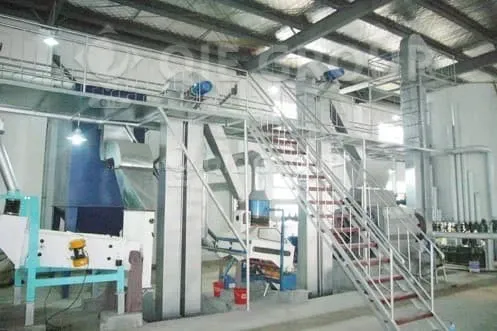
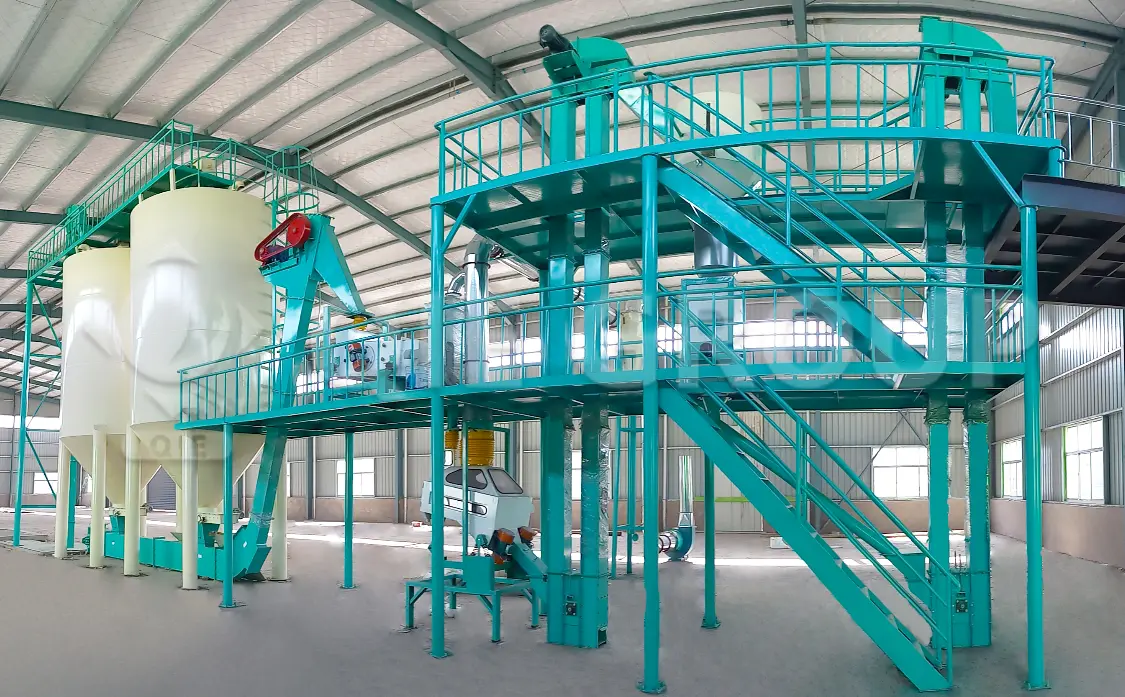
Proper pretreatment removes impurities and prepares the seed structure to maximize oil extraction while protecting downstream machinery from premature wear.
Vibrating Cleaning Screen: Separates big and small impurities (leaves, stems, dirt) from raw oilseeds.
Specific Gravity Destoner: Removes stones, dirt clods, and heavy debris using gravity and air airflow.
Magnetic Separator: Captures iron and metal particles to prevent damage to crushers and presses.
Huller & Sheller / Crusher: Removes outer hulls (crucial for seeds like sunflower and cottonseeds) and breaks large seeds into smaller, uniform pieces.
Flaking machine: Rolls crushed seeds into thin flakes (0.3–0.5 mm), expanding the surface area for higher pressing efficiency.
Cooker / Seed Roaster: Adjusts the moisture content and temperature of the seed flakes to break down oil cells and lower viscosity before pressing.
2 Stage 2: Mechanical Oil Pressing Equipment
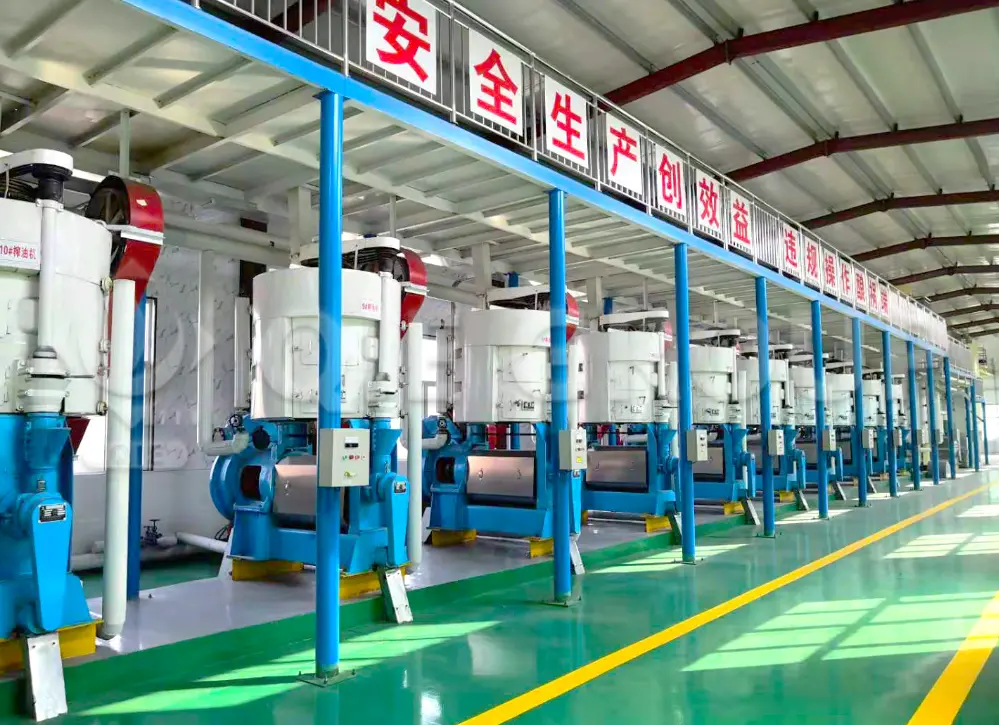
Mechanical pressing extracts crude oil through physical pressure, retaining the oil's natural aroma and nutrients.
Screw Oil Press (Expeller): Uses a rotating screw shaft inside a cage to apply continuous pressure, squeezing crude oil out from the prepared seeds.
Hydraulic Oil Press: Ideal for cold-pressing specialized oilseeds (such as sesame, olive, or walnuts) where high temperatures must be avoided to preserve delicate flavors.
Plate & Frame Filter Press / Vacuum Oil Filter: Removes suspended solids, cake residue, and impurities from the raw crude oil right after pressing.
For commercial operations processing high volumes or low-oil-content seeds (like soybeans), solvent extraction reduces the residual oil in the remaining cake to under 1%.
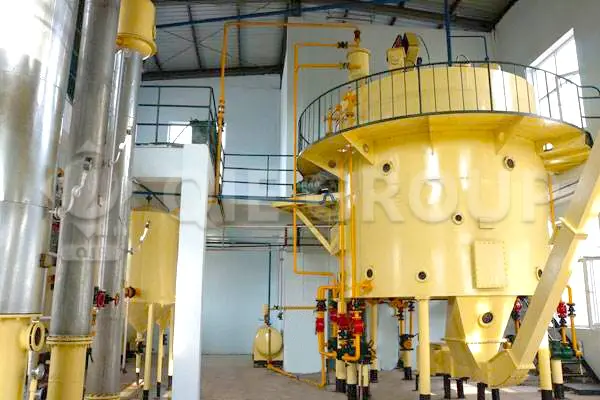
Rotocel Extractor / Loop Extractor: Soaks the oil cake in a solvent (typically organic n-hexane) to dissolve all remaining oil.
Desolventizer-Toaster (DTDC Machine): Separates and recovers solvent from the wet meal while roasting the meal into high-protein animal feed.
Evaporator & Stripper System: Separates the solvent from the oil-solvent mixture (miscella) through precise heating and evaporation.
Solvent Condenser & Recovery Unit: Recycles evaporated solvent back into the extraction loop to lower operating costs and ensure environmental safety.
4 Stage 4: Cooking Oil Refining Equipment
Crude oil from pressing or solvent extraction contains gum, free fatty acids, pigments, and odors. Refining processes transform it into clear, stable, standard-compliant edible oil.
Degumming & Deacidification Tank (or Centrifuge): Removes phospholipids and neutralizes free fatty acids.
Decolorization / Bleaching Earth Tower: Uses activated clay to absorb unwanted pigments, giving the oil a clear golden color.
Deodorization Tower: Removes volatile odor components under high vacuum and steam distillation.
Dewaxing / Fractionation Unit: Removes high-melting-point waxes (essential for sunflower, corn, and rice bran oils) to keep the oil transparent at low temperatures.
2. Equipment Configuration Guide by Daily Processing Capacity
Not every plant needs every machine listed above. Your optimal equipment configuration depends directly on your daily processing volume (TPD) and budget.
Full Pretreatment Line + Pre-expeller + Solvent Extraction Unit (DTDC & Recovery) + Continuous Oil Refining Line
Large commercial processing factories prioritizing maximum oil yield and byproduct (meal) commercialization
3. Key Factors to Consider When Selecting Oil Processing Equipment
Oilseed Characteristics: High-oil seeds (e.g., peanuts, sesame, sunflower) are usually suited for double-pressing. Low-oil seeds (e.g., soybeans) yield much higher profit margins when using solvent extraction.
Target Oil Grade: Producing unrefined aromatic oil requires simple pressing and filtering. Producing Grade 1 national standard bottled supermarket oil requires a complete refining line (Degumming, Deacidification, Bleaching, Deodorizing).
Footprint & Power Supply: Make sure your workshop dimensions and industrial power capacity match the power and steam requirements of continuous cookers and extractors.

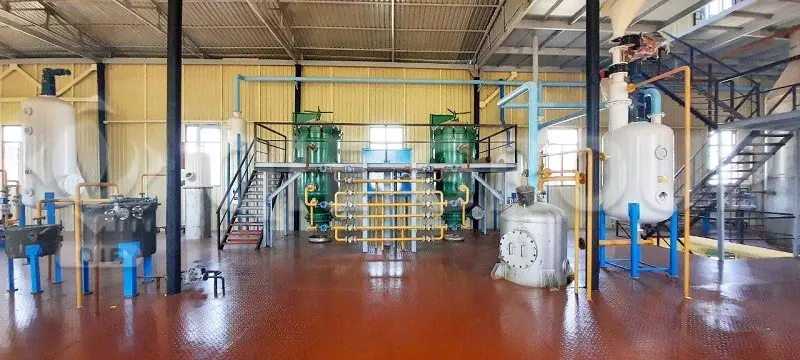
 Soybean oil pressing process Soybean oil extraction process Soybean Oil Refining Technology Budget for a Small Soybean Oil Processing Plant


.png?x-oss-process=image/resize,h_100,m_lfit/format,webp)
.png?x-oss-process=image/resize,h_100,m_lfit/format,webp)
.png?x-oss-process=image/resize,h_100,m_lfit/format,webp)