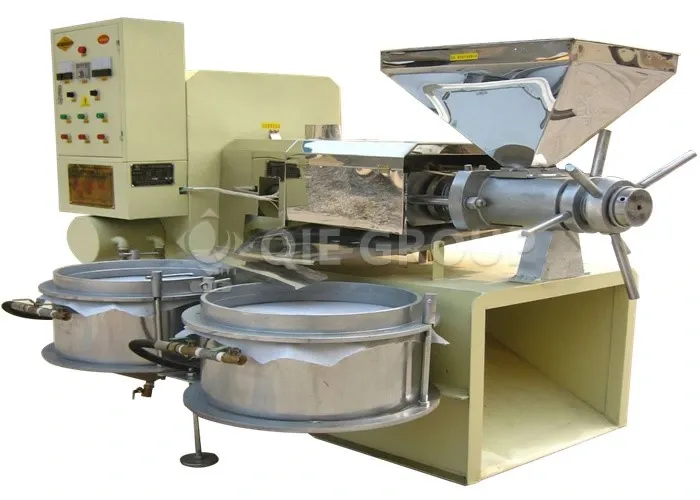
The global soybean oil market continues to expand, and oil mills, facing fluctuations in raw material prices and evolving market demands, need more efficient and intelligent processing equipment to maintain their competitiveness. The oil yield, residual oil rate, energy consumption, and oil product stability of each ton of raw material directly impact profits and market responsiveness.
By adopting a one-stop, modular, and intelligent production line, oil refineries can not only increase production capacity but also reduce energy consumption and chemical consumable usage, maximizing efficiency. This article will analyze key process steps and equipment optimization directions based on industry pain points, and provide actionable reference indicators to help you evaluate your upgrade path.
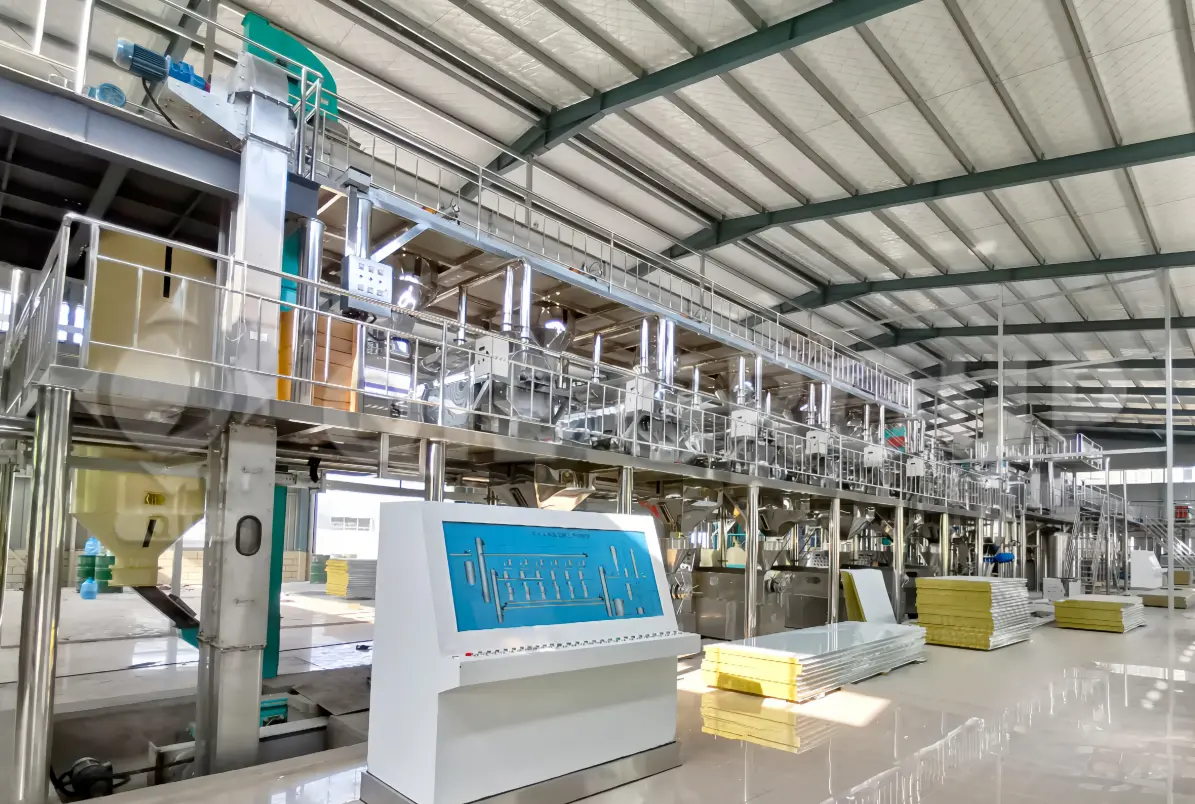
Multiple factors are prompting oil refineries to upgrade their equipment as soon as possible:
Increased raw material differences : The variety of soybeans, oil content, and moisture content fluctuate greatly, directly affecting the oil yield.
Increased market demands : Consumers and regulators have higher requirements for the quality, safety, and stability of fuels.
Rising energy and environmental costs : Optimizing equipment and processes can reduce unit production costs and carbon emissions.
Modern equipment can improve oil utilization and reduce energy consumption by optimizing pretreatment, pressing/leaching and refining processes without significantly increasing raw material input, bringing long-term returns to enterprises.
Soybean oil processing typically includes: raw material pretreatment (cleaning, peeling, puffing/conditioning), pressing or solvent extraction, and crude oil degumming and refining (deacidification, decolorization, deodorization, etc.). The following are quantifiable optimization points for each step:
Efficient cleaning and dehulling can reduce impurities and moisture, ensuring uniform puffing/conditioning, thereby improving the efficiency of subsequent pressing or leaching.
It is recommended to equip the system with a variable frequency cleaning system, a precision screening and desquamation device, and to realize online monitoring of moisture and oil content fluctuations to reduce additional losses caused by process fluctuations.
Choosing the appropriate pressing or solvent extraction route depends on the company's production capacity, the oil content of the feedstock, and its capital budget. Common practices include:
In solvent extraction systems, a high residual oil content is usually due to problems with the pretreatment process. For detailed guidelines on how to improve oil yield through pretreatment equipment , please refer to them.
The refining process directly affects the color, odor, and storage stability of oils. Modern refining emphasizes low-loss deacidification, gentle decolorization, and efficient deodorization to maintain nutritional components and sensory properties. Intelligent process control minimizes the amount of chemical additives and heat consumption, while improving the consistency of the finished product.
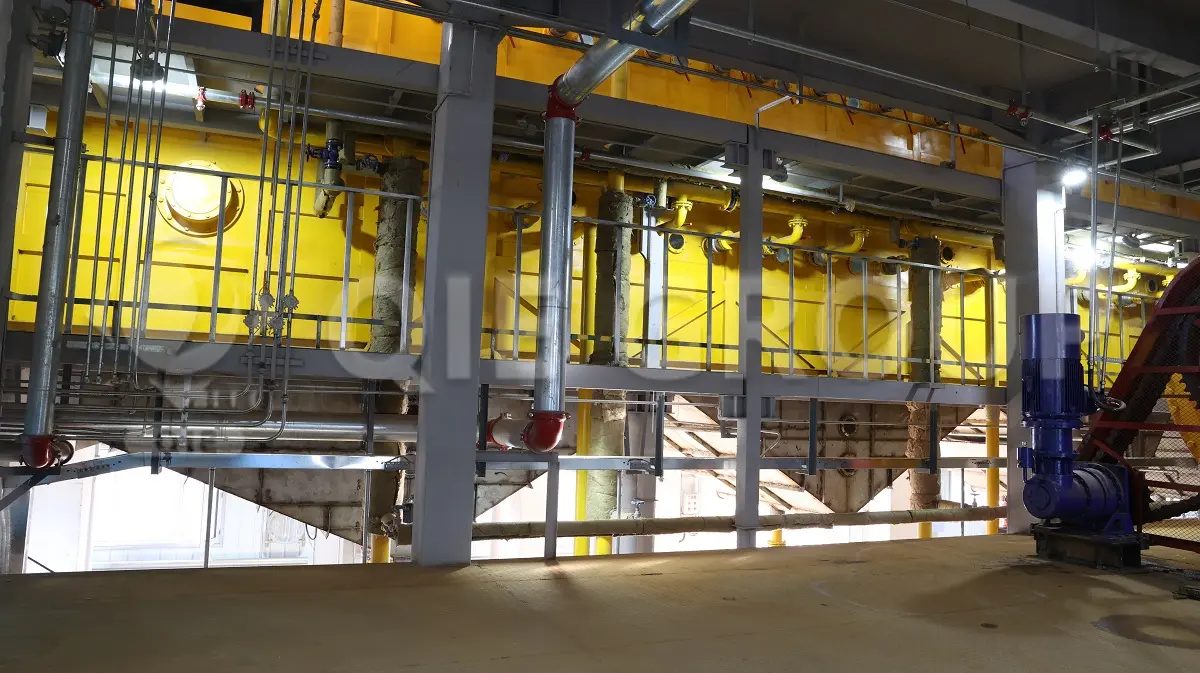
Many oil refineries have observed the following improvements after implementing intelligent upgrades (specific figures vary depending on plant conditions and processes, but the trend is consistent):
Increased oil yield: This can typically increase the yield by 0.5–1.5 percentage points, which is equivalent to producing tens to hundreds of kilograms more refined oil per 10,000 tons of raw materials.
Residual oil content decreases: The residual oil content of the pressing and pre-pressing-leaching system decreases, and the solvent system can stabilize it at a low level through closed-loop recovery.
Energy and chemical consumable savings: Heat recovery and intelligent control can reduce energy consumption by 10%–15%.
Product consistency and compliance: Online testing, formula management, and full-process traceability improve the oil product qualification rate and facilitate entry into the high-end market.
We offer a one-stop, intelligent, modular production line encompassing cleaning, peeling, puffing, pressing/leaching to refining. The following are key technical points frequently emphasized by our customers:
Modular design: Arranged according to production capacity segments, facilitating phased investment and rapid capacity expansion.
Intelligent process control: The PLC+SCADA system enables online parameter optimization, alarms, and remote diagnostics.
Energy efficiency is a priority: heat recovery, waste heat utilization, and high-efficiency steam systems reduce operating costs.
Customized engineering: Technical engineers follow up throughout the process and customize solutions based on raw material characteristics and market objectives.
Safety and Compliance: Solvent recovery, safety interlocks, and wastewater treatment meet the regulations of different countries.
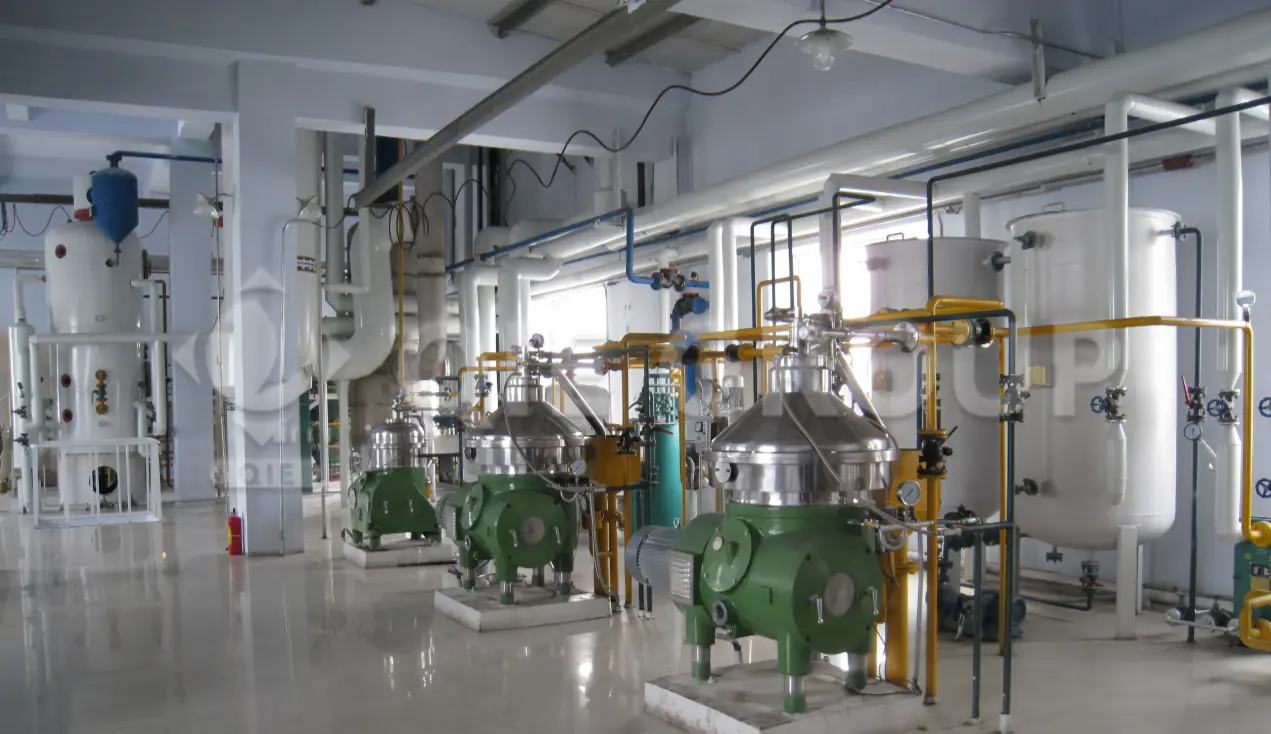
Upgrade decisions should be based on: target production capacity, raw material stability, funding schedule, and market positioning. A simple evaluation process follows:
If you are interested in specific economic calculations or process modification plans, QIE Group can provide feasibility assessments based on on-site data, including capacity matching, investment estimation, energy consumption and payback period analysis.
Technological upgrading is not just about replacing equipment; it's a process of establishing sustainable operational capabilities. To further improve oil yield and reduce energy consumption in your production line, please refer to solvent extraction equipment solutions that offer high oil yield and low energy consumption for detailed solutions. In this way, oil mills can not only improve raw material utilization but also stabilize oil quality, access the high-end edible oil market, and maximize long-term profits.
How can we transform our production line from a "passive response" to a "proactive optimization" model, maximizing the value of every ton of raw materials?
 Intelligent oil processing Green Edible Oil Production Energy-saving solutions for oil plants Intelligent data monitoring Oil processing equipment
Small oil press equipment How much does it cost to open an oil mill? Selection of edible oil processing equipment A Beginner's Guide to Opening an Oil Plant Oil mill investment budget Edible oil production line
Sunflower oil yield Sunflower oil production process Dehulling process Mechanical pressing Oil refining
Palm Kernel Oil Processing Plant Palm Kernel Oil Refiner Palm kernel oil production line Small Palm Oil Press
edible oil processing plant turnkey edible oil plant vegetable oil production line edible oil refinery equipment edible oil mill plant
Intelligent oil processing Green Edible Oil Production Energy-saving solutions for oil plants Intelligent data monitoring Oil processing equipment
Small oil press equipment How much does it cost to open an oil mill? Selection of edible oil processing equipment A Beginner's Guide to Opening an Oil Plant Oil mill investment budget Edible oil production line
Sunflower oil yield Sunflower oil production process Dehulling process Mechanical pressing Oil refining
Palm Kernel Oil Processing Plant Palm Kernel Oil Refiner Palm kernel oil production line Small Palm Oil Press
edible oil processing plant turnkey edible oil plant vegetable oil production line edible oil refinery equipment edible oil mill plant


.png?x-oss-process=image/resize,h_100,m_lfit/format,webp)
.png?x-oss-process=image/resize,h_100,m_lfit/format,webp)
.png?x-oss-process=image/resize,h_100,m_lfit/format,webp)