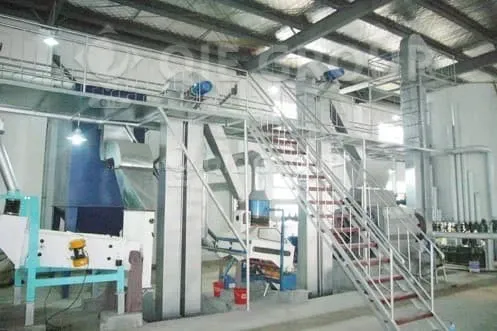
Have you ever encountered this situation: despite investing in advanced solvent extraction equipment , the oil yield remains low and the residual oil level is high? Many people's first reaction is, "Is there a problem with the solvent leaching process?" In fact, the real "hidden culprit" may be in the first step of the production chain— pretreatment .
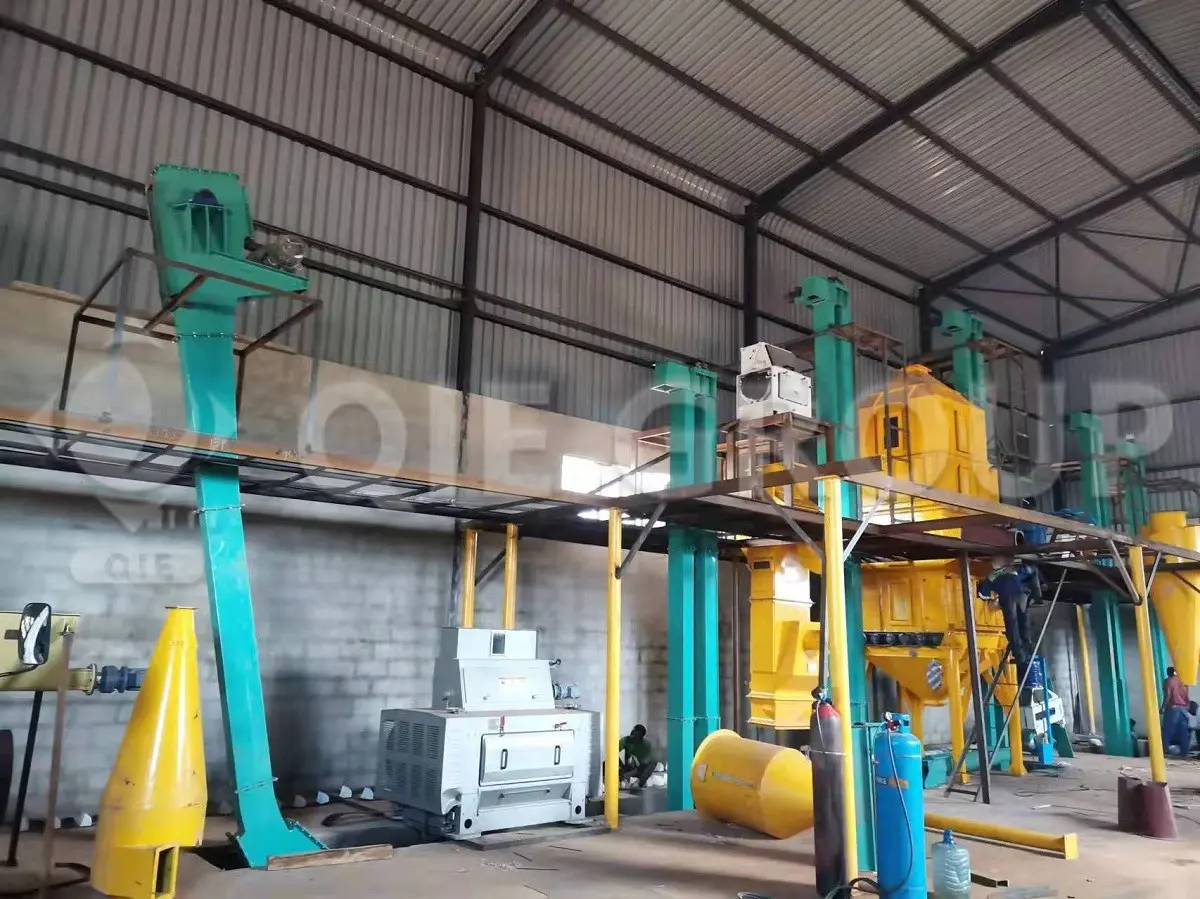
Just like building a house requires a solid foundation, soybean oil production also needs to start with raw material processing. If the pretreatment is insufficient, even the most advanced solvent extraction equipment will inevitably result in "inefficiency and instability".
Industry research and customer case studies show that every 1% increase in peeling rate or moisture uniformity can improve the overall oil yield by an average of 0.8%–1.2%. For a soybean oil mill with an annual production capacity of 10,000 tons, this translates to an additional profit of hundreds of thousands of yuan.
💡 Case Study : One of our African clients' oil mills originally had a solvent leaching residual oil content of 1.5%. After optimizing the pretreatment process, it dropped to 1.1%. This alone resulted in an additional 40 tons of crude oil per year, worth approximately 300,000 yuan.
The entire process is as follows: conditioning → crushing → secondary peeling → puffing
✅ Conditioning : Adjusts the moisture content of soybeans to make the oil release easier.
✅ Crushing : Increases the exposed surface area of oils and greases, improving solvent penetration efficiency.
✅Second peeling : reduces impurities and improves oil quality
✅Expansion : Changes the material structure to allow for full release of oil.
This combination not only increases the oil yield but also ensures a uniform material structure and reduces the residual oil rate.
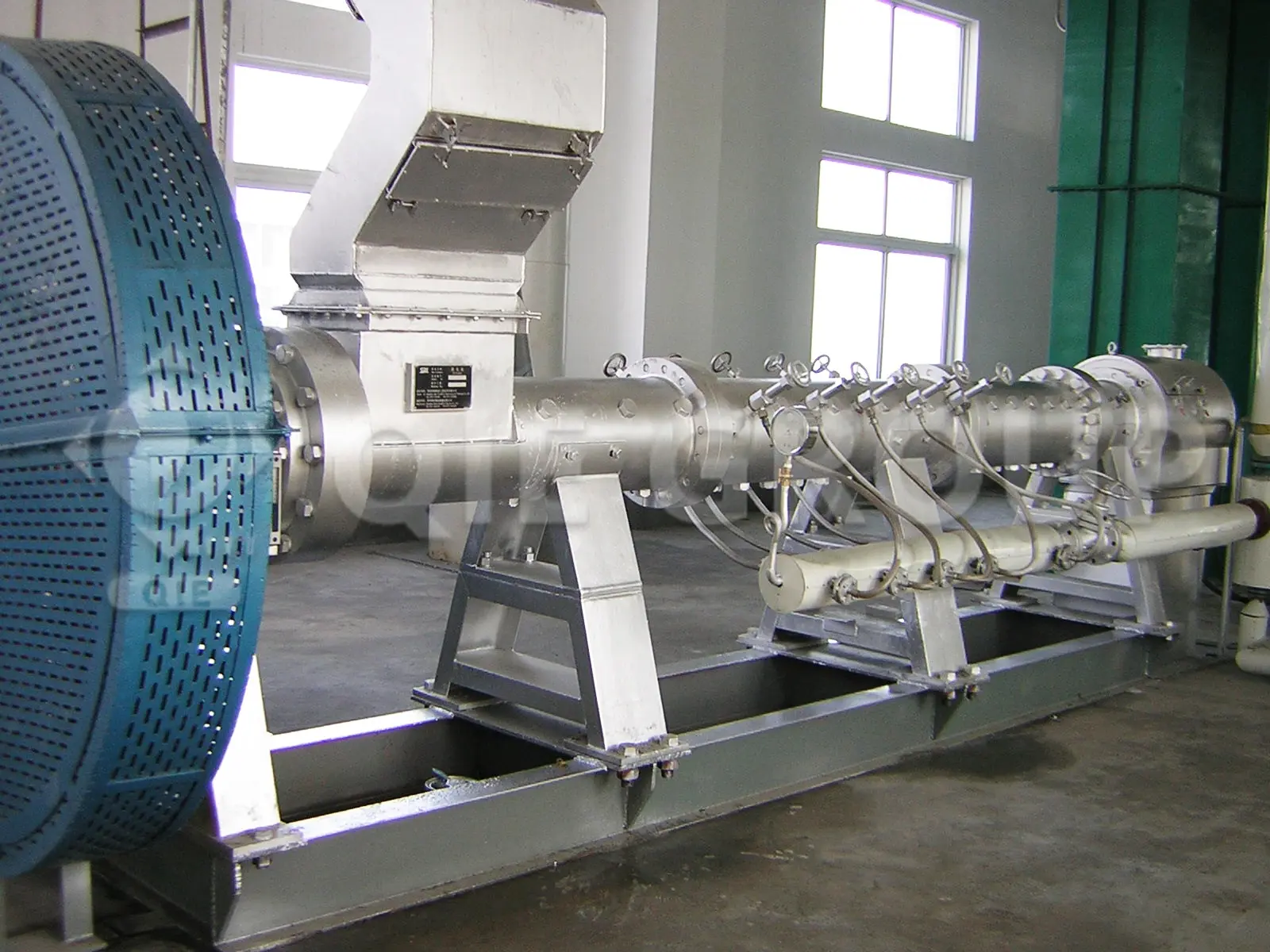
Our equipment is equipped with a computerized automated control system and electrical interlock control, providing clear visibility of key parameters such as temperature, pressure, material level, and flow rate. An independent control room, coupled with a large-screen simulation monitoring system and automatic alarm system, allows managers to monitor production status at any time, minimizing human error.
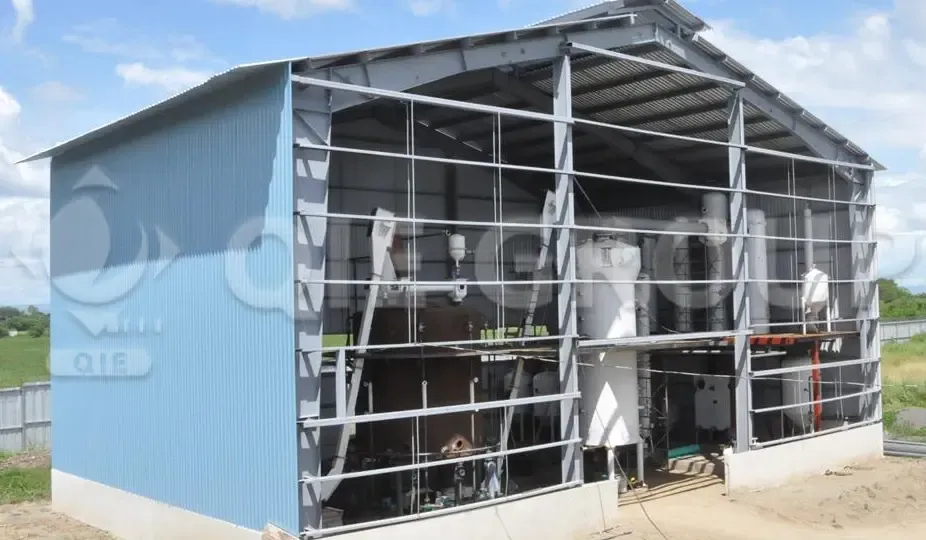
💡Customer feedback : Automated control can reduce production errors by about 30% and save about 20% on manual inspection costs. Compared with traditional manual operation, production is more stable and reliable.QIE Group's pre-processing equipment is also equipped with a high-efficiency temperature peeling system, achieving a peeling rate of up to 95% and reducing energy consumption by approximately 15%. It also features an advanced dust removal system that meets national environmental standards. Impurities generated during processing can be recycled or stored centrally, improving raw material utilization. The equipment's exterior is clad in color steel plates, ensuring a clean and aesthetically pleasing workshop while facilitating daily maintenance.
Through comprehensive pretreatment optimization, oil mills can significantly reduce residual oil rates in solvent extraction, increase soybean oil yield, save energy, reduce consumption, and achieve efficient production line operation. Multiple customers have provided feedback after upgrading:
✅ Increased oil yield : Stable increase of 1-2%, with some customers even seeing an increase of 3%.
✅ Easy to operate : Automated control reduces the burden of manual operation.
✅ Highly efficient workshop management : Real-time monitoring allows managers to keep track of production status at any time.
This optimization not only increased yield but also maximized the value of every ton of soybeans.
Q1: Why does soybean pretreatment affect oil yield?
A1: Soybeans that have not been properly conditioned, crushed, or puffed cannot fully release their oil, resulting in a high residual oil rate and low oil yield.
Q2: How much can the residual oil rate be reduced after upgrading the pretreatment equipment?
A2: Typically, it can reduce by 1–2% (typical value), and some customers can reduce it to below 1.5% through end-to-end optimization.
Q3: Can the equipment be adapted to existing solvent leaching production lines?
A3: Yes. QIE Group equipment adopts a modular design, which can be seamlessly integrated into existing production lines, reducing modification costs.
Q4: How much labor cost can automation control save?
A4: Based on customer case studies, it can save approximately 20%-30% on manual inspection and operation costs, while also reducing human error.
Q5: Does the pretreatment optimization meet environmental protection standards?
A5: The equipment is equipped with an advanced dust removal system and waste recycling solution, which meets national environmental protection standards and improves the utilization rate of raw materials.
If you're considering upgrading your production line, or already struggling with high residual oil levels, consider taking some time to learn about the "hidden champion" of pretreatment. After all, a good start leads to a better finish.
Want to achieve higher oil yield and lower residual oil content in your soybean oil production line? 👉Consult the QIE Group technical team now!
 Rapeseed Oil Refining Machine Rapeseed oil processing plant refining equipment Rapeseed oil 50 tons per day refiner Rapeseed oil cold pressing oil refining equipment Rapeseed oil deacidification and deodorization equipment
steam cooker edible oil oil seeds pretreatment equipment cooking oil production line edible oil processing plant oil pressing machine steam cooker
Soybean oil extraction equipment Oil refinery energy-saving renovation Intelligent Leaching Production Line Oil processing equipment High efficiency oil yield Soybean oil production line
Castor seed oil cold press machine Castor seed oil cold pressing process Castor seed oil solvent extraction process Castor seed oil production line Castor oil processing plant Castor oil refinery
Palm Kernel Oil Processing Plant Palm Kernel Oil Refiner Palm kernel oil production line Small Palm Oil Press
Rapeseed Oil Refining Machine Rapeseed oil processing plant refining equipment Rapeseed oil 50 tons per day refiner Rapeseed oil cold pressing oil refining equipment Rapeseed oil deacidification and deodorization equipment
steam cooker edible oil oil seeds pretreatment equipment cooking oil production line edible oil processing plant oil pressing machine steam cooker
Soybean oil extraction equipment Oil refinery energy-saving renovation Intelligent Leaching Production Line Oil processing equipment High efficiency oil yield Soybean oil production line
Castor seed oil cold press machine Castor seed oil cold pressing process Castor seed oil solvent extraction process Castor seed oil production line Castor oil processing plant Castor oil refinery
Palm Kernel Oil Processing Plant Palm Kernel Oil Refiner Palm kernel oil production line Small Palm Oil Press


.webp?x-oss-process=image/resize,h_800,m_lfit/format,webp)




.png?x-oss-process=image/resize,h_100,m_lfit/format,webp)
.png?x-oss-process=image/resize,h_100,m_lfit/format,webp)
.png?x-oss-process=image/resize,h_100,m_lfit/format,webp)