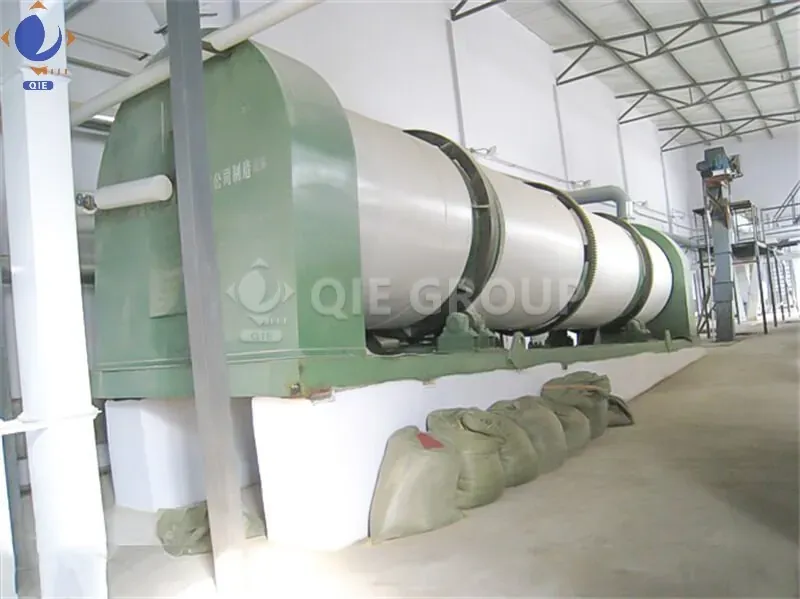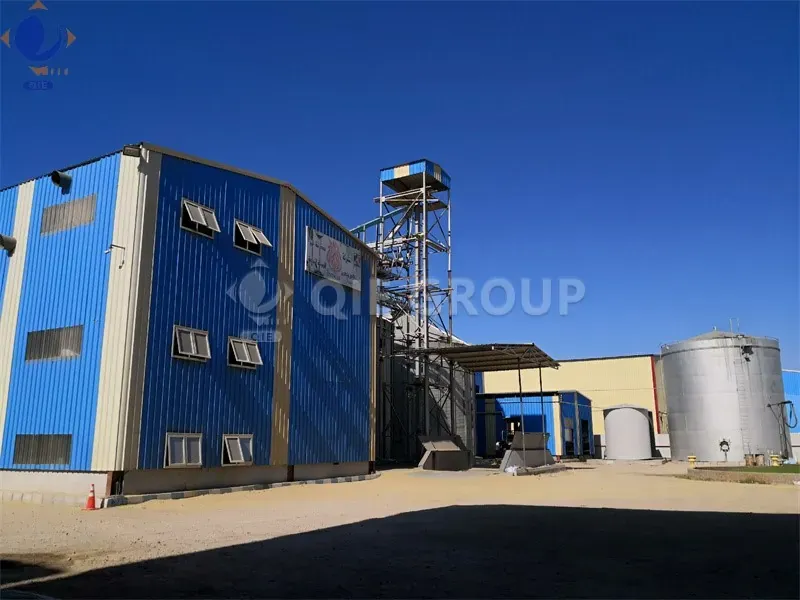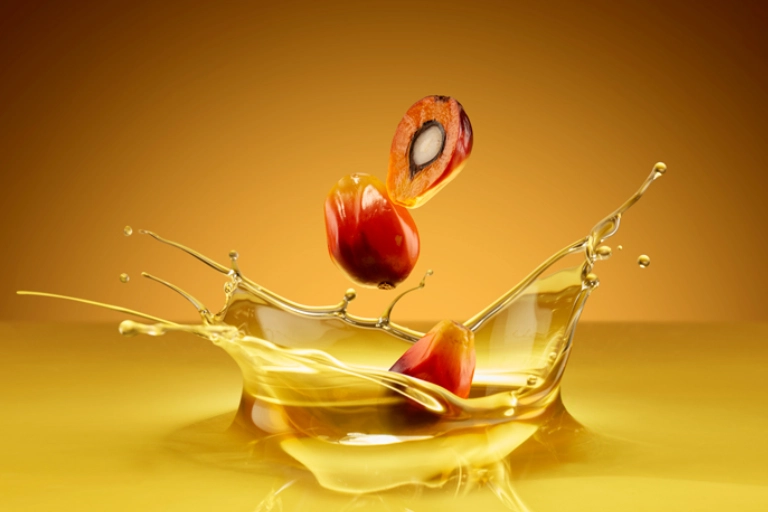
With the continued growth in global demand for vegetable oils, palm oil has gradually become a market leader due to its high yield and good processing performance. However, both small and large palm oil processing plants generally face the following challenges:
Limited production capacity : Traditional equipment has limited room for capacity expansion, making it difficult to meet the rapidly growing market demand.
Low processing efficiency : Aging equipment and insufficient automation lead to waste of energy and raw materials. 👉( The key to improving palm fruit oil extraction efficiency? )
Fluctuations in oil quality : Unstable processing technology can easily affect the taste and color of oil.
In contrast, factories that have upgraded to automated production lines can generally achieve the following:
30%–40% actual capacity growth
Continuous operation stability is significantly improved
Reduced fuel consumption and energy consumption per unit
The oil's color, acid value, and impurity levels are more stable.
(The above data is based on statistical analysis of QIE Group's clients.)
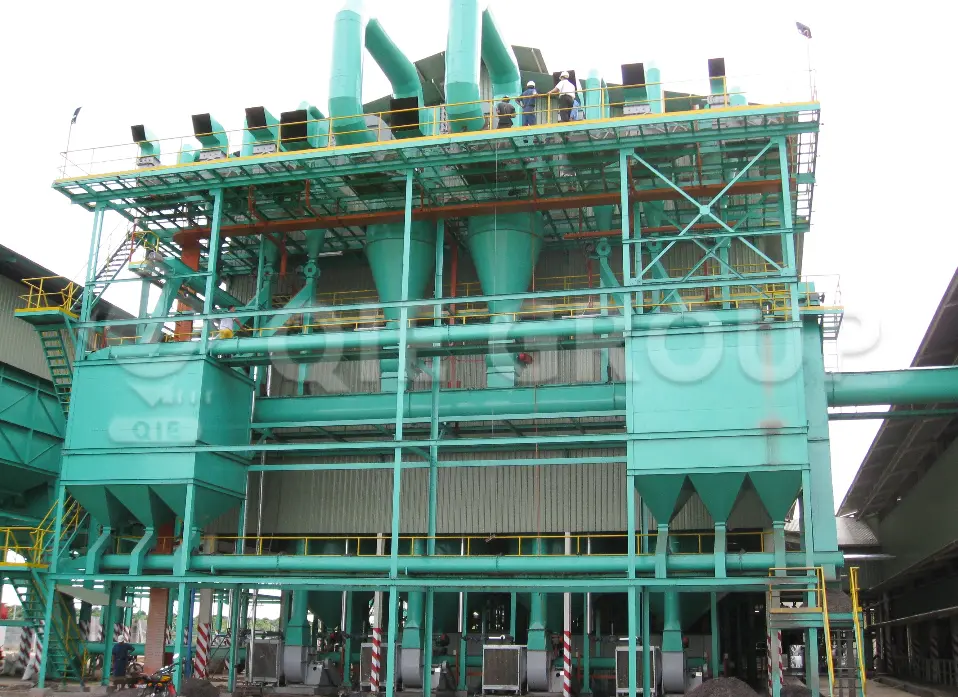
We offer integrated production lines covering pretreatment → oil extraction → refining → fractionation, suitable for factories of different sizes, and can be flexibly customized according to customer needs.
Modular and modular production units : quickly adapt to different production capacities.
Intelligent automatic control : Real-time monitoring of production parameters, supporting remote management and data analysis.
Energy saving and environmental protection : Optimize power consumption and exhaust emissions to reduce operating costs.
Easy to maintain and operate : The optimized equipment structure reduces downtime.
QIE Group offers flexible, customized palm oil production line solutions based on customer size and capacity budget:
| scale | Typical production capacity (tons/day) | Features | Customized focus |
|---|---|---|---|
| small processing plant | 10-20 | The equipment has a small footprint and low investment cost. | Simplified process, fully automated control |
| medium-sized processing plant | 20-50 | Balancing efficiency and quality improvement | Modular design, flexible expansion |
| large processing plant | 50+ | High automation leads to a significant increase in production capacity. | Multi-process integration and intelligent management |
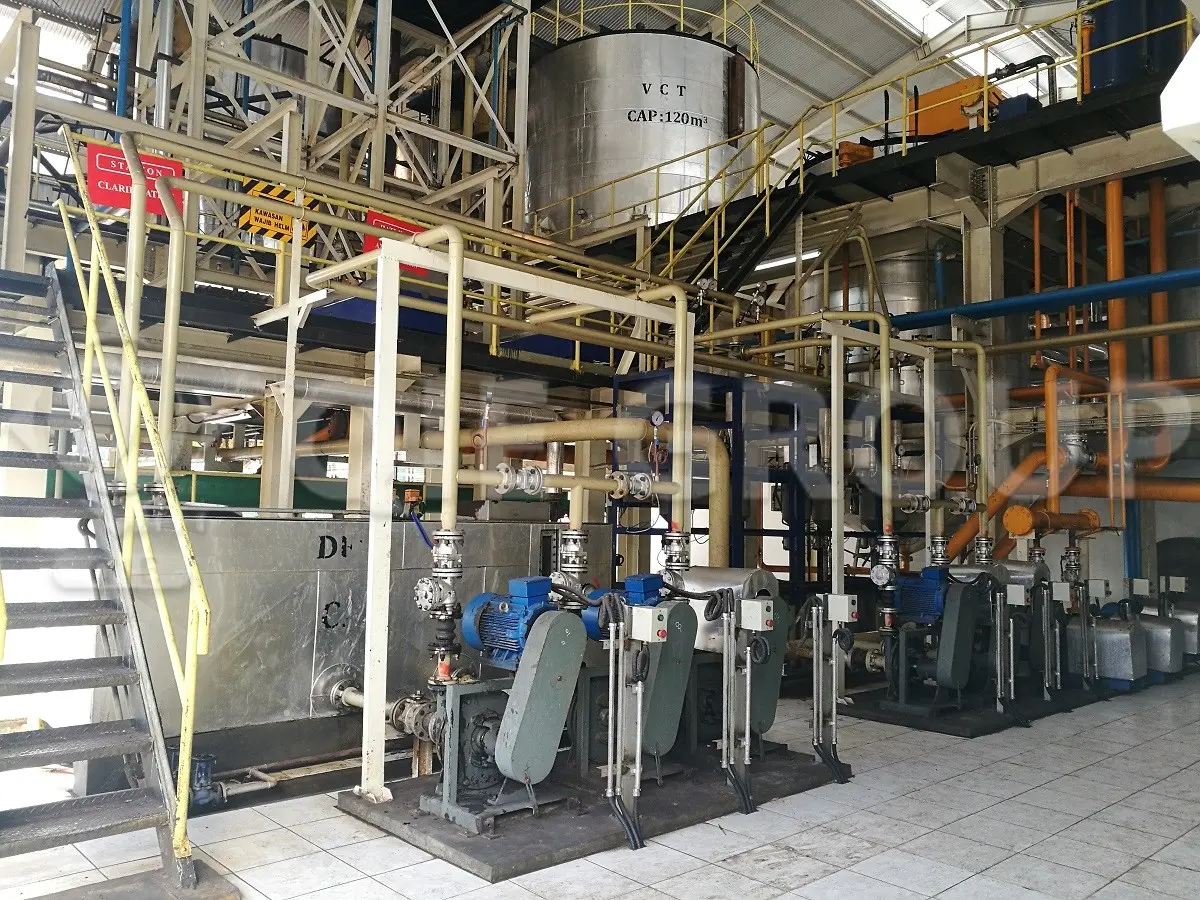
Our efficient palm oil production line covers every step from raw materials to finished oil:
The goal at this stage is to process the fresh fruit bunches to a suitable state for pressing, laying the foundation for high oil yield and stable oil quality.
Receiving and sorting : Weighing, grading and quality testing of fresh fruit bunches to remove inferior fruit and improve subsequent oil yield.
Sterilization : High-pressure steam is used to cook the fruit bunches, softening the pulp, inactivating lipase, preventing rancidity, and improving oil stability.
Threshing : Using mechanical rollers to separate the fruit from the cooked fruit bunches.
Digestion : Using a mortar and pestle to break down fruit pulp cells, allowing the oil to be fully released and creating conditions for pressing.
This stage involves pressing the pre-treated pulp and separating crude palm oil (CPO).
Pressing : Using a screw press to apply high pressure to crushed fruit pulp to obtain an oil-water-solid mixture.
Clarification : Crude palm oil is obtained by separating solid impurities and water through sieving, sedimentation or centrifugation techniques.
By-product handling : The separated fibers can be used as boiler fuel; the kernels are used to produce palm kernel oil (PKO).

Crude palm oil needs further refining to meet food-grade standards and long-term stability.
Degumming : Removes phospholipids and gums, improving oil stability.
Deacidification (Neutralization / Physical Refining) : Removing free fatty acids through chemical alkali refining or physical refining.
Bleaching : Using activated clay to adsorb pigments (such as beta-carotene) and trace impurities.
Deodorization : Odors and volatile substances are removed by high-temperature, high-vacuum distillation to obtain refined palm oil (RBD Palm Oil).
Special steps are taken with palm oil to prepare oil products with different melting points.
Crystallization : Slowly lowering the temperature causes high-melting-point triglycerides (stearin) to crystallize and precipitate.
Filtration yields :
Palm oil (Oleín) : Low melting point, suitable for frying and cooking.
Palm stearin : High melting point, used in shortening, margarine, and other recipes.
Objective : To obtain specialized oils with different melting points and applications, thereby increasing product added value. 👉(Learn more about palm oil winterization and dewaxing processes )
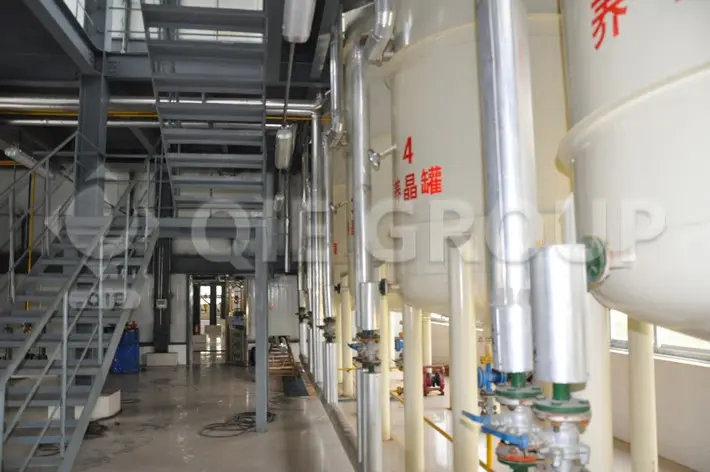
Standards Compliance : The production line design complies with HACCP and ISO 22000 standards.
Online monitoring : Real-time tracking of temperature, pressure, and pH levels to ensure stability at every stage.
End-to-end quality tracking : Rapid response to anomalies reduces risks and ensures that end users receive safe and stable high-quality palm oil.
After a medium-sized palm oil mill in Southeast Asia adopted a QIE customized production line:
Daily production capacity increased from 25 tons to 35 tons , representing a 40% increase .
Automation reduces labor costs by 15%.
Improved oil refining level and reduced waste oil rate
The equipment's stable operation rate exceeds 98% , and unplanned downtime has been significantly reduced.
Q: How do I determine the appropriate equipment capacity for my factory?
A: We recommend assessing production capacity based on daily raw material supply and market demand, and then considering space and investment capabilities. QIE Group's pre-sales engineers will provide customized solutions to ensure maximum return on investment.
Q: What does equipment operation training include?
A: It covers equipment operation, maintenance, troubleshooting, and safe operating procedures, and supports on-site and remote training to ensure that operators can get started quickly.
Q: Is it possible to produce both palm oil (CPO) and palm kernel oil (PKO) simultaneously? What additional equipment is required?
A: Yes. If the fruit pits are collected and further processed simultaneously, the following additional equipment will be needed: a pit crusher, a kernel-shell separation system, a palm kernel press, and a PKO refining line (optional). We can design a "dual-line shared plant" solution for our clients to improve return on investment.
Q: What are the main wear parts of the equipment? How often do they need to be replaced?
A: The screw, press cage, filter screen, and seals of a screw oil press are considered wear parts, and their replacement cycle is generally 6–12 months, depending on the raw material. QIE Group provides long-term spare parts supply and local warehousing support to ensure uninterrupted operation.
When selecting a production line, the following aspects should be considered:
Capacity matching and expansion : Avoid equipment idleness or insufficient capacity.
Automation level : Improves management efficiency and reduces labor costs.
Equipment stability and ease of maintenance : ensuring continuous production.
Customized solutions support : meeting special processes and differentiated needs.
Brand reputation and after-sales service : Providing full life-cycle protection.
By leveraging the expertise of the QIE Group, customers can obtain a full range of services, from solution design, equipment manufacturing, on-site installation and commissioning to operation training and technical support, thereby improving processing efficiency and product quality and enhancing market competitiveness.
 Mustard Seed Screw Oil Press Mustard seed pretreatment equipment Equipment configuration plan for mustard oil plant What to do if mustard seeds have low oil yield? Indian mustard oil factory equipment mustard oil refinery
Palm fruit oil Energy saving Palm oil production line Palm Oil Screw Press Palm fruit vertical fermentation tank
Peanut oil production line turnkey production line Upgrading of small and medium-sized oil plants High oil yield peanut oil production line Peanut oil pressing equipment
Small oil press equipment How much does it cost to open an oil mill? Selection of edible oil processing equipment A Beginner's Guide to Opening an Oil Plant Oil mill investment budget Edible oil production line
Edible oil production line Oil processing equipment Oil refining process Automatic oil pressing equipment Modular production line
Mustard Seed Screw Oil Press Mustard seed pretreatment equipment Equipment configuration plan for mustard oil plant What to do if mustard seeds have low oil yield? Indian mustard oil factory equipment mustard oil refinery
Palm fruit oil Energy saving Palm oil production line Palm Oil Screw Press Palm fruit vertical fermentation tank
Peanut oil production line turnkey production line Upgrading of small and medium-sized oil plants High oil yield peanut oil production line Peanut oil pressing equipment
Small oil press equipment How much does it cost to open an oil mill? Selection of edible oil processing equipment A Beginner's Guide to Opening an Oil Plant Oil mill investment budget Edible oil production line
Edible oil production line Oil processing equipment Oil refining process Automatic oil pressing equipment Modular production line






.png?x-oss-process=image/resize,h_100,m_lfit/format,webp)
.png?x-oss-process=image/resize,h_100,m_lfit/format,webp)
.png?x-oss-process=image/resize,h_100,m_lfit/format,webp)