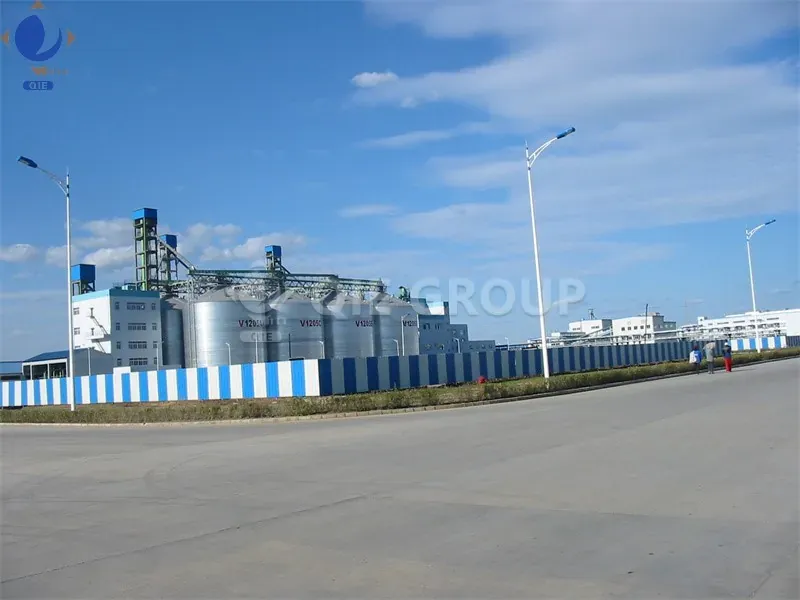
In traditional palm fruit oil extraction processes, oil mills generally face three major challenges: low oil yield, high energy consumption, and heavy reliance on manual labor . Many factories attempt to optimize the pressing process, but often overlook the core starting point for overall system efficiency—pretreatment and overall process synergy.
Leveraging its years of experience in oilseed engineering, QIE Group has systematically integrated processes such as vertical fermentation, intelligent pressing, automatic clarification, and palm kernel recovery. The result is not only increased oil yield per ton of palm fruit, but also a shift in the entire production line towards automation, energy efficiency, and maximum capacity.
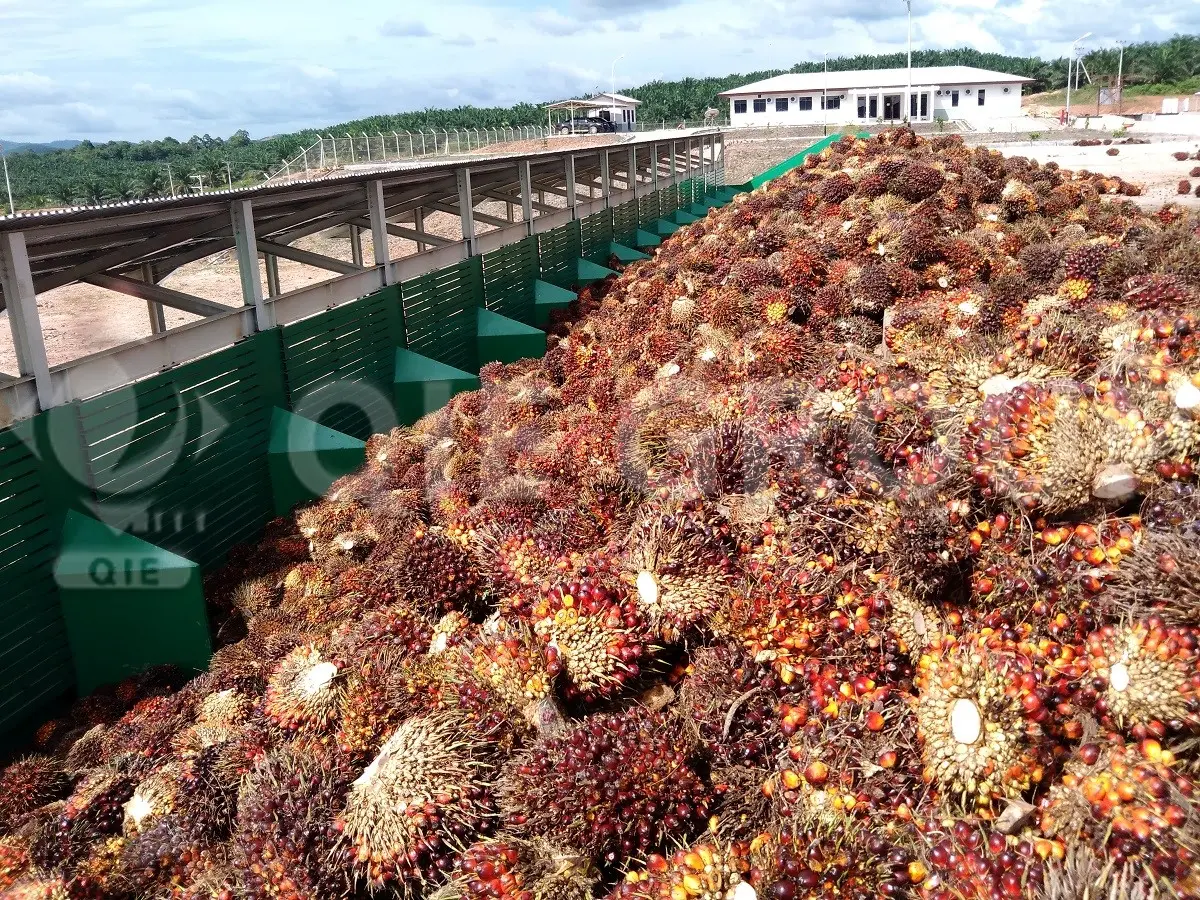
Pretreatment determines the degree of enzyme inactivation inside the fruit bunch, the fruit removal effect, and the softening of the pulp. It also directly affects the feeding status, pressing pressure, and oil overflow rate of the subsequent double screw oil press.
The reason why most oil mills have poor oil yields is often not due to the oil press itself, but rather to:
Incomplete sterilization leads to decreased fruit drop rate and higher oil content in the fiber.
Uneven steaming and crushing → Double screw pressing cannot achieve optimal extraction.
Our approach is to elevate pretreatment from an "auxiliary step" to a "core process," using a vertical fermentation and intelligent crushing and cooking system to ensure that the materials entering the oil press are always in optimal condition.
We have integrated the palm fruit processing line into a complete supply chain:
Raw material collection and storage → Vertical fermentation → Fruit removal → Steaming and crushing → Double screw pressing → Crude oil clarification → Palm kernel recovery and drying
Compared with traditional horizontal steam boilers, vertical sterilization has three major advantages:
Steam directly contacts the fruit bunches, resulting in more thorough enzyme inactivation.
Loose fruit bunches result in a higher rate of fruit detachment, making subsequent mechanical separation easier.
Reduce energy waste and improve steam utilization.
The more thorough the sterilization process, the cleaner the separation of the pulp from the stem, the more stable the fruit quality, and naturally, the higher the efficiency of subsequent crushing and pressing. 🔗 [ What is the function of the palm fruit sterilization tank? ]

Our double-helix oil pressing structure is designed in conjunction with the crushing tank:
The pulp is broken down into smaller pieces, allowing the internal oils to be fully released.
The material moisture content is more stable, and the pressing pressure is more precisely controlled.
The residual oil rate decreased significantly, and the actual oil received by the oil plant increased markedly.
This not only increases the main oil production but also reduces the pressure of subsequent oil residue processing. [ What are the differences between palm fruit oil pressing equipment and palm kernel oil pressing equipment? ]
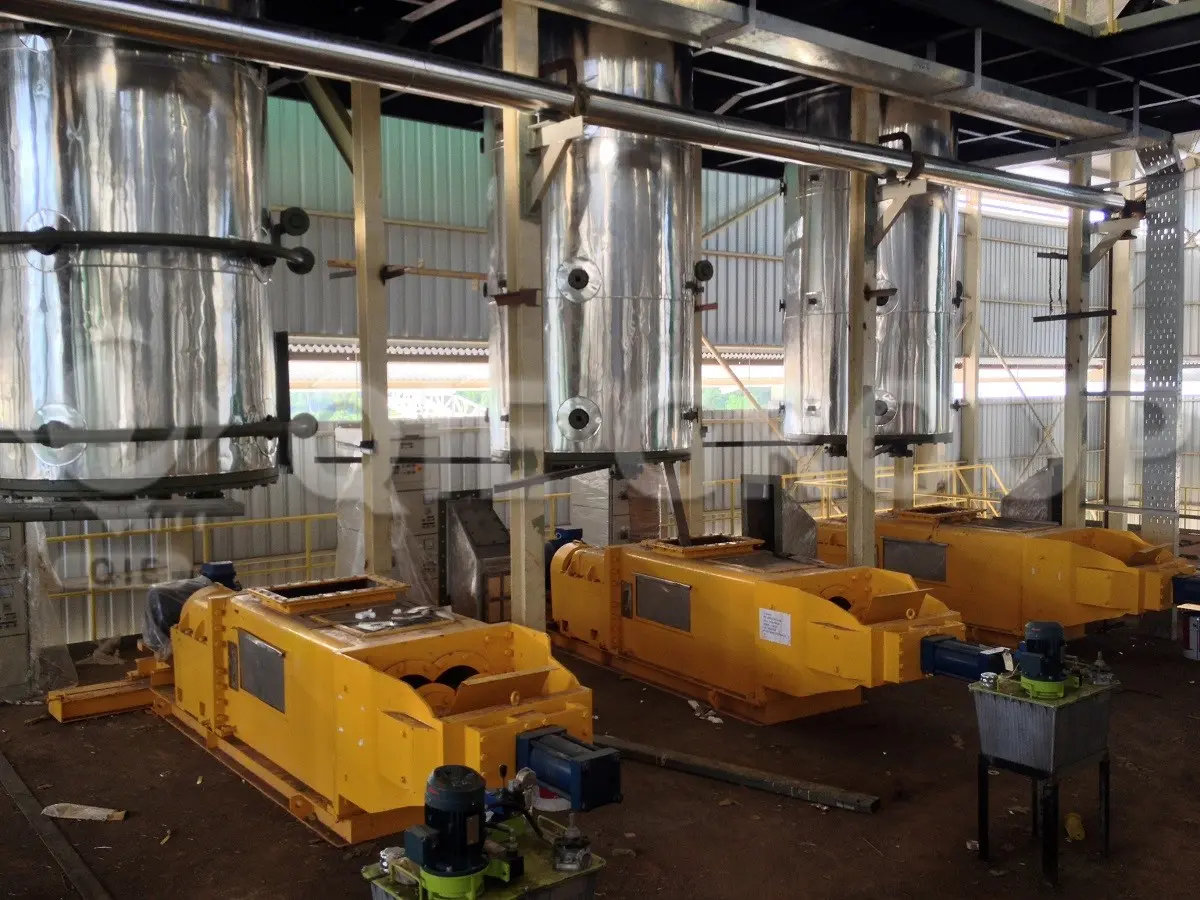
Utilizing a combination of continuous separation and vacuum drying technologies:
Rapid separation of oil, water, and impurities
Further reduce moisture content to decrease the risk of oil hydrolysis.
Improve the stability of finished crude oil and the efficiency of subsequent refining.
The more thoroughly the crude oil is clarified, the lower the refining costs will be for subsequent processes such as degumming, deacidification, and decolorization.
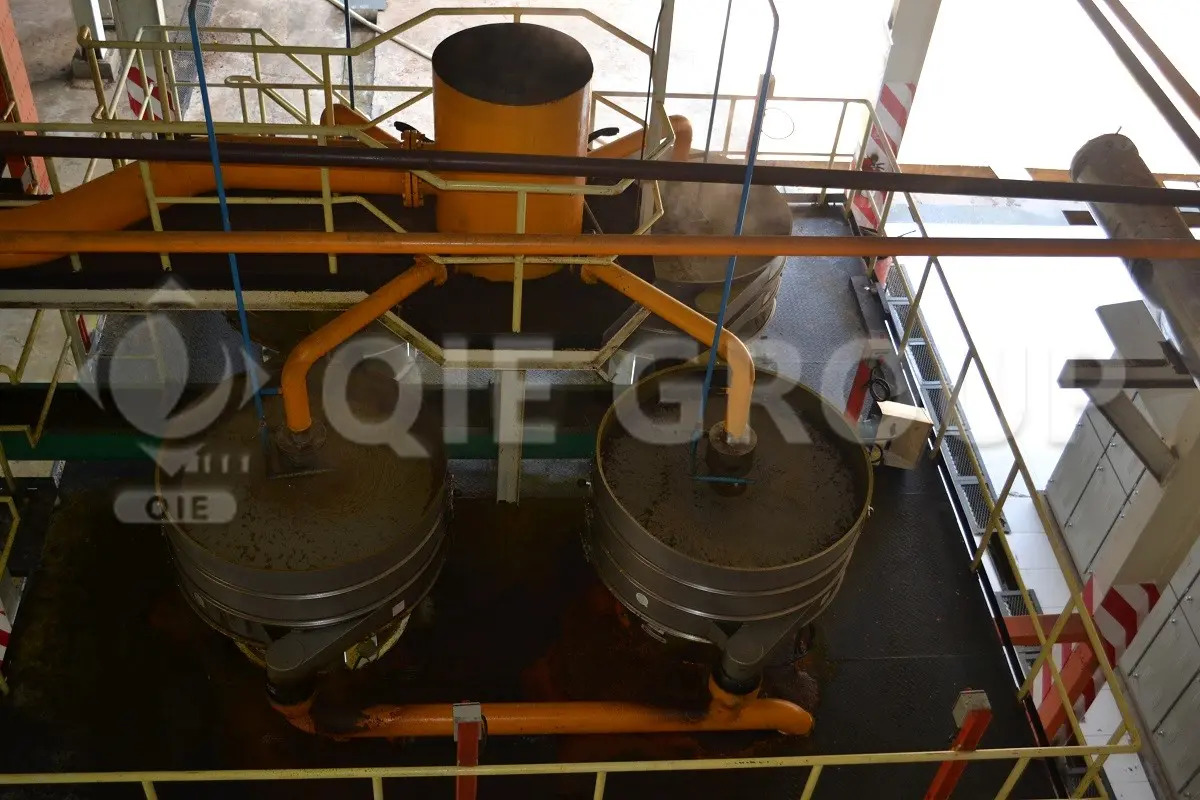
Modern palm oil mills should not only pursue pressing efficiency but also improve overall economic benefits. Our by-product utilization system can achieve this:
Wet fibers can be recycled as boiler fuel, which is energy-saving and environmentally friendly.
Palm kernel recycling : Through shelling, separation, and drying, the yield of dried kernels can reach 5%, with a shell content of <6% and a moisture content of ≤8%.
Byproduct utilization achieves energy saving, efficiency improvement, and profit sharing.
Many managers may be concerned that intelligent processes require high investment but do not necessarily yield high output. According to internal testing at QIE Group:
Vertical fermentation sterilization system saves approximately 15% of energy.
Twin-screw presses reduce power consumption by more than 10%.
Oil yield significantly improved
The increased output per ton of palm fruit directly translates into economic benefits, and the long-term return on investment is significantly higher than that of traditional processes.
The global palm oil market is highly competitive, and oil mills that are the first to implement intelligent and systematic production will gain significant advantages in profits, capacity, and brand influence. Our comprehensive solution is a pioneering work that aligns with this trend.
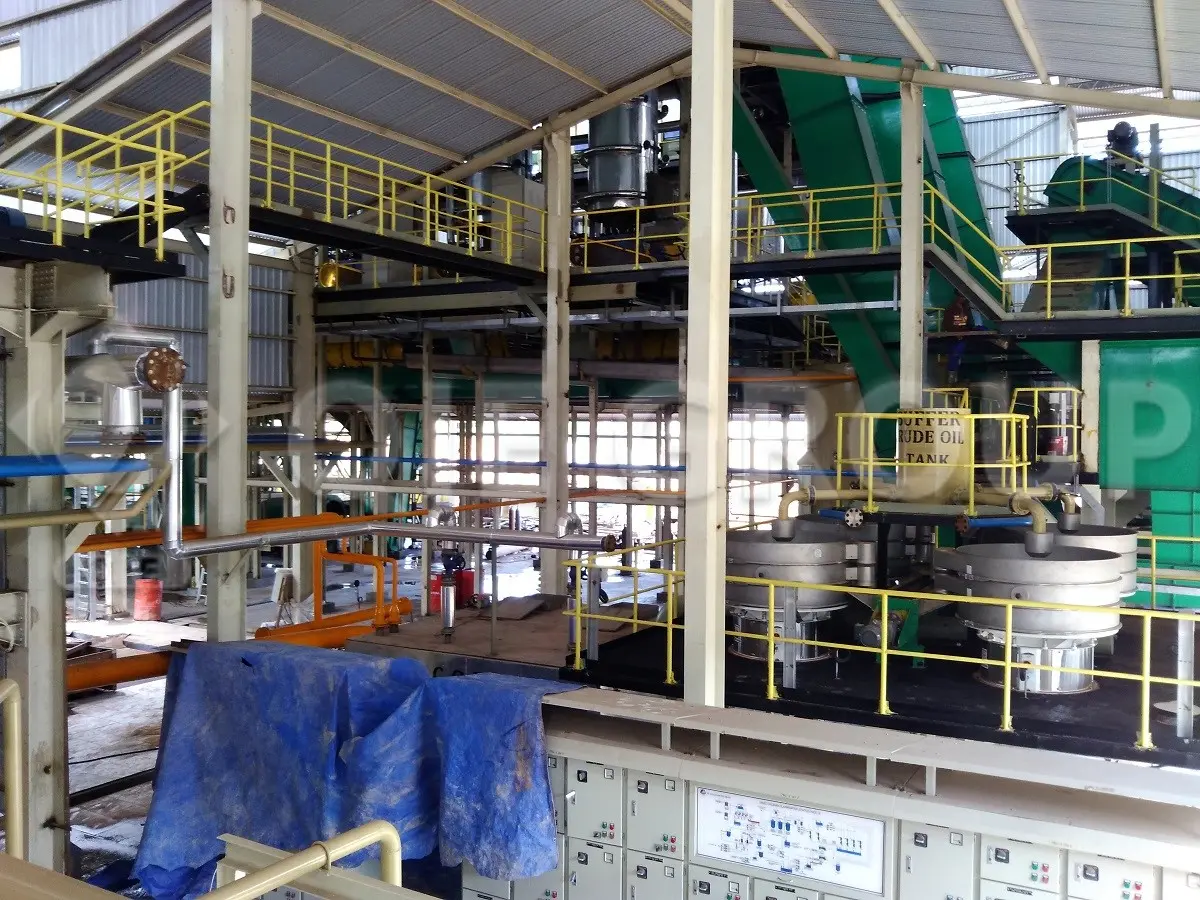
From raw material processing to pressing, clarification, and palm kernel recovery, every step is meticulously controlled, data-driven, and automated. The competition among oil mills in the future will no longer be solely about the number of machines, but rather:
How much can the oil yield per ton of fruit be increased?
Is energy consumption decreasing year by year?
Has the reliance on manual labor decreased?
Does the utilization of by-products generate secondary profits?
Is the entire process monitorable, traceable, and optimizable?
What we offer is this kind of system-level upgrade, not a single device replacement.
Low oil yield is usually related to incomplete sterilization, insufficient pulp crushing, uneven cooking, or mismatched pressing processes. We significantly improve efficiency through vertical sterilization and intelligent crushing systems.
The vertical fermentation tank allows steam to directly contact the fruit bunches, completely deactivating the enzymes, increasing the fruit removal rate, and saving steam energy, thus optimizing energy consumption.
When used in conjunction with a crushing tank, the double-screw oil press can fully crush the pulp, increase the oil release rate, reduce the residual oil rate, and thus increase the oil yield per unit of raw material.
Palm kernels can be shelled, separated, and dried to obtain high-value dried nuts, while the wet fibers can be recycled as boiler fuel, achieving energy saving and efficiency improvement.
Intelligent production lines can achieve fully automated control of the entire process, reduce labor and energy consumption, increase oil yield, ensure stable oil quality, and increase the profit per unit of raw material.
If you are planning to build a new palm fruit oil mill, or want to improve the oil yield and energy efficiency of your existing production lines, integrated, automated, and intelligent production models will become the standard for the next decade.
Usher in a new era of intelligent palm oil production, obtain customized solutions, and fully realize the value of every ton of palm fruit. → Peanut oil production line turnkey production line Upgrading of small and medium-sized oil plants High oil yield peanut oil production line Peanut oil pressing equipment
small-scale sunflower oil plant sunflower oil processing equipment sunflower oil production line sunflower oil refining equipment sunflower oil dewaxing
Soybean oil extraction production line Fully automatic oil processing equipment Solvent Extraction Process Edible oil refining equipment 30 tons of soybean oil produced per day
Intelligent oil processing Green Edible Oil Production Energy-saving solutions for oil plants Intelligent data monitoring Oil processing equipment
Edible oil production line Oil processing equipment Oil refining process Automatic oil pressing equipment Modular production line
Peanut oil production line turnkey production line Upgrading of small and medium-sized oil plants High oil yield peanut oil production line Peanut oil pressing equipment
small-scale sunflower oil plant sunflower oil processing equipment sunflower oil production line sunflower oil refining equipment sunflower oil dewaxing
Soybean oil extraction production line Fully automatic oil processing equipment Solvent Extraction Process Edible oil refining equipment 30 tons of soybean oil produced per day
Intelligent oil processing Green Edible Oil Production Energy-saving solutions for oil plants Intelligent data monitoring Oil processing equipment
Edible oil production line Oil processing equipment Oil refining process Automatic oil pressing equipment Modular production line




.png?x-oss-process=image/resize,h_100,m_lfit/format,webp)
.png?x-oss-process=image/resize,h_100,m_lfit/format,webp)
.png?x-oss-process=image/resize,h_100,m_lfit/format,webp)