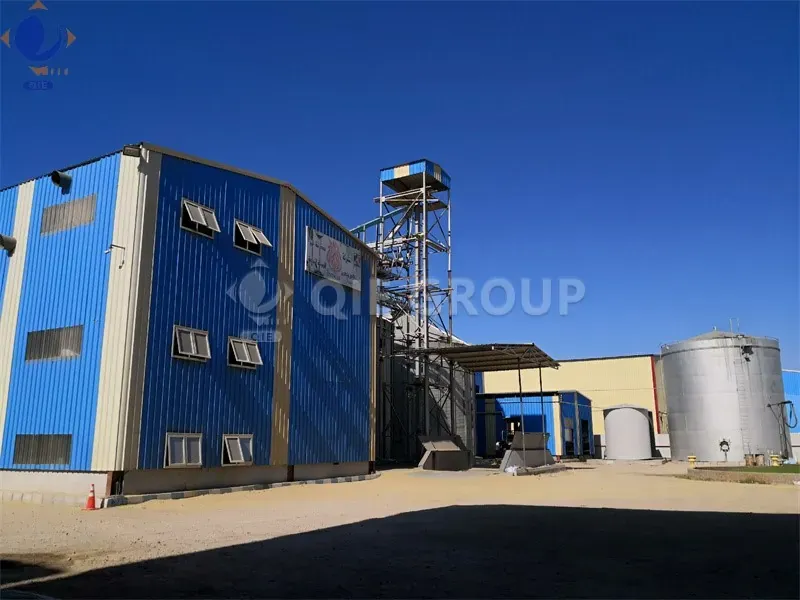
Amidst the booming food industry in Africa, Egypt is becoming a pioneer in the transformation of its edible oil industry. With population growth and rising consumption levels, local demand for high-quality vegetable oils continues to climb. To help companies achieve modern, large-scale production, the QIE Group custom-designed a 30-ton-per-day soybean oil extraction line for an Egyptian agricultural processing company. This line not only meets the requirements of high efficiency and low energy consumption but has also become a benchmark project for the upgrading of the local oilseed industry.
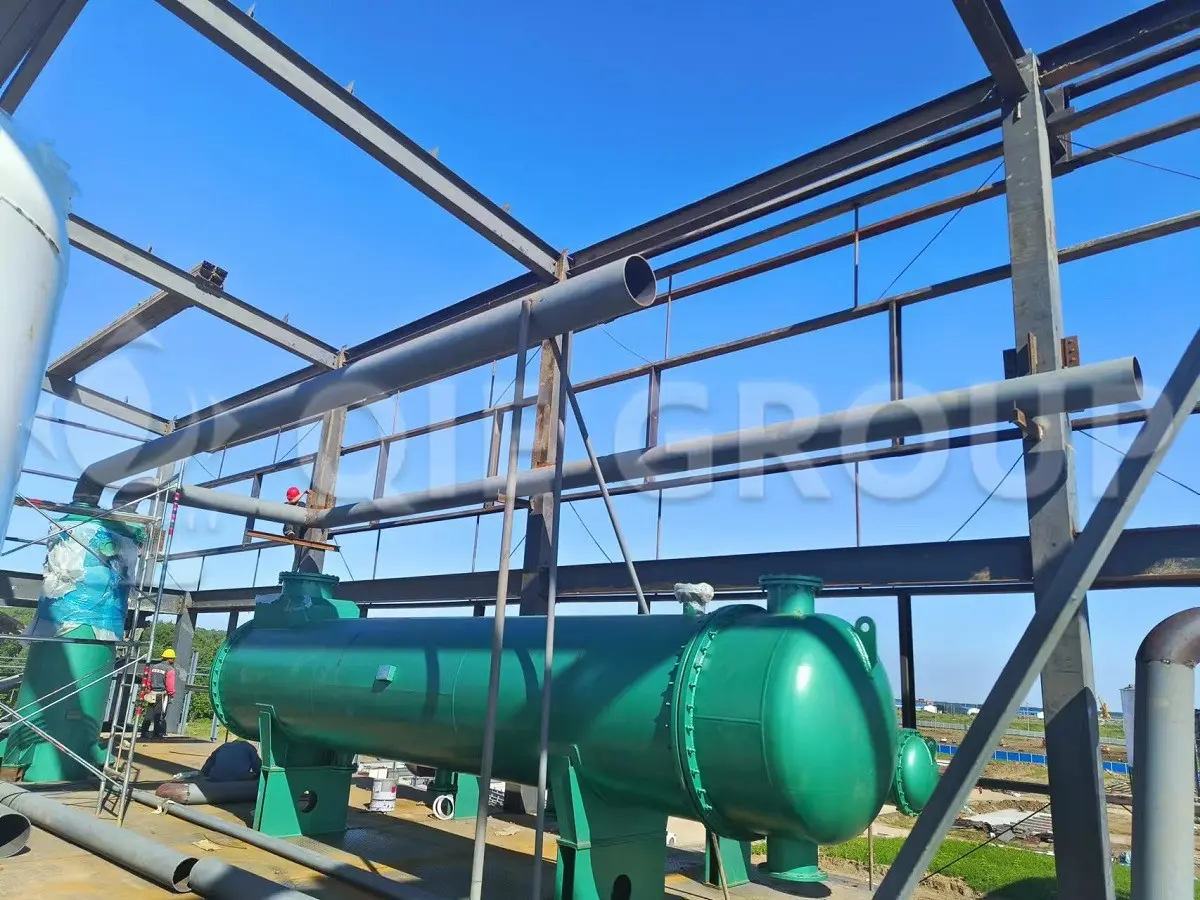
The client is an agricultural enterprise primarily engaged in soybean cultivation and primary processing. Previously, they relied on traditional intermittent pressing equipment, which resulted in low oil yield, high energy consumption, and poor utilization of by-products, making it difficult to meet the growing market orders. With the advancement of policies aimed at reducing Egypt's dependence on imported edible oils, the company decided to transform towards deep processing, building a fully automated soybean oil production line to achieve a leap from "selling raw materials" to "selling finished oil products."
The client's core needs are very clear:
🔹 Stable daily production of 30 tons of refined soybean oil – ensuring production capacity matches market demand
🔹 High-oil-yield oil press combined with solvent extraction process – maximizing raw material utilization
🔹 Low-energy design – Overall energy consumption is reduced by more than 15% compared to the old line.
🔹 Fully automated control – Reduces manual intervention and improves operational stability
QIE Group is a professional supplier specializing in this field – we not only provide equipment, but also systematic solutions based on real-world working conditions.
To meet customer needs, we designed and delivered a complete edible oil processing production line, covering three core stages: pretreatment, leaching, and refining, truly realizing one-stop production "from soybeans to bottled oil".
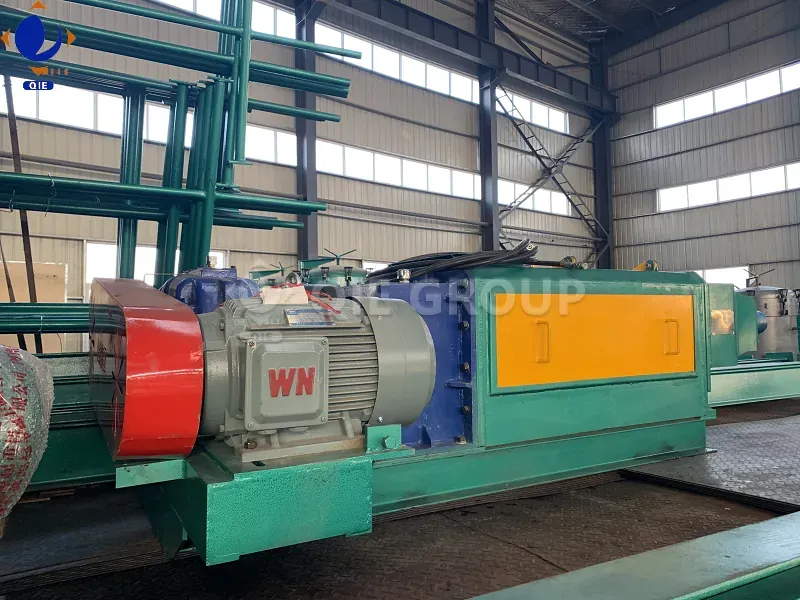
The first section of the production line uses a combination of equipment that we have independently developed:
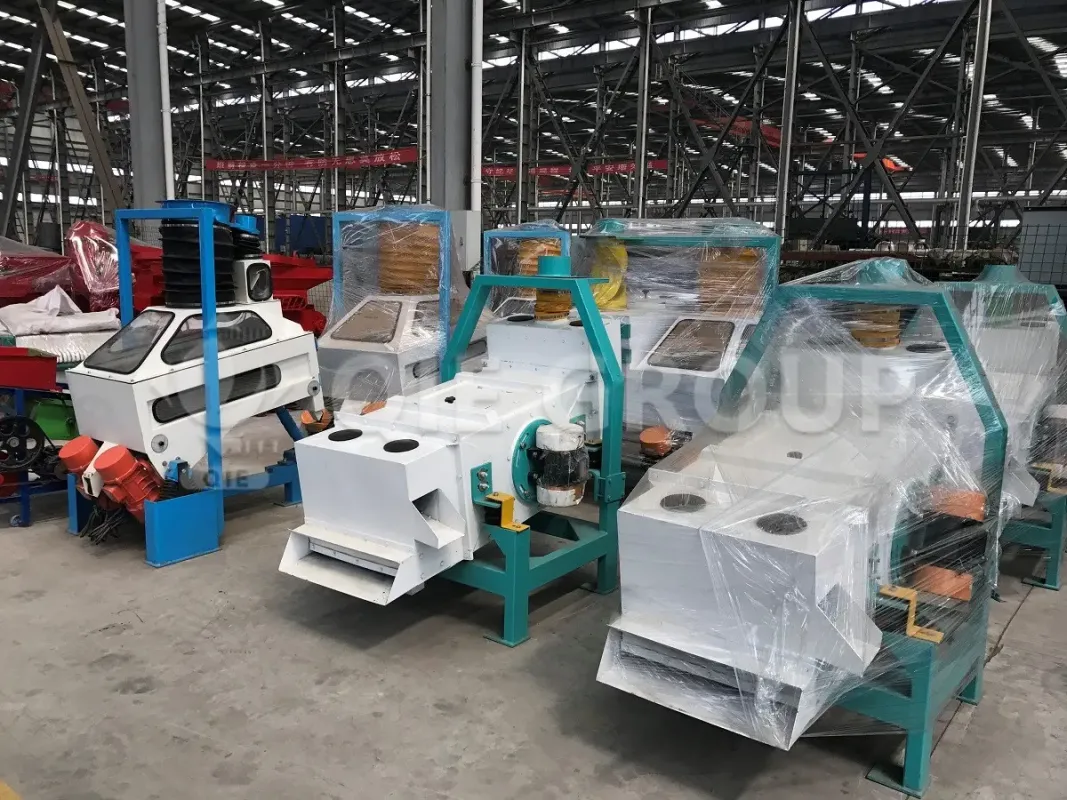
🔹 Vibrating screen + destoner : efficiently removes impurities and ensures the safety of subsequent equipment.
🔹 Crusher + Softening Pot : Crush soybeans and adjust moisture content to facilitate pressing into embryos.
🔹 Double-roller pressing machine : forms thin and uniform bean sheets, increasing the solvent contact area.
🔹 Extruder + Dryer/Cooler : High-temperature, short-time extrusion disrupts cell structure, significantly improving leaching efficiency.
This series of optimizations has kept the residual oil content of the soybean slices after leaching consistently below 0.8%, far exceeding the industry average of 1.2%.
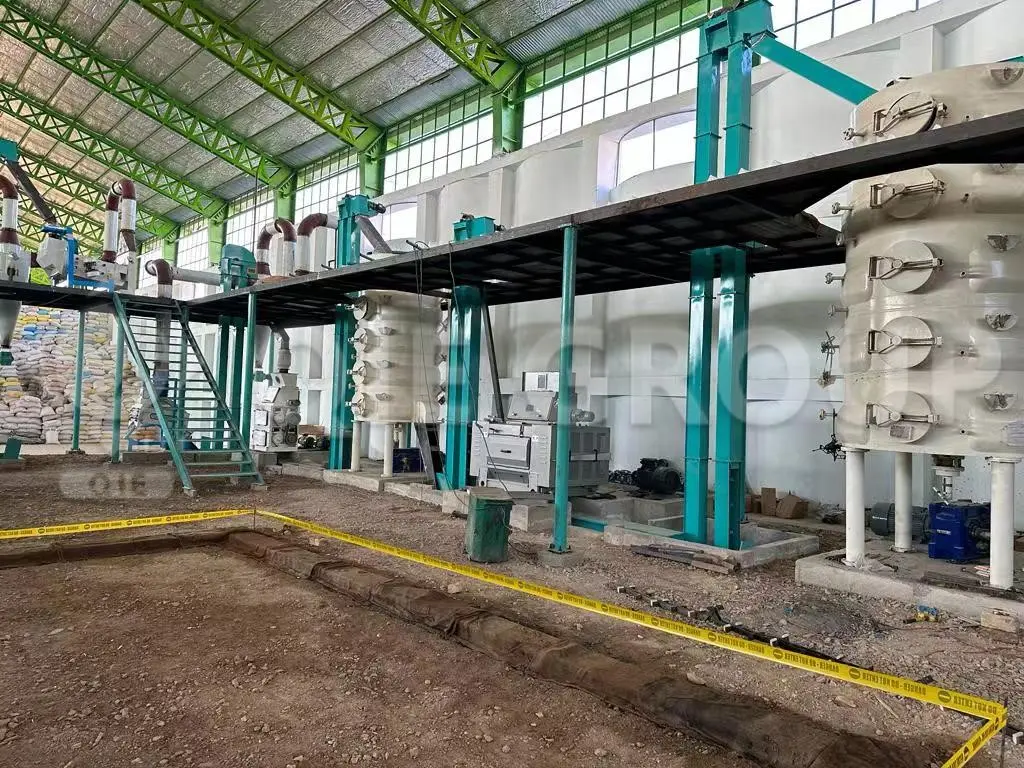
The project is equipped with a standard drag chain extractor , combined with a DTDC desalination machine, a full negative pressure evaporation system, and a paraffin recovery unit. The advantages of this complete oil extraction system include:
🔹The solvent (n-hexane) is used in a closed-loop cycle with a recovery rate of up to 99.5%.
🔹Full negative pressure evaporation technology prevents solvent leakage and enhances safety.
🔹Intelligent solvent concentration monitoring system for real-time control, avoiding waste
Customer feedback: "We used older equipment before, which resulted in significant solvent loss and a strong odor. Now the air in the workshop is much fresher." 🔗: [Learn about soybean oil solvent extraction equipment ]
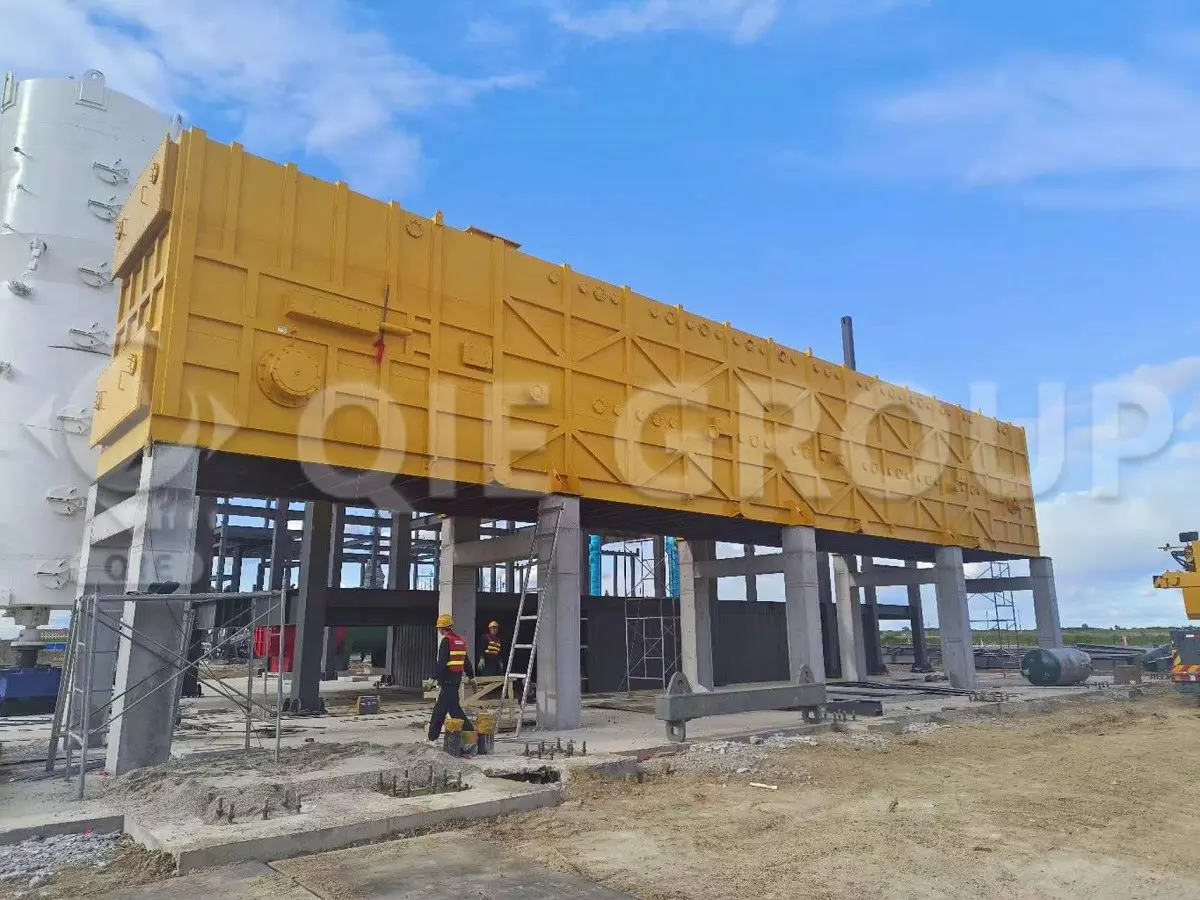
Crude soybean oil undergoes four refining steps—degumming, deacidification, decolorization, and deodorization—to reach international standard Grade 1 oil quality. The configured continuous physical refining line includes:
🔹Phosphoric acid degumming + water washing and drying system
🔹Baked soil decolorization tower + leaf filter
🔹Packed deodorization tower + heat recovery device
🔹Automatic Filtering and Buffering System
The entire refining production line is highly automated, centrally controlled by PLC, requiring only 3 people to monitor it around the clock. 🔗: [Learn about soybean oil refinery plant ]
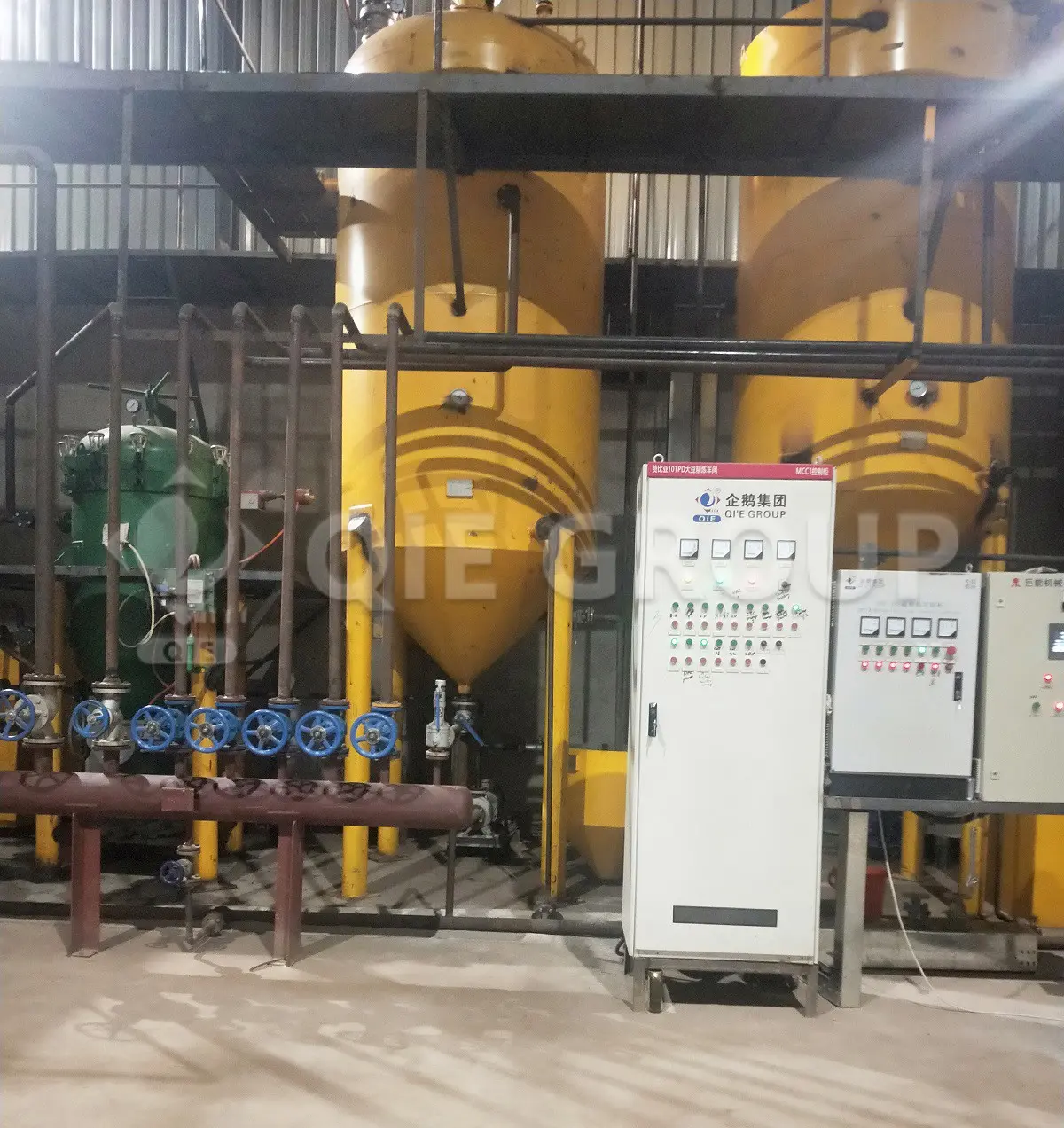
Our team spent 45 days on-site to complete the installation and commissioning, and enhanced cooling and electrical protection for Egypt's high-temperature and high-humidity environment. During the customer's acceptance test, they wrote: "Smooth operation, clear oil output, high degree of automation, completely exceeding expectations." Now, this production line has been running stably for over 9 months, and the customer is planning a second phase expansion to add a rice bran oil production line.
We understand that true success lies not in a single delivery, but in ongoing support. Therefore, we offer:
✅ English version of the user manual + video tutorials
✅ On-site operation training, lasting two weeks
✅ One year of free remote technical support
✅ Recommendation for local stockpiling of critical spare parts
Q1: What size oil mills are your soybean oil extraction production lines suitable for?
A: Our soybean oil extraction production lines cover the needs of small, medium and large oil mills, and we can provide customized solutions ranging from 5 tons to 3,000 tons or even higher capacity per day to meet the production scale of different customers.
Q2: What is the oil yield of the entire production line?
A: In actual operation, the oil yield of a 30-ton-per-day soybean oil extraction production line can reach 18.7% (approximately 187 kg of oil per ton of soybeans, based on a soybean oil content of 19%), and the residual oil rate is less than 0.8%, which is significantly higher than the industry average.
Q3: Does the device support remote monitoring and automated management?
A: Yes, the entire production line adopts a PLC+HMI centralized control system, which supports remote monitoring, fault early warning and data export. It is simple to operate and highly automated.
Q4: How does the production line perform in terms of energy consumption and environmental protection?
A: Our soybean oil extraction production line adopts an energy-saving heat exchange design and a closed solvent circulation system. The overall energy consumption is reduced by about 15% compared with traditional production lines, and the solvent recovery rate is as high as 99.5%, which is safe and environmentally friendly.
Q5: What installation and training services are provided?
A: We provide a full range of installation guidance, commissioning services, and on-site training. The training content includes equipment operation, daily maintenance, and process management to ensure that customers can quickly master the production process.
Q6: Is equipment maintenance and spare parts supply convenient?
A: We provide customers with advice on localizing the stock of critical spare parts and offer one year of free remote technical support to ensure the long-term stable operation of the production line.
Don't hesitate any longer! We have helped clients in dozens of countries around the world modernize their oil processing operations. Whether you are a startup or an established manufacturer, our engineers will provide you with a one-stop, customized solution from design to installation, helping your oil processing plant achieve efficient operations.
Inquire now about solutions for a 30ton per day soybean oil extraction production line. edible oil plant edible oil processing plant edible oil refinery equipment oil mill EPC project complete oil processing plant oil extraction machine manufacturer
Rice bran oil extraction process Rice bran oil extraction technology Efficient rice bran oil production Rice bran oil processing solutions Rice bran oil processing equipment
sesame oil production line sesame oil refining plant small scale sesame oil expeller sesame oil processing plant sesame oil press machine sesame oil mill plant
Palm fruit pressing process Palm Oil Press Palm oil production line Palm oil processing equipment Palm oil production process
Sunflower oil production line Sunflower seed pretreatment equipment Sunflower oil processing technology Sunflower oil processing plant
edible oil plant edible oil processing plant edible oil refinery equipment oil mill EPC project complete oil processing plant oil extraction machine manufacturer
Rice bran oil extraction process Rice bran oil extraction technology Efficient rice bran oil production Rice bran oil processing solutions Rice bran oil processing equipment
sesame oil production line sesame oil refining plant small scale sesame oil expeller sesame oil processing plant sesame oil press machine sesame oil mill plant
Palm fruit pressing process Palm Oil Press Palm oil production line Palm oil processing equipment Palm oil production process
Sunflower oil production line Sunflower seed pretreatment equipment Sunflower oil processing technology Sunflower oil processing plant



.png?x-oss-process=image/resize,h_100,m_lfit/format,webp)
.png?x-oss-process=image/resize,h_100,m_lfit/format,webp)
.png?x-oss-process=image/resize,h_100,m_lfit/format,webp)