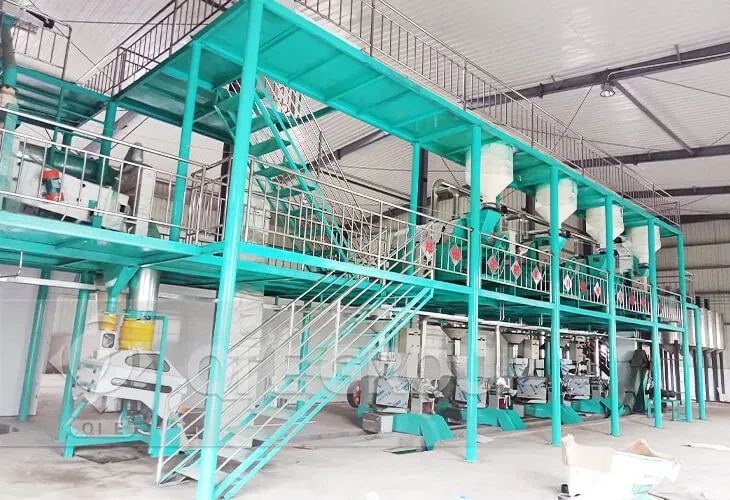
Cottonseed oil processing projects usually need to choose between mechanical pressing, pre-pressing followed by solvent extraction, and, under specific conditions, direct solvent extraction.
So, which is more economical: cottonseed oil pressing or solvent extraction?
The answer is not simply “pressing is cheaper” or “solvent extraction is more economical.”
Full pressing generally requires lower initial investment and has a simpler process system, while pre-pressing followed by solvent extraction generally offers higher overall oil recovery potential. Therefore, the final economics depend on cottonseed oil content, processing capacity, oil recovery, equipment investment, energy prices, solvent costs, annual operating days, cottonseed meal value, and safety and environmental requirements.
For projects with limited investment budgets and a preference for simpler processing, full pressing can be evaluated first. For projects that prioritize oil recovery and long-term operating economics, pre-pressing plus solvent extraction deserves closer evaluation.
First, it is important to distinguish between mechanical pressing, pre-pressing, and solvent extraction. They are not the same process route.
There are three main process routes that can be considered for cottonseed oil production.
Full pressing uses mechanical pressure to extract oil from properly cooked cottonseed material.
Its main advantages include:
However, mechanical pressing cannot recover all the oil contained in cottonseed, so the press cake still contains a certain amount of residual oil.
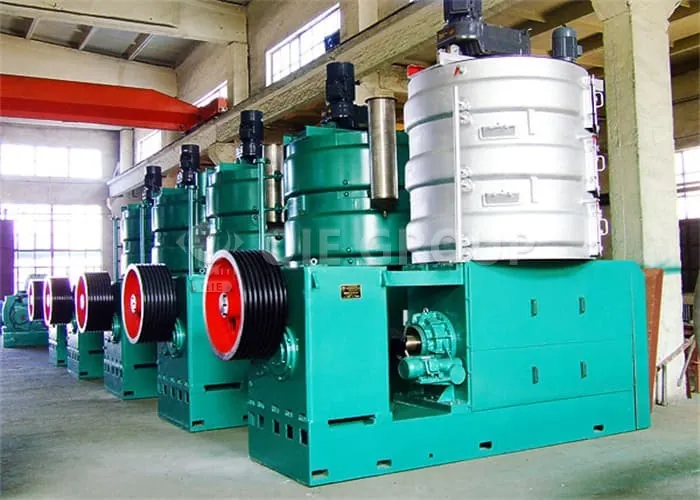
Pre-pressing first recovers most of the oil mechanically. The resulting press cake is then sent to the solvent extraction system to recover additional residual oil.
The key advantage of this route is:
It combines the advantages of mechanical pressing and solvent extraction to balance equipment investment and overall oil recovery.
Under specific raw material, capacity, and engineering conditions, direct solvent extraction can also be evaluated.
Unlike pre-pressing followed by solvent extraction, direct extraction does not use mechanical pre-pressing. Instead, properly prepared material is sent directly to the extraction system.
Therefore, when comparing project economics, it is important to distinguish:
These three routes should not simply be grouped into two identical categories of “pressing” and “extraction.”
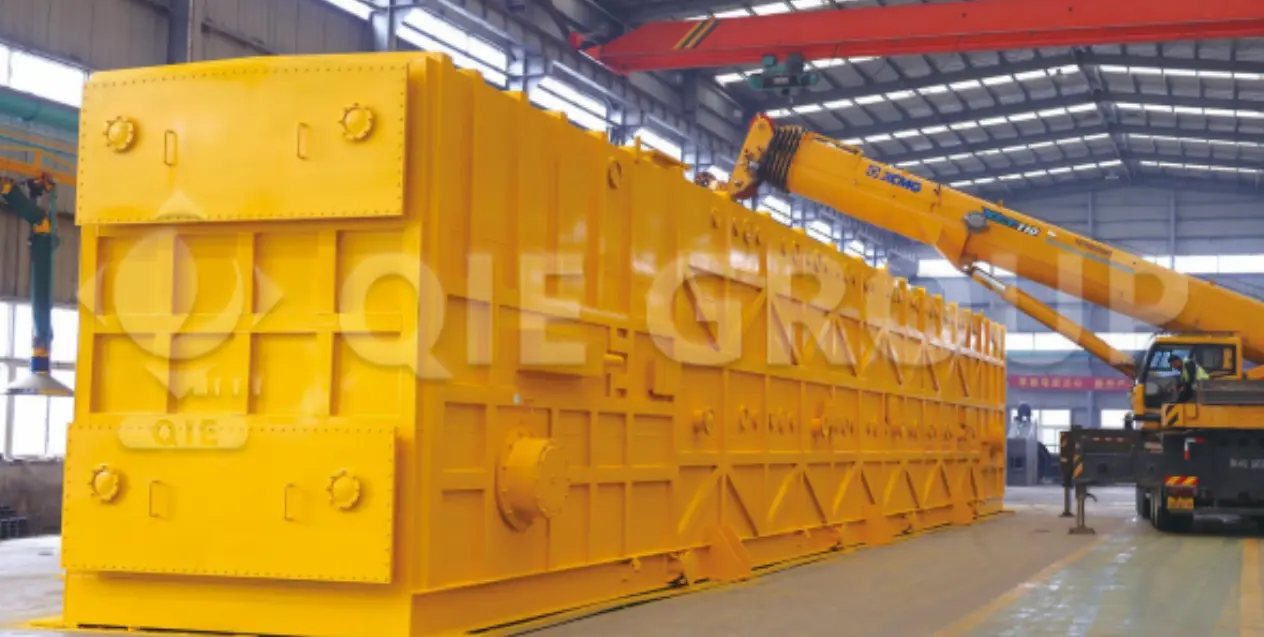
Cottonseed has relatively hard hulls and surface lint. Therefore, pretreatment quality can directly affect subsequent pressing, extraction, and by-product utilization.
A typical pretreatment process is:
Delinting → Cleaning → Dehulling → Hull-Kernel Separation → Flaking → Cooking
A cottonseed delinting system is used to remove lint from the surface of cottonseed.
According to QIE project design, a delinting rate of: ≥95% can be achieved.
The main functions of delinting include:
It is important to note that: Delinting is part of raw material pretreatment and should not simply be considered a cottonseed gossypol detoxification step.
Cottonseed hulls generally have relatively low oil content and contain a significant amount of fiber. Proper dehulling can reduce the amount of hull material entering subsequent oil extraction processes and improve cottonseed kernel processing conditions.
In QIE project design, the dehulling rate can reach: ≥90%
However, engineering design should not focus only on dehulling rate. It should also consider:
Therefore, a higher dehulling rate does not automatically mean that the entire project will be more economical.
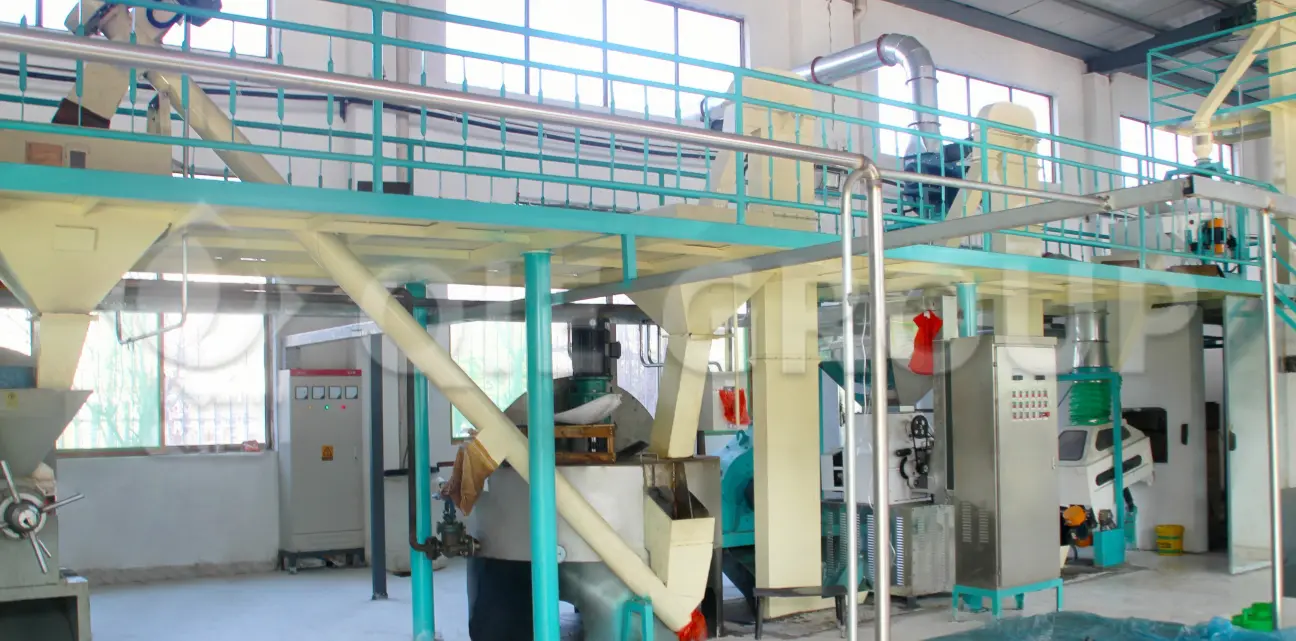
For a full pressing process, cottonseed is flaked, cooked, and then fed into a cottonseed oil screw press.
A typical process is:
Cottonseed → Pretreatment → Flaking → Cooking → Screw Pressing → Crude Cottonseed Oil
For a pre-pressing plus extraction process, the route becomes:
Cottonseed → Pretreatment → Flaking → Cooking → Pre-pressing → Press Cake → Solvent Extraction
There is an important difference here: The purpose of pre-pressing is not to remove all the oil mechanically. Instead, it first recovers most of the oil mechanically while producing a press cake suitable for subsequent solvent extraction.
According to QIE project design:
Actual values can be affected by cottonseed oil content, kernel-to-hull ratio, cooking conditions, flake quality, and operating parameters of the pressing equipment. Therefore, these figures should be understood as project design references or target ranges, rather than universal standards for all cottonseed and all screw presses.
The press cake still contains a certain amount of residual oil after pre-pressing.
The press cake is then sent to the solvent extraction system to recover additional residual oil.
A typical process is:
Press Cake → Extractor → Miscella
And:
Extractor → Wet Meal → DTDC Desolventizing → Cottonseed Meal
The miscella is then processed through:
Evaporation → Stripping → Extracted Crude Oil
The solvent is condensed and recovered for reuse.
In the QIE project design, the residual oil content of the final meal after extraction can reach: ≤0.8%
This means that the pre-pressing plus solvent extraction route has the potential to further reduce final meal residual oil and improve overall oil recovery.
However: A lower residual oil content does not automatically mean higher project profitability.
The additional: CAPEX, steam consumption, electricity consumption, solvent losses, maintenance costs, safety requirements, and environmental requirements must also be considered.
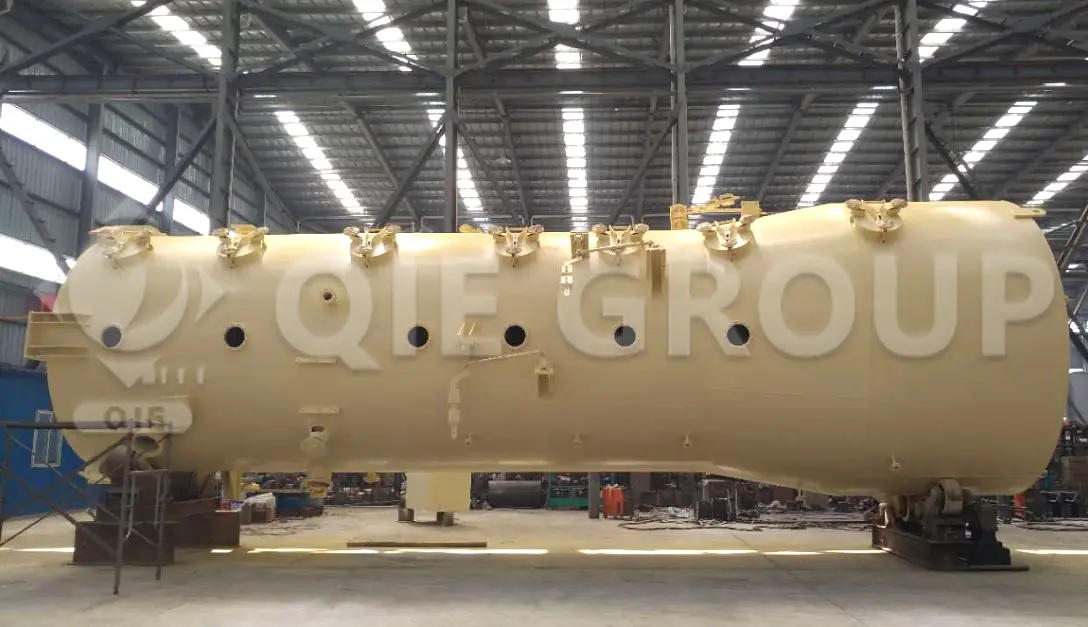
From a process perspective, properly designed solvent extraction can further recover residual oil remaining in the press cake after mechanical pressing.
Therefore, pre-pressing + solvent extraction generally yields higher overall oil recovery.
However, the economic comparison should focus on:
How much additional oil can actually be sold from each ton of cottonseed, and how much additional investment and operating cost is required to recover that oil?
Instead of only comparing: Pressing residual oil vs. extraction residual oil
It is more useful to calculate: Additional Oil Recovered per Ton of Cottonseed
In other words: How much additional oil can the extraction system recover from each ton of cottonseed? This is one of the key factors in evaluating project economics.
Compared with full pressing, pre-pressing plus solvent extraction requires an additional solvent extraction and recovery system.
Major equipment can include:
Therefore, it is not appropriate to compare only: Screw Press Price vs. Extractor Price
The actual comparison should be: Full Pressing CAPEX VS. Pre-pressing + Solvent Extraction CAPEX
The latter also includes a complete: Extraction + Desolventizing + Solvent Recovery + Safety & Environmental System. Therefore, the total investment for pre-pressing plus solvent extraction is generally higher.
However, the additional investment cannot be represented by one fixed percentage because actual CAPEX depends on processing capacity, automation level, civil construction, utilities, equipment configuration, and local construction and environmental requirements.
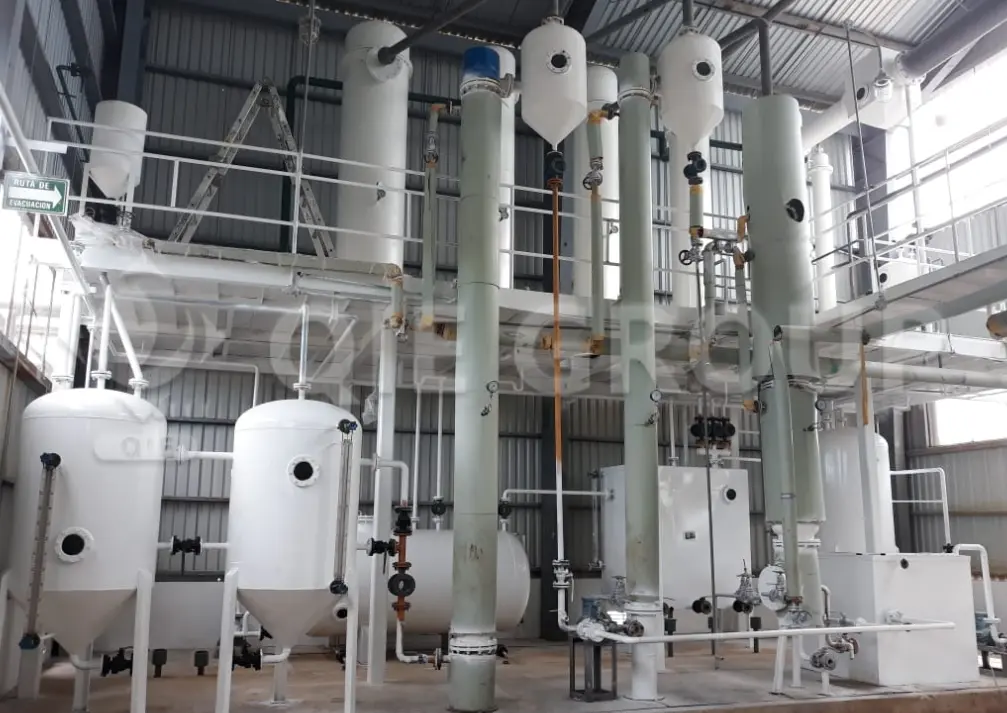
Project economics should not be evaluated based only on electricity consumption or equipment price. At minimum, the following factors should be compared:
| Economic Factor | Full Pressing | Pre-pressing + Solvent Extraction |
|---|---|---|
| Initial investment | Relatively lower | Relatively higher |
| Process complexity | Lower | Higher |
| Electricity demand | Required | Required |
| Steam demand | Required | Usually higher |
| Solvent consumption | None | Required |
| Oil recovery potential | Lower | Higher |
| Equipment maintenance | Relatively simpler | More systems to maintain |
| Safety & environmental requirements | Relatively simpler | Higher |
| Cottonseed meal residual oil | Relatively higher | Can be reduced further |
| Long-term economics | Project-dependent | Project-dependent |
Therefore, the option with the lowest initial investment is not necessarily the most economical solution over the entire project lifecycle.
A cottonseed oil plant does not generate revenue only from oil. It also produces cottonseed meal and other by-products such as cotton linters.
Therefore, the economic analysis should not consider only: Oil Revenue. It should also consider: Meal Revenue + By-product Revenue
Cottonseed meal value can be affected by:
Therefore, it is not appropriate to simply conclude: “Extracted meal is always more valuable than pressed meal.” A better approach is to include actual product quality and local market prices in the economic model.
Compared with many other oilseeds, cottonseed requires particular attention to gossypol and related naturally occurring compounds.
Gossypol control is not completed by a single piece of equipment. It is the result of the overall processing and refining system.
A typical route is: Pretreatment → Pressing/Extraction → Degumming → Deacidification → Bleaching → Deodorization
Alkali refining can remove part of the gossypol and other related components through soapstock separation. However, alkali refining should not simply be described as the “only detoxification step.”
The final gossypol level in the finished oil should be confirmed through actual testing and according to the food safety regulations and product standards of the target market.
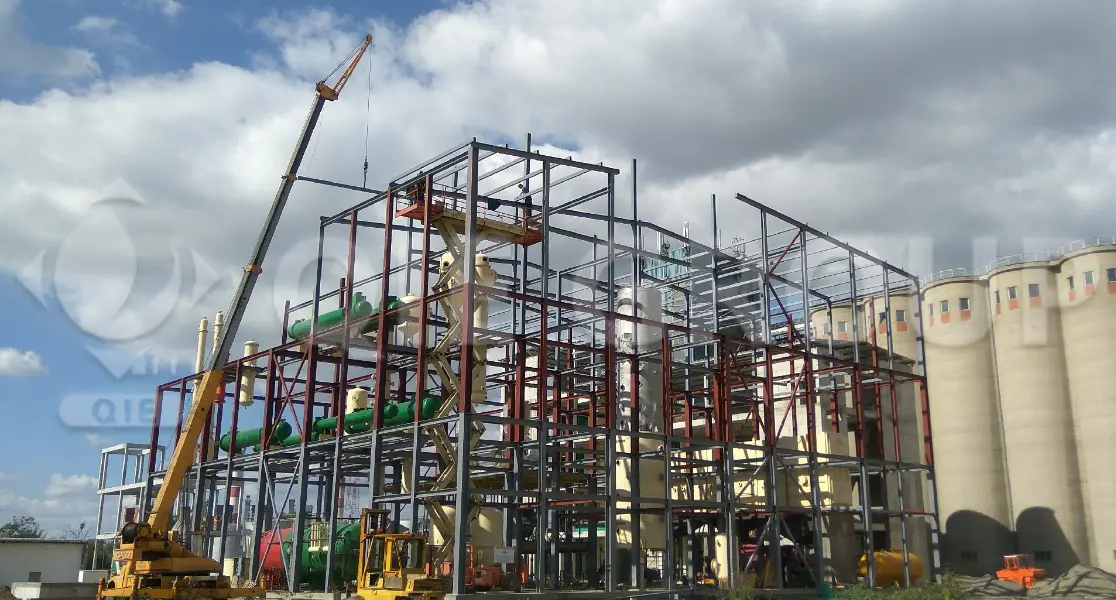
A typical cottonseed oil refining process is:
Degumming → Deacidification → Bleaching → Deodorization → Winterization/Dewaxing, if required
Removes phospholipids and other gum-related impurities.
A common method is: Water Degumming + Centrifugal Separation
Removes free fatty acids through methods such as alkali refining.
Uses adsorbents such as activated bleaching earth to reduce pigments, residual soap, and certain adsorbable impurities.
Uses high temperature, high vacuum, and steam stripping to remove volatile odor compounds and part of the free fatty acids.
If the final product has specific requirements for low-temperature clarity, the process can include: Crystallization → Maturation → Filtration
Approximately 8–12°C can be used as a reference range for process design in some projects, but the actual temperature and holding time should be determined according to the wax composition of the oil and the required final product quality.
Therefore: Winterization/dewaxing is not an absolute requirement for every cottonseed oil project.
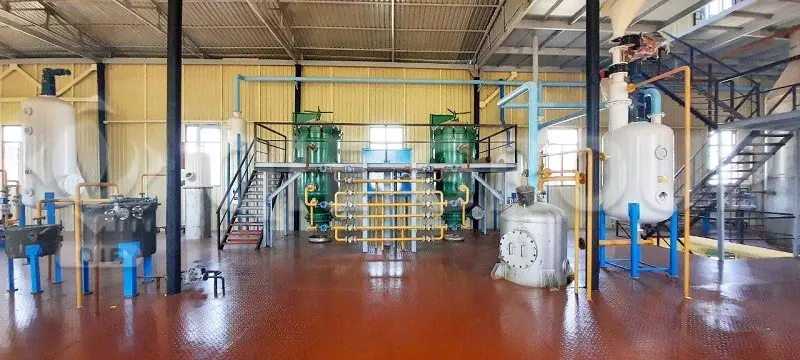
This is one of the most important steps when determining whether cottonseed oil pressing or solvent extraction is more economical. Instead of comparing equipment purchase prices alone, the annual economic performance of the two process routes should be calculated.
A useful calculation is:
Then:
This gives the additional revenue generated from increased oil recovery.
The pre-pressing plus solvent extraction route needs to account for additional: Steam; Electricity; Solvent makeup; Equipment maintenance; Labor; Safety and environmental operating costs.
Therefore:
The annual benefit can then be calculated as:
Finally, compare Additional CAPEX with Additional Annual Benefit. This helps determine whether adding the solvent extraction system provides a reasonable return on investment.
The following example is only intended to demonstrate the calculation method and does not represent universal industry data.
Assume a project has the following data after raw material testing and process evaluation:
Then: Additional Annual Benefit = X − Y
If changes in by-product value are also considered: Net Additional Benefit = Additional Oil Revenue + Additional By-product Revenue − Additional Operating Cost
Finally: Simple Payback Period = Additional CAPEX ÷ Net Additional Annual Benefit
This calculation method is more reliable than simply saying: “Large-scale plants are more economical with solvent extraction.” Because it uses the actual project data.
Under the following conditions, full pressing can be evaluated first.
If the project prioritizes CAPEX reduction, a simpler mechanical pressing system may be easier to implement.
If the local market has limited experience with solvent systems, safety management, or maintenance, a simpler pressing route may be more suitable.
If the plant operates for a limited number of days per year, the fixed costs of a higher-CAPEX extraction system may be more difficult to amortize.
If the additional oil revenue generated by extraction cannot cover the additional CAPEX and OPEX, the economics of adding a solvent extraction system should be reconsidered.
The following conditions may justify a closer evaluation of pre-pressing plus solvent extraction.
If the residual oil in cottonseed has significant economic value, improving overall oil recovery may generate better long-term returns.
A higher-CAPEX system needs stable operation and sufficient capacity utilization to spread fixed costs.
Solvent extraction requires reliable steam, electricity, cooling, and other utilities.
The product quality and local market demand for lower-residual-oil cottonseed meal should also be included in the overall economic model.
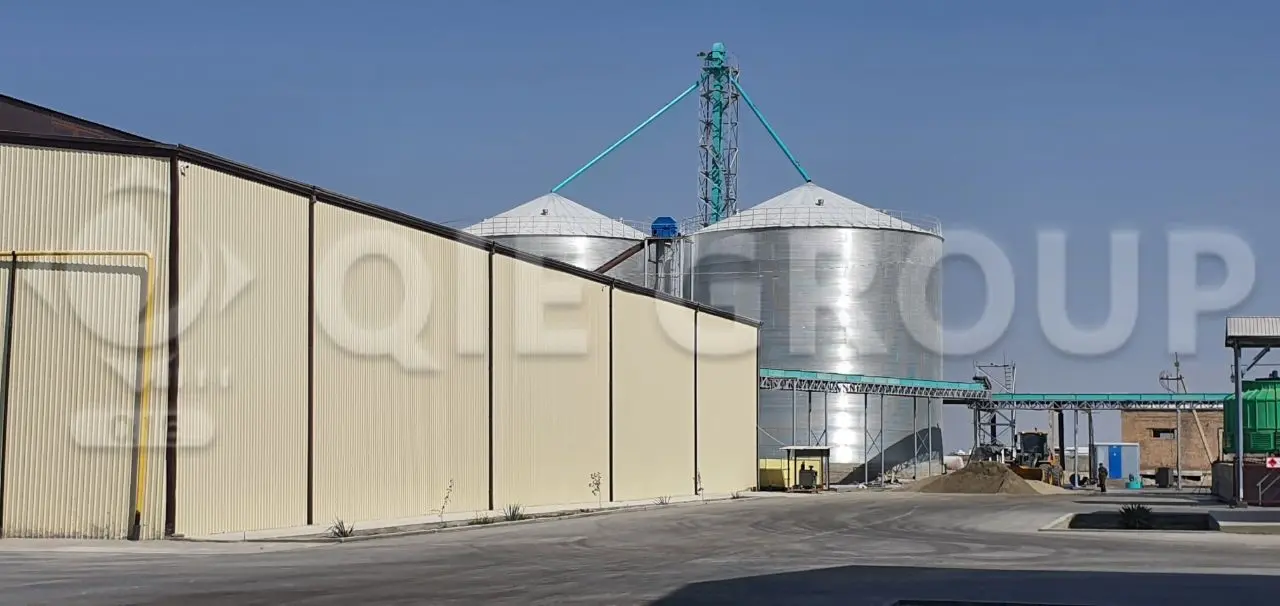
In actual engineering projects, it is not recommended to simply use a rule such as: “Below a certain TPD, use pressing; above a certain TPD, use solvent extraction.”
Different projects can have completely different economic conditions. For example, two plants with the same processing capacity may have different optimal process routes if they have different:
Therefore, a more reliable approach is to evaluate: Capacity + Raw Material + Oil Recovery + CAPEX + OPEX + Product Value as a whole.
| If the project prioritizes... | Process to Evaluate First |
|---|---|
| Lower initial investment | Full pressing |
| Simpler process | Full pressing |
| Lower system complexity | Full pressing |
| Higher overall oil recovery | Pre-pressing + extraction |
| Stable long-term operation | Compare both routes |
| Higher raw material oil content | Calculate additional extraction revenue carefully |
| High-value cottonseed meal | Compare overall economics |
| Stable utility supply | Evaluate extraction more closely |
| Mature solvent safety and environmental conditions | Evaluate extraction more closely |
| Uncertain budget, raw material, or energy conditions | Conduct project-specific economic analysis |
Therefore, the real question is: Which process provides the better lifecycle economics?
The economics of a cottonseed oil processing project are not determined by one piece of equipment. The entire system should be evaluated from:
Raw Material → Pretreatment → Pressing/Extraction → Oil Recovery → Refining → Meal & By-products → Utilities → Safety → Automation
QIE can evaluate different process routes based on:
For a pre-pressing plus solvent extraction project, the system can include:
Delinting System + Dehulling System + Flaking System + Cooking System + Screw Pre-press + Extractor + DTDC + Solvent Recovery System + Refining System
The following parameters can be included as project design targets:
Actual performance should be confirmed according to raw material characteristics, processing capacity, equipment configuration, and operating conditions.
There is no universal answer. Full pressing generally requires lower initial investment, while pre-pressing plus solvent extraction offers higher overall oil recovery potential. The final economics should be evaluated based on CAPEX, OPEX, oil recovery, cottonseed meal value, energy prices, and annual operating days.
Not necessarily. Large-scale projects are often worth evaluating for pre-pressing plus solvent extraction, but the final decision should be based on raw material characteristics, processing capacity, oil prices, energy costs, and investment returns.
Full pressing aims to extract oil mechanically, while pre-pressing first recovers most of the oil mechanically and produces a press cake suitable for subsequent solvent extraction.
Because the solvent can further extract residual oil that remains in the press cake after mechanical pressing.
Not necessarily. Lower residual oil can increase oil recovery, but energy, solvent, equipment maintenance, and overall operating costs must also be considered.
Not necessarily. Whether winterization/dewaxing is required depends on the wax characteristics of the crude oil and the low-temperature clarity requirements of the final product.
No fixed answer applies to every cottonseed oil project.
The main advantages of full pressing are:
Lower initial investment + simpler process system + lower system complexity.
The main advantages of pre-pressing plus solvent extraction are:
Higher overall oil recovery potential + lower final meal residual oil + more complete raw material utilization.
If the primary objective is to reduce initial investment and maintain a simple process, full pressing can be evaluated first.
If the project places greater importance on oil recovery and long-term operating returns, pre-pressing plus solvent extraction should be evaluated carefully.
The final decision should not be based on a fixed TPD threshold or equipment purchase price alone.
A more reliable approach is to compare:
And further evaluate:
This is a more reliable way to determine whether cottonseed oil pressing or solvent extraction is more economical for a specific project.
If you are planning a cottonseed oil processing plant, provide your planned processing capacity (TPD), cottonseed oil content, target product, and local energy conditions. QIE will evaluate full pressing, pre-pressing + solvent extraction, and refining options to build your tailored equipment solution.
Get Custom Project Evaluation Rice bran oil pretreatment equipment Rice bran expansion and extraction production line Rice bran oil refining equipment Rice bran oil production line turnkey project Small rice bran oil production line configuration plan Price of 50 tons per day rice bran oil equipment
Peanut oil processing plant Peanut oil production line Peanut oil production process Peanut Oil Press Peanut oil processing plant equipment price Small peanut oil processing plant investment Edible oil processing equipment
Mustard Seed Screw Oil Press Mustard seed pretreatment equipment Equipment configuration plan for mustard oil plant What to do if mustard seeds have low oil yield? Indian mustard oil factory equipment mustard oil refinery
Corn germ oil press Corn oil production line Corn oil processing equipment Corn oil refining equipment Corn oil processing plant Corn germ oil factory
Rapeseed oil press machine rapeseed oil refining machine Rapeseed oil processing plant Rapeseed oil pretreatment equipment Small rapeseed oil mill plant Rapeseed oil filter
Rice bran oil pretreatment equipment Rice bran expansion and extraction production line Rice bran oil refining equipment Rice bran oil production line turnkey project Small rice bran oil production line configuration plan Price of 50 tons per day rice bran oil equipment
Peanut oil processing plant Peanut oil production line Peanut oil production process Peanut Oil Press Peanut oil processing plant equipment price Small peanut oil processing plant investment Edible oil processing equipment
Mustard Seed Screw Oil Press Mustard seed pretreatment equipment Equipment configuration plan for mustard oil plant What to do if mustard seeds have low oil yield? Indian mustard oil factory equipment mustard oil refinery
Corn germ oil press Corn oil production line Corn oil processing equipment Corn oil refining equipment Corn oil processing plant Corn germ oil factory
Rapeseed oil press machine rapeseed oil refining machine Rapeseed oil processing plant Rapeseed oil pretreatment equipment Small rapeseed oil mill plant Rapeseed oil filter




.png?x-oss-process=image/resize,h_100,m_lfit/format,webp)
.png?x-oss-process=image/resize,h_100,m_lfit/format,webp)
.png?x-oss-process=image/resize,h_100,m_lfit/format,webp)