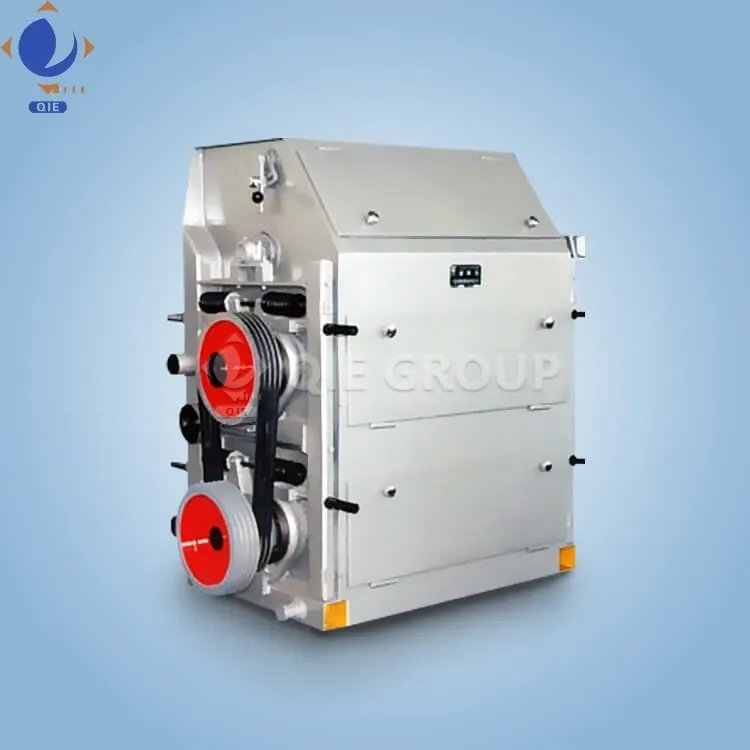
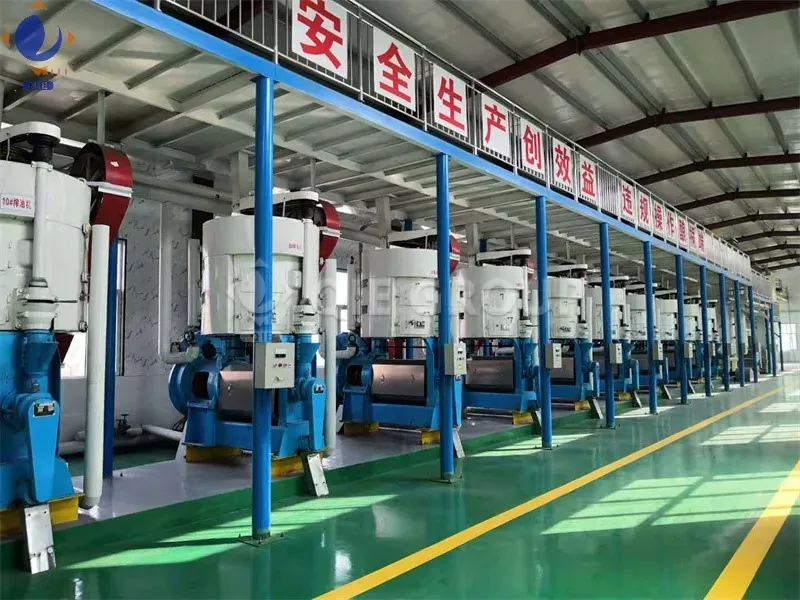
In the context of growing global demand for edible oils and reshaping supply chains, adopting a turnkey model for vegetable oil production lines has become a key strategy for investors and plant decision-makers to achieve rapid commissioning, optimize ROI, and mitigate engineering risks. QIE GROUP, based on its extensive global engineering experience, provides an in-depth analysis of the core logic of whole-plant system design and demonstrates the advantages of EPC delivery through real project examples. 👉(Turnkey EPC solutions for vegetable oil plants)
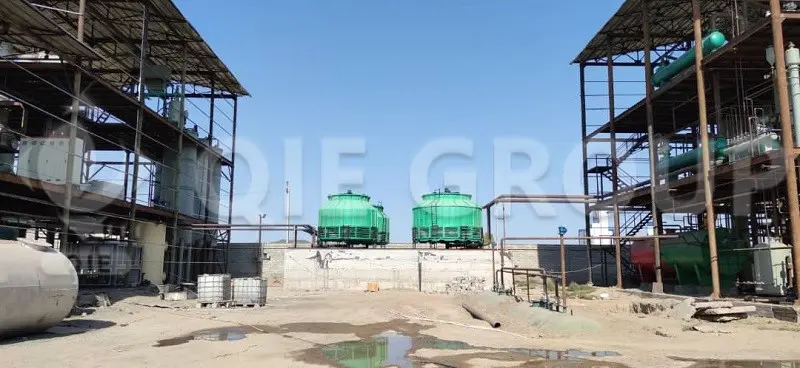
Turnkey EPC condenses complex project scopes into a single accountable contract. This structure is proven to deliver earlier mechanical completion and faster stable operations, especially in multi-discipline, solvent-involving edible oil plants.
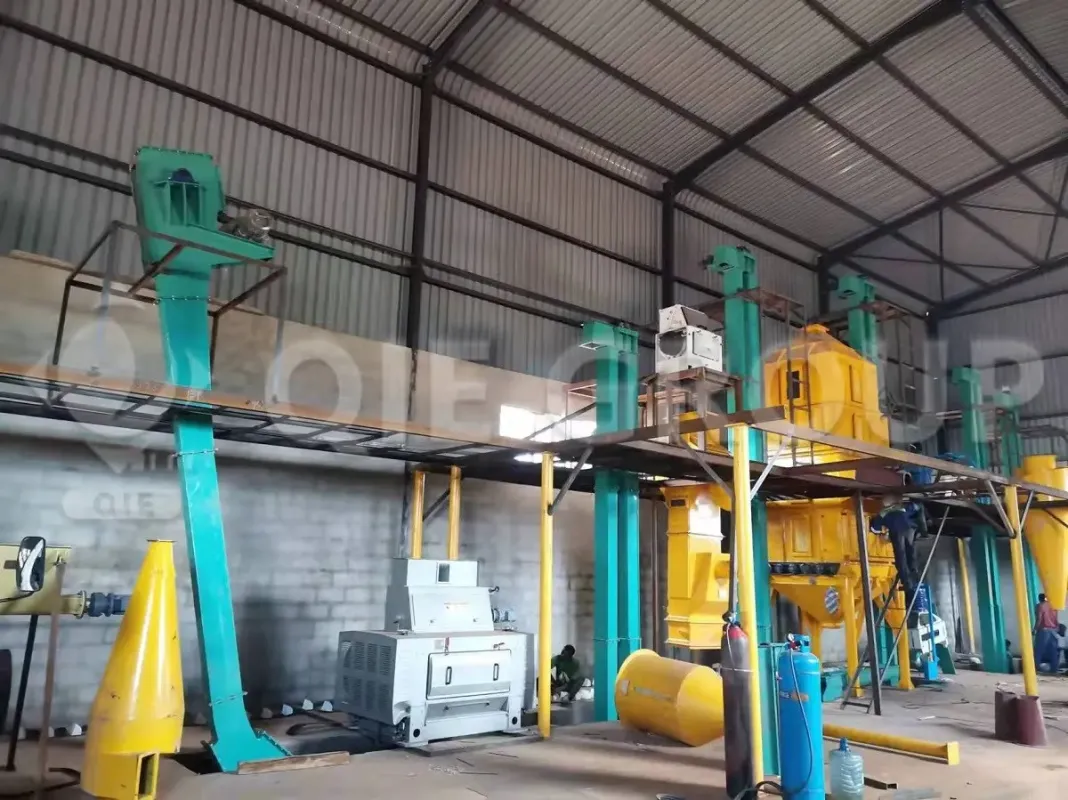
Case Example: 50 TPD Peanut Oil Production Line (Africa)
This project demonstrates how proper EPC-based system integration directly improves yield stability, operating cost, and return on investment.
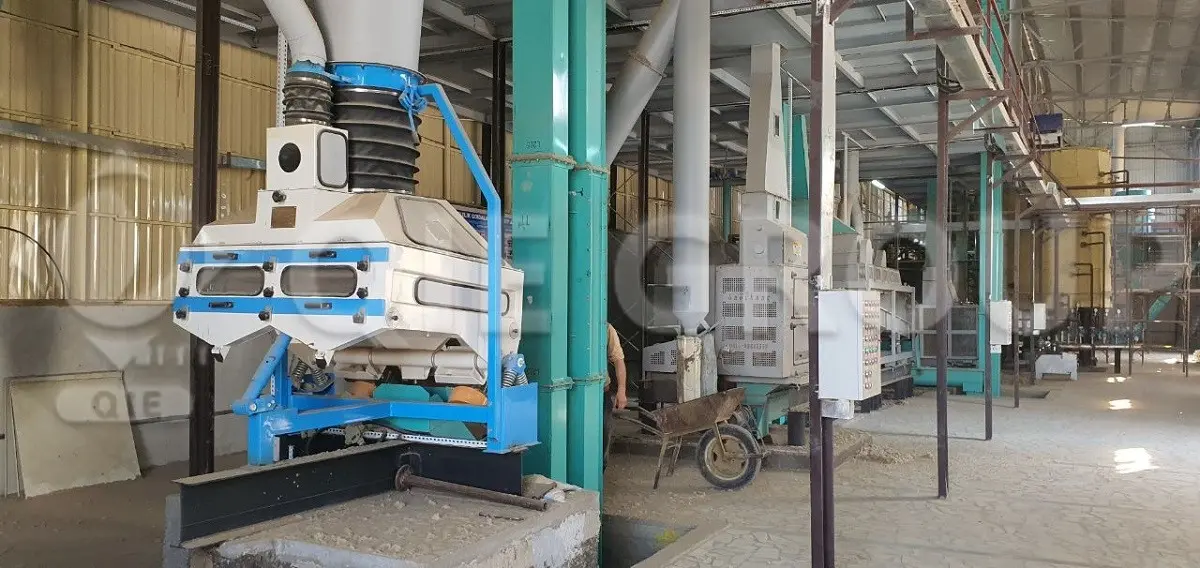
To help investors and project owners quickly evaluate feasibility and engineering scope, a standard turnkey vegetable oil production line typically includes the following design parameters:
Capacity range: 100–3,000 TPD (scalable and modular)
Applicable raw materials: soybean, sunflower, rapeseed, palm, cottonseed, peanut, coconut
Process routes:
Residual oil in meal:
Steam consumption: 280–350 kg/ton (extraction section average)
Power consumption: 45–65 kWh/ton (whole plant)
Automation level: PLC / SCADA, semi-automatic or fully automatic
Safety & standards: ATEX / IECEx (solvent section), ISO, HACCP
Typical commissioning cycle: 4–8 months depending on capacity and site conditions
These parameters allow EPC contractors to balance oil yield, energy efficiency, safety compliance, and long-term operating cost.
Raw material characteristics—oil content, moisture, impurities, FFA, and climatic origin—directly influence process route selection:
Moisture adjustment, crushing size, and flake thickness must be dynamically optimized based on seed hardness and cellular structure. For example, canola seeds require gentle handling to minimize powder generation.
Plants should reserve interfaces for raw material switching (e.g., adjusting sieve aperture or extraction temperature curves) to handle seasonal variations.
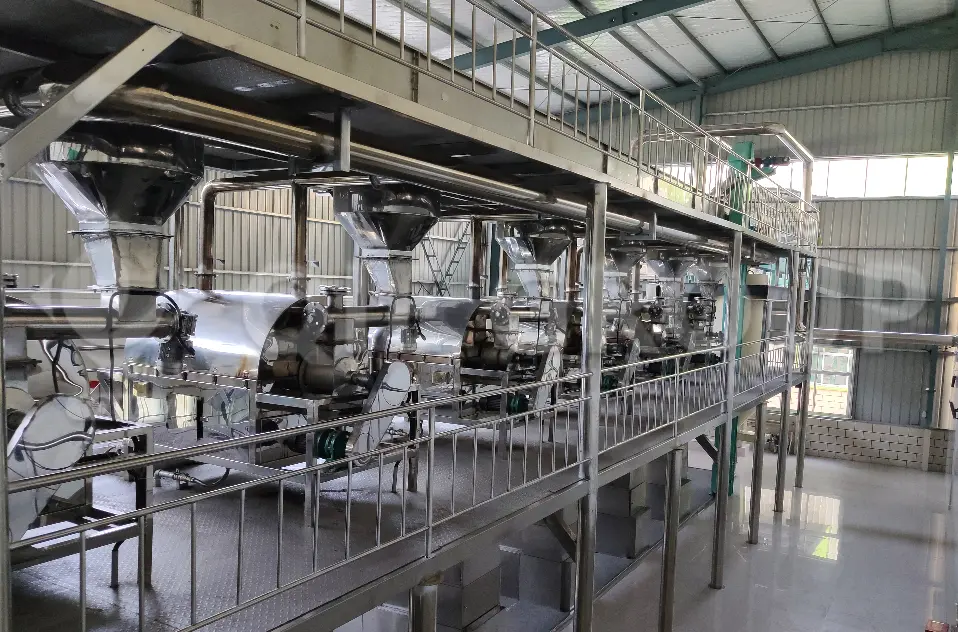
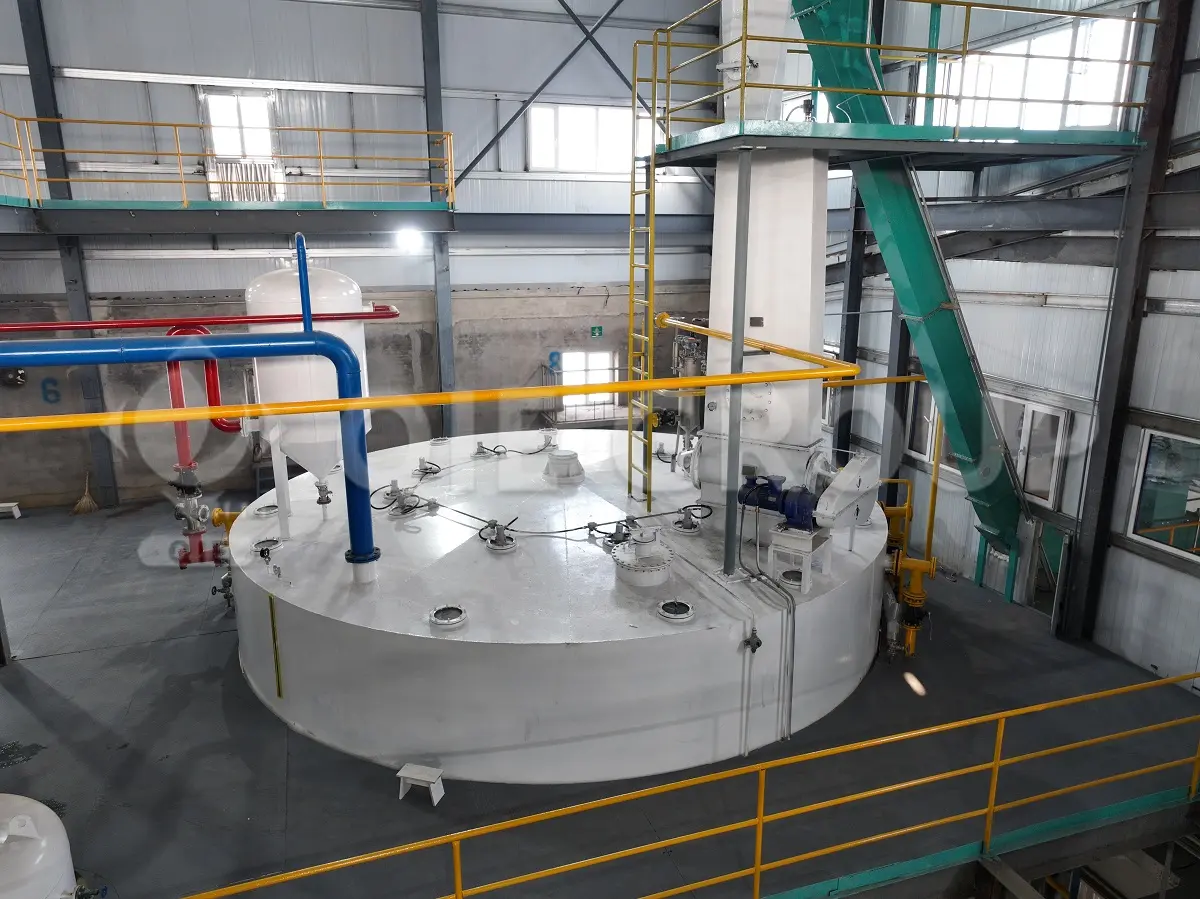
Refining stabilizes quality, flavor, and shelf life while meeting country-specific regulations. The choice of chemical vs. physical refining is primarily driven by FFA levels, phosphatides, and product positioning.
| Refining Method | Applicable Oil | Advantages | Notes |
|---|---|---|---|
| Physical Refining | Low-gum oils (palm, coconut) | Low wastewater, high yield | High requirements for degumming & decolorization |
| Chemical Refining | High FFA oils | Wide applicability | 2–5% neutral oil loss; high wastewater treatment cost |
Degumming: Hydration or special acid method, high-efficiency centrifugation; phospholipid removal impacts subsequent processes and stability.
Decolorization: Type and dosage of bleaching earth/activated carbon, adsorption temperature/time, filtration efficiency affect oil loss and solid waste.
Deodorization: High-temperature vacuum deodorizer, heat medium (steam/thermal oil), fatty acid collection and heat recovery; strict control to prevent trans-fat formation and preserve flavor.
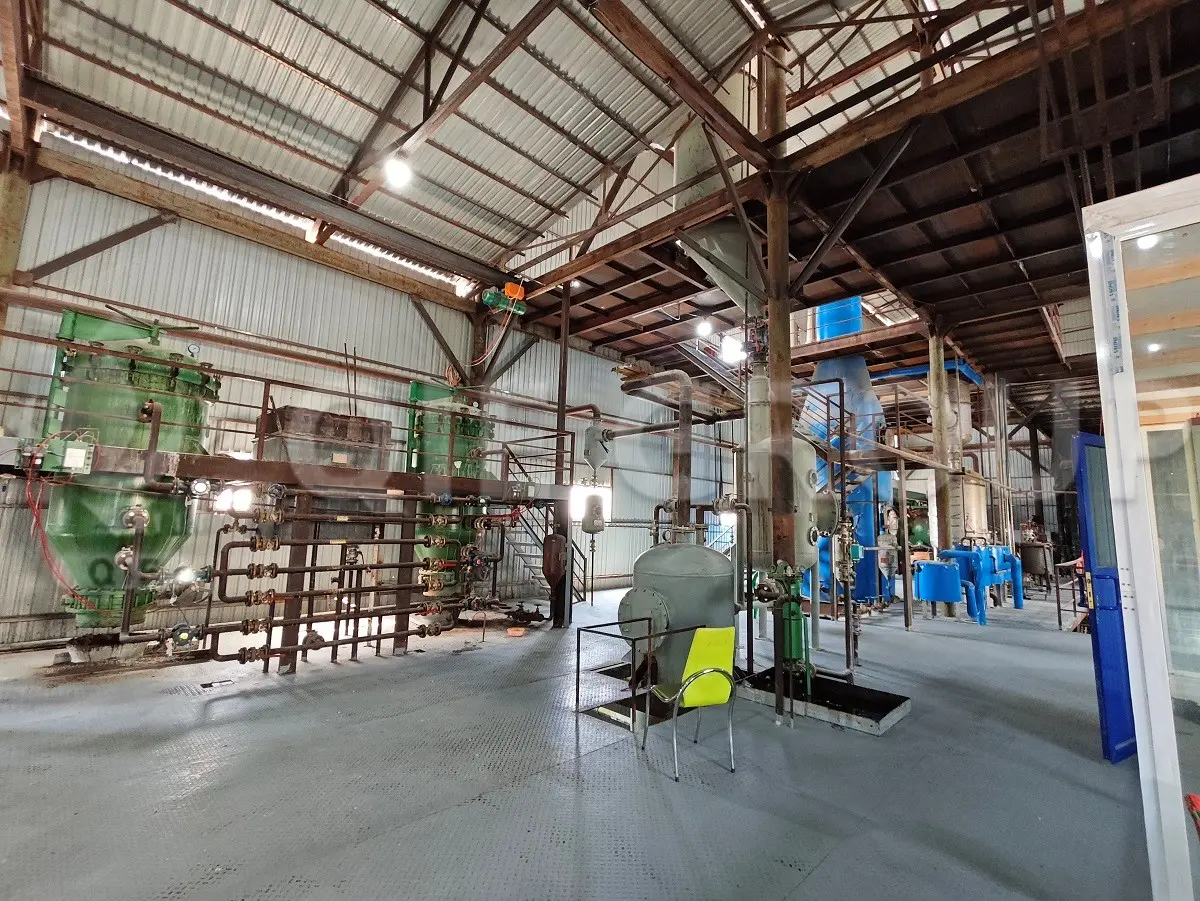
A global-ready layout prioritizes safe solvent handling, short material paths, and modular expansion. Civil, steel, and utilities should anticipate the next capacity step at minimal retrofit.
CAPEX: Covers process equipment, civil works, installation, automation, design, permits, project management, and contingency; EPC lump-sum contracts help control overruns.
OPEX:
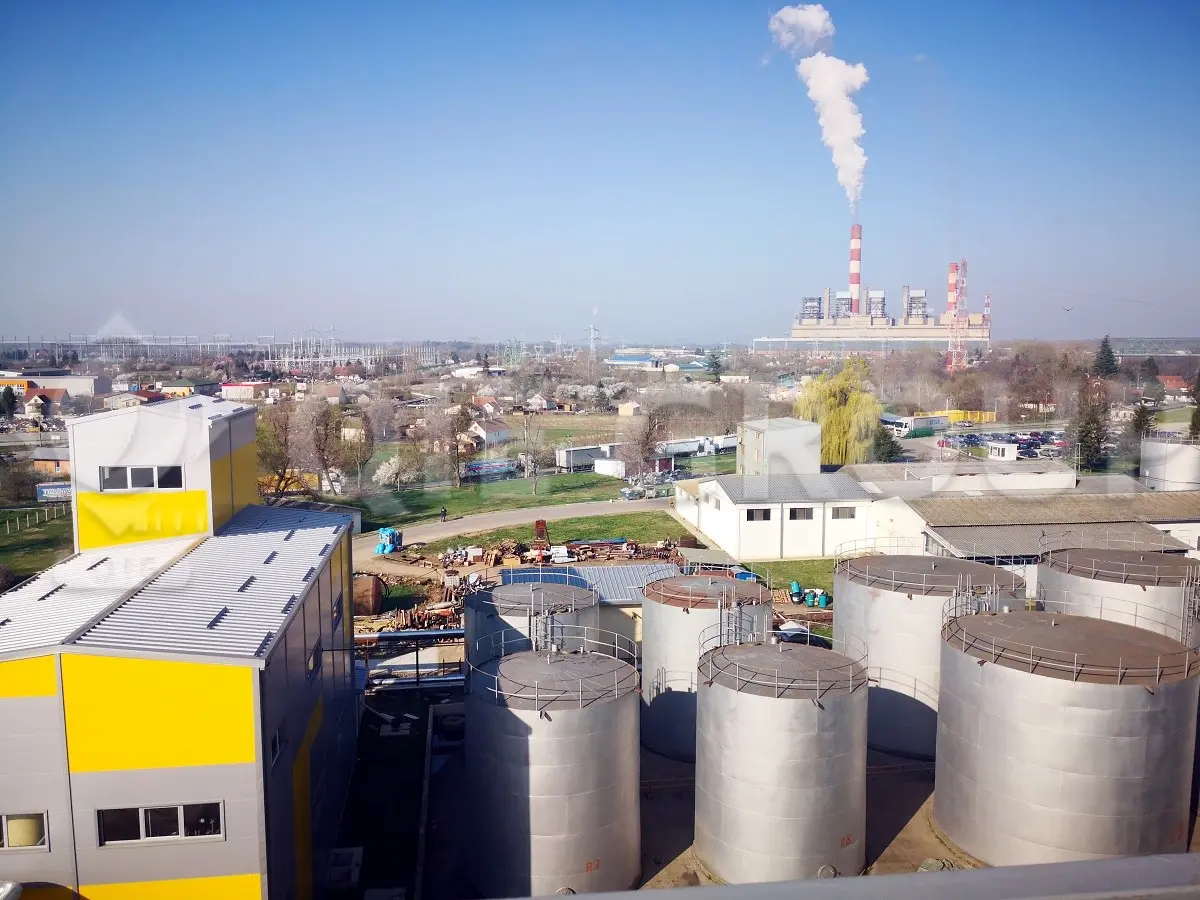
System Redundancy: Critical equipment has backups; key instruments double-checked.
Automation & Predictive Maintenance: DCS/SCADA remote monitoring, vibration analysis, and thermal imaging shift from reactive to preventive maintenance.
Training & Documentation:
On-Site Support: EPC engineers stationed during commissioning ensure smooth transition.
| Risk Type | Potential Issue | QIE GROUP Mitigation |
|---|---|---|
| Process Technology | Immature tech, raw material mismatch, underperformance | Verified processes, pilot trials, performance guarantee clauses |
| Equipment Quality | High failure, delivery delays | Supplier evaluation, reputable brands, warranty & factory acceptance |
| Design Flaws | Poor layout, wrong selection | Experienced EPC designers, HAZOP review, mature standards/software |
| Construction Safety | Accidents, quality issues, schedule delays | Strict HSE management, third-party supervision, clear standards |
| Raw Material & Market | Supply shortage or price volatility | Supply chain research, diversified sourcing, hedging strategies |
Q1: What capacity is suitable for first-time edible oil investors?
A: Many first-time investors start with 30–100 TPD, allowing faster commissioning and controlled CAPEX while keeping expansion options open.
Q2: Can one turnkey plant process multiple oilseeds?
A: Yes. With proper pretreatment and flexible process design, a turnkey plant can handle multiple oilseeds seasonally with minimal retrofit.
Q3: How long does a turnkey vegetable oil plant take to start production?
A: Typical EPC projects reach stable operation within 4–8 months, depending on capacity, site readiness, and local infrastructure.
Q4: What guarantees should be included in an EPC contract?
A: Capacity, residual oil in meal, energy consumption, safety compliance, and commissioning timeline should all be clearly defined.
Ready to scope a turnkey edible oil production line—pretreatment, extraction, refining, and dewaxing—engineered for measurable ROI? Explore a tailored EPC proposal with design guarantees, energy optimization, and a phased scale‑up plan.
Request a Turnkey EPC Proposal for Your Edible Oil Plant Cottonseed oil solvent extraction Cottonseed oil pressing process Cottonseed oil production line Cottonseed oil processing plant Cottonseed oil solvent extraction equipment Cottonseed oil screw press
Rapeseed Oil Refining Machine Rapeseed oil processing plant refining equipment Rapeseed oil 50 tons per day refiner Rapeseed oil cold pressing oil refining equipment Rapeseed oil deacidification and deodorization equipment
Intelligent oil processing Green Edible Oil Production Energy-saving solutions for oil plants Intelligent data monitoring Oil processing equipment
twin screw palm fruit oil press palm fruit oil pressing machine palm oil processing equipment palm fruit oil production line palm oil mill machinery palm oil extraction plant
Coconut oil refining equipment Coconut Oil Refinery Small Coconut Oil Refining Machine Coconut oil processing production line Coconut Oil Refinery Cost
Cottonseed oil solvent extraction Cottonseed oil pressing process Cottonseed oil production line Cottonseed oil processing plant Cottonseed oil solvent extraction equipment Cottonseed oil screw press
Rapeseed Oil Refining Machine Rapeseed oil processing plant refining equipment Rapeseed oil 50 tons per day refiner Rapeseed oil cold pressing oil refining equipment Rapeseed oil deacidification and deodorization equipment
Intelligent oil processing Green Edible Oil Production Energy-saving solutions for oil plants Intelligent data monitoring Oil processing equipment
twin screw palm fruit oil press palm fruit oil pressing machine palm oil processing equipment palm fruit oil production line palm oil mill machinery palm oil extraction plant
Coconut oil refining equipment Coconut Oil Refinery Small Coconut Oil Refining Machine Coconut oil processing production line Coconut Oil Refinery Cost



.png?x-oss-process=image/resize,h_100,m_lfit/format,webp)
.png?x-oss-process=image/resize,h_100,m_lfit/format,webp)
.png?x-oss-process=image/resize,h_100,m_lfit/format,webp)