In today's highly competitive edible oil market, building a stable, efficient, and compliant peanut oil processing plant is no longer a simple equipment purchasing decision—it is a systematic engineering project.
From raw peanut cleaning and pretreatment to oil pressing or solvent extraction, refining, and finished oil storage, every process step directly affects oil yield, energy consumption, product quality, and long-term operating costs.
With more than 40 years of experience in grain and oil machinery manufacturing and project delivery, QIE Group provides a complete turnkey peanut oil processing plant solution, covering engineering design, equipment manufacturing, installation, and commissioning—helping investors reduce risks, shorten project timelines, and achieve sustainable profitability.
When planning a peanut oil processing project, investors commonly face the following challenges:
Raw peanuts usually contain 10–15% impurities. Inadequate cleaning, shelling, or crushing increases equipment wear and causes oil loss, significantly raising production costs.
In many projects across Africa and Central Asia, we have found that pretreatment is often underestimated—yet it is one of the most critical factors determining final profitability.
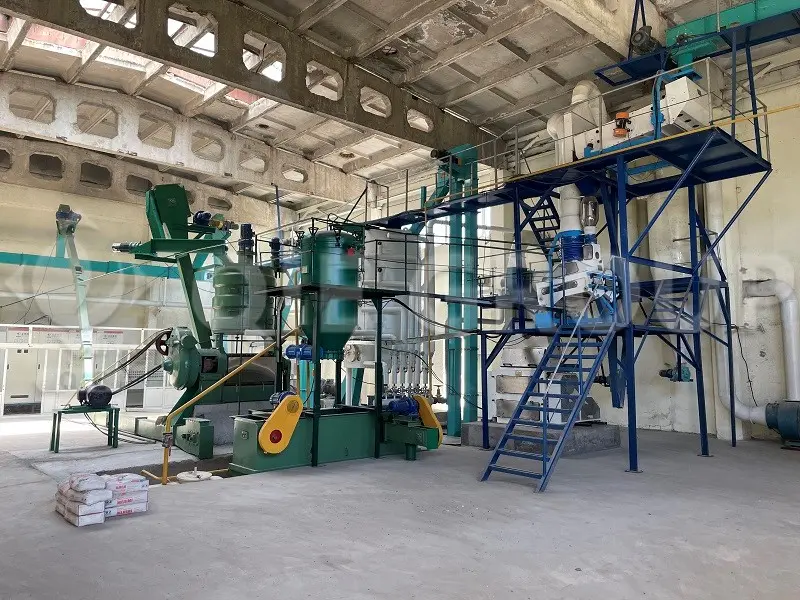
Small-scale workshops struggle to meet stable market demand, while oversized plants may suffer from idle capacity and capital pressure.
From engineering practice, 50 TPD (tons per day) is often a balanced capacity for medium-scale peanut oil processing plants. However, the final configuration must be calculated based on raw material supply, market positioning, and investment strategy.
Crude peanut oil contains gums, free fatty acids, pigments, and trace impurities.
If refining is applied without differentiation, the product may either fail to meet edible oil standards or lose its characteristic peanut aroma due to over-processing.
Plant layout design, equipment selection, installation, and commissioning involve multiple disciplines.
Managing multiple suppliers independently often leads to interface mismatches and project delays.
This is why more investors now choose a turnkey EPC (Engineering, Procurement, Construction) solution.
At the project initiation stage, QIE engineers conduct detailed discussions focusing on:
Peanut oil content (typically 45–55%)
Raw material moisture and impurity levels
Target product positioning (aromatic oil or refined oil)
Investment budget and payback expectations
Based on these parameters, two typical solutions are commonly adopted:
Small-Capacity Processing Line
Using a drum roaster + screw oil press + plate filter, this solution requires lower investment and delivers quick returns. Precise roasting temperature control promotes Maillard reactions, creating a stable and rich peanut aroma for premium markets.
Medium to Large-Capacity Processing Line
Using a pre-pressing + solvent extraction + refining process, total oil recovery can increase by 3–5%. The system supports hot pressing, cold pressing, and pre-pressing modes to serve diversified markets.
In a 50 TPD peanut oil project in Malawi, accurate process calculations allowed the plant to achieve oil yields above regional averages, despite relatively low raw material oil content.
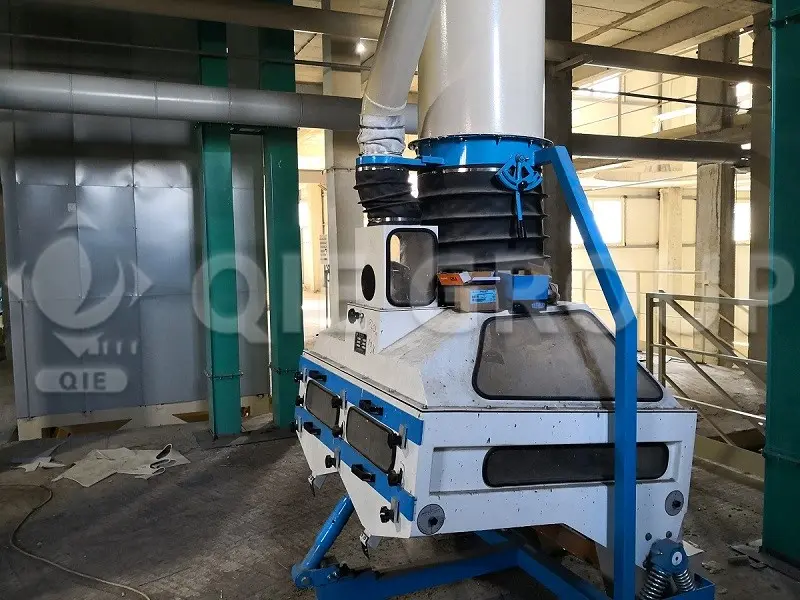
Pretreatment quality defines the performance ceiling of the entire production line.
Standard QIE configurations include:
Four-stage cleaning system: magnetic separator, vibrating screen, and destoner, achieving impurity removal rates above 99.5%
Flexible shelling technology: kernel-shell separation efficiency ≥95%, with kernel loss in shells <1%
Intelligent conditioning system: automatically adjusts temperature and residence time based on moisture content, ensuring optimal pressing conditions
One Nigerian client reduced electricity consumption by approximately 28 kWh per ton of raw material after optimizing pretreatment—an improvement that could not be achieved by press adjustment alone.
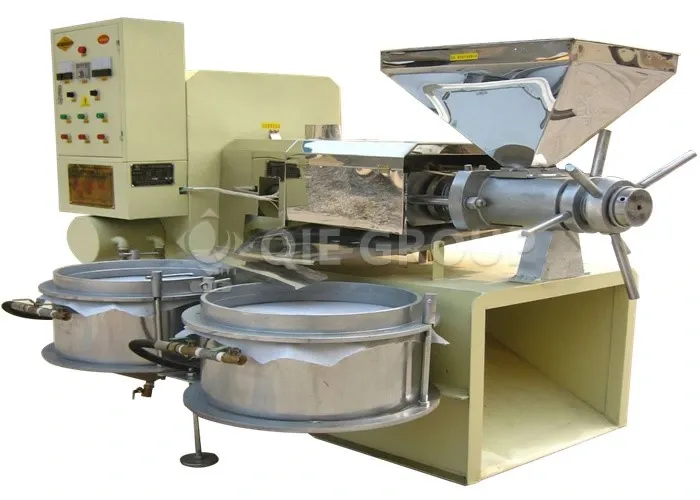
Aromatic pressing (small oil press)
Oil yield: 35–40%
Residual oil in cake: 6–8%
High pressure and low temperature maximize flavor retention.
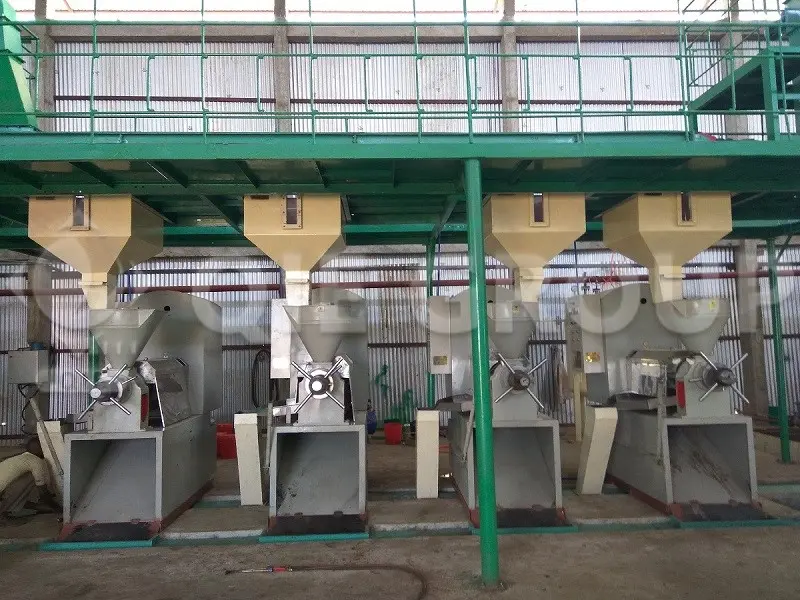
Pre-pressing (large screw press)
Oil yield: 30–35%
Residual oil in cake: 16–20%
Creates stable conditions for solvent extraction. 👉(peanut oil press machine)
System features include:
Optimized screw structure for smooth oil flow
Automatic temperature control to prevent carbonization
Uniform cake shape suitable for continuous processing
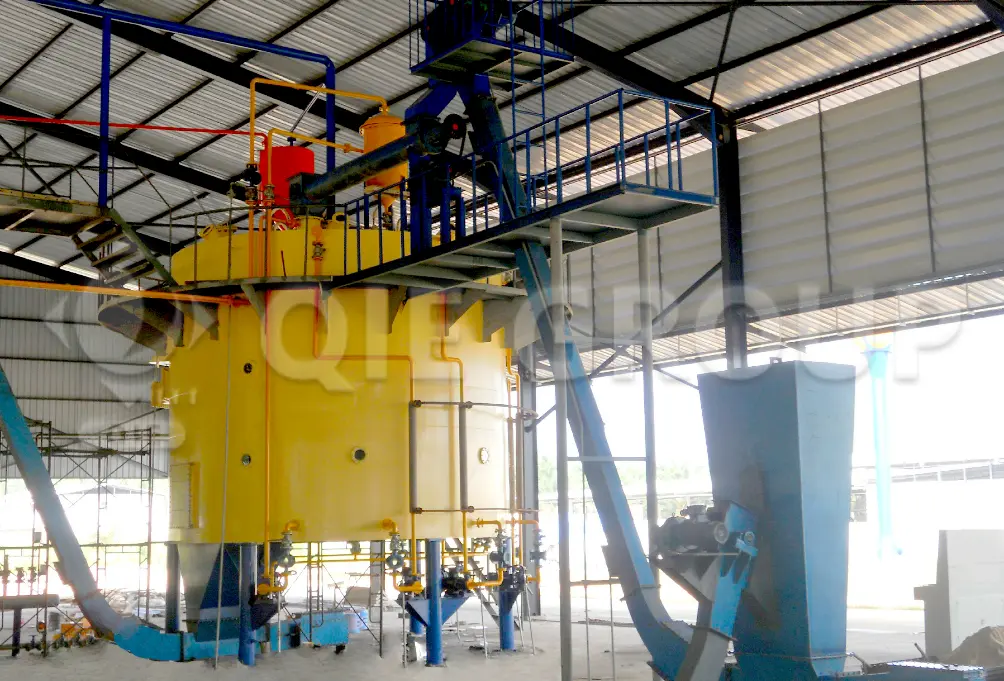
Process flow:
Pre-pressed cake → Counter-current extractor → Miscella → Evaporation & stripping → Crude oil
Wet meal → DTDC desolventizer → Finished peanut meal
Key performance indicators:
Residual oil ≤0.8%
Solvent consumption ≤1.5 kg/t
Solvent recovery ≥99.5%
Thermal efficiency improved by 10–15% 👉(Peanut oil solvent extraction plant)
In multiple West African projects, the pre-pressing + extraction combination has proven to be the most economical solution for high-oil-content peanut
Standard refining process:
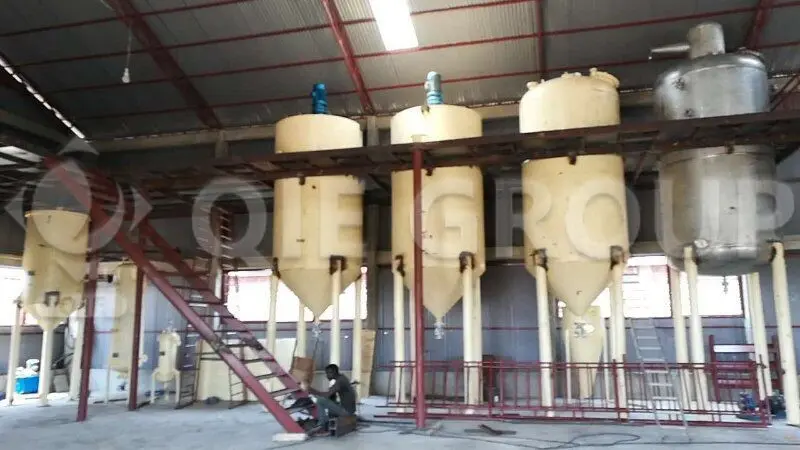
Degumming → Deacidification → Decolorization → Deodorization
QIE engineers emphasize a critical distinction:
Aromatic peanut oil: light treatment only, must not enter deodorization
Grade 1 refined peanut oil: full refining with high-vacuum deodorization
System advantages:
Continuous or batch refining options
High-vacuum, low-oxygen operation
Energy consumption reduced by 10–15%
Finished oil meets national Grade 1 or Grade 2 standards
Modern oil mills rely heavily on digital management:
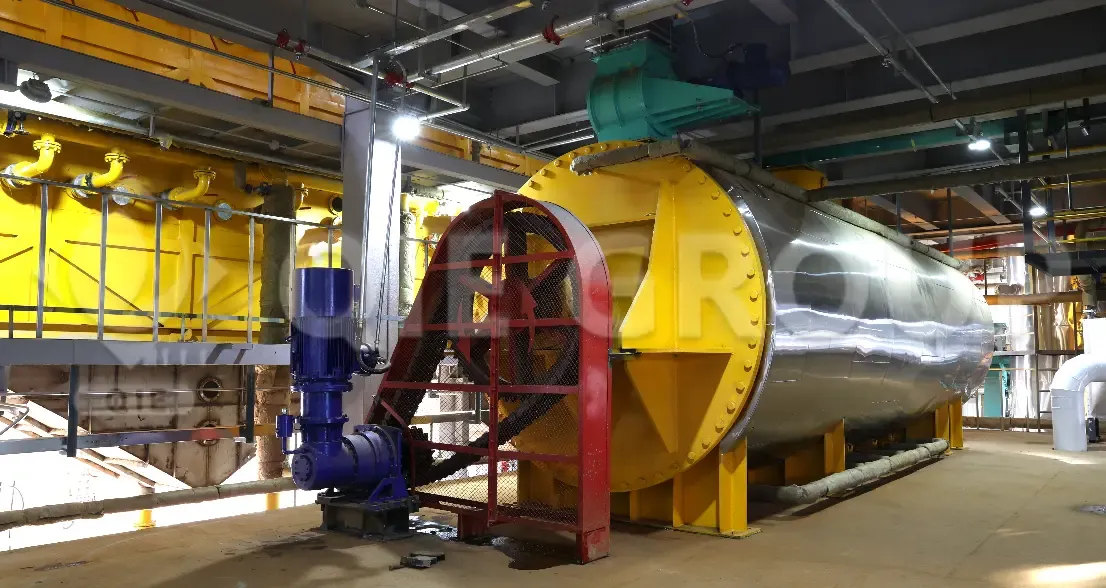
PLC centralized control system
Energy management (steam ≤420 kg/t oil)
Full production and quality traceability
In an Ethiopian project, these systems improved overall efficiency by approximately 35% while reducing management costs by 20%.
3D plant layout design saving 15–30% floor space
Certified installation teams
72-hour continuous load commissioning to ensure performance compliance
24-hour technical response
Local spare parts availability
Continuous process optimization support
Time and cost savings: The design-to-production cycle is shortened by 40-60%, allowing you to seize market opportunities faster.
Comprehensive risk control: A one-stop solution avoids problems such as interface mismatches and process integration issues.
Guaranteed quality throughout: All equipment is ISO9001 and CE certified, with a 3-year warranty on key components.
Reduced management burden: No need to coordinate multiple suppliers; one phone call solves all problems. 👉(Turnkey edible oil processing plant)
“After working with QIE, I can finally focus on market development instead of daily equipment issues.”
— Client feedback from Uzbekistan
Established in 1982
Provincial-level edible oil equipment engineering research center
Nearly 200 patented technologies
Class I & II pressure vessel design and manufacturing qualifications
Equipment exported to over 100 countries
Representative projects:
Malawi 50 TPD peanut oil plant
Nigeria 50 TPD pretreatment + 15 TPD refining line
Uzbekistan 100 TPD fully automated production line
If you are evaluating or planning a peanut oil processing investment, contact QIE Group to receive:
Customized process design
Equipment configuration and investment analysis
Project references and operational data
Training and long-term service plans
📩 Leave your contact information, and our engineers will contact you within 24 hours.
 Edible oil processing plant Edible oil production line Edible oil refining equipment Oil Press Solvent extraction plant Oil refinery turnkey project Edible oil factory construction
Energy-saving and environmentally friendly cooking oil Market trend analysis turnkey projects Intelligent production equipment Investment in edible oil production lines
Shea butter processing Shea butter production equipment Vegetable oil refining equipment Oil extraction process African Shea Butter Shea butter production line
edible oil processing equipment soybean oil processing plant palm oil production line sunflower oil refining equipment copra oil processing systems
Palm oil production line Automated oil processing equipment Customized production equipment High-efficiency production line Oil pressing equipment
Edible oil processing plant Edible oil production line Edible oil refining equipment Oil Press Solvent extraction plant Oil refinery turnkey project Edible oil factory construction
Energy-saving and environmentally friendly cooking oil Market trend analysis turnkey projects Intelligent production equipment Investment in edible oil production lines
Shea butter processing Shea butter production equipment Vegetable oil refining equipment Oil extraction process African Shea Butter Shea butter production line
edible oil processing equipment soybean oil processing plant palm oil production line sunflower oil refining equipment copra oil processing systems
Palm oil production line Automated oil processing equipment Customized production equipment High-efficiency production line Oil pressing equipment




.png?x-oss-process=image/resize,h_100,m_lfit/format,webp)
.png?x-oss-process=image/resize,h_100,m_lfit/format,webp)
.png?x-oss-process=image/resize,h_100,m_lfit/format,webp)