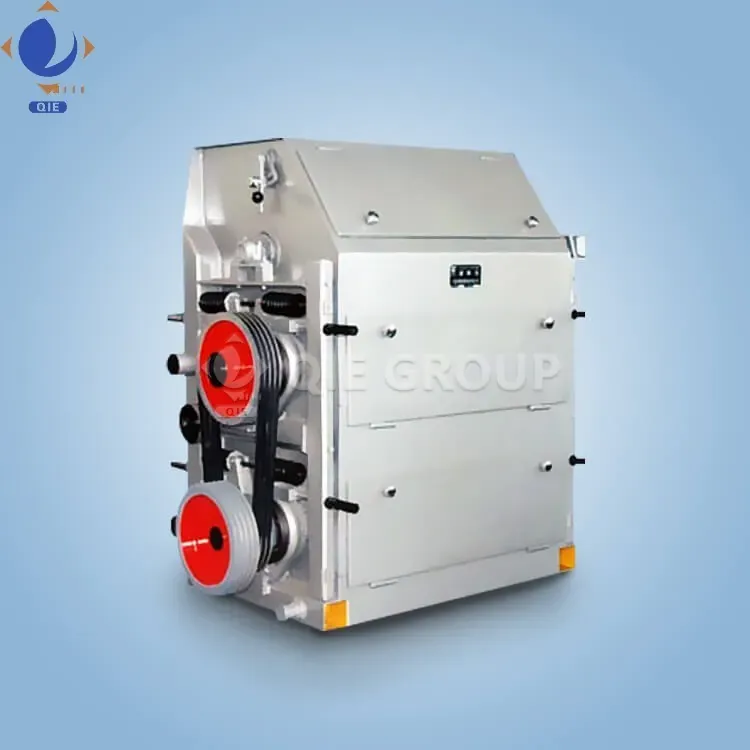
Côte d'Ivoire is a major agricultural nation in West Africa with favorable climatic conditions for oil palm cultivation, offering strong potential for the palm oil sector. For investors, plantation owners, and agribusinesses planning to build a palm oil mill in Côte d'Ivoire, a successful project requires a comprehensive evaluation of fresh fruit bunch (FFB) raw material supply, processing capacity, plant site selection, utility infrastructure, and processing technology. A turnkey (EPC) model integrates process design, equipment manufacturing, installation, commissioning, and project delivery into a single one-stop solution for project owners.
The final project scheme should be custom-designed based on local FFB supply volumes, transportation conditions, target capacities, and product requirements in Côte d'Ivoire. This article provides practical guidance for planning a palm oil mill project in the Ivorian market, helping potential developers understand key considerations, processing workflows, equipment configurations, and EPC service scopes.
1. Why Comprehensive Upfront Planning is Essential for a Palm Oil Mill Project in Côte d'Ivoire
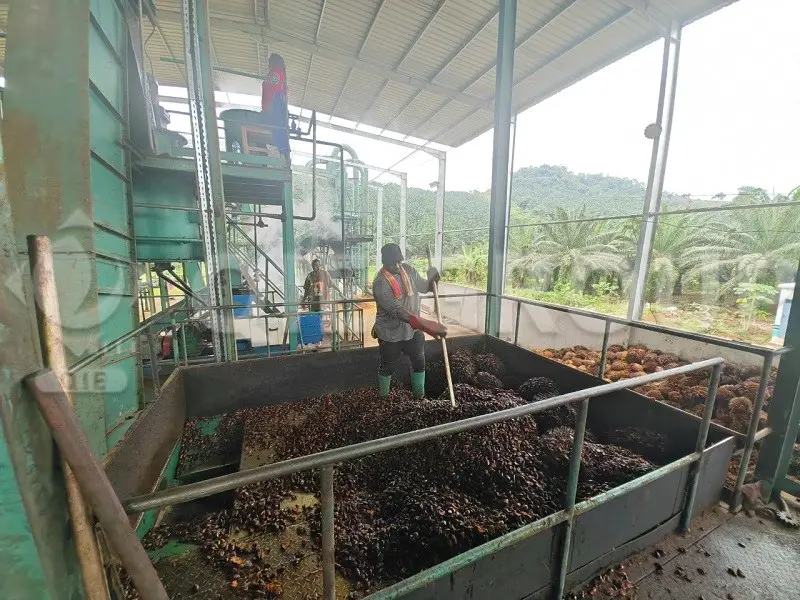
The core constraint of a palm oil mill is its raw material. If fresh palm fruit cannot be delivered into the plant stably and on time, even the highest equipment capacity will struggle to maintain continuous operation. Therefore, project planning must prioritize the following aspects:
- Raw Material Supply: A stable supply of FFBs is the foundation of continuous plant operation. Evaluate local plantation scales, yields, and seasonal fluctuations.
- FFB Transportation: Fresh fruit must be processed promptly to ensure low Free Fatty Acid (FFA) levels. Transport distance and efficiency directly impact raw material loss and processing costs.
- Site Selection: Locate the plant close to raw material origins to minimize transportation costs, while accounting for infrastructure (such as electricity and water sources) and space for future expansion.
- Utility Infrastructure: Power, industrial water, compressed air, steam, and wastewater treatment systems must be incorporated into the planning stage.
- Product & Downstream Requirements: Define the target market (such as local edible oil or export) and downstream processing needs (such as refining and fractionation) to optimize the product structure.
When building a palm oil mill in Côte d'Ivoire, the project should not be viewed merely as "building an oil-pressing workshop," but rather as an integrated engineering design spanning the raw material chain, production chain, and utility chain.
2. How to Determine the Optimal Palm Oil Mill Capacity (TPH)?
- Core Principle: Base calculations on guaranteed daily FFB supply volumes, convert into TPH (Tonnes Per Hour) assuming an 8–10 hour daily operating window, and reserve a 15% to 20% buffer capacity to manage peak harvesting season fluctuations.
- Reference Example: If a plantation stably supplies 240 tonnes of FFB per day, a 30 TPH processing line is recommended. If multiple cooperatives combine to supply 600 tonnes per day, a 60–75 TPH scale can be considered.
- Key Reminder: TPH refers to actual processing capacity under continuous and stable operation. It must be calculated alongside transport vehicle scheduling frequencies, unloading area buffer capacities, and rainy season temporary storage requirements.
3. Complete Processing Workflow from FFB to CPO and By-Products
From fresh fruit bunches (FFB) to crude palm oil (CPO), a standard palm oil processing line relies on continuous production. The standard workflow is as follows:
FFB → Sterilization → Threshing → Digestion → Pressing → Clarification → Purification / Drying → CPO
The key to the above workflow lies in the stable control of processing temperatures, retention times, and separation efficiency. In addition to the CPO main line, the facility generates several valuable by-products:
- Empty Fruit Bunches (EFB): Can be used for mulching, composting, biomass utilization, or further processing.
- Palm Fiber: Largely utilized as boiler fuel or for biomass energy.
- Palm Shells: Utilized as a renewable energy resource.
- Palm Kernels: If required by the project, a separate palm kernel processing line can be established to extract palm kernel oil (PKO), though this process belongs to an independent processing chain and should not be confused with CPO production.
- Wastewater / Effluent: Must be equipped with a wastewater treatment system to meet environmental regulations and operational standards.
4. Core Production Equipment and Côte d'Ivoire Adaptation Points
1. FFB Pretreatment and Extraction System
- Sterilizer: Utilizes horizontal or vertical direct steam sterilizers equipped with efficient condensate drainage and closed safety interlocks to cook the fruit, inactivate enzymes preventing oil oxidation, and soften fruit mesocarp.
- Thresher & Screw Press: Designed with high-strength wear-resistant materials to handle high-fiber raw materials; double or multi-stage pressing configurations maximize oil extraction rates.
- Clarification & Purification System: Includes vibrating screens, horizontal decanter centrifuges, and vacuum drying systems to efficiently remove moisture and fine impurities from crude oil.
2. Auxiliary and Utility Systems
- Energy System: Biomass boilers (burning wet fiber and shells) paired with waste heat recovery systems to reduce reliance on external grid power.
- Storage & Logistics System: Stainless steel CPO storage tanks (equipped with nitrogen blanketing and thermal insulation), temporary EFB yards, and moisture-proof kernel warehouses.
- Intelligent Control Center: PLC + SCADA monitoring platform to achieve visual and remote regulation of critical parameters such as temperature, pressure, and flow rates.
5. What Does a Turnkey / EPC Model Actually Deliver?
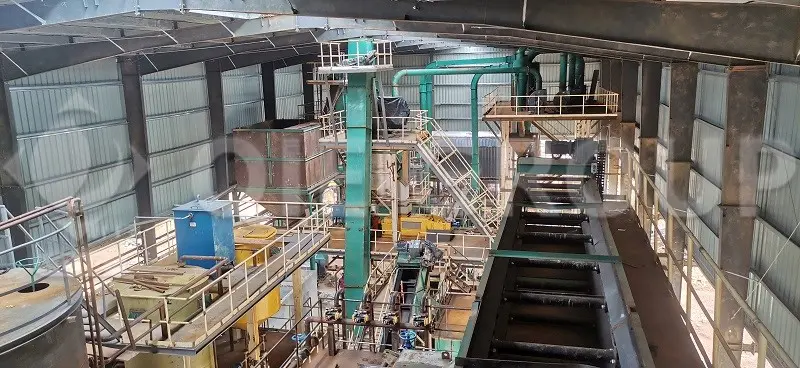
QIE Group’s turnkey service covers the full lifecycle—from consulting and design to manufacturing, installation, commissioning, and training—rather than simply supplying equipment:
- Preliminary Phase: Plant layout planning, process package design, mass balance calculation, and 3D layout simulation.
- Execution Phase: Custom manufacturing of core equipment, factory pre-assembly testing, international logistics coordination, and on-site installation guidance.
- Delivery Phase: Electrical and automation system commissioning, full-load trial runs, hands-on operator training, and spare parts inventory handover.
- Extended Support: Remote diagnostics, regular maintenance recommendations, and process optimization upgrade services.
⚠️ Note: EPC project boundaries must be strictly defined in the contract (such as civil works inclusion and local construction crew management rights) to eliminate handover blind spots.
6. Five Non-Core Systems Essential for Côte d'Ivoire Project Success
- Energy System: Biomass boiler (utilizing wet fiber) + waste heat recovery to minimize grid dependence.
- Water System: Closed-loop cooling water recycling + compliant wastewater discharge meeting the latest Ministry of Environment standards in Côte d'Ivoire.
- Storage & Transport System: Stainless steel CPO tanks with nitrogen blanketing, EFB temporary storage yards, and moisture-proof kernel warehouses.
- Smart Control Hub: SCADA monitoring platform for remote visualization and adjustment of parameters (temperature, pressure, flow rate).
- Compliance Facilities: Laboratory (testing IV and FFA values), fire protection systems, and occupational health protection zones.
7. Why Project Investment Costs Cannot Be Fixed with a "Single Flat Rate"
The capital expenditure of a palm oil mill is a "variable function" dependent on FFB processing capacity, automation level, material selection, utility depth, and local civil construction conditions.
- Scale & Cost Dynamics: A 30 TPH versus a 60 TPH production line involves an equipment cost difference of approximately 2.3 times, but the unit investment per ton of processing capacity decreases by roughly 18%.
- Automation Impact: Fully automatic PLC control systems cost 12% to 15% more than semi-automatic setups, but labor costs can be reduced by up to 40% over 5 years.
- Material Selection: Stainless steel tanks are roughly 35% more expensive than carbon steel alternatives, but their lifespan is tripled while eliminating anti-corrosion maintenance.
✅ Recommended Approach: Providing FFB supply data, site coordinates, and target product specifications enables QIE to generate a tiered investment estimation breakdown encompassing equipment, civil works, installation, and taxation modules.
8. How to Evaluate the Reliability of a Palm Oil Mill EPC Supplier
Key criteria to verify when selecting a partner include:
- Do they possess complete process package design capabilities from FFB to CPO (rather than merely offering an equipment list)?
- Do they own an independent manufacturing base to ensure delivery timelines and quality control?
- Do they provide localized installation guidance and multilingual training (French language support is crucial for Côte d'Ivoire projects)?
- Do they have a proven track record of edible oil project deliveries globally (QIE Group has successfully delivered over 1,000 projects across more than 100 countries)?
- Is the automation system architecture clearly defined (PLC brands, communication protocols, and data interface openness)?
9. What QIE Group Can Offer for Côte d'Ivoire Projects
QIE is a comprehensive palm oil EPC partner covering process design, equipment manufacturing, engineering delivery, and intelligent operation, rather than a mere equipment reseller. Backed by over 40 years of grain and oil engineering experience, QIE provides:
- Customized Process Packages: Including mass balance calculations, energy consumption models, and by-product utilization schemes.
- R&D and Manufacturing of Core Equipment: Sterilizers, double-screw presses, vacuum drying systems, and more.
- Turnkey EPC Execution: Incorporating French technical documentation, on-site engineer dispatch, and localized operation manuals.
- Intelligent Control Systems: PLC + SCADA architecture supporting remote parameter adjustments and early fault warnings.
- Full Lifecycle Services: From initial free inspections in the first year to decade-long spare parts guarantees.
10. Conclusion
A turnkey palm oil mill project tailored for the Côte d'Ivoire market requires the systematic integration of pretreatment, pressing, refining, energy, logistics, environmental, and automation systems. Equipment selection should focus on adaptability, reliability, and resource recycling while fully accounting for local infrastructure and regulatory frameworks. Through an experienced EPC service provider, project owners can ensure efficient execution and effectively meet the rising palm oil demand in Côte d'Ivoire and neighboring regions.
Plan Your Palm Oil Project in Côte d'Ivoire with QIE
If you are currently planning a palm oil mill project in Côte d'Ivoire, share your daily FFB supply volume, target processing capacity, project location, and utility conditions. Our expert engineering team will evaluate the optimal process routes and equipment configuration scheme for your requirements.
Request a Custom Proposal & Evaluation

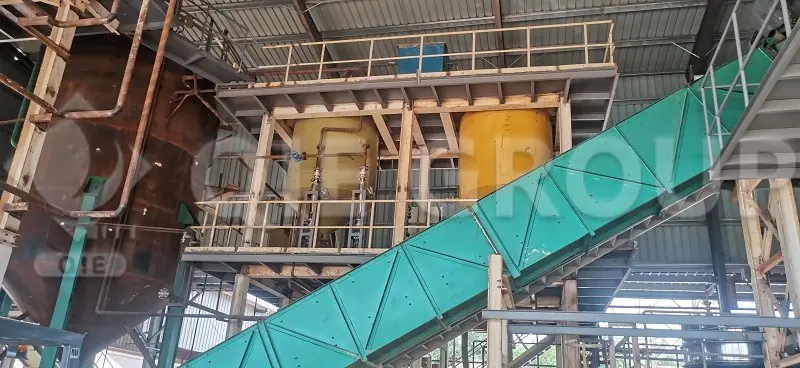
 500 TPD edible oil production line edible oil processing oil engineering pressing process solvent extraction refining equipment automation control