Home > News > How Much Does a Complete Turnkey Edible Oil Plant Cost?

How Much Does a Complete Turnkey Edible Oil Plant Cost?

QIE
2026-02-09
Tutorial Guide
Discover the cost factors of building a turnkey edible oil plant, including capacity, raw materials, process technology, automation, and location. Get a tailored, transparent cost estimate from QIE Group's global experts.

Whether you are an experienced producer planning a capacity expansion or a new investor entering the dynamic edible oil market, accurately estimating the cost of building a new or upgrading an existing edible oil processing plant is crucial for project success.

A comprehensive cost estimate affects not only the initial investment but also the long-term operational efficiency, profitability, and market competitiveness of the plant. The factors influencing the cost of a turnkey edible oil plant are complex, spanning raw material selection, process technology, automation level, and geographical conditions.

As a globally recognized turnkey engineering service provider for edible oil plants, QIE Group delivers end-to-end turnkey edible oil plant solutions, covering everything from conceptual design to commissioning.

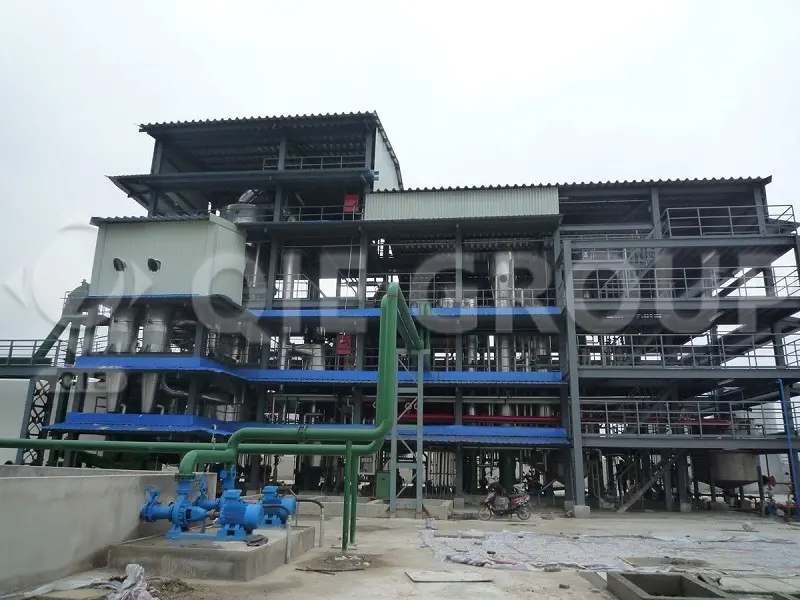
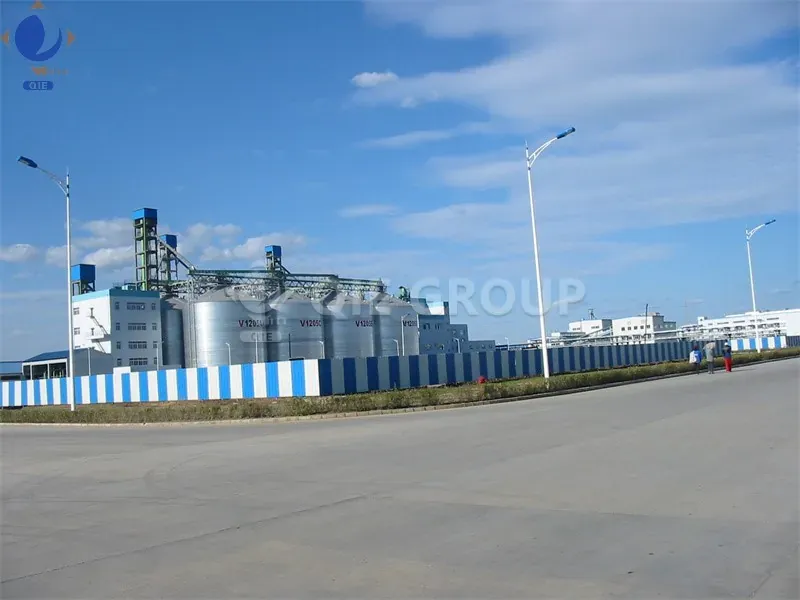
This is an exterior view of the turnkey edible oil production workshop designed and built by the QIE Group.

Key Factors Affecting Turnkey Edible Oil Plant Costs

The total investment of a turnkey edible oil plant is not fixed and depends heavily on specific project requirements. Key factors include:

Factor What it changes in the plant Typical engineering notes
Design Capacity Processing capacity per hour or per day (tons/hour or tons/day), depending on raw materials such as palm fruits, rapeseed, sunflower seeds, etc. Core driver. Higher capacity requires larger equipment, more building space, and higher energy consumption, with costs increasing non-linearly
Raw material type Different oil crops (palm, rapeseed, sunflower, soybean, peanut, etc.) require specific pretreatment, pressing or solvent extraction, and refining processes Critical differentiator. For example, a palm oil plant requires sterilization, fruit stripping, and pressing equipment; a solvent extraction plant needs solvent recovery systems; refining depth varies by oil type
Process Technology Pressing: Physical extraction, suitable for high-oil-content materials (peanut, rapeseed), relatively simple equipment.
Solvent Extraction: Using solvents to extract oil, suitable for low-oil-content materials (soybean), high yield but complex and requires solvent safety measures.
Refining Level: From crude to refined oil, includes degumming, neutralization, bleaching, deodorization; deeper refining increases equipment complexity and cost
Determinant. Solvent extraction generally costs more than pressing; deeper refining requires advanced equipment and technology
Automation Level From manual/semi-automatic to fully integrated DCS systems, reducing labor and improving efficiency and stability Significant. High automation increases control system and instrumentation costs but reduces long-term labor costs
Civil Works & Infrastructure Factory buildings, raw material and finished product storage, press/extraction and refining workshops, offices, boiler house, wastewater treatment, roads, utilities Important component. Costs vary depending on local materials, building codes, and site conditions
Geographical Location & Logistics Land cost, labor rates, energy prices, environmental regulations, and proximity to raw materials and markets Regional variations are significant. Urban areas may have high land and labor costs; remote areas may have higher infrastructure and logistics costs
Environmental & Safety Standards Wastewater and exhaust treatment, noise control, solvent safety, dust explosion prevention Compliance requirement. Higher standards require more investment but reduce fines and operational risks
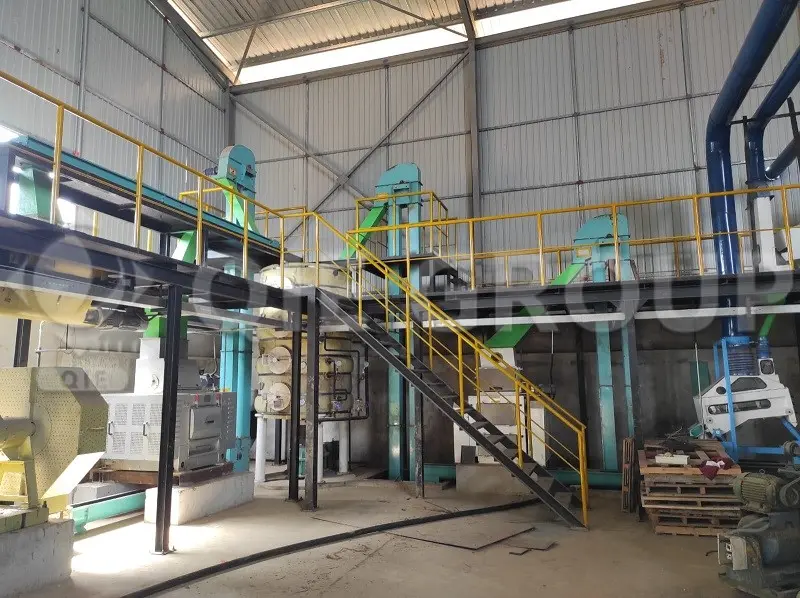
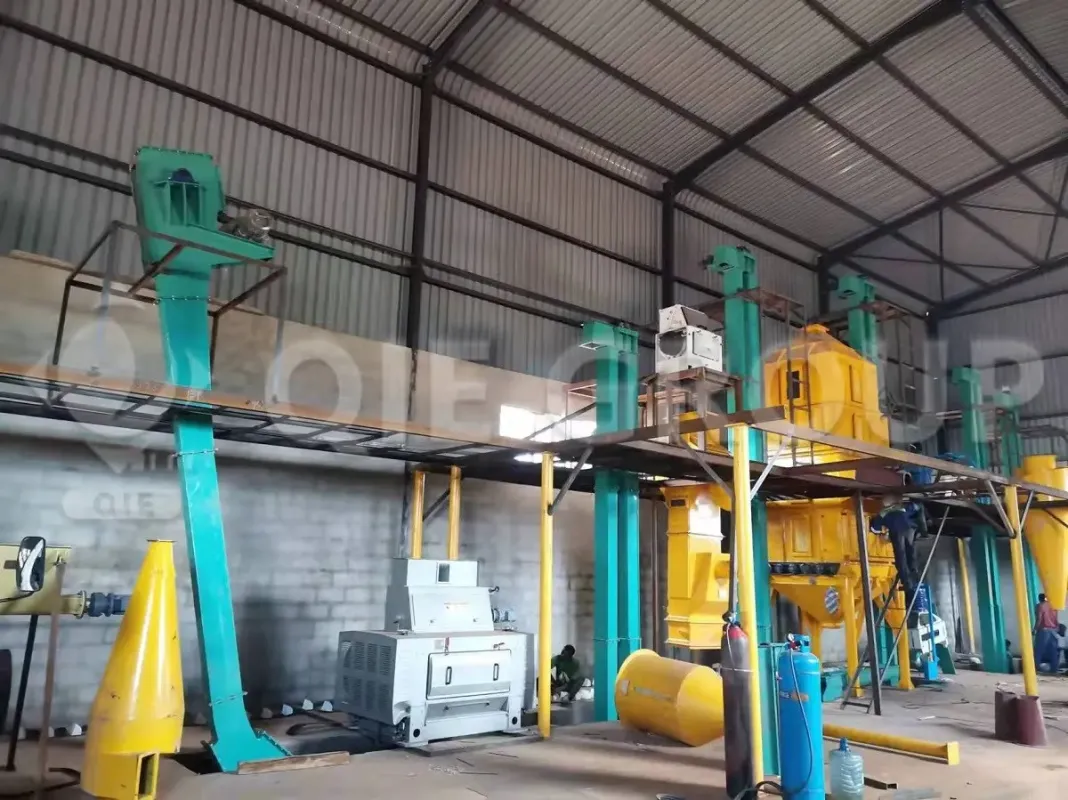
Workshop equipment for edible oil pretreatment, including cleaning, crushing, dehulling, and conditioning systems.

Cost Breakdown: Where the Money Goes

The investment of a complete turnkey edible oil plant typically includes the following:

1) Core Process Equipment

This is the largest portion of the investment:

  • Pretreatment Equipment: Cleaning machines, crushers, softening kettles, flaking machines, roasting/stirring kettles
  • Extraction Equipment: Screw oil presses (for high-oil materials or physical pressing), extractors, desolventizers, DTDC systems (drying, cooling), solvent recovery units
  • Refining Equipment: Degumming tanks, Deacidification towers, decolorization columns, deodorization towers, filters, vacuum systems, heat exchangers tec
  • Packaging & Auxiliary Systems: Filling machines, sealing machines, labeling machines, palletizers; oil pumps, valves, pipelines, storage tanks (crude and refined oil); steam boilers, thermal oil heaters, explosion-proof systems (required for solvent extraction), air compressors, dust collectors

2) Civil Works

This includes the construction costs of the main plant structure, foundation, floor, internal partitions, and various functional workshops (pretreatment, pressing/leaching, refining, filling, warehouse, utilities, etc.). Area and structural complexity are key factors.

3) Installation, Commissioning & Start-Up

Engineers handle equipment installation, piping, electrical wiring, control system integration, and full-line trial runs. QIE Group has extensive experience ensuring projects are delivered on time and within budget.

4) Engineering Design Fees

Includes process flow diagrams (PFD), piping & instrumentation diagrams (P&ID), equipment layouts, structural drawings, electrical and automation schematics. A foundational element for project success.

5) Training Fees

Systematic training for operators, maintenance, and management staff covering equipment operation, maintenance, safety, and process control

6) Project Management & Service Fees

Project managers coordinate resources, control schedule, quality, and costs, and provide full technical support

7) Other Costs

Auxiliary facilities (fire protection, ventilation), spare parts, initial production consumables (filter cloths, chemicals), shipping insurance, customs clearance, etc.

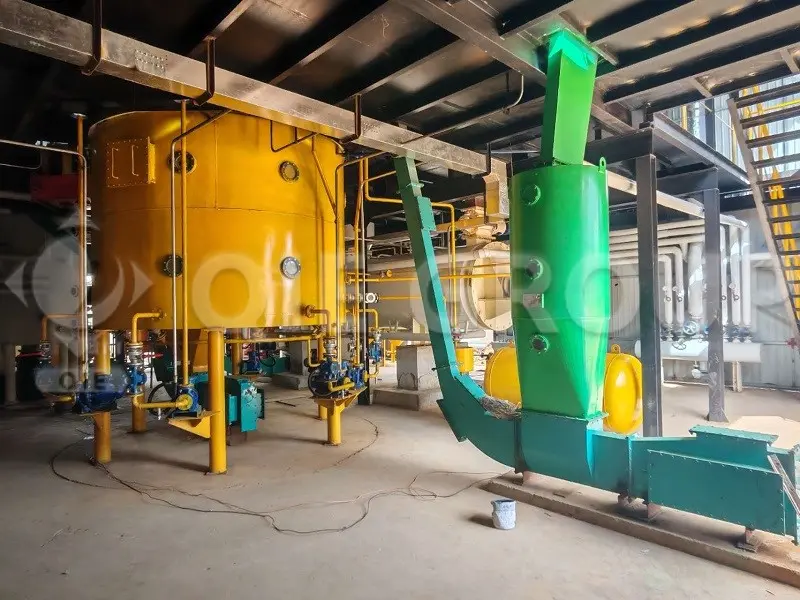
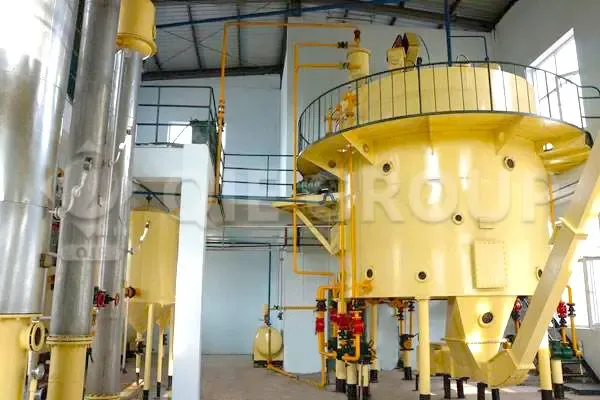
Workshop equipment used for solvent extraction of edible oils, including extractors, desolventizers, and solvent recovery systems.

Investment Range Overview

Based on QIE Group's global experience, the following is a general reference (actual costs depend on detailed specifications and location):

Plant Scale Daily Processing Process Investment (USD) Suitable For
Small 30-100 tons Pressing or small extraction with simple refining, low automation 0.5 – 2 million Startups or specialty oils
Medium 100-500 tons Pressing or extraction, complete refining, multiple oils, higher automation 2 – 8 million Balanced investment and economic efficiency
Large 500+ tons Fully automated continuous production, deep refining (may include fractionation), large auxiliary systems 8 million+ (up to tens of millions) High technical and management requirements, lower unit cost due to scale

⚠️ Note: Costs vary significantly depending on raw materials and process. A soybean extraction plant and a palm fruit processing plant with similar capacities can have multi-million-dollar differences due to process requirements.

Why Choose QIE Group's Turnkey Solution

Choosing an experienced turnkey contractor is key to reducing risks and optimizing investment. QIE Group's turnkey solution provides:

Single Point of Responsibility

Clients only need to connect with the QIE Group, which will be fully responsible for all aspects from design to production. This ensures clear responsibilities and avoids the hassle and risk of disputes from multiple parties.

Time & Cost Savings

With its mature process flow, supply chain management, and project management experience, QIE Group can optimize design, shorten construction period, control costs, and ensure projects are delivered on time and within budget.

Reduced Technical Risk

With extensive experience in processing various raw materials such as palm oil, soybean oil, and sunflower oil, we ensure reliable processes, precise equipment selection, and stable system operation, thereby guaranteeing product quality and oil yield.

Optimized Capacity & Efficiency

Customized designs based on customer needs ensure full utilization of factory capacity and effective control of energy and material consumption.

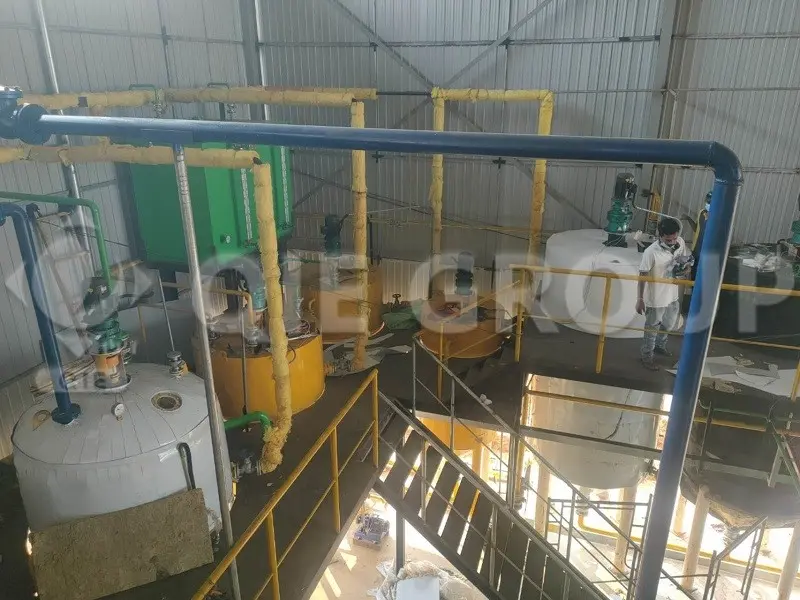
Workshop for refining edible oil, equipped with degumming, neutralization, bleaching and deodorization units.

FAQ

Q1: What preparations are needed before building a plant?

Define target capacity, raw material type, refining depth, automation level, and site location

Conduct feasibility study, market research, and investment budgeting

Q2: How much does pressing vs. solvent extraction cost?

Solvent extraction is typically more expensive than pressing; suitable for low-oil-content materials, with higher equipment and safety requirements

Q3: How does automation affect total investment?

Higher automation increases initial investment by 15-25% but significantly reduces long-term labor costs

Start Your Edible Oil Production Journey

From small-scale projects of a few hundred thousand dollars to large integrated plants costing tens of millions, investment scales vary widely. Understanding precise costs based on your requirements is essential.

By providing your target capacity, raw materials, product standards, automation level, and site location, our experts will develop a customized turnkey edible oil plant solution, delivering a precise, transparent, and competitive cost estimate to help you take the first step toward production.

Name *
Email *
WhatsApp *
Message*

Recommended Products

Related Reading

Turnkey Edible Oil Processing Plant Solution from Design to Installation

2025-12-24 | https://shmuker.oss-accelerate.aliyuncs.com/tmp/temporary/60ec5bd7f8d5a86c84ef79f2/60ec5bdcf8d5a86c84ef7a9a/20240305160636/lable.png edible oil processing plant turnkey edible oil plant oil refining equipment oil pressing line edible oil plant installation services

Uzbekistan 10-50TPD Cottonseed Oil Processing Plant

2025-09-16 | https://shmuker.oss-accelerate.aliyuncs.com/tmp/temporary/60ec5bd7f8d5a86c84ef79f2/60ec5bdcf8d5a86c84ef7a9a/20240305160636/lable.png cottonseed oil processing plant cottonseed oil production line cottonseed oil refinery machine edible oil equipment 10-50TPD cottonseed oil plant Uzbekistan cottonseed oil

Steam Cooker for Edible Oil Processing: Improve Efficiency and Oil Yield

2025-10-05 | https://shmuker.oss-accelerate.aliyuncs.com/tmp/temporary/60ec5bd7f8d5a86c84ef79f2/60ec5bdcf8d5a86c84ef7a9a/20240305160636/lable.png steam cooker edible oil oil seeds pretreatment equipment cooking oil production line edible oil processing plant oil pressing machine steam cooker

Cold press vs solvent extraction for castor oil

2025-08-06 | https://shmuker.oss-accelerate.aliyuncs.com/tmp/temporary/60ec5bd7f8d5a86c84ef79f2/60ec5bdcf8d5a86c84ef7a9a/20240305160636/lable.png Castor seed oil cold press machine Castor seed oil cold pressing process Castor seed oil solvent extraction process Castor seed oil production line Castor oil processing plant Castor oil refinery

Walnut Oil Production Guide: Choosing the Right Equipment & Processing Method

2025-10-01 | https://shmuker.oss-accelerate.aliyuncs.com/tmp/temporary/60ec5bd7f8d5a86c84ef79f2/60ec5bdcf8d5a86c84ef7a9a/20240305160636/lable.png walnut oil processing plant walnut oil extraction machine walnut oil production line cold pressed walnut oil walnut oil refining equipment

Hot Products

Popular articles
sunflower-oil-press-machine-small-scale-2.webp
oil-vegetable-oil-solvent-extraction-workshop-2.webp
soybean-pretreatment-workshop-3.webp
canola-oil-pretreatment-workshop-1.webp
5tph-palm-oil-press-1.webp
sunflower-pretreatment.webp
edible-oil-solvent-extraction-plant-02.webp
qie-engineer-on-site-guidance-3.webp
coconut-oil-refinery.webp
sunflower-seed-oil-preprocessing-equipment-1.webp
Recommended Reading
Contact Us
https://shmuker.oss-accelerate.aliyuncs.com/tmp/temporary/60ec5bd7f8d5a86c84ef79f2/60ec5bdcf8d5a86c84ef7a9a/thumb-prev.png