Before engineering design begins, several basic project conditions should be clearly defined.
The project should evaluate the cottonseed's oil content, moisture, impurities, hull condition, and lint condition.
These characteristics directly influence the design of delinting, dehulling, pretreatment, and oil extraction systems.
Plant capacity is normally expressed as TPD (tons per day).
Capacity should not be determined by market demand alone. It should also consider local cottonseed availability, annual operating days, storage capacity, investment budget, and potential future expansion.
The project should define whether the plant will produce:
If the plant is expected to produce edible refined oil directly, an appropriate refining section should be integrated after the pressing or extraction system.
Common cottonseed oil processing routes include mechanical pressing, pre-press followed by solvent extraction, and solvent extraction systems designed according to specific project conditions.
Mechanical pressing generally has a relatively simple process and can be suitable for projects that prioritize a simpler plant configuration. Pre-press plus solvent extraction can further recover residual oil from the press cake and may be more suitable for projects that prioritize overall oil recovery.
Depending on plant capacity and final product requirements, a typical cottonseed oil production route is:
The delinting and dehulling configuration does not have to be identical for every project. Equipment selection should be based on the condition of the incoming cottonseed, the desired cottonseed meal quality, and the selected extraction route.
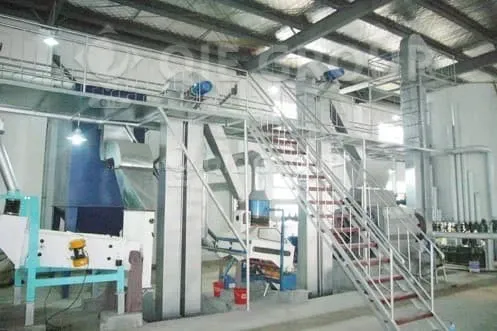
Cottonseed pretreatment is an important stage for improving downstream oil extraction efficiency. It generally includes:
Delinting removes short fibers from the surface of cottonseed, facilitating subsequent processing and recovery of the cotton linters by-product.
Dehulling and kernel-hull separation reduce the amount of high-fiber hull material entering the oil extraction system and can improve oil recovery and cottonseed meal quality.
Under the corresponding raw material and equipment conditions, the QIE cottonseed oil processing solution can achieve design targets such as a delinting rate of ≥95% and a dehulling rate of ≥90%. Actual performance depends on raw material conditions and the project technical specification.
During flaking, cottonseed kernels are processed into flakes suitable for subsequent cooking, pressing, or extraction. In the QIE solution, a typical flake thickness can be controlled within approximately 0.3–0.5 mm, while the actual value is adjusted according to the process conditions.
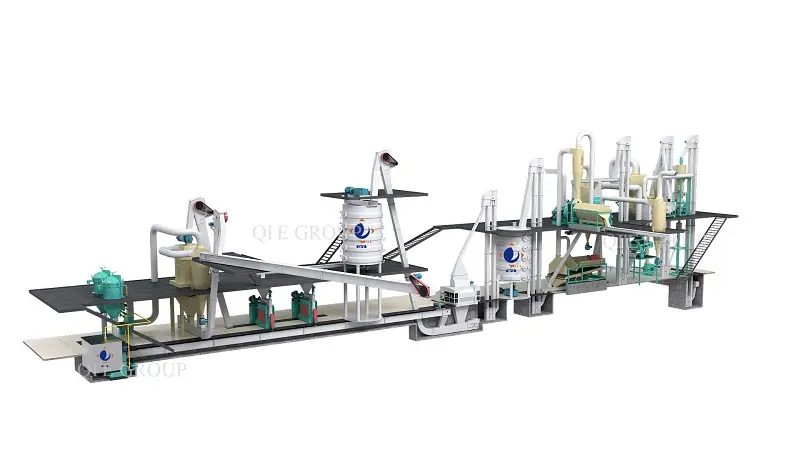
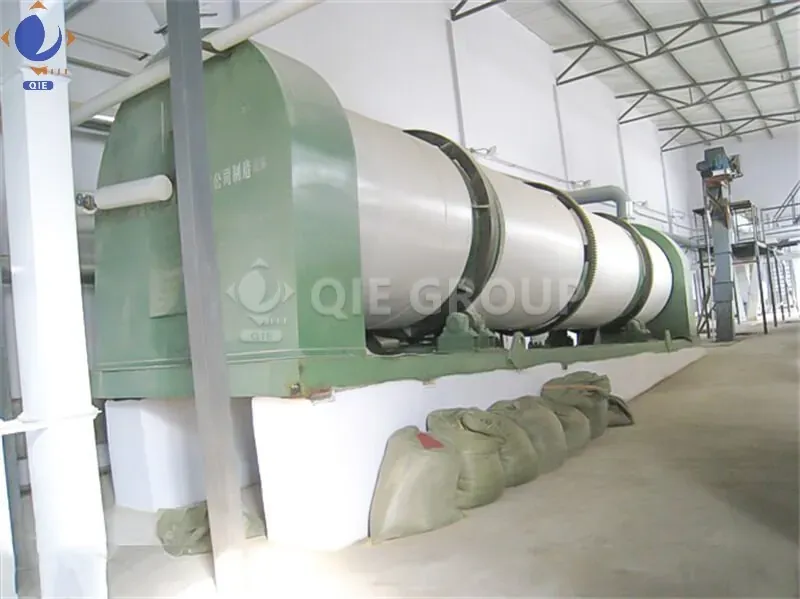
After cooking, the conditioned cottonseed material enters a screw pre-press. Continuous mechanical pressure extracts most of the oil that can be efficiently recovered through mechanical pressing.
In the QIE cottonseed oil processing solution, the pre-press oil yield can reach approximately 25–30%, while the residual oil content of the press cake can be controlled at around 16–20%. The press cake is then sent to solvent extraction for further oil recovery.
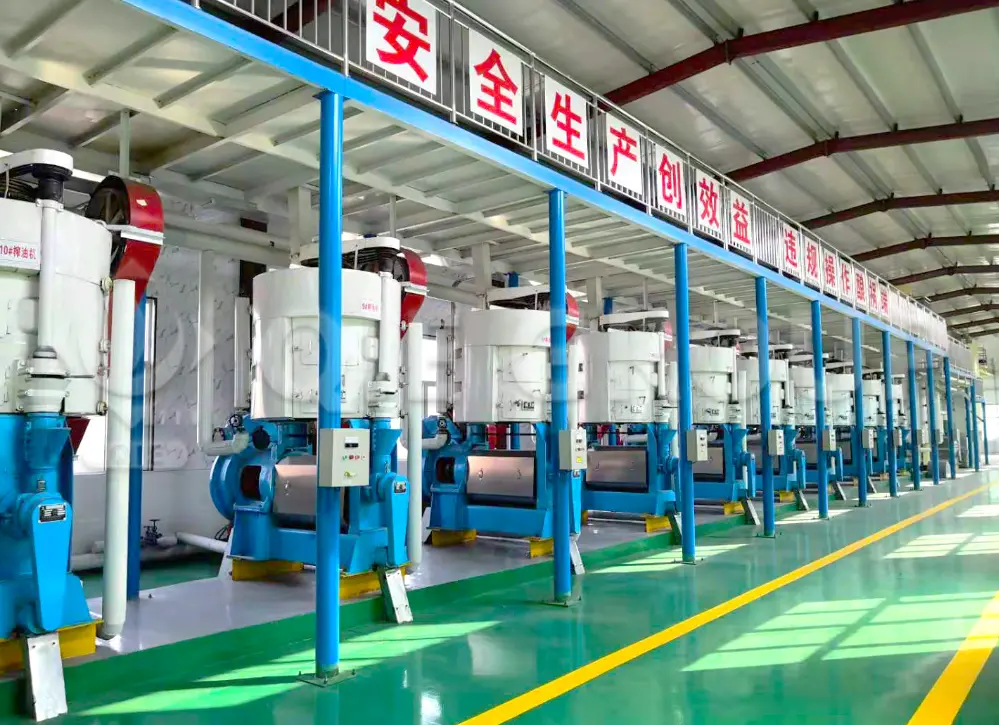
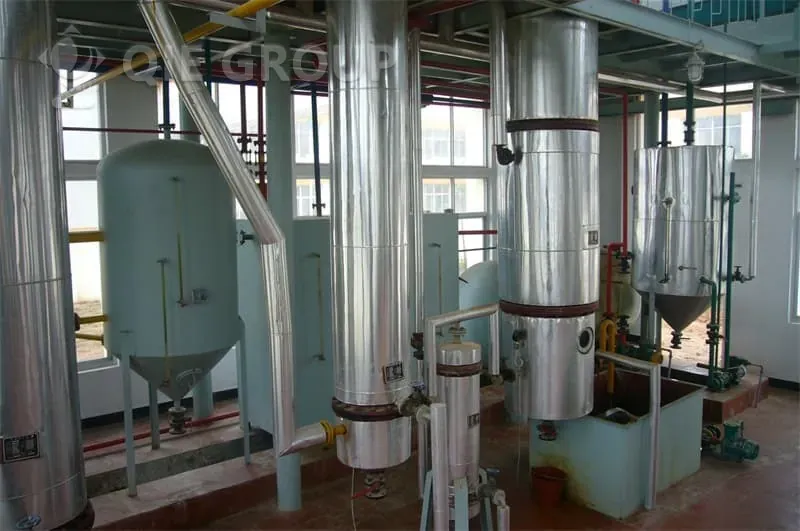
The pre-pressed cake enters an extractor, where solvent counter-current extraction recovers additional oil.
The QIE solution integrates the extractor, DTDC desolventizing system, miscella evaporation system, and solvent recovery system.
Under the corresponding design conditions, the residual oil content of the extracted meal can be controlled to ≤0.8%.
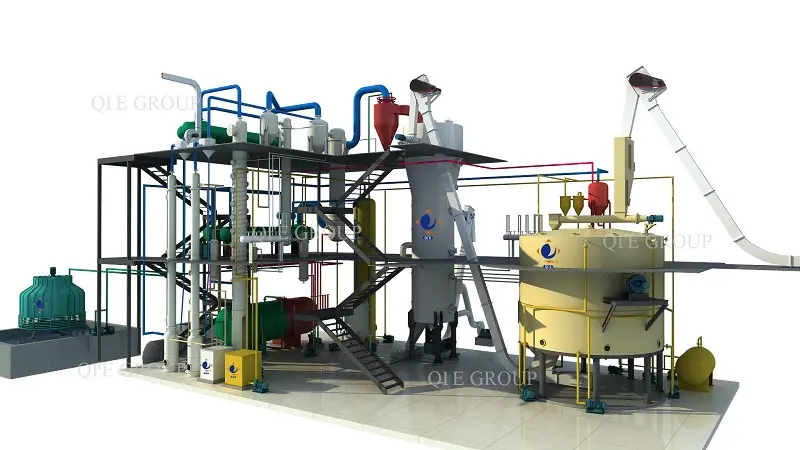
Cottonseed oil refining is designed not only to reduce free fatty acids, phospholipids, pigments, and undesirable odors, but also to control gossypol and other undesirable components.
Degumming removes phospholipids and other gum-forming impurities. Water degumming or other suitable methods can be selected according to the characteristics of the crude oil, followed by centrifugal separation where appropriate.
During alkali refining, free fatty acids react with alkali to form soapstock, while free gossypol can also be reduced during the process. This makes alkali refining an important stage in cottonseed oil quality control.
Activated bleaching earth and other adsorbents can be used to remove pigments, residual soap, trace metals, and other polar impurities, improving oil color and quality stability.
Under high-temperature, high-vacuum, and steam conditions, deodorization removes volatile odor compounds and residual free fatty acids, further improving the flavor and quality of refined cottonseed oil.
If the final product requires good clarity at low temperatures, a winterization or dewaxing system can be added.
By controlling crystallization and filtration, waxes can be separated from the oil. The specific crystallization temperature and holding conditions should be determined according to the wax content of the crude oil and the final product requirements.
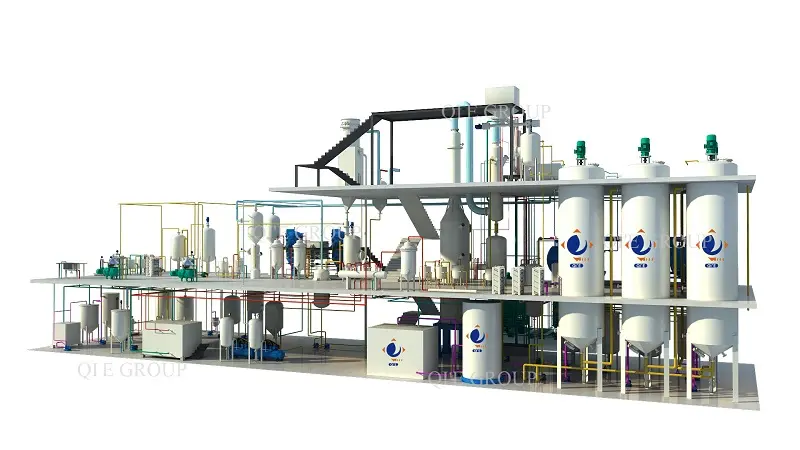
A complete turnkey cottonseed oil mill EPC project generally covers:
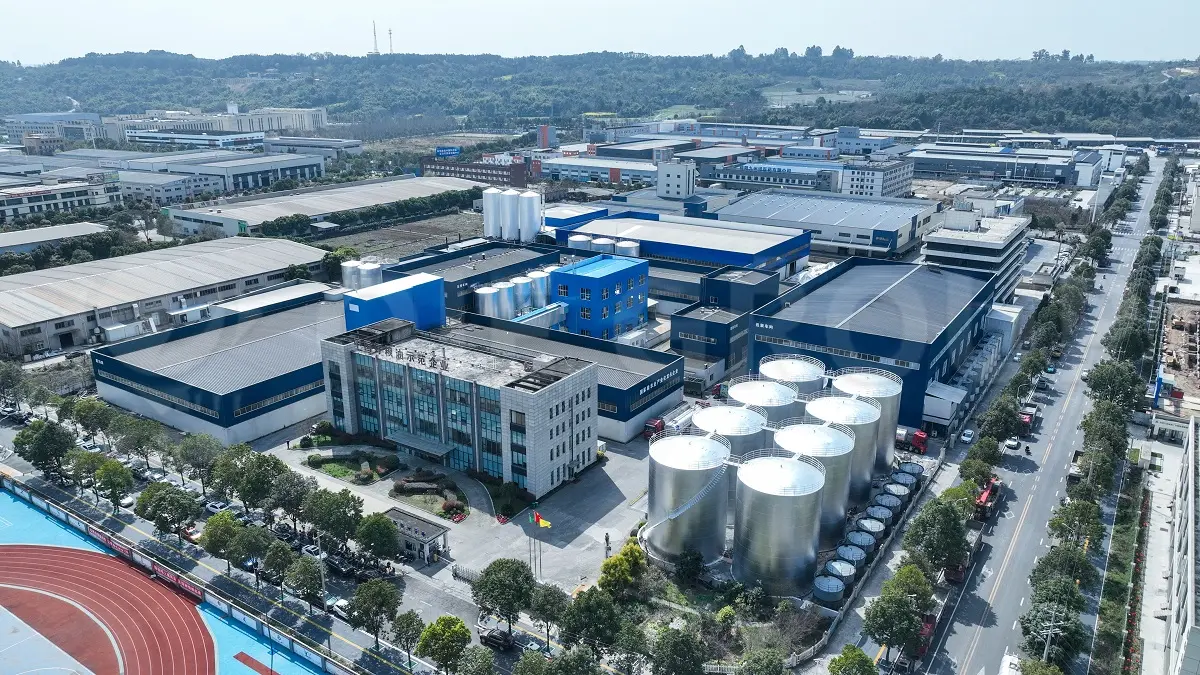
QIE GROUP can develop an integrated solution covering pretreatment, pressing, solvent extraction, refining, storage, and related auxiliary systems according to specific project requirements.
This is one of the main differences between a turnkey EPC project and purchasing individual equipment: an EPC project focuses on the coordination and integration of the complete plant rather than the performance of a single machine.
Before commercial production begins, the cottonseed oil mill should undergo systematic commissioning.
The engineering team checks equipment installation, pipelines, electrical systems, instruments, safety facilities, and utility connections.
Each machine is tested to verify operating direction, vibration, temperature rise, interlocks, and control functions.
Equipment is started progressively according to the production process to verify material flow, equipment coordination, and control-system communication between different sections.
Actual cottonseed is introduced for trial production. Key parameters in cleaning, dehulling, cooking, pressing, extraction, and refining are adjusted according to operating conditions.
According to the technical agreement, the project can be evaluated based on processing capacity, oil recovery, residual oil content, product quality, and system operating stability.
After the agreed performance requirements are achieved, the plant can proceed to project handover, with operators receiving production and maintenance training.
There is no single fixed price for a turnkey cottonseed oil mill plant.
The total project investment mainly depends on:
Therefore, a reliable EPC quotation should not be calculated simply by applying a generic “cost per ton of capacity.”
Instead, the engineering scope should first be defined based on TPD, raw material specifications, processing route, project location, utilities, and final product requirements.
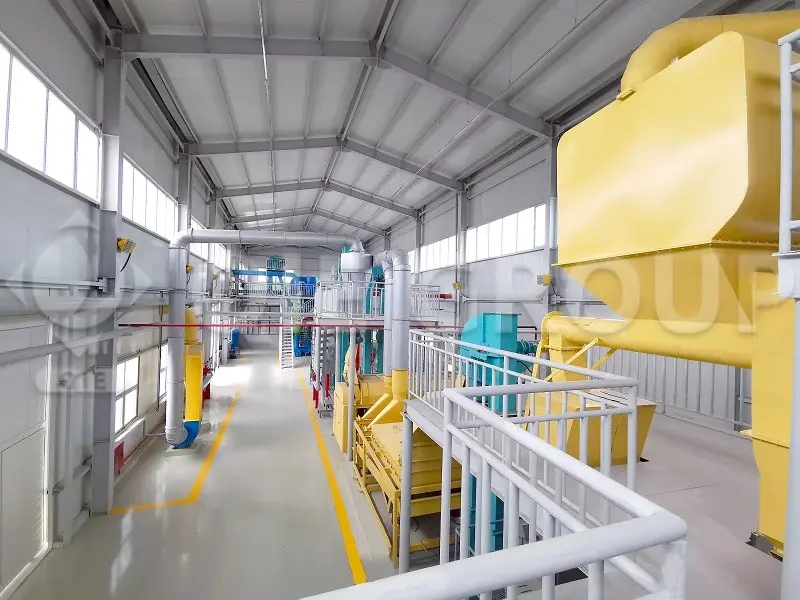
Investors should evaluate the following factors when selecting an EPC supplier:
Investors should be particularly cautious of suppliers that promise the “highest oil yield” or “lowest investment cost” without first evaluating the raw material characteristics and engineering conditions.
With more than 40 years of experience in grain and oil machinery and oil processing engineering, QIE GROUP provides solutions covering pretreatment, pressing, solvent extraction, and refining for cottonseed and other oilseeds.
For cottonseed oil projects, QIE develops the processing route according to the raw material condition, target capacity, final product requirements, and project location, rather than simply applying a fixed equipment configuration.
QIE's turnkey project support can cover the process from engineering design and equipment manufacturing to installation guidance, commissioning, performance verification, operator training, and project handover.
For an accurate project proposal, investors should provide:
The more complete the project information, the more accurately the EPC supplier can determine the processing route, equipment configuration, investment estimate, and project implementation plan.
 complete rapeseed oil processing line rapeseed oil refinery rapeseed oil production plant rapeseed oil processing equipment pre-press solvent extraction
sesame oil production line sesame oil processing plant sesame oil pressing machine hot pressed sesame oil cold pressed sesame oil
Sunflower oil processing edible oil plant 1000TPD oil mill oil refining pressing and solvent extraction
olive pomace solvent extraction olive pomace oil processing turnkey edible oil plant olive pomace oil recovery edible oil EPC project
sunflower seed oil processing sunflower oil pretreatment turnkey sunflower oil production line oil refining stability dehulled sunflower seed
complete rapeseed oil processing line rapeseed oil refinery rapeseed oil production plant rapeseed oil processing equipment pre-press solvent extraction
sesame oil production line sesame oil processing plant sesame oil pressing machine hot pressed sesame oil cold pressed sesame oil
Sunflower oil processing edible oil plant 1000TPD oil mill oil refining pressing and solvent extraction
olive pomace solvent extraction olive pomace oil processing turnkey edible oil plant olive pomace oil recovery edible oil EPC project
sunflower seed oil processing sunflower oil pretreatment turnkey sunflower oil production line oil refining stability dehulled sunflower seed





.png?x-oss-process=image/resize,h_100,m_lfit/format,webp)
.png?x-oss-process=image/resize,h_100,m_lfit/format,webp)
.png?x-oss-process=image/resize,h_100,m_lfit/format,webp)