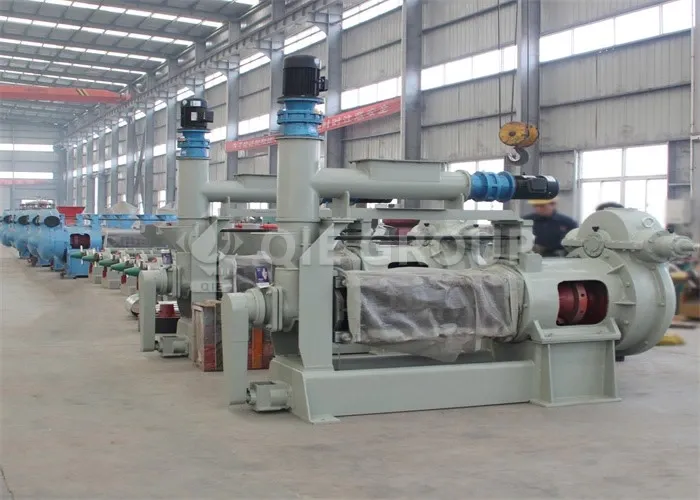
In sunflower seed oil processing, the decision whether to dehull the seeds before pressing or extraction is far more than a minor process adjustment. It is a strategic choice that directly affects crude oil quality, process stability, refining intensity, and long-term operating efficiency.
For investors, plant owners, and technical managers planning a sunflower oil production line, understanding the fundamental differences between dehulled and whole-seed processing routes is essential to achieving consistent product quality and predictable plant performance.
Drawing on extensive project experience in global edible oil plants, QIE GROUP analyzes this decision from an engineering and system-design perspective rather than a purely theoretical one.
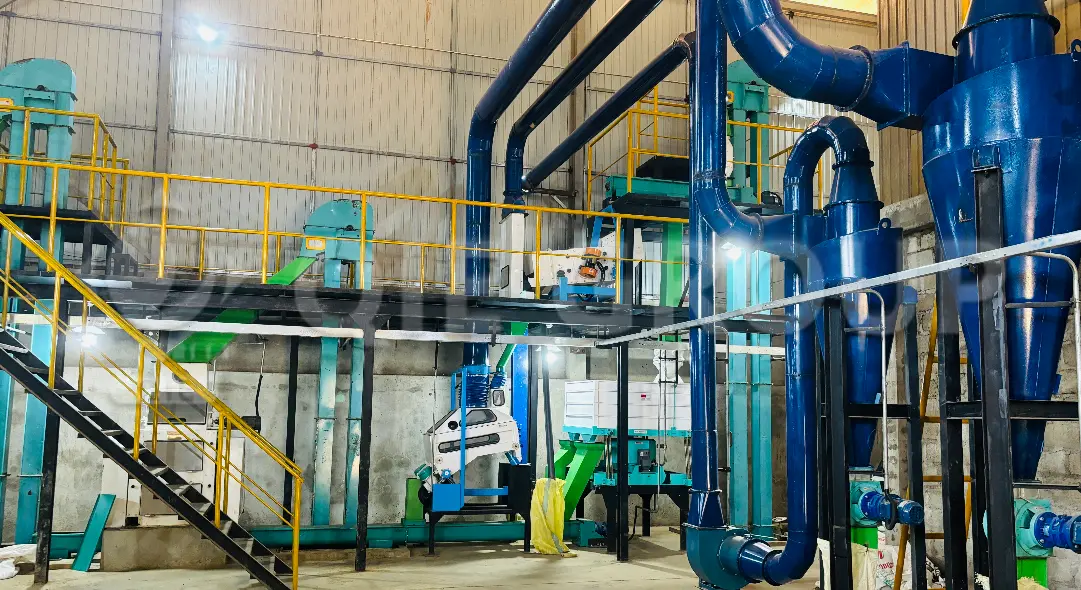
In modern sunflower seed oil pretreatment, dehulling is typically positioned after cleaning and before crushing or conditioning. A common process route is:
Cleaning → Dehulling → Hull Separation → Crushing → Cooking/Conditioning
Sunflower hulls contain high levels of fiber, pigments, and wax-related components. When hulls enter the pressing or extraction system, they tend to darken crude oil color and introduce flavor instability, increasing the burden on downstream refining.
By removing the hull layer prior to oil release, dehulled sunflower seed processing consistently produces lighter-colored crude oil with a cleaner sensory profile, which is particularly important for refined or export-oriented sunflower oil products.
Wax content in sunflower oil is closely linked to hull-derived components. While dewaxing technology can effectively remove wax during refining, minimizing wax formation at the pretreatment stage significantly improves process stability and refining efficiency.
Dehulling helps reduce wax precursors entering the oil phase, resulting in more stable winterization and lower energy demand in the refining section.
From a process efficiency standpoint, sunflower hulls contain negligible oil but absorb a disproportionate amount during pressing or extraction. Removing them increases the proportion of effective oil-bearing material entering the system.
When dehulling efficiency and kernel integrity are properly controlled, plants typically achieve higher effective oil recovery and better utilization of raw materials.
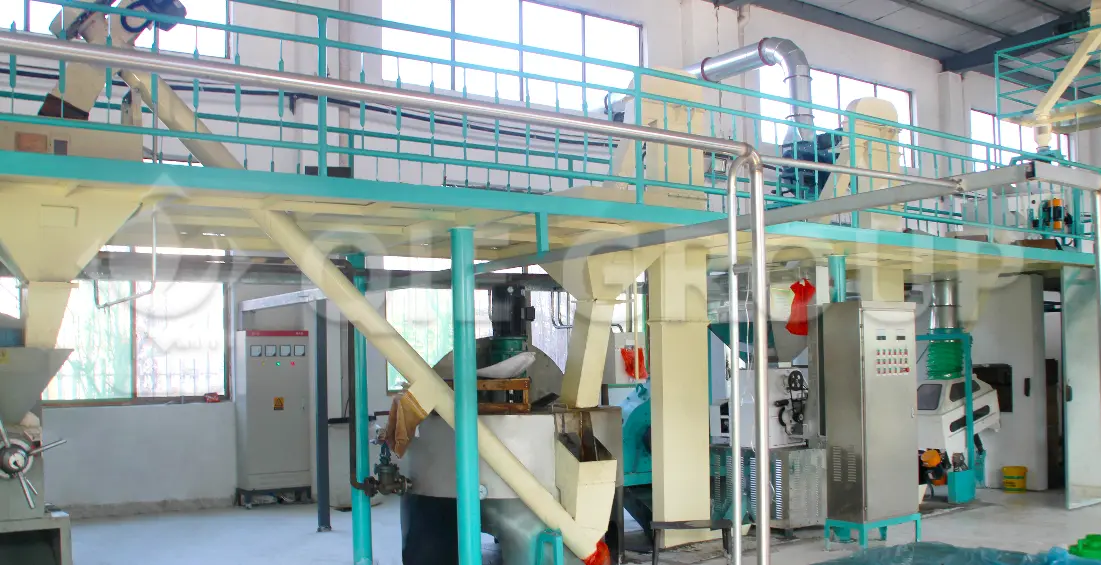
While dehulling offers clear quality advantages, it also places higher demands on process control and equipment integration.
Excessive dehulling creates fines and powder, negatively affecting cooking uniformity and press cake structure. Insufficient dehulling leaves residual hulls that undermine the intended benefits.
Successful dehulled sunflower seed processing requires precise control of:
These parameters must be matched to seed variety, moisture content, and particle size distribution—an area where engineering experience is critical.
Once hulls are removed, the kernel structure becomes more uniform but also more sensitive to temperature and moisture control. Cooking parameters such as:
must be carefully engineered to ensure consistent oil release and press stability.
This is why dehulled processing performs best when integrated into a well-designed, automated pretreatment system, rather than added as a standalone modification.
In contrast, non-dehulled (whole-seed) processing follows a simpler route:
Cleaning → Crushing → Cooking/Conditioning → Pressing
Sunflower hulls provide natural structural support during pressing, forming a porous cake that improves material conveyance and oil drainage.
For plants operating under variable raw material quality or smaller capacities, whole-seed processing often delivers robust mechanical stability and easier operation.
Whole-seed processing generally produces sunflower oil with a darker color and stronger aroma, characteristics that are preferred in certain regional or traditional markets.
This route is well suited for products where flavor intensity is valued over ultra-light color.
Without dehulling and hull separation, the pretreatment line becomes more compact. Initial investment and operational complexity are reduced, making this option attractive for:
However, these advantages come with higher demands on downstream dewaxing and impurity removal.
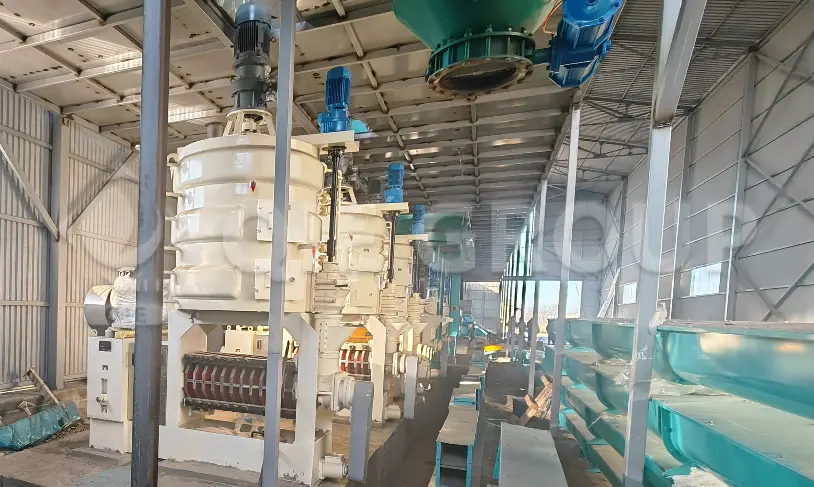
From a refinery perspective, the choice between dehulled and whole-seed processing significantly affects operating conditions.
Over the full lifecycle of a plant, these differences often outweigh the initial savings in pretreatment equipment.
Based on QIE GROUP's turnkey project experience, the question is never whether dehulling is “better” in absolute terms. The real issue is alignment between product goals, market positioning, and system capability.
What matters most is not a single process step, but the overall engineering design of the sunflower seed oil production line.
As an engineering-oriented supplier of turnkey edible oil processing plants, QIE GROUP goes beyond equipment supply. We support clients through:
Our approach is grounded in operational data, material behavior, and long-term plant performance, ensuring that each sunflower oil project achieves stable production and predictable quality.
Choosing between dehulled and whole sunflower seed processing is a strategic decision that defines oil quality, refining intensity, and operational efficiency for years to come.
With a clear understanding of product targets and a system-level engineering approach, sunflower oil producers can turn this choice into a competitive advantage.
QIE GROUP is ready to support that decision with proven technology and integrated turnkey solutions.
 turnkey edible oil plant edible oil processing plant edible oil processing line EPC edible oil plant design and construction
Sunflower oil production line Sunflower seed pretreatment equipment Sunflower oil processing technology Sunflower oil processing plant
turn-key edible oil processing plant edible oil plant solutions commercial edible oil producer vegetable oil processing line oil refining equipment
Small oil press equipment How much does it cost to open an oil mill? Selection of edible oil processing equipment A Beginner's Guide to Opening an Oil Plant Oil mill investment budget Edible oil production line
twin screw palm fruit oil press palm fruit oil pressing machine palm oil processing equipment palm fruit oil production line palm oil mill machinery palm oil extraction plant
turnkey edible oil plant edible oil processing plant edible oil processing line EPC edible oil plant design and construction
Sunflower oil production line Sunflower seed pretreatment equipment Sunflower oil processing technology Sunflower oil processing plant
turn-key edible oil processing plant edible oil plant solutions commercial edible oil producer vegetable oil processing line oil refining equipment
Small oil press equipment How much does it cost to open an oil mill? Selection of edible oil processing equipment A Beginner's Guide to Opening an Oil Plant Oil mill investment budget Edible oil production line
twin screw palm fruit oil press palm fruit oil pressing machine palm oil processing equipment palm fruit oil production line palm oil mill machinery palm oil extraction plant




.png?x-oss-process=image/resize,h_100,m_lfit/format,webp)
.png?x-oss-process=image/resize,h_100,m_lfit/format,webp)
.png?x-oss-process=image/resize,h_100,m_lfit/format,webp)