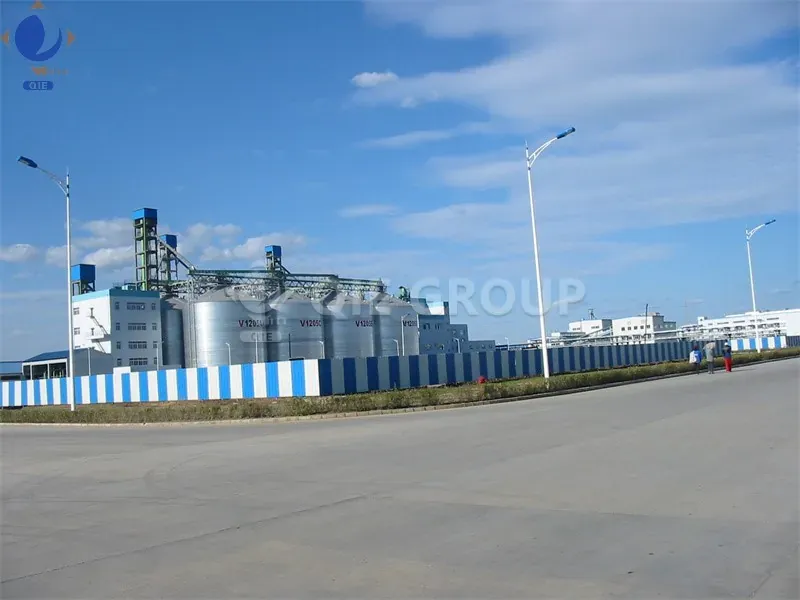
Sunflower seed oil holds a significant position in the edible oil market due to its clear color, pure taste, and rich nutritional value. Many oil mills often face problems such as unsatisfactory pressing rates of high-oil-content raw materials and inconsistent oil quality during production. In fact, efficient oil extraction relies not only on a simple combination of pressing machinery and chemical extraction technology, but also on a rigorous and scientific process design system. This article will delve into the entire process of sunflower seed oil production, from raw materials to refining, revealing the key to improving oil yield and optimizing oil quality.
Sunflower seeds typically contain 40% to 50% oil and about 30% to 40% shells. High oil content means high oil potential, but high shell content also presents processing challenges. Oil mills need to find the optimal balance between oil yield, smooth material flow, and oil quality during production. The key question is: to remove the shells or not?
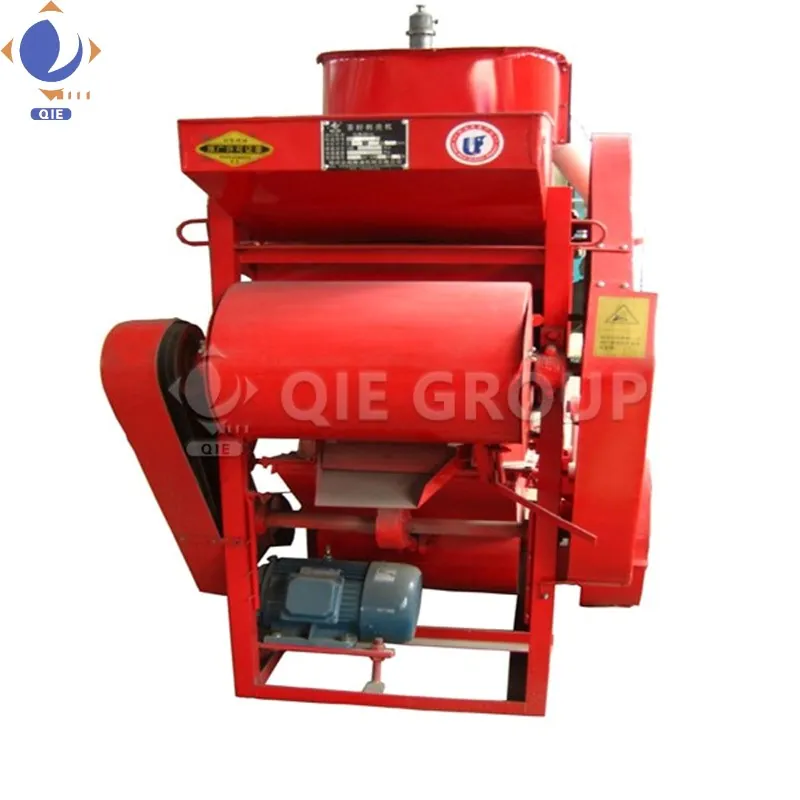
The main purpose of the dehulling process is to remove seed shell impurities, improve oil purity, and produce high-end, clear oil. Advantages include:
Reduce the impact of shell impurities : Fiber and pigments in the seed shell can affect the smoothness of pressing and the color of the oil.
Improve refining efficiency : With fewer impurities in the oil, subsequent degumming, decolorization, and deodorization processes are more efficient.
Optimize taste and flavor : Removing the shell can reduce bitterness and off-flavors.
However, dehulling also presents technical challenges. The steaming, roasting, or conditioning process must precisely control the temperature, time, and moisture; otherwise, it is easy for the material to slip through the chamber, become pulpy, or be over-crushed, leading to a decrease in pressing efficiency or an increase in equipment wear and tear.
The non-shelling process preserves the seed husk skeleton, making the pressing process smoother and requiring less equipment investment and process complexity. It is suitable for small and medium-sized oil mills or products with less stringent color requirements. However, non-shelling also means that subsequent refining stages require more advanced color control and impurity removal technologies, resulting in relatively higher refining costs.
The key to efficient sunflower seed oil production lies in the combination of process design and equipment optimization. QIE Group provides oil mills with customized solutions covering the entire process from raw material processing to finished product refining, encompassing the following stages:
The pretreatment stage is fundamental to ensuring successful pressing and leaching, and mainly includes:
Remove impurities : Screening, stone removal, and dust removal to prevent equipment wear and blockage.
Adjusting moisture and temperature : Maintaining suitable flowability and plasticity of materials reduces the risk of material blockage during pressing.
Optimize particle structure : Increase the exposed surface area of oil by crushing or breaking it, creating conditions for subsequent oil release.
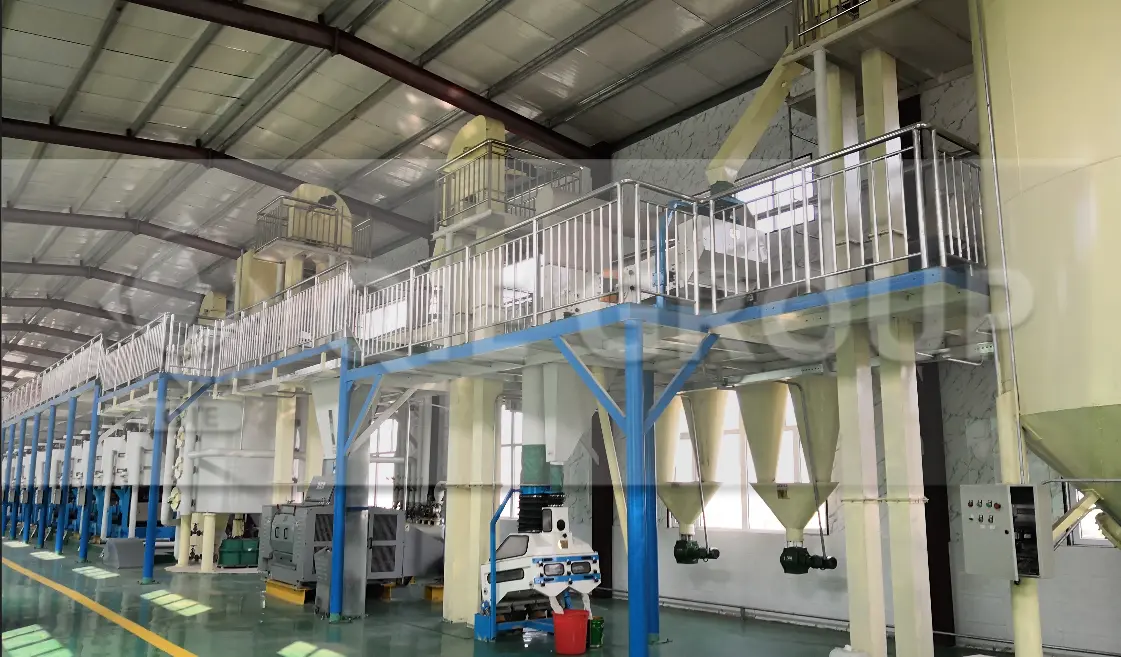
Steaming, roasting, or conditioning are key steps in the efficient extraction of sunflower seed oil.
Cell disruption : Heat treatment causes the cell walls of oil cells to rupture, increasing the oil yield.
Controlling flavor development : Through precise temperature control, the ideal nutty aroma is formed while avoiding over-caramelization.
Stable material structure : Maintains the integrity of the grains, ensures a smooth pressing process, and reduces the risk of pulping.
Optimizing steaming and frying parameters is particularly important for the dehulling process, directly affecting the smoothness of pressing and oil extraction efficiency. 🔗 ( Steam cooker: Improves efficiency and oil yield )
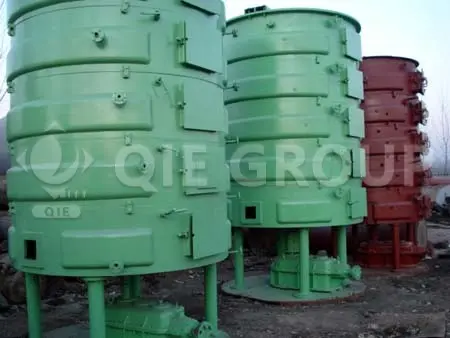
Mechanical pressing and solvent extraction are the main processes in oil extraction:
Mechanical pressing : initially releases most of the oil, suitable for high-oil-content seeds.
Solvent leaching : Deep extraction of residual oil fraction, with residual oil content below 0.5%.
Heat recovery : Advanced equipment can recover 10%~15% of heat energy, reducing energy consumption and improving overall economic efficiency.
The combined pressing and solvent extraction process is customized based on the oil mill's output and product positioning to achieve a balance between high oil yield and low energy consumption. 🔗 ( Guide to High-Efficiency Extraction Technology and Equipment for Sunflower Seed Oil )

Crude oil after pressing or leaching still contains impurities, pigments, and small amounts of free fatty acids, requiring refining.
Degumming : Removes phospholipids and gums, reducing the viscosity of the oil.
Deacidification : Reduces acid value and improves oil stability and taste.
Decolorization : Removes pigments, improving the transparency and visual quality of the oil.
Dewaxing : Improves low-temperature stability and prevents turbidity and precipitation.
Deodorization : Removes odors while retaining natural fragrance and nutrients.
Based on product positioning, our company can adjust the refining process to meet the needs of different oil mills, achieving high-quality sunflower seed oil that is clear, stable, and retains its nutrients.
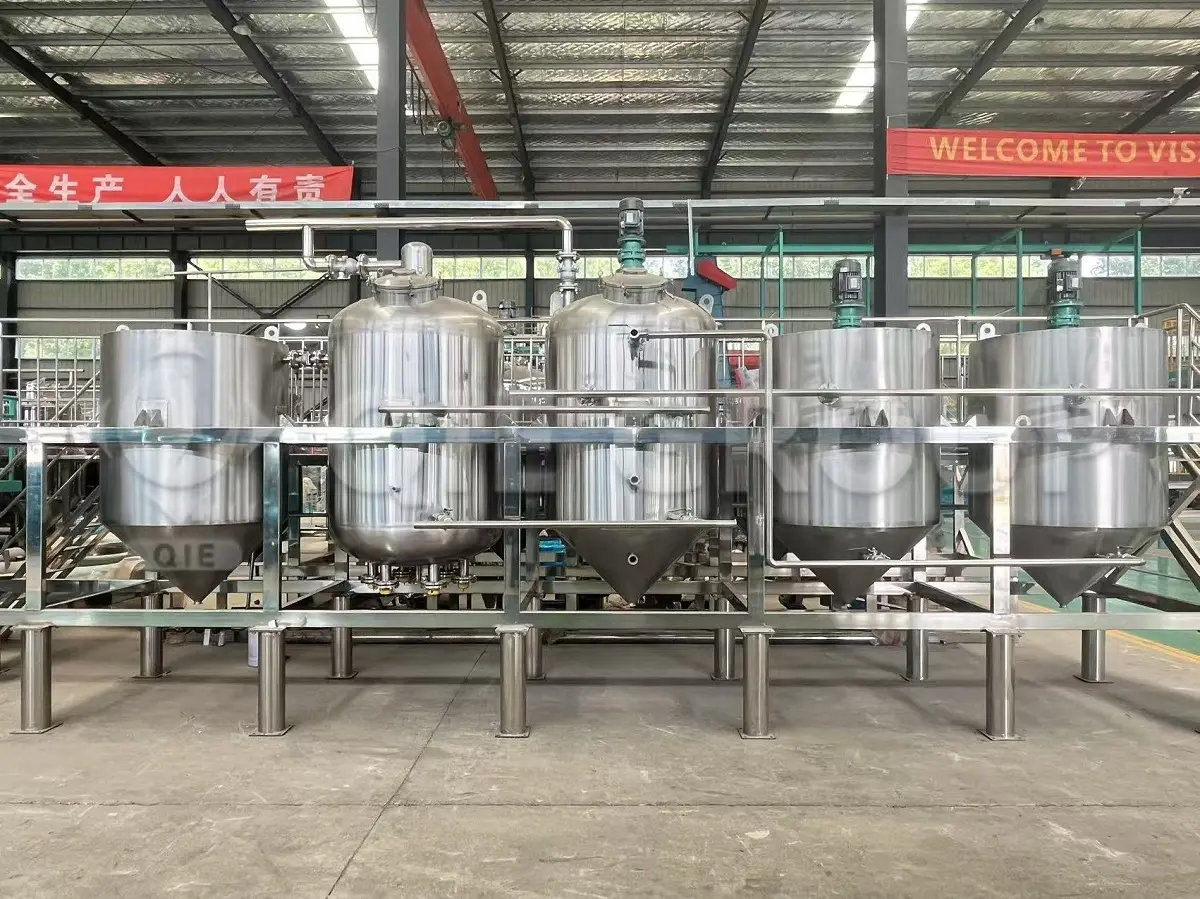
In sunflower seed oil production, oil yield and oil quality are often seen as contradictory. In reality, scientific process design and equipment optimization can achieve a "win-win" situation:
Optimizing steaming and frying parameters can increase the efficiency of oil release while avoiding a decline in the color and flavor of the oil.
The combination of mechanical pressing and solvent extraction ensures extremely low residual oil content and significant economic benefits.
The refining process is customized to preserve nutritional components while meeting market demands for clear, low-acid oils.
By optimizing the entire process, the oil mill not only improves production efficiency but also better meets consumers' demand for high-quality sunflower seed oil.
Q1: What are the key steps in the efficient oil extraction process of sunflower seed oil?
A1: Key steps include raw material pretreatment, steaming and frying conditioning, a combination of mechanical pressing and solvent extraction, and optimization of refining processes. These steps directly affect the oil yield, oil color, flavor, and retention of nutrients.
Q2: What is the difference between the shelling process and the non-shelling process?
A2: The dehulling process removes seed shell impurities, which is beneficial for producing high-end clear oil, while reducing pressing resistance and refining burden. However, the steaming, roasting, and pressing parameters need to be precisely controlled. The undehulled process is simple and the pressing is smooth, but the subsequent refining requires higher standards for color and impurity control.
Q3: How to reduce the residual oil content of sunflower seed oil?
A3: By combining mechanical pressing and solvent extraction to extract oil, and optimizing steaming, frying, conditioning, and heat recovery, the residual oil rate can be reduced to below 0.5%, while improving the overall oil extraction efficiency.
Q4: How does the sunflower seed oil refining process ensure the quality of the oil?
A4: The refining process includes degumming, deacidification, decolorization, dewaxing, and deodorization. By removing impurities, reducing acid value, and stabilizing the oil, while retaining natural nutrients, high-quality finished oil products are achieved.
Q5: What customized solutions can you provide?
A5: We can provide customized solutions for the entire process, from raw material processing, steaming and frying conditioning, pressing and leaching to refining, based on the scale of the oil mill, product positioning and market demand, to achieve high oil yield, low residual oil rate and high-quality oil products.
The key to high-efficiency sunflower seed oil extraction lies in scientific process design and equipment optimization. From raw material pretreatment, steaming and frying conditioning, mechanical pressing and leaching, to the optimization of refining processes, each step has a crucial impact on oil yield and oil quality.
Leveraging its extensive experience and professional equipment, QIE Group provides customized end-to-end solutions. Whether for small and medium-sized oil refineries or those targeting the high-end market, scientific process design and equipment optimization can maximize oil yield, ensure superior oil quality, reduce production costs, and enhance market competitiveness.
We offer a one-stop sunflower seed oil processing solution. From raw material handling to refining optimization, we help you maximize oil yield and oil quality.
Click to learn more → sunflower oil plant Kazakhstan sunflower oil processing plant sunflower oil mill Kazakhstan edible oil extraction equipment turnkey oil processing plant sunflower oil pressing machine sunflower oil refinery plant
Edible oil plant Oil press machine Oil refining equipment Solvent extraction plant Small and medium oil mill plant
Soybean oil extraction equipment Oil refinery energy-saving renovation Intelligent Leaching Production Line Oil processing equipment High efficiency oil yield Soybean oil production line
Ring extractor Oil extraction equipment Oil processing solutions Edible oil production equipment High-efficiency leaching system
Soybean oil press machine Soybean oil solvent extraction equipment Soybean oil processing plant Soybean oil production line Soybean oil refinery plant
sunflower oil plant Kazakhstan sunflower oil processing plant sunflower oil mill Kazakhstan edible oil extraction equipment turnkey oil processing plant sunflower oil pressing machine sunflower oil refinery plant
Edible oil plant Oil press machine Oil refining equipment Solvent extraction plant Small and medium oil mill plant
Soybean oil extraction equipment Oil refinery energy-saving renovation Intelligent Leaching Production Line Oil processing equipment High efficiency oil yield Soybean oil production line
Ring extractor Oil extraction equipment Oil processing solutions Edible oil production equipment High-efficiency leaching system
Soybean oil press machine Soybean oil solvent extraction equipment Soybean oil processing plant Soybean oil production line Soybean oil refinery plant


.png?x-oss-process=image/resize,h_100,m_lfit/format,webp)
.png?x-oss-process=image/resize,h_100,m_lfit/format,webp)
.png?x-oss-process=image/resize,h_100,m_lfit/format,webp)