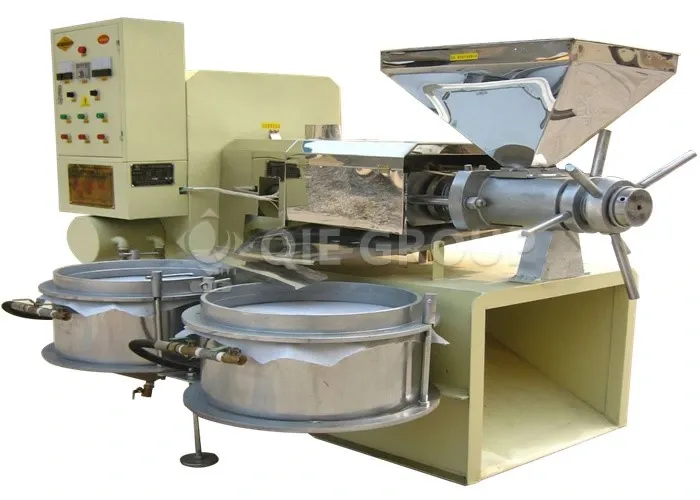
In today's highly competitive edible oil market, stable clarity is no longer a cosmetic attribute. For sunflower oil, it is a visible result of engineering discipline, process control, and long-term operational reliability. Clear, bright oil with consistent color and strong oxidative stability signals not only product quality, but also the maturity of the production system behind it.
For investors, factory owners, and project decision-makers, building such a production line is not a matter of assembling equipment, but a system engineering task that requires a deep understanding of raw material behavior, process bottlenecks, equipment matching, and risk control.
As an engineering-driven turnkey edible oil solution provider, QIE Group approaches sunflower oil projects from a practical, project-tested standpoint. This article explains how to design a sunflower oil production line that can continuously deliver stable, clear oil—at industrial scale and under real operating conditions.
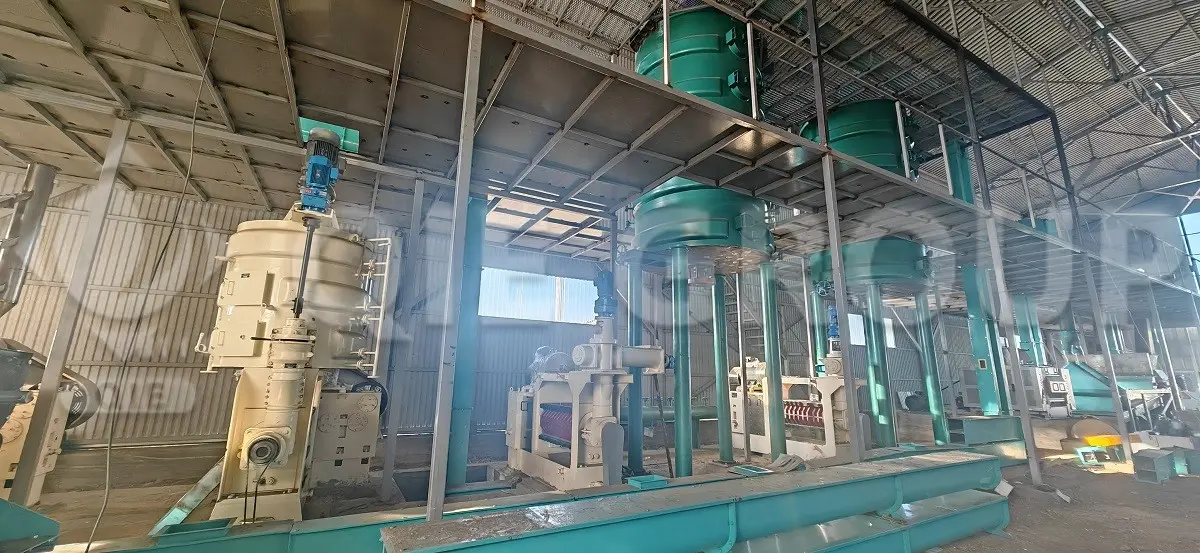
At the early stage of a sunflower oil project, discussions with investors and plant managers tend to focus on similar concerns. Behind each question lies a potential engineering risk.
Is the initial investment aligned with realistic market demand?
Can the line reach stable production quickly without prolonged commissioning?
Will equipment utilization remain efficient under seasonal or raw-material fluctuations?
In practice, capacity mismatch is one of the most common long-term ROI killers in edible oil projects.
Why does oil clarity fluctuate from batch to batch?
Can the process tolerate raw material variations by origin or harvest year?
Are cold test failures occasional incidents or signs of structural process weakness?
Loss of clarity is rarely caused by a single machine—it is almost always the result of cumulative process deviation.
Are refining losses underestimated at the feasibility stage?
How stable are energy consumption and solvent usage (if extraction is applied)?
Will winterization and filtration become daily operational bottlenecks?
Many plants look economical on paper but reveal their true cost only after months of unstable operation.
Is the selected process industrially proven or only theoretically sound?
Does stable operation depend on highly experienced operators?
When turbidity or off-odor occurs, is there a clear troubleshooting logic?
Can the line meet GB, Codex, EU, and FDA standards?
Is the process flexible enough to handle standard and high-oleic sunflower oil?
All these questions point to one core requirement: system engineering capability rather than isolated equipment performance.
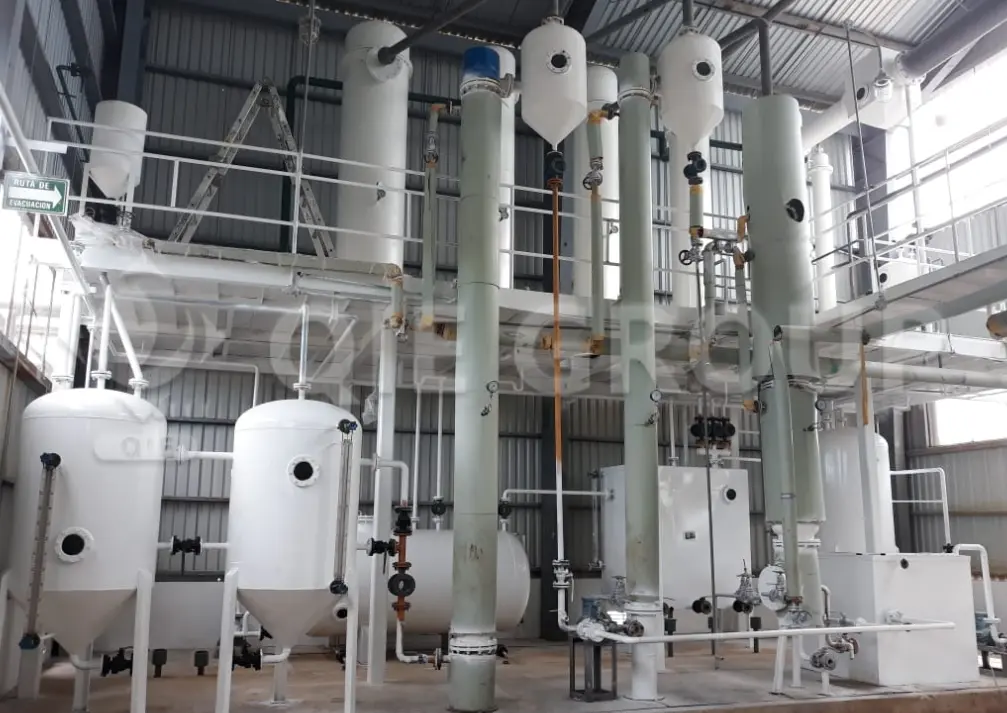
Every successful edible oil project begins with a realistic understanding of the raw material. Sunflower seeds present specific challenges that must be addressed at the design stage.
Oil content: typically 40–50%, directly affecting economic performance.
Physical impurities: hulls, sand, stones, and metal particles that define pretreatment intensity.
Gums and phospholipids: influencing degumming load and separation efficiency.
Free fatty acids (FFA): reflecting freshness and determining refining strategy.
Pigments: chlorophyll and carotenoids requiring selective adsorption.
Waxes: the decisive factor for oil clarity, especially under low-temperature storage.
In real projects, underestimating wax content is the fastest route to chronic turbidity problems.
Based on these characteristics, the engineering objectives go far beyond oil yield:
Stable clarity throughout shelf life
Bright, consistent color without color reversion
High oxidative stability
Maximum retention of natural antioxidants (tocopherols)
For high-quality sunflower oil, physical refining is often the preferred route, provided that dewaxing and filtration are engineered to industrial robustness.
A typical sunflower oil production line includes:
Pretreatment → Pressing / Pre-press + Solvent Extraction → Crude Oil Filtration → Degumming → Deacidification → Decolorization → Deodorization → Dewaxing (Winterization) → Final Polishing Filtration
It is critical to understand that clarity issues usually appear at the end of the line, while their root causes originate upstream.
Efficient cleaning (screening, magnetic separation, destoning) protects downstream equipment and reduces metal-ion-induced oxidation risks.
During crushing and flaking, the engineering focus is:
Uniform flake thickness
Controlled fines generation
Favorable internal structure for oil release
From an operational standpoint:
Stable press temperature and controlled mechanical stress are more valuable than chasing maximum oil yield.
Variable-frequency, temperature-monitored dual-stage screw presses offer a better balance between crude oil quality and economics.
Crude oil filtration is not merely about removing solids. Insufficient filtration capacity often results in:
Excess gums entering the refining system
Higher bleaching earth consumption
Progressive filtration instability downstream
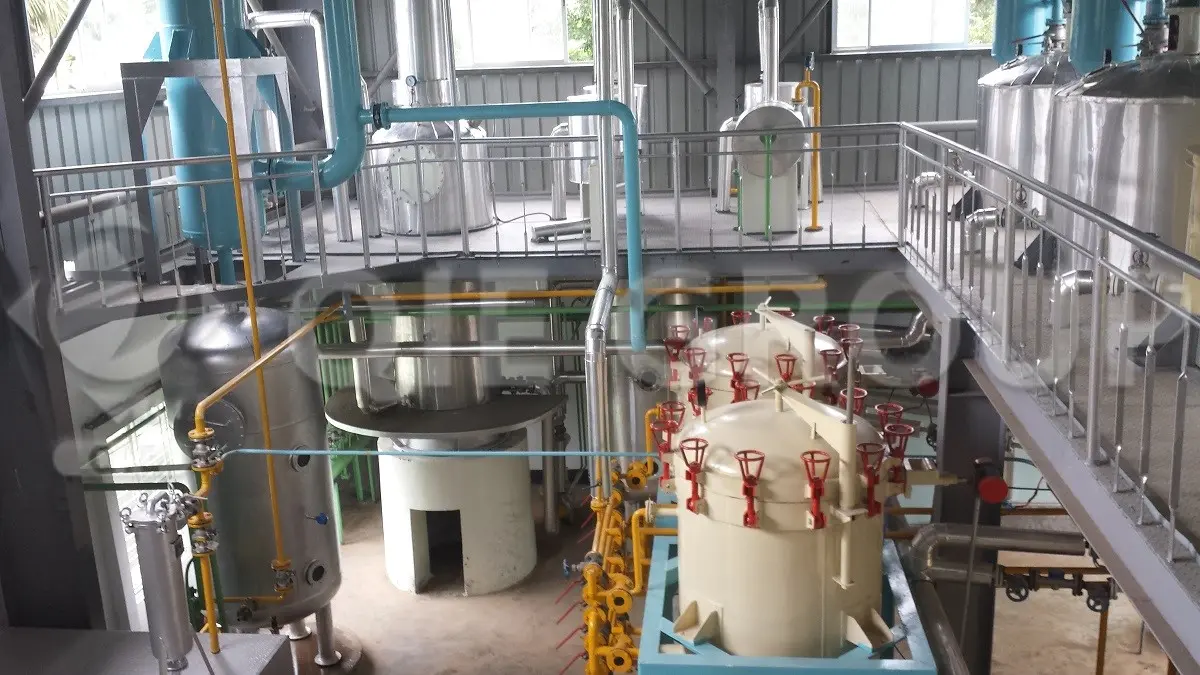
Water degumming combined with acid degumming is commonly applied. The separation efficiency of disc-stack centrifuges—rather than reaction time—determines actual gum removal quality.
Key engineering parameters include:
Stable ultra-high vacuum
Uniform oil film distribution
Dry, oxygen-free stripping steam
In practice, vacuum instability not only reduces FFA removal efficiency but significantly increases oxidation risk.
Decolorization is not about achieving the lightest possible color.
Engineering judgment focuses on:
Chlorophyll adsorption efficiency
Secure removal of spent bleaching earth
Balanced temperature and contact time
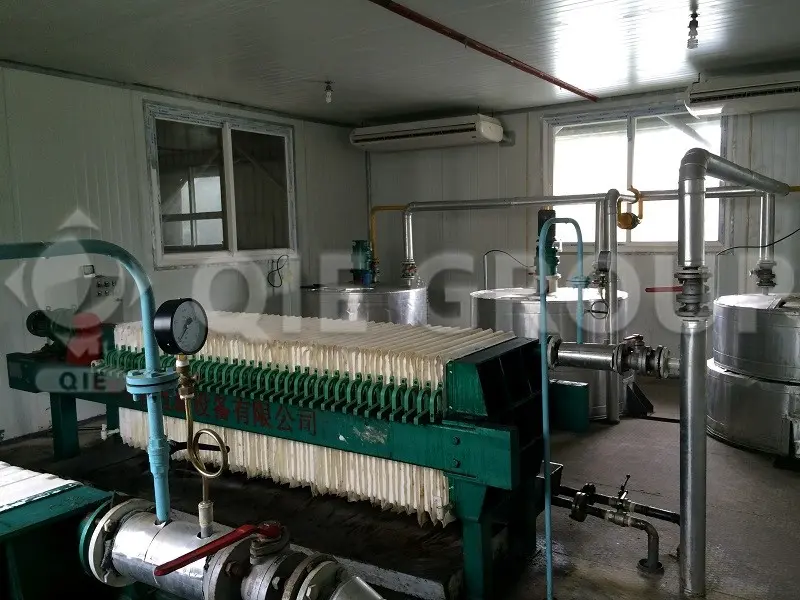
Two-stage filtration (pressure leaf + safety filter) is standard in high-quality sunflower oil projects.
The main risks during deodorization are thermal damage and oxidation. Short residence time, precise temperature control, and inert gas protection are essential for flavor stability.
A robust dewaxing system requires:
Programmable cooling curves
Adequate crystal maturation time
Reliable low-temperature filtration
Project experience repeatedly confirms:
💡 Filtration reliability often determines success more than crystallization itself.
Most commonly caused by:
Incomplete dewaxing
Residual gums or bleaching earth
Improper cooling and storage conditions
Typical triggers include:
High initial FFA
Inadequate bleaching system design
Excessive deodorization temperature or time
Engineering control focuses on:
Strict metal ion management
Inert gas protection throughout refining
Balanced retention of natural antioxidants
More often caused by:
Poor heat integration
Insufficient automation leading to process fluctuation
In a large sunflower oil project in Kazakhstan, QIE Group delivered the full turnkey scope from process design to commissioning. Project targets included:
Cold test clarity at 0°C for 24 hours
EU market compliance
High automation and low operational variability
By reinforcing the dewaxing system and optimizing vacuum and heat-recovery networks, the project achieved:
Refining loss below 1.2%
Oxidative stability above 15 hours
Stable production from first commissioning 👉(QIE Group Sunflower Oil Project Case)
This project once again demonstrated that oil clarity is the outcome of system engineering, not individual equipment performance.
Start with raw material reality, not equipment lists
Design for system stability, not single-point optimization
Rely on automation, not operator experience alone
Expose risks at design stage, not after commissioning
At QIE Group, we believe that a truly reliable sunflower oil production line must be engineered to manage variability, not merely perform under ideal conditions. Choosing a partner with proven engineering experience is the most effective way to reduce project uncertainty and ensure long-term, stable production of clear, high-quality sunflower oil.
 Soybean oil extraction rate Oil pressing equipment selection Optimization of leaching process Edible Oil Processing Soybean Oil Press Soybean oil processing equipment
small-scale sunflower oil plant sunflower oil processing equipment sunflower oil production line sunflower oil refining equipment sunflower oil dewaxing
Rapeseed oil press machine rapeseed oil refining machine Rapeseed oil processing plant Rapeseed oil pretreatment equipment Small rapeseed oil mill plant Rapeseed oil filter
Intelligent oil processing Green Edible Oil Production Energy-saving solutions for oil plants Intelligent data monitoring Oil processing equipment
edible oil processing equipment turnkey edible oil production line edible oil processing plant edible oil refining equipment edible oil solvent extraction equipment edible oil press machine
Soybean oil extraction rate Oil pressing equipment selection Optimization of leaching process Edible Oil Processing Soybean Oil Press Soybean oil processing equipment
small-scale sunflower oil plant sunflower oil processing equipment sunflower oil production line sunflower oil refining equipment sunflower oil dewaxing
Rapeseed oil press machine rapeseed oil refining machine Rapeseed oil processing plant Rapeseed oil pretreatment equipment Small rapeseed oil mill plant Rapeseed oil filter
Intelligent oil processing Green Edible Oil Production Energy-saving solutions for oil plants Intelligent data monitoring Oil processing equipment
edible oil processing equipment turnkey edible oil production line edible oil processing plant edible oil refining equipment edible oil solvent extraction equipment edible oil press machine


.png?x-oss-process=image/resize,h_100,m_lfit/format,webp)
.png?x-oss-process=image/resize,h_100,m_lfit/format,webp)
.png?x-oss-process=image/resize,h_100,m_lfit/format,webp)

.webp?x-oss-process=image/resize,h_800,m_lfit/format,webp)