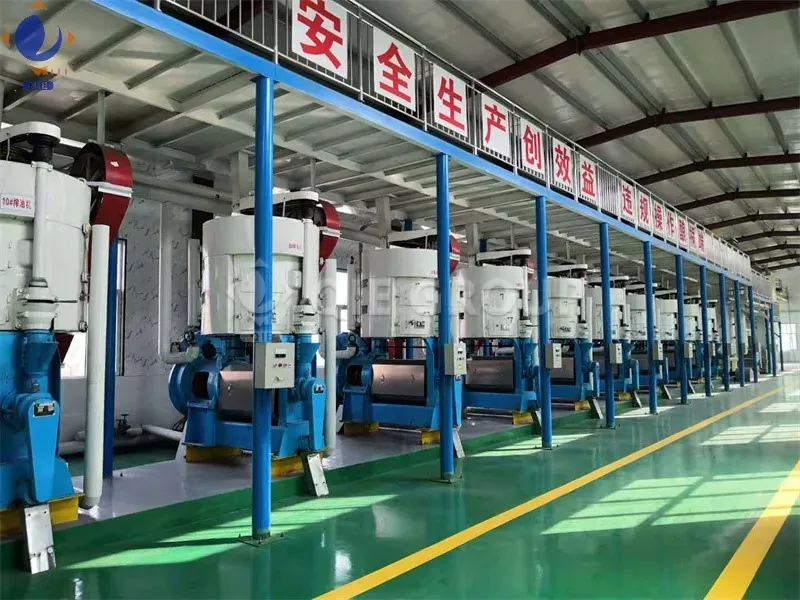
Sunflower oil, with its mild flavor, high smoke point, and rich unsaturated fatty acids, consistently ranks among the top three global vegetable oils in consumption. Its quality and stability, however, heavily depend on professional processing. From raw material cleaning to final deodorization, every process parameter directly affects yield, nutrient retention, and shelf life. With over 40 years of global engineering experience, QIE Group understands that an efficient sunflower oil extraction and sunflower oil refining system is the core competitive advantage for oil mills.
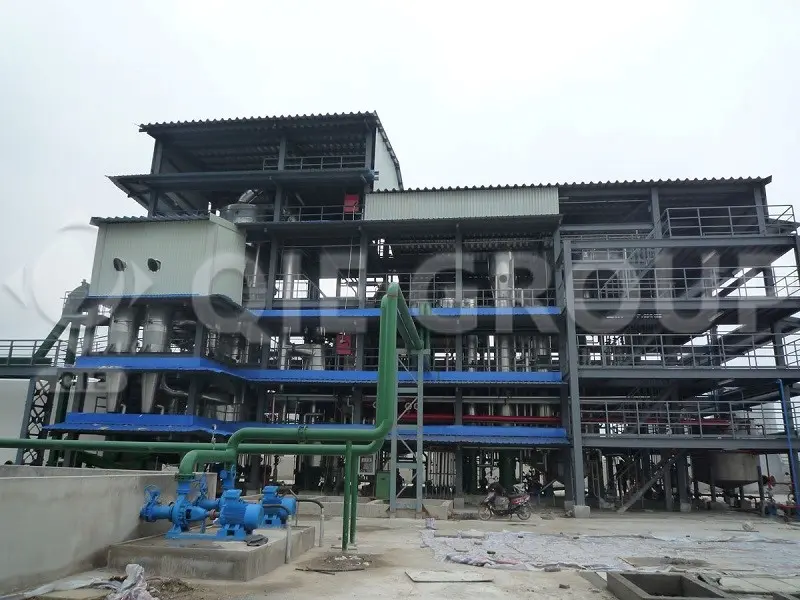
A complete sunflower oil production line is a highly coordinated engineering system, where each step is interdependent:
Sunflower seeds → Cleaning → Dehulling/Crush (optional) → Flaking → Cooking → Screw Pressing → (Meal) Solvent Extraction → Crude Oil Mixing → Refining (Degumming → Neutralization → Decolorization → Deodorization) → Dewaxing → Finished Oil Storage & Packaging
Removes impurities (sand, stones, metals, stems/leaves), adjusts seed structure and moisture, breaks cell walls, and optimizes oil flow for high-efficiency extraction.
Mechanical pressing removes part of the oil, producing crude oil and meal; solvent extraction using food-grade n-hexane dissolves residual oil in the meal (yield > 99%), maximizing total recovery. Combined, these form the complete sunflower oil extraction process. 👉 (Pressing vs solvent extraction)
Crude oil contains phospholipids, free fatty acids, pigments, odor compounds, trace metals, and waxes. Physical and chemical treatments (degumming, neutralization, decolorization, deodorization) are required to ensure safety, stability, clarity, and neutral flavor.
A unique step for sunflower oil. Natural waxes crystallize at low temperatures, causing cloudiness. Cooling, crystallization, and filtration remove waxes, ensuring clarity in cold conditions.
After refining and dewaxing, oil is cooled, filtered, and stored in inert-gas-protected tanks before bottling.
Every step and equipment selection directly impacts yield, quality, and operating costs of a sunflower oil processing plant.
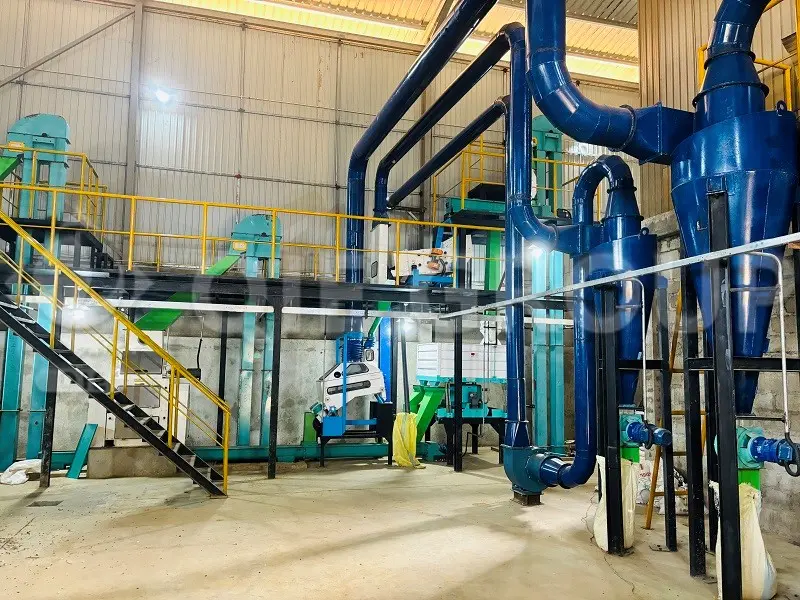
Pre-treatment is the "frontline battle" for efficient oil recovery, determining final yield and downstream equipment load.
Vibrating screens, gravity destoners, and magnetic separators ensure clean raw material. Impurities can wear equipment and affect oil color and flavor.
Gear-roll or hammer crushers break seeds to suitable particle size, improving flaking uniformity and solvent penetration.
Roller flakers press broken seeds into thin, uniform flakes, breaking cell walls to release oil. Uniform thickness is critical for cooking and extraction efficiency.
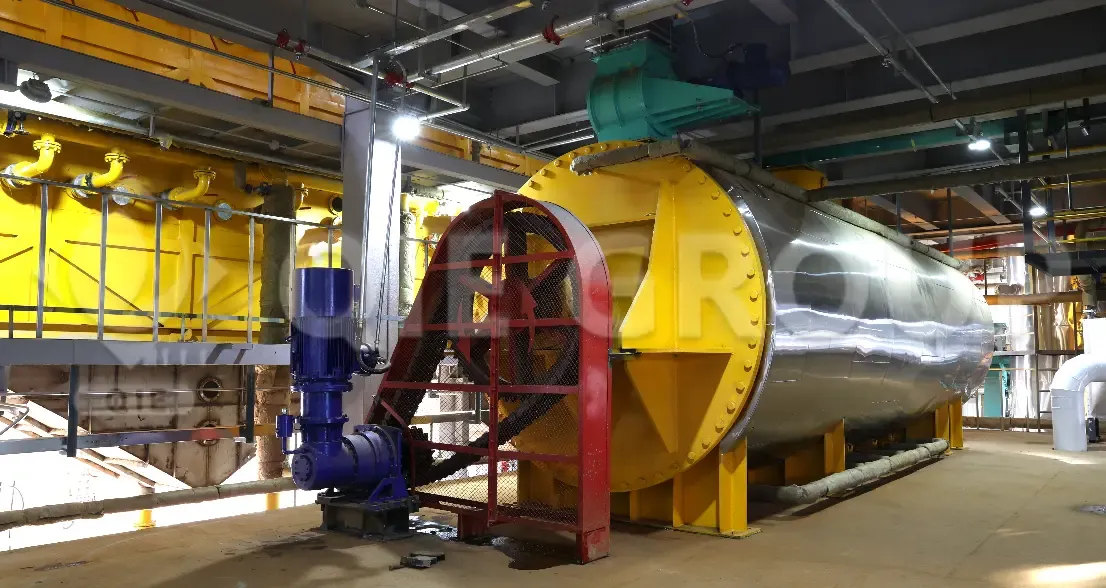
Layered or drum cookers apply direct and indirect steam, controlling moisture (5–6%), temperature (100–120°C), and cooking time. Proteins denature, oil coalesces, and viscosity decreases, significantly improving pressing efficiency.
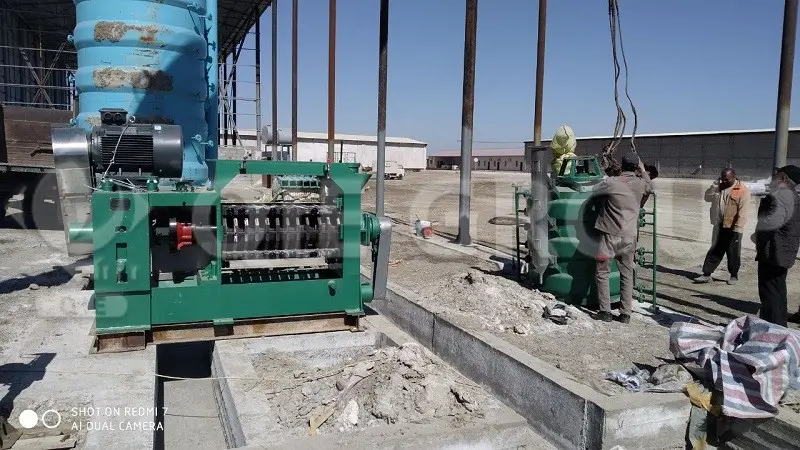
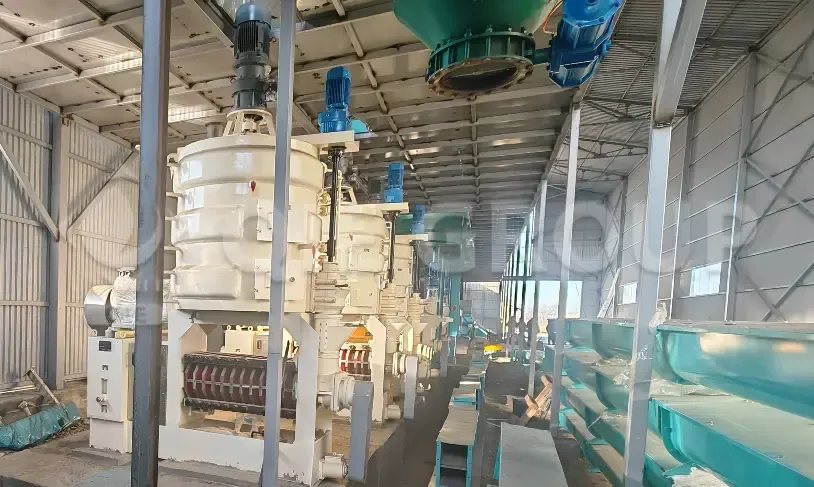
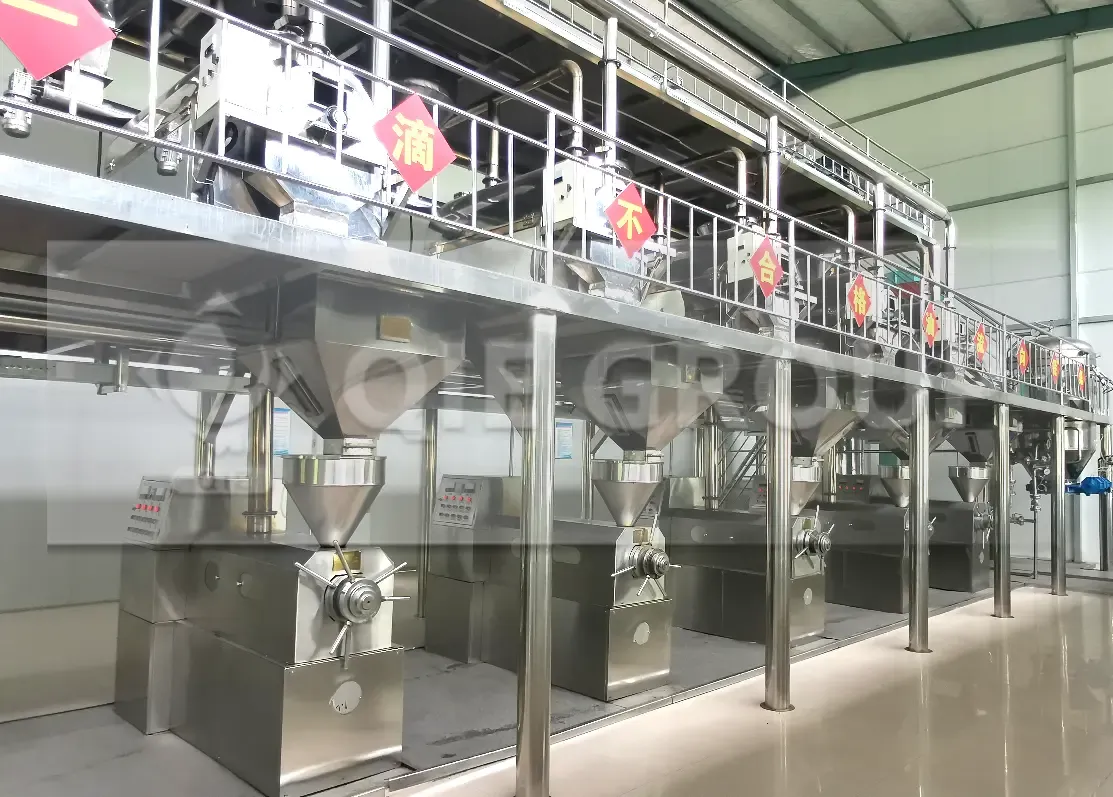
Pre-treated flakes feed continuously into a screw press. Crude oil exits through cage gaps, forming solid cake (residual oil 12~18%). Large mills often pre-press to supply low-residual cake for solvent extraction.
For medium-to-large mills, pre-pressed cake or directly flaked seeds enter the solvent extraction unit.
Pressing alone leaves high residual oil, reducing efficiency. Solvent extraction using n-hexane dissolves remaining oil, reducing residual oil to ≤0.5% and maximizing recovery.
Oil dissolves in n-hexane; solvent penetrates flakes, forming miscella (mixed oil solution).
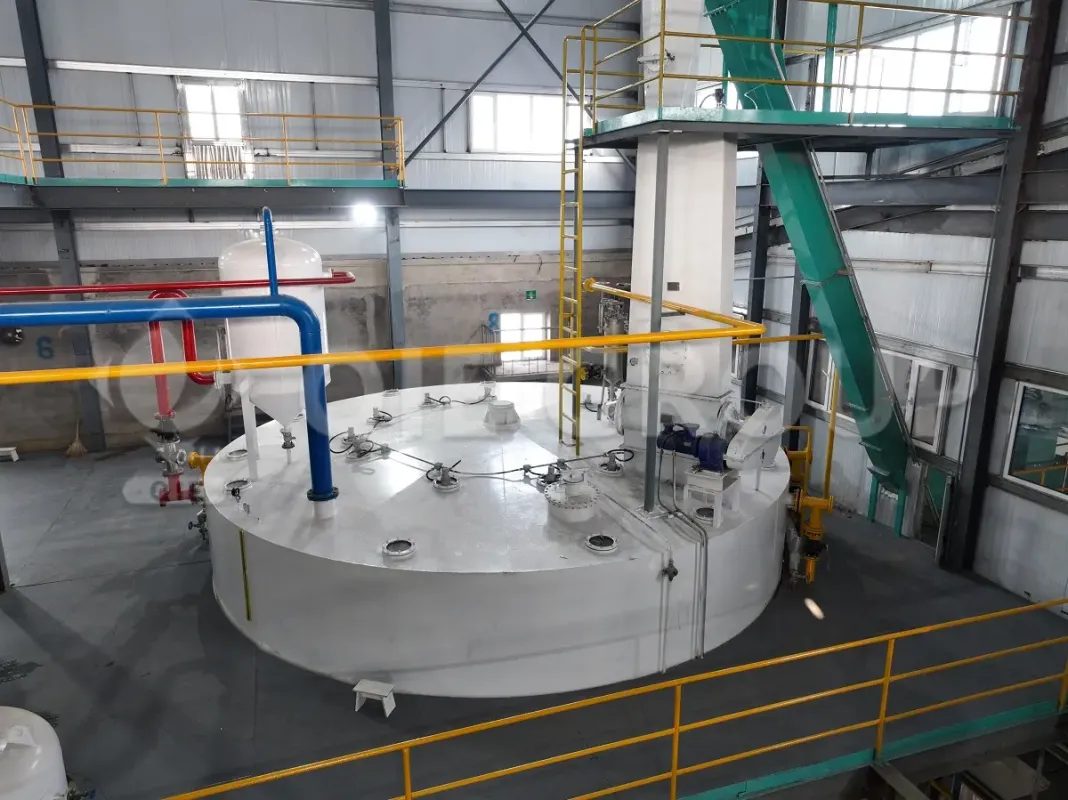
Large loop type extractors or drag chain extractors perform countercurrent extraction with fresh solvent. Closed systems ensure safety and prevent solvent leaks.
Solvent-laden wet cake must be dried and toasted to remove solvents and inactivate anti-nutritional factors. Solvent recovery units (evaporators, condensers, stripping columns) efficiently recycle solvent and produce extracted crude oil. Solvent recovery rate is a key indicator of technical and environmental performance.
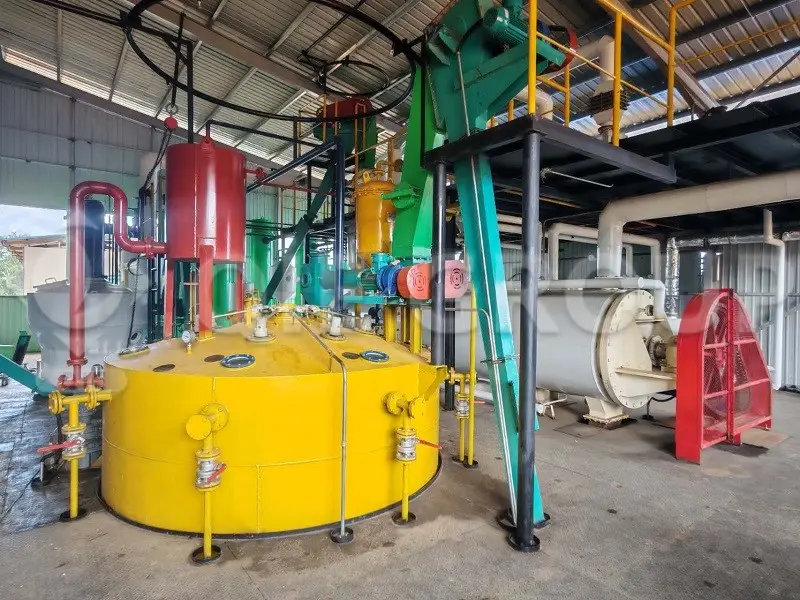
The four-step refining process is key to producing stable edible oil.
| Step | Purpose | Key Parameters |
|---|---|---|
| Degumming | Remove phospholipids, mucilaginous gums | Hydration 70–80°C, 2–3% water |
| Deacidification | Remove FFA (Acid value ≤0.2mg KOH/g) | Alkali excess 0.1–0.2%, centrifugation |
| Decolorization | Adsorb pigments, residual soaps | 0.5–1.5% bleaching earth, vacuum 90kPa |
| Deodorization | Remove odors and FFA (<0.05%) | 220–260°C, absolute pressure 1–2mmHg |
Natural waxes crystallize at low temperatures, causing cloudiness. Dewaxing ensures clear oil.
Key Points: Precise control of cooling curve, crystallization time, stirring speed, and filtration minimizes oil loss.
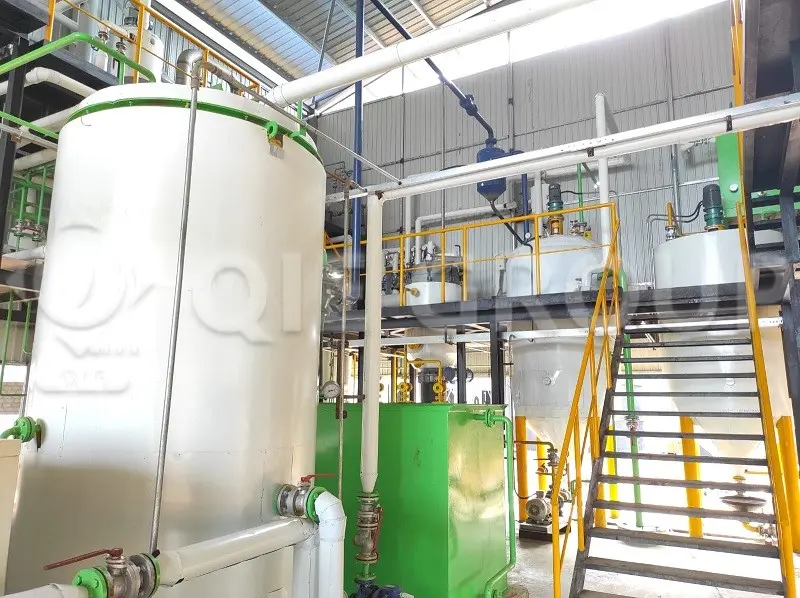
| Plant Type | Raw Material Capacity |
|---|---|
| Small | 20–100 TPD |
| Medium | 100–500 TPD |
| Large Industrial | 500–3000 TPD |
Capacity planning considers raw material supply, investment, efficiency, and market demand.
Small plants: multi-stage screw pressing
Medium plants: pre-press + solvent extraction
Large plants: continuous pre-treatment + large solvent extraction + fully automated refining
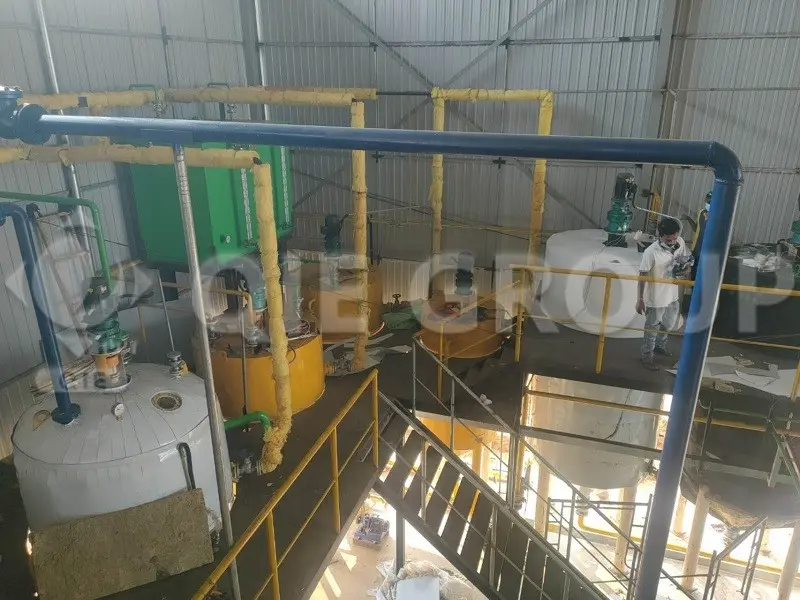
PLC + SCADA central control system
Precise temperature control: Cooking, extraction, refining, dewaxing
Energy-saving systems: Steam heat recovery, variable frequency drives
Benefits: stable quality, higher efficiency, safety, traceable data, reduced labor dependency
Key investment areas:
High-tech and cost-intensive areas: extraction, refining (especially deodorization & dewaxing), and automation.
Central Asia 15TPD Sunflower Oil Plant
Eastern Europe 500TPD Sunflower Oil Processing Plant
Q1: Pressing or solvent extraction – which is better?
A: They are complementary. Pressed oil retains flavor but lower yield; solvent extraction yields >99% but requires refining. Modern medium-large mills adopt pre-press + solvent extraction.
Q2: Does refining destroy nutrients?
A: Some Vitamin E and plant sterols are lost, but optimized physical refining preserves most nutrients while ensuring safety and stability.
Q3: Must small-scale mills use solvent extraction?
A: Not necessarily. Multi-stage pressing is feasible but yields are lower (residual oil >5%).
Q4: What happens if dewaxing is incomplete?
A: Cloudiness at low temperatures, sedimentation, potential clogging in bottling lines, reduced market competitiveness.
Q5: Key investment areas?
A: Extraction, refining (deodorization & dewaxing), automation are major cost drivers.
Q6: Can QIE upgrade old lines?
A: Yes. Targeted retrofits improve pre-treatment efficiency, solvent recovery, yield, and quality.
Sunflower oil production is a complex industrial process. Efficient extraction ensures economic yield, and advanced refining & dewaxing guarantee high-quality oil. Automated systems enable precise control, energy optimization, and stable product quality.
QIE Group offers turnkey sunflower oil processing solutions: Process design, equipment manufacturing, plant installation, commissioning & training, ongoing technical support.
We can customize 30TPD–3000TPD production lines, helping clients succeed in the competitive global market.
 Oil extraction equipment oil yield rate Edible oil production line Oil processing technology Cooking oil equipment Screw oil press
Philippines palm oil processing machine low cost palm oil mill palm oil refining equipment palm oil production line palm oil press machine turnkey palm oil plant
Palm oil production line Automated oil processing equipment Customized production equipment High-efficiency production line Oil pressing equipment
twin screw palm fruit oil press palm fruit oil pressing machine palm oil processing equipment palm fruit oil production line palm oil mill machinery palm oil extraction plant
Intelligent palm oil production line Palm fruit processing technology High efficiency oil yield Automated pressing system By-product recycling and value-added
Oil extraction equipment oil yield rate Edible oil production line Oil processing technology Cooking oil equipment Screw oil press
Philippines palm oil processing machine low cost palm oil mill palm oil refining equipment palm oil production line palm oil press machine turnkey palm oil plant
Palm oil production line Automated oil processing equipment Customized production equipment High-efficiency production line Oil pressing equipment
twin screw palm fruit oil press palm fruit oil pressing machine palm oil processing equipment palm fruit oil production line palm oil mill machinery palm oil extraction plant
Intelligent palm oil production line Palm fruit processing technology High efficiency oil yield Automated pressing system By-product recycling and value-added






.png?x-oss-process=image/resize,h_100,m_lfit/format,webp)
.png?x-oss-process=image/resize,h_100,m_lfit/format,webp)
.png?x-oss-process=image/resize,h_100,m_lfit/format,webp)