In today's global grain and oil supply chain, soybean oil stands out as a foundational vegetable oil, ranking among the top worldwide in terms of both production and consumption. Its processing industry is increasingly capturing the attention of global investors. According to global commodity market data, driven by population growth and the development of the food industry, global demand for high-quality edible oils and high-protein animal feed is expanding steadily at an annual rate of 3% to 5%.
However, in practical engineering consultation, we frequently encounter investors who blindly enter the market simply because they have capital. They often fixate on "which brand of equipment is the cheapest" while completely overlooking fundamental bottom-line factors—such as raw material supply chains, process compatibility, energy consumption control, and the comprehensive utilization of by-products—which directly dictate an enterprise's survival. Establishing a consistently profitable soybean oil processing plant is never a simple matter of "purchasing machinery and starting the production line." Instead, it is a highly systematic engineering endeavor that demands rigorous engineering logic and meticulous commercial planning.
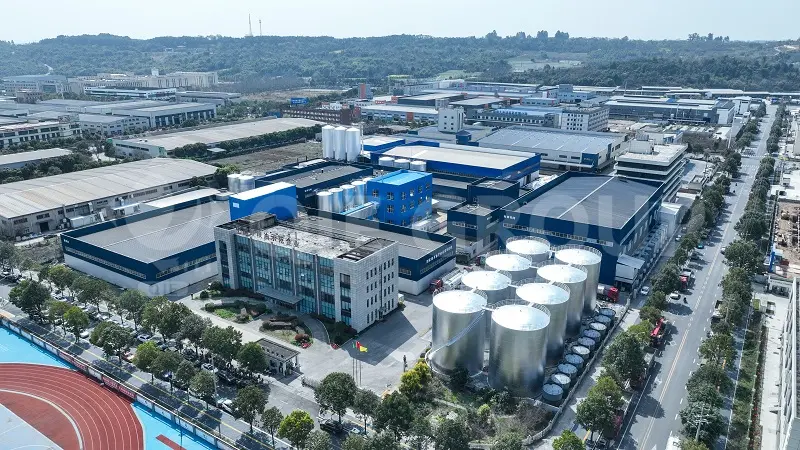
To evaluate whether a soybean oil manufacturing business is worth investing in, one must examine it through two distinct lenses: the macro supply chain and the micro value chain. The core reasons why soybean processing demonstrates such powerful investment appeal across multiple countries lie in its unique dual-product attributes and localized import-substitution advantages.
Although the oil content of soybeans is relatively modest—typically ranging between 18% and 22%—their total global yield is massive. Soybean oil serves not only as a foundational raw material for refined vegetable oils, frying oils, and the food processing industry, but its applications in industrial sectors like biodiesel are also rapidly broadening. This rigid, inelastic demand in consumer markets ensures a relatively stable sales pipeline once a processing plant goes live.
Soybean processing is essentially a "two-birds-with-one-stone" industry. After pressing or extraction, in addition to obtaining soybean oil, the process yields a high-protein by-product that accounts for 78% to 80% of the total volume: Soybean Meal. With the booming development of the livestock and feed industries, high-quality soybean meal often enjoys greater liquidity and bargaining power than the soybean oil itself. In most soybean processing case studies, soybean meal sales revenue accounts for over 60% of the plant's total gross turnover. This effectively offsets raw material procurement costs, creating a "double-insurance" profit structure for the project.
Currently, many developing countries—particularly in Sub-Saharan Africa, parts of the Middle East, and Southeast Asia—still import massive quantities of refined soybean oil or soybean meal. Concurrently, local soybean cultivation in these regions is rising, or they possess favorable port conditions for bulk soybean imports. To protect foreign exchange reserves and stimulate domestic employment, local governments frequently offer policy incentives, such as tax exemptions and protective import tariffs, to localized soybean oil processing projects. Entering the market at this juncture allows investors to not only capture the processing spread (Crush Margin) but also reap substantial policy dividends.
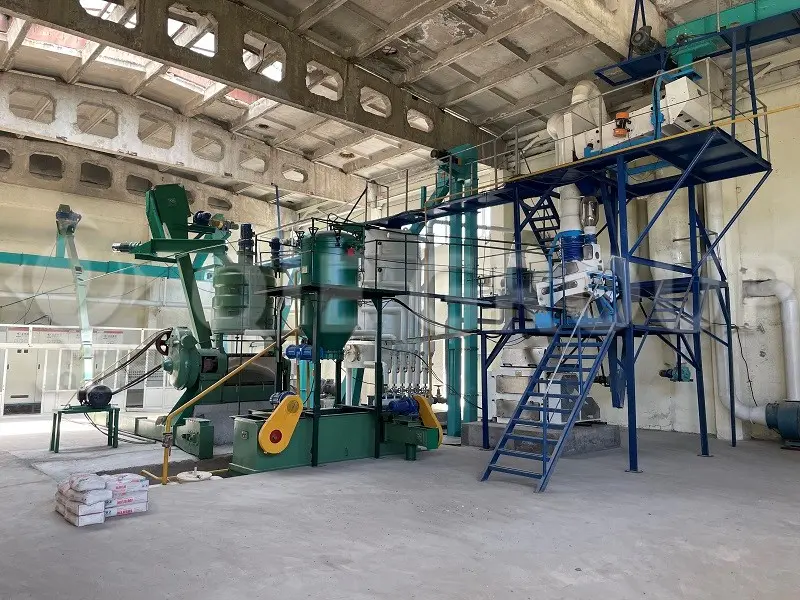
When drafting a soybean oil business plan, the very first step is to firmly establish your business model. The business model directly dictates the plant's technical process route, equipment selection, and capital payback period. Below are the five most mainstream models currently operating in the soybean processing industry:
| Business Model | Core Outputs | Primary Profit Sources | Ideal Enterprise Type |
|---|---|---|---|
| Crude Oil Production | Soybean cake / Low-protein meal, Crude soybean oil | Basic crush margins, Bulk sales to animal feed mills | Primary processors with abundant raw material resources but lacking refining and retail channels |
| Pressing + Refining | Grade-1 soybean oil, Pressed cake | Premium margins on high-quality pressed oil, Localized retail | Regional small-to-medium plants focusing on mid-to-high-end markets with a "chemical-free" concept |
| Pre-pressing + Solvent Extraction + Refining | Grade-1 soybean oil, High-protein soybean meal | Ultra-low residual oil rate, Economies of scale, Bulk supply chain arbitrage | Medium-to-large grain and oil groups, soybean traders, and investors targeting the livestock feed industry |
| OEM / Toll Manufacturing | Custom-standard oil/meal per client specs | Stable processing fees, Zero raw material price depreciation risk | Facilities with surplus capacity, or enterprises in engineering transition looking for asset-light operations |
| Own-Brand Edible Oil | Packaged refined soybean oil | Proprietary brand premium, End-consumer retail channel profits | Agricultural investment firms possessing robust marketing networks and mature distribution channels |
💡 Decision Guide: How to choose your business model?
Plant scale is by no means a case of "the bigger, the better." In oilseed engineering design, we strictly adhere to the principle of "resource matching, phased planning." Blindly pursuing massive capacity can trigger severe raw material shortages or idle capacity, which will rapidly drain an enterprise's cash flow.
Determining the daily processing capacity (TPD) of a soybean oil processing plant should follow this logical checklist:
🛠️ Engineering Recommendation: For most first-time investors in developing countries, 30 TPD - 100 TPD represents a golden entry-level range that perfectly balances economic scale with capital risk. For large-scale commodity traders with strong bulk supply chain arbitrage capabilities, 300 TPD - 3000 TPD is the standard configuration to achieve globalized industrial deployment.
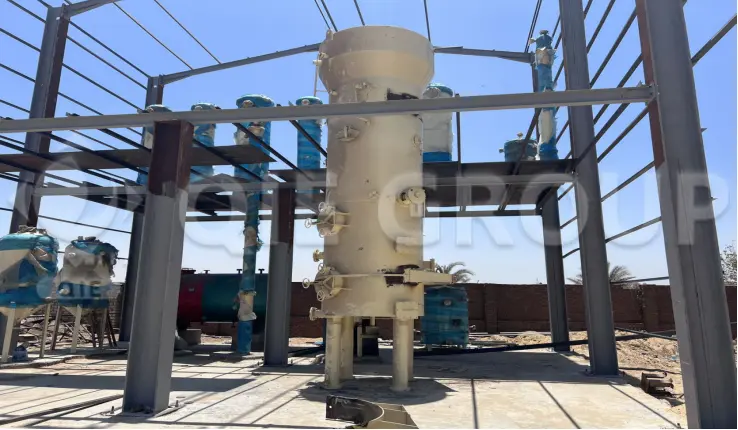
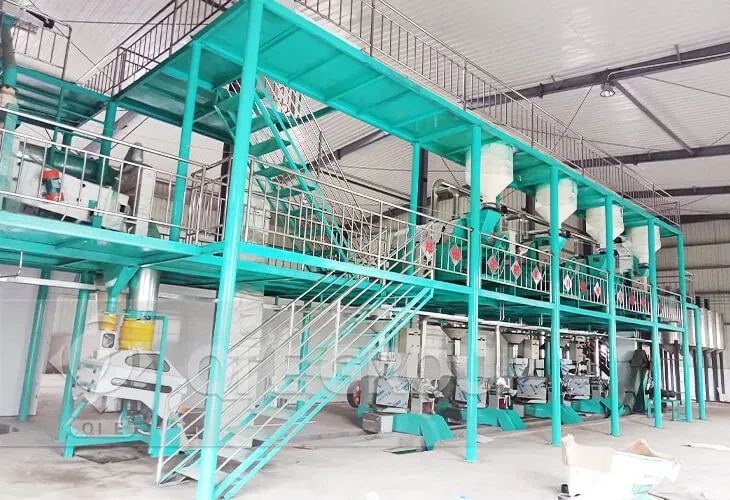
A complete soybean oil production line typically encompasses multiple stages: preprocessing, pressing or extraction, refining, and packaging.
Every single technical step directly impacts the final product quality and the enterprise's operational costs:
Consequently, the soybean oil processing flow is not merely a matter of product quality; it is directly intertwined with energy consumption, equipment utilization, and long-term operating overhead.
An efficient soybean oil production line demands that the equipment across all workshops achieve precise synchronization in capacity, speed, and material balance. The "barrel effect" (or bottleneck constraint) is glaringly obvious in oil processing plants—a performance deficiency in any single piece of critical equipment will slow down the entire line.
| Workshop System | Core Equipment Names | Core Functions |
|---|---|---|
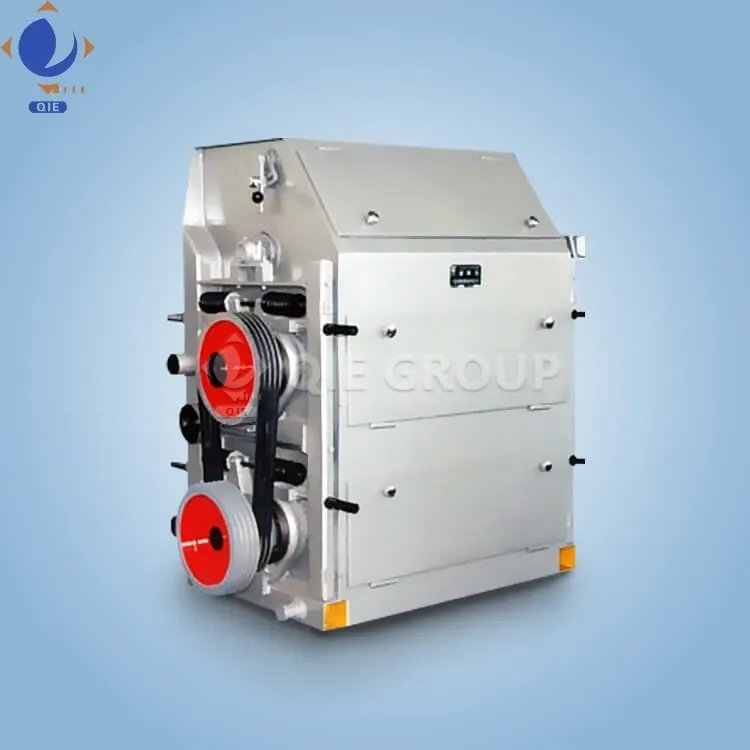
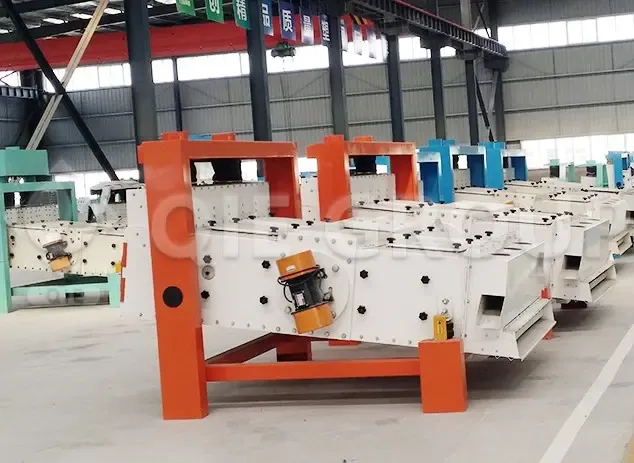
| Preprocessing System | Cleaning equipment, Crusher, Flaking mill, Conditioner/Cooker | Executes soybean cleaning, crushing, flaking, and cooking to prepare the material for subsequent pressing or extraction. |
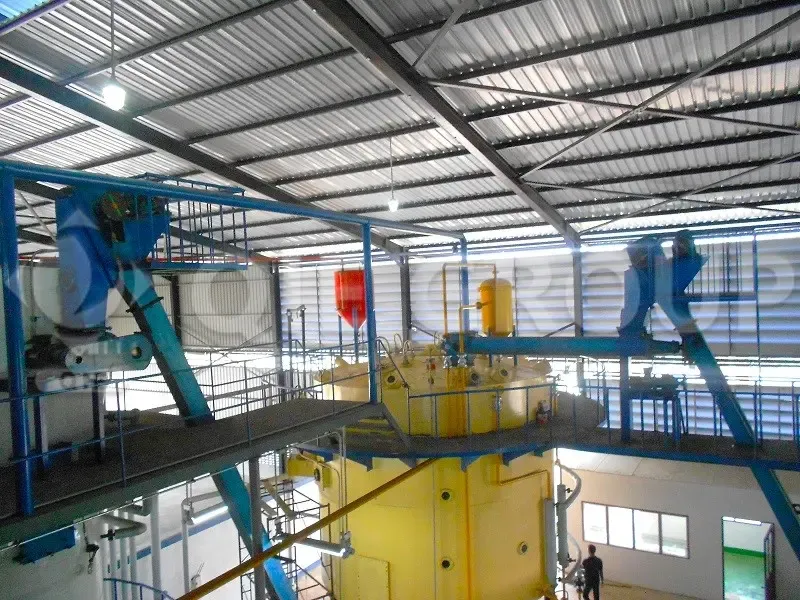
| Pressing/Extraction System | Pre-press oil expeller, Extractor, Desolventizer-Toaster-Dryer-Cooler (DTDC), Stripper, Solvent recovery system | Extracts residual oil from the cake using solvents, followed by solvent recovery and oil separation. |
| Refining System | Centrifuges, Degumming tanks, Deacidification tower, Bleaching earth mixer/filter, Deodorization tower, Leaf filter | Refines crude oil by removing impurities, free fatty acids, color pigments, and volatile odors to upgrade oil quality. |
| Utility Engineering System | Steam boiler, Cooling tower, Oil storage tanks, Soybean silos, Transfer pumps/piping | Supplies thermal and electrical energy, stores raw materials and finished oil, and transports materials across the plant. |
| Automated Control System | PLC central control cabinets, Fieldbus sensors, SCADA monitoring software | Facilitates adaptive self-regulation of temperature, pressure, and flow rate across the entire line—the hallmark of modern, safe, and highly reproducible soybean oil production. |
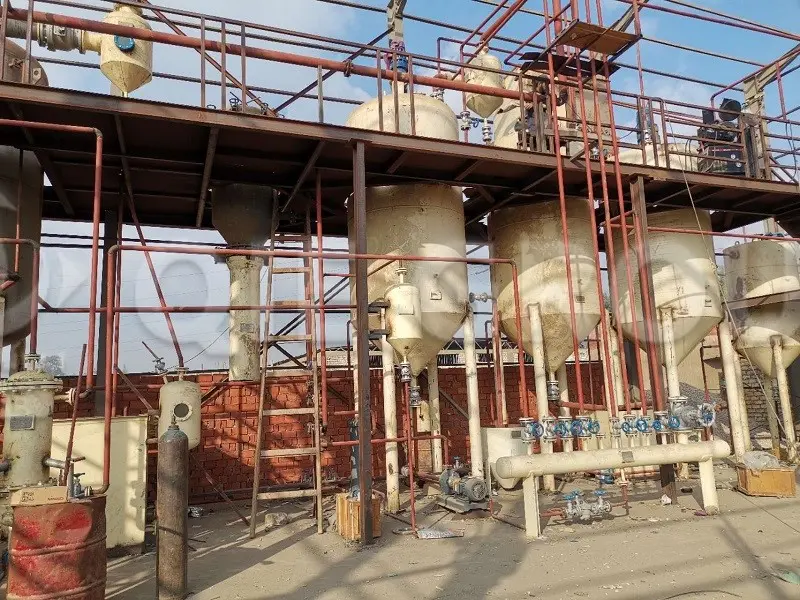
When evaluating the construction costs of a soybean oil plant, seasoned investors avoid accepting blind, all-inclusive "turnkey low-ball quotes." The Total Capital Investment required for a soybean oil processing project is a complex function driven by multiple variables.
Once the factory goes into active production, true competitiveness is determined not just by sales metrics, but heavily by the consumption indicators and product yields inside the workshops. In the edible oil industry, profit margins are hidden behind the decimal points.
Taking a daily processing volume of 100 tons of soybeans (with an average oil content of roughly 20%) as a benchmark under identical raw material parameters, different process routes yield distinct variances in oil recovery rates and by-product structures:
| Metric Dimension | Mechanical Pressing Process | Solvent Extraction Process | Engineering Context |
|---|---|---|---|
| Residual Oil Rate | 5% - 7% | ≤ 0.5% | Extraction dramatically lowers oil left in the meal. |
| Soybean Oil Output | Approx. 14–16 Tons | Approx. 18–19.5 Tons | Varies based on process and equipment efficiency. |
| By-Product Value | Yields lower-priced pressed cake | Yields high-protein soybean meal + Soybean lecithin | Offers a more diversified and premium product mix. |
🔬 Engineer's Note: At a 100 TPD scale, every single percentage point drop in the residual oil rate delivers a massive impact on the annual cumulative oil recovery. Shifting from a 6% residual oil rate down to 0.5% means an extra 5.5 tons of premium oil is successfully extracted from the meal daily rather than being sold at low feed prices.
However, this difference does not rest solely on the process type itself; it is tightly dictated by the following operational variables: • Fluctuations in raw soybean oil content. • The performance of the preprocessing stage (flaking/cooking quality). • The structural stability and material bed control of the extraction system. • The operational efficiency of the steam and solvent recovery loops. Therefore, in practical engineering design, the focus must always center on the "systemic oil recovery rate" rather than isolated machine parameters.
During the degumming and deacidification phases, poorly engineered processes will cause a massive amount of neutral oil to get trapped and carried away inside the soapstock. Incorporating high-precision, automated disc separators alongside meticulous regulation of acid-alkali ratios and reaction temperatures can elevate the refining yield by 0.5%. This seemingly small optimization saves vast amounts of raw material loss over a year of operation.
Soybean processing consumes substantial amounts of steam and electricity. Integrating multi-effect evaporation technology and utilizing the ultra-hot refined oil exiting the deodorization tower (220°C–260°C) to preheat incoming cold crude oil via high-efficiency plate heat exchangers (Heat Recovery) drastically slashes the entire plant's overall steam consumption.
Soybeans are far more than just oil and meal. Smart plants extract value from every stream:
Operating an edible oil refinery is a long-term marathon. Below is a practical risk-mitigation blueprint derived from executing dozens of international oilseed engineering projects:
Equipment Mismatch Risk: Many investors fall into the trap of piecing together a factory by buying cleaning gear from Vendor A, flaking mills from Vendor B, and extraction loops from Vendor C. During commissioning, Vendor B's mill fails to produce uniform, ultra-thin flakes, which immediately causes Vendor C's extractor to miss its designed residual oil target. The vendors inevitably engage in finger-pointing, leaving the investor to shoulder devastating financial losses.
Solution: Entrust the entire processing line to a single, accountable supplier possessing end-to-end forward engineering design capabilities to ensure unified process liability.
Overseas After-Sales & Spare Parts Disruption: If a critical bearing or PLC module fails during peak harvest season and takes weeks to ship internationally, the accumulated downtime losses can break a business.
Solution: During the initial procurement phase, enforce the mandatory purchase of a comprehensive Two-Year Wear Parts & Spare Parts Packet.
When launching a soybean oil processing plant, the supplier you choose is far more than a machinery vendor—they are the core engineering and technological partner of your commercial enterprise. A premium edible oil engineering supplier must possess complete, one-stop EPC Turnkey capabilities.
When auditing potential suppliers, closely evaluate these three mandatory benchmarks:
Mediocre suppliers simply sell off-the-shelf, standardized machines. Conversely, a premium engineering team (such as QIE GROUP) will start by thoroughly analyzing your raw soybean samples—testing their precise moisture, impurity profiles, and baseline oil content. They then synthesize these findings with your local electrical grid frequencies, available boiler fuel types, and regional finished oil standards to generate custom 3D Workshop Layout Plans and comprehensive P&ID (Piping and Instrumentation Diagram) process flowcharts.
A soybean oil processing plant features complex high-pressure vessels, delicate chemical piping, explosion-proof electronics, and automated safety interlocks. Selecting a supplier with a proven track record of international project deliveries ensures that all equipment fabrication strictly aligns with international safety codes (like ASME or CE). Furthermore, it guarantees that their dispatched field engineers can seamlessly manage local labor forces to execute flawless on-site welding, piping pressure tests, and live-material trial runs.
As a deeply rooted, professional force in the grain and oilseed machinery industry, QIE GROUP is unswervingly committed to providing global investors with comprehensive EPC turnkey solutions. Our services span early-stage engineering consultation, bespoke process design, premium equipment manufacturing, secure on-site installation and commissioning, deep training for local personnel, and long-term after-sales spare parts support. We do not just sell production lines; we deploy advanced engineering and technology to help clients secure the absolute maximum oil yield, ensuring that every single ton of soybeans crushes into its maximum commercial value.
Q 1: Is the soybean oil processing business truly profitable? What factors influence margins the most?
Answer: Soybean oil processing offers excellent commercial potential, but profitability does not depend solely on fluctuating retail oil prices. It is primarily driven by the Crush Margin—the difference between the combined sales revenues of the soybean oil and soybean meal versus the costs of raw soybean procurement and operational processing. Beyond this, raw material supply consistency, extraction oil yield, precise energy management, equipment uptime, and the commercialization of by-products are the ultimate deciders of long-term profitability.
Q 2: How many soybeans are required to produce one ton of Grade-1 refined soybean oil? What by-products are generated?
Answer: The precise ratio depends on the oil content of the raw beans, the chosen processing method, and refining yield losses. On average, producing 1 ton of Grade-1 refined soybean oil requires roughly 5.0 to 5.5 tons of raw soybeans. This process simultaneously yields a massive volume of high-protein soybean meal, alongside smaller quantities of soybean lecithin, fatty acid soapstock, and hulls. Because soybean meal is a high-demand staple in the livestock feed industry, it represents an incredibly stable revenue driver for the plant.
Q 3: Should I choose mechanical pressing or the solvent extraction process?
Answer: This choice must be guided by your investment budget, target capacity, and market positioning. Mechanical pressing features a simpler setup and lower initial capital cost, making it ideal for small-to-medium operations or brands specializing in "purely physical, chemical-free" specialty oils. Conversely, pre-pressing combined with solvent extraction minimizes residual oil loss (leaving less than 0.5% in the meal), making it the indispensable choice for medium-to-large-scale continuous operations aiming for maximum efficiency.
Q 4: Can a soybean oil processing plant be expanded in the future? What should be considered during initial planning?
Answer: Yes, the majority of modern soybean oil projects can be designed for modular, phased expansions. However, this flexibility must be deliberately engineered into the initial phase. Investors must properly allocate space in the initial plot layout, choose over-spec utilities (such as boilers and main electrical switchgear), and design flexible pipe racks and tank farm footprints. Partnering with an experienced EPC team like QIE GROUP ensures these expansion interfaces are seamlessly integrated from day one, drastically cutting future upgrade costs.
Q 5: What are the main machine systems required to build a soybean oil processing factory?
Answer: A fully integrated soybean oil processing line requires a synchronized chain of systems: an oilseed preprocessing and cleaning line, crushing and flaking mills, conditioning cookers, mechanical expellers (or a full solvent extraction loop with desolventizer-toasters and solvent recovery systems), a chemical or physical refining train, oil storage tank farms, automated filling/packaging lines, utility steam boilers, water cooling loops, and an integrated PLC automated control system.
Q 6: What are the most common mistakes investors make when building a soybean oil plant?
Answer: The most frequent missteps include over-focusing on cheap machinery prices while ignoring long-term energy draw, failing to secure a stable 250-day raw material supply chain, choosing a mismatched plant capacity that is either too small to be economic or too large for local meal consumption, and failing to budget for environmental wastewater compliance or deep operator training. Successful execution requires treating the plant as a unified engineering system rather than a collection of independent machines.
A successful soybean oil processing venture never happens by chance. It is the direct output of a closed-loop system that seamlessly integrates precise upfront resource planning, scientifically sound process path selection, rigorous equipment capacity balance, uncompromising energy conservation, and robust, long-term technical support. In the face of volatile global commodity markets and rapid technological iterations, maintaining engineering rationality and partnering with proven technical experts during the decision-making phase is the single most effective way to ensure your project maintains a powerful, lifelong competitive edge.
Get in touch with QIE GROUP's expert engineering team today for a customized project proposal, raw material analysis, and full EPC turnkey budgeting.
Request a Free Consultation Cost of a soybean oil plant with a daily output of 300 tons soybean oil extraction equipment price Turnkey oil press project Investment in soybean oil refineries Solvent leaching equipment manufacturers
Palm oil yield increased Palm oil processing technology Palm oil pressing equipment FFB sterilization technology Palm oil EPC project
olive pomace solvent extraction olive pomace oil processing turnkey edible oil plant olive pomace oil recovery edible oil EPC project
Coconut oil production process Pressed coconut oil Coconut oil yield Coconut oil production line Coconut oil processing plant
edible oil processing plant oil mill energy saving solvent extraction efficiency crude oil refining system oil extraction EPC contractor
Cost of a soybean oil plant with a daily output of 300 tons soybean oil extraction equipment price Turnkey oil press project Investment in soybean oil refineries Solvent leaching equipment manufacturers
Palm oil yield increased Palm oil processing technology Palm oil pressing equipment FFB sterilization technology Palm oil EPC project
olive pomace solvent extraction olive pomace oil processing turnkey edible oil plant olive pomace oil recovery edible oil EPC project
Coconut oil production process Pressed coconut oil Coconut oil yield Coconut oil production line Coconut oil processing plant
edible oil processing plant oil mill energy saving solvent extraction efficiency crude oil refining system oil extraction EPC contractor








.png?x-oss-process=image/resize,h_100,m_lfit/format,webp)
.png?x-oss-process=image/resize,h_100,m_lfit/format,webp)
.png?x-oss-process=image/resize,h_100,m_lfit/format,webp)