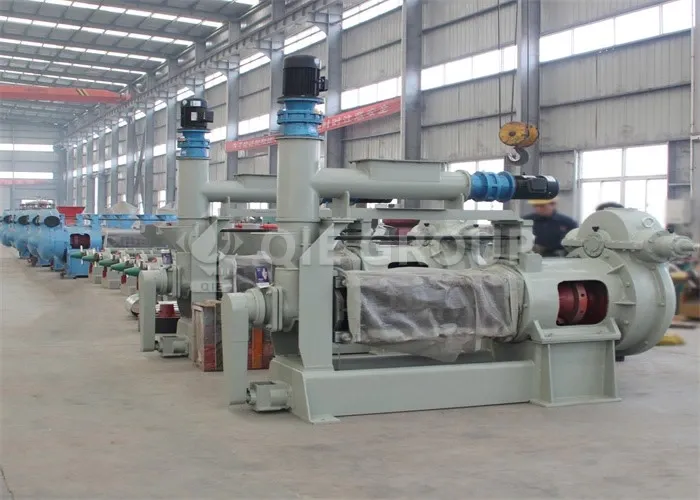
Why low-CAPEX equipment alternatives lead to profit-devouring operational leaks in continuous processing.
In large-scale soybean processing (500+TPD), many global investors fall into a common pitfall during the initial project planning phase: over-focusing on the upfront Capital Expenditure (CAPEX) of equipment while ignoring the long-term Operational Expenditure (OPEX) post-commissioning.
While "low-cost" plants appear to lower the financial entry barrier initially, hidden technical flaws and subpar manufacturing tolerances will turn into an insatiable "black hole" that continuously devours your net profits once operational. This article breaks down how low-tier equipment inflicts severe financial damage across four core dimensions:
Solvent Recovery, Desolventizing-Toasting (DTDC), Preprocessing, and Steam Consumption.
01
Solvent Loss: The Invisible Profit Leak in Cheap Extraction Plants
In the solvent extraction process, commercial hexane is standard. In continuous, large-scale operations, specific hexane consumption (kilograms of solvent lost per ton of soybeans processed) stands as the ultimate metric for measuring a plant's technical efficiency and direct profitability.
To drive down equipment quotes, budget-tier suppliers typically downsize the heat exchanger surface area of condensers or simplify the vent gas recovery loops.
VENT GAS DISCHARGE CONTROL STANDARDS
Budget Plant
Single-stage condensation
➔ Massive hexane drift
➔ Loss:
1.2 - 1.5+ kg/t
QIE Solution
Multi-stage condensation + MOS System
➔ Total absorption
➔ Loss:
0.5 - 0.7 kg/t
The Hard Engineering Ledger (2,000 TPD Line)
An extra 0.5 kg of solvent loss per ton translates directly to 1 metric ton of lost hexane daily. Over 300 operating days, that is 300 metric tons of pure profit dissolved into thin air, costing hundreds of thousands of dollars annually.
True technological competition boils down to consumption metrics per ton. QIE Group’s turnkey soybean extraction solutions strictly optimize the miscella negative-pressure evaporation system and the vent gas absorption loop, ensuring solvent is highly recycled within a closed-loop system, cutting off hidden leaks at the source.
02
Unstable DTDC Systems: Sacrificing Soybean Meal Protein and Premium Margins
Soybean processing revenues depend not only on the crude oil but heavily on the quality of the soybean meal, which accounts for nearly 80% of the bean's output by weight. The downstream premium animal feed market enforces strict physiochemical specifications for the meal's Protein Dispersibility Index (PDI) and Urea Activity (UA).
The Desolventizer-Toaster-Dryer-Cooler (DTDC) systems provided by cheap factories often lack precise material retention time control and automated steam-to-material ratio systems, causing operations to swing between two extreme operational failures:
Over-Toasting Risk
Excessive bed temperatures lead to severe protein denaturation, causing PDI to plummet. The meal turns dark/scorched, triggering client claims and forced discounts.
Under-Toasting Risk
Trypsin inhibitors are not thoroughly deactivated, leaving urea activity above acceptable limits. Animals suffer indigestion, leading to severe product returns.
Resolving this finished-product quality bottleneck requires rigorous, automated DTDC process control. By deploying precise automated bed-level sensing and a scientifically balanced distribution of direct and indirect steam across different stages, QIE Group ensures that residual solvent in the finished meal stays well below industry standards (typically < 500 ppm) while maximizing the protection of native, high-value plant proteins. This process consistently yields premium, high-protein meal (46% - 48% protein content), allowing you to capture maximum market premiums.
03
Subpar Crushing & Cleaning: Premature Flaking Roll Wear and Costly Downtime
The preprocessing section is the physical foundation of the entire extraction line. If internal debris, stones, iron contaminants, and fine abrasive grit are not meticulously eliminated from the incoming soybeans right after they leave the silos, it will inflict catastrophic damage on high-precision downstream machinery.
Flaking is a high-precision mechanical process that compresses crushed soybean cotyledons into uniform flakes with a thickness of ≤0.3 mm. This precise thickness is vital to rupture cell structures and minimize solvent diffusion paths. The flaking rolls themselves represent a high-value core asset, requiring extreme surface hardness and deep chill depth.
The Mechanical Chain Failure
Subpar Cleaning Section ➔ Abrasive Grit Enters Flaker ➔ Destroys Roll Surface Geometry ➔ Uneven Flake Thickness ➔ High Residual Oil in Meal + Unscheduled Downtime
In continuous, large-scale processing, downtime means zero revenue while fixed utility baseloads and labor costs continue to burn capital. Relying on our 130,000-square-meter specialized manufacturing footprint, QIE Group designs robust
oilseed preprocessing machinery engineered to withstand intense, 24/7 non-stop industrial loads, safeguarding your highest-value assets from day one.
04
Steam Efficiency: The Overlooked Utility Energy Black Hole
Aside from solvents, the second-highest operating cost for a soybean crushing plant is steam consumption. The extraction process involves intensive heating, evaporation, and desolventization phases.
Tier-1 international engineering designs implement extensive energy integration techniques. For instance, the hot secondary solvent vapors discharging from the top of the DTDC toaster are harnessed as the primary thermal energy source for the first-stage miscella evaporator. This heat integration loop reduces the plant's live steam demand by over 30%.
Cheap factories, lacking comprehensive system-engineering capabilities, design each section with independent thermal profiles. This leads to massive thermal waste, leaving investors saddled with an uncompetitive financial burden on every single ton of steam consumed for decades.
05
Solving Real Operational Risks: Partnering with a Performance-Guaranteed EPC Provider
Building a plant is never a simple aggregation of mechanical machinery. Many budget suppliers possess only baseline steel fabrication or basic machining capabilities; they lack the deep process expertise required to orchestrate the dynamic balances—mass balance, thermal balance, and solvent balance—of a live soybean extraction plant.
Global soybean crushing investors do not need a "low-cost equipment catalog." They need a complete engineering solution that actively prevents operational losses while guaranteeing product quality and utility benchmarks.
The profitability of a soybean processing plant is earned and saved over decades of continuous, grueling runtime. QIE Group’s comprehensive
soybean EPC turnkey project—spanning custom process layout, precision equipment manufacturing, overseas field mechanical/electrical installation, and commissioning—are systematically engineered around reducing your OPEX and guaranteeing final product metrics. Selecting an EPC partner that truly masters the chemical process, rather than just the steel mechanics, is the only calculated way to de-risk your industrial investment.
Engineering FAQ
Q:
Can high solvent loss be resolved through localized retrofits, or must I replace the equipment entirely?
In most cases, a full replacement is unnecessary. QIE Group can systematically lower specific hexane consumption without disrupting the main plant footprint by retrofitting a custom Mineral Oil Scrubber (MOS) system, optimizing the miscella evaporation stages, or expanding the thermal surface area of existing condensers.
Q:
How do you guarantee the deactivation of urea activity while keeping meal PDI within premium specifications?
The solution lies in the precise ratio and multi-stage temperature control of direct and indirect steam inside the DTDC toaster. The material bed must be held at precise temperatures for a calculated retention time to denature anti-nutritional factors completely without localized over-heating.
Q:
What is the typical maintenance interval for flaking rolls in a 1,000+ TPD line?
Under optimized, debris-free conditions, high-quality rolls can run continuously for 6 to 9 months. However, if the cleaning section is subpar, abrasive contaminants can score and ruin the roll profile within 1 to 2 months, leading to immediate unscheduled downtime.
Q:
What specific scopes are included under QIE Group's Soybean EPC Turnkey Projects?
Our scope covers the entire project lifecycle: including initial Process Flow Diagrams (PFD/PID) and 3D plant layout engineering, advanced automated equipment manufacturing, on-site overseas installation supervision, full-line water/dry testing and commissioning, as well as operator training.
Optimize Your Processing Efficiency & Secure Your Margins
Stop letting hidden technological flaws drain your daily operational profits. Contact QIE Group's senior engineering team for a customized tech-evaluation or a retrofitting analysis for your extraction line.
Request Technical Consultation ➔

 Flaxseed oil production Oil yield optimization Hot pressing and cold pressing technology Edible Oil Processing Leaching process




.png?x-oss-process=image/resize,h_100,m_lfit/format,webp)
.png?x-oss-process=image/resize,h_100,m_lfit/format,webp)
.png?x-oss-process=image/resize,h_100,m_lfit/format,webp)