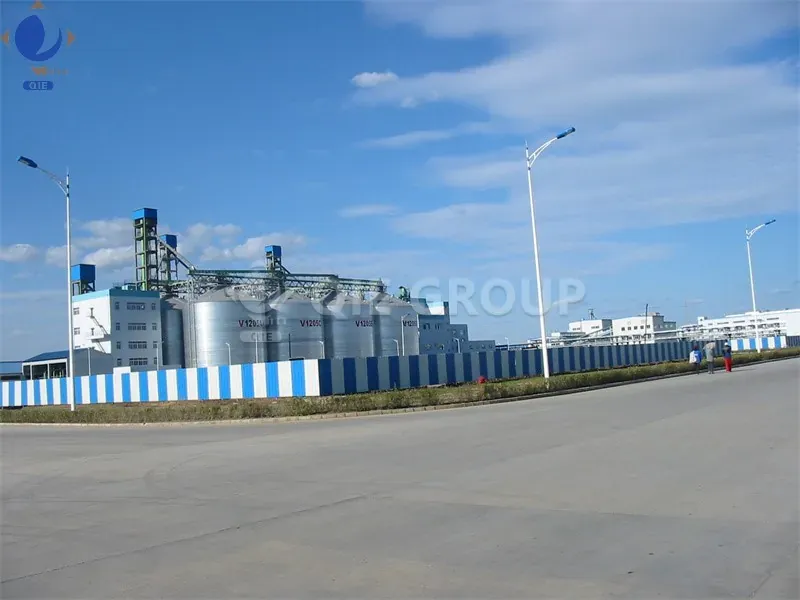
In the modern edible oil industry, the quality, yield, and energy efficiency of soybean oil production are not solely determined by pressing or solvent extraction processes. In fact, from the moment soybeans enter the factory, their oil yield, solvent penetration, and equipment energy consumption are already influenced by the pre-treatment section. This is why QIE GROUP places the soybean pre-treatment workshop at the core of its modern soybean oil processing line design.
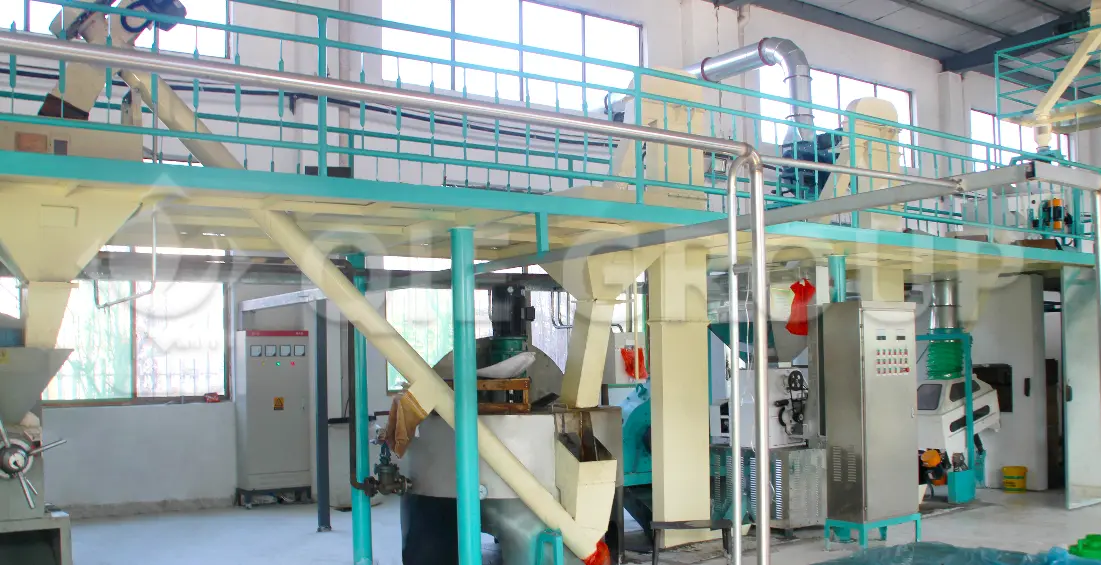
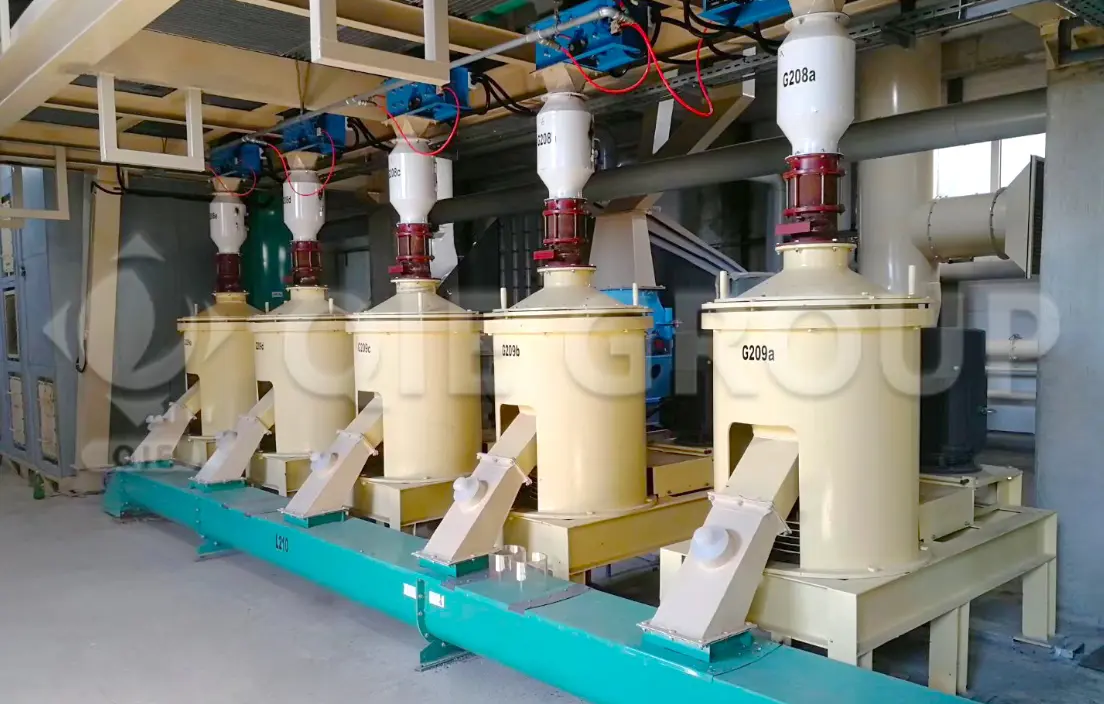
The pre-treatment workshop is the first critical stage that directly affects production efficiency in a soybean oil plant. It not only handles cleaning, dehulling, and conditioning but also provides optimal material conditions for cracking, flaking, and solvent extraction. If pre-treatment is not properly executed, even the most advanced downstream equipment cannot achieve high oil yield, low energy consumption, and stable production.
QIE GROUP optimizes soybean pre-treatment with a focus on several key aspects:
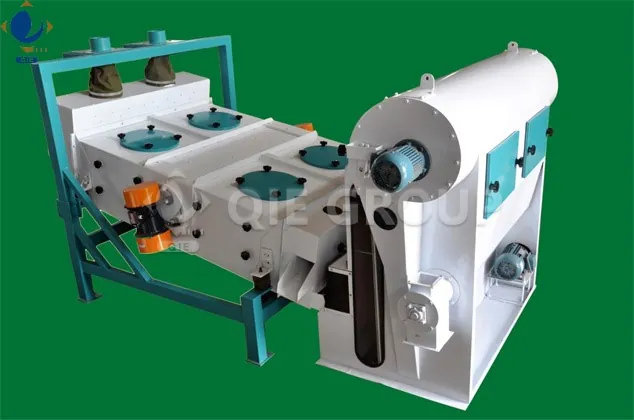
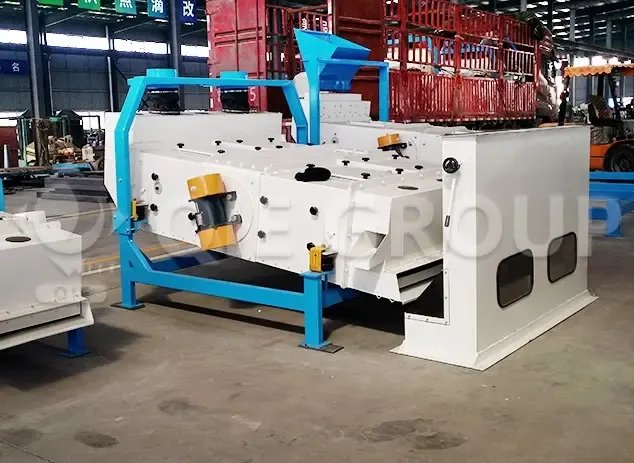
Before entering the production line, soybeans undergo weighing, screening, destoning, and de-ironing. This process:
Although often overlooked, effective raw material cleaning directly impacts production stability and maintenance costs. Poor cleaning may not only reduce oil quality but also cause frequent equipment downtime, increasing energy consumption and operational expenses.
After cleaning, soybeans enter a conditioning tower, where steam and hot air adjust moisture content to approximately 10% and raise the temperature to 60–70°C. The significance of this process includes:
Proper conditioning enhances oil release efficiency and reduces energy consumption and wear in the flaking and expansion equipment. QIE GROUP's design allows adjustment of parameters according to different soybean varieties, ensuring optimal treatment for every batch of raw materials.
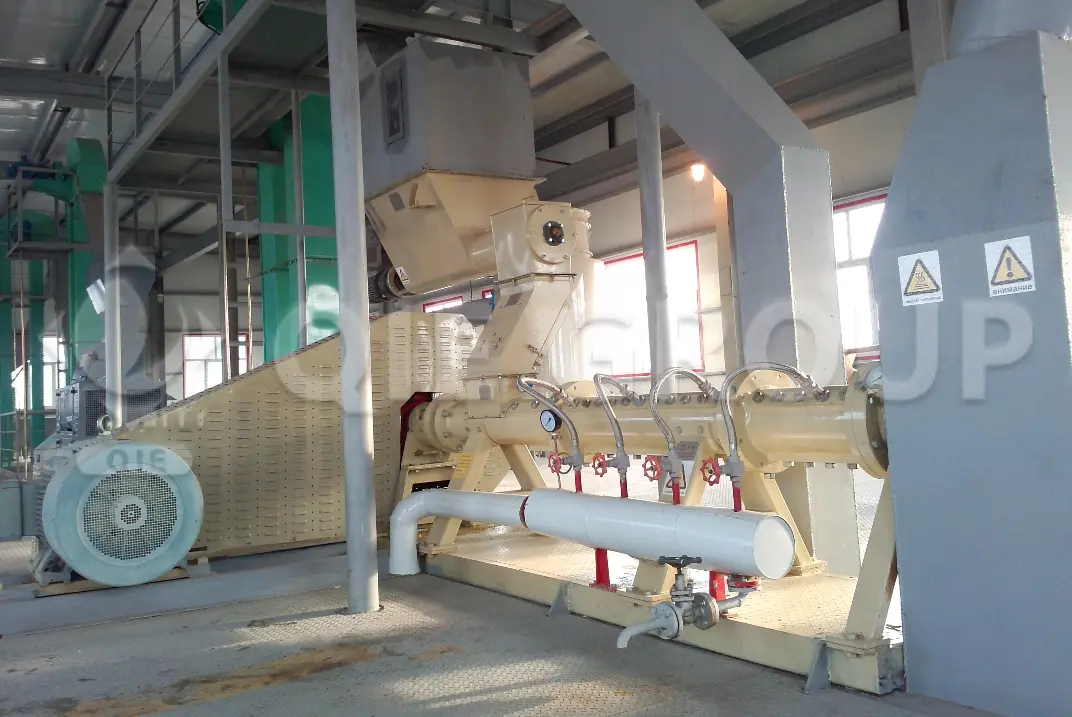
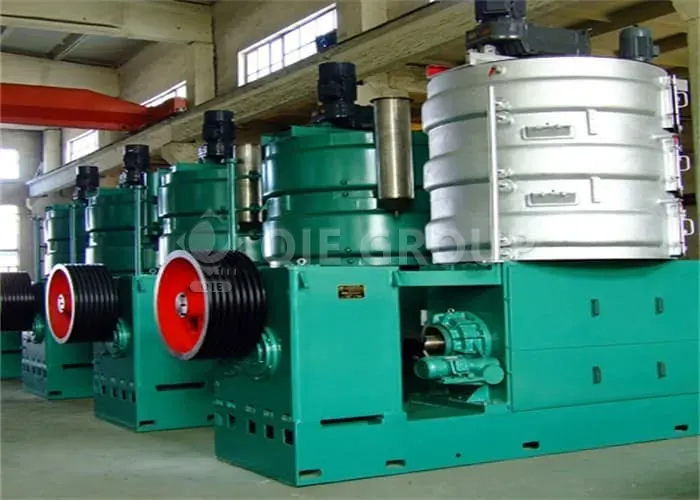
Conditioned soybeans proceed through two-stage cracking, two-stage dehulling, flaking, and expanding. Key parameters include:
These parameters directly influence solvent extraction efficiency. Oversized particles or uneven flakes can decrease extraction rates, slow filtration, and increase residual solvent. QIE GROUP’s pre-treatment process precisely controls these factors, improving oil yield and reducing solvent consumption.
Expanded soybeans are then cooled evenly in a counter-flow flap dryer. This step:
Uniform cooling not only maintains the integrity of expanded particles during extraction but also extends equipment lifespan and reduces maintenance frequency.
Modern soybean oil production relies on intelligent control systems. QIE GROUP integrates:
Key parameters such as temperature, moisture, particle thickness, and expansion pressure are monitored in real time and can be traced historically. This ensures safe, efficient, and energy-conscious operation, allowing operators to maintain stable production with minimal risk.
Choosing a soybean oil production line from QIE GROUP is more than selecting equipment; it’s accessing a complete turnkey engineering solution. Key advantages include:
Experience shows that when pre-treatment is properly executed, a plant’s overall oil yield and production efficiency can increase by 10–15%, while energy and solvent usage decrease. Simply put, when pre-treatment is done right, half the success of a soybean oil plant is already achieved.
Q1: Why is soybean pre-treatment so important in oil production?
A: Soybean pre-treatment determines the physical structure of the material before extraction. Proper cleaning, conditioning, flaking, and expanding improve solvent permeability, oil release efficiency, and overall production stability. Poor pre-treatment often leads to lower oil yield, higher energy consumption, and unstable extraction performance.
Q2: What moisture and temperature are optimal for soybean conditioning?
A: In most modern soybean oil plants, soybeans are conditioned to around 10% moisture and heated to 60–70°C. These parameters help optimize cracking, dehulling, and flaking while improving material permeability for solvent extraction.
Q3: How does flake thickness affect solvent extraction efficiency?
A: Flake thickness directly affects solvent penetration and filtration speed. A controlled thickness of 0.3–0.35 mm allows efficient oil extraction while minimizing solvent residue and reducing extraction time.
Q4: Can poor pre-treatment reduce oil yield even with advanced extraction equipment?
A: Yes. Even the most advanced solvent extraction systems cannot compensate for poor pre-treatment. Inconsistent particle size, improper moisture control, or weak material structure will limit solvent contact and reduce oil recovery.
Q5: How does QIE Group optimize soybean pre-treatment in turnkey projects?
A: QIE GROUP designs soybean pre-treatment workshops based on raw material characteristics, plant capacity, and extraction process requirements. By integrating process design, equipment selection, and automation control, we ensures stable operation, high oil yield, and energy-efficient performance across the entire production line.
Soybean oil production is not just about machines and processes; it reflects the integration of source material management, process optimization, and intelligent control. By focusing on soybean pre-treatment, QIE GROUP delivers highly efficient, safe, and stable oil production solutions.
Whether you are constructing a new plant or upgrading an existing line, the pre-treatment section is critical to success. Partnering with QIE GROUP ensures optimal oil yield, energy efficiency, and production safety right from the start.
 Peanut oil production line Fragrant peanut oil Efficient pressing equipment Intelligent steaming and frying process Energy-saving and environmentally friendly filtration
Palm fruit pressing process Palm Oil Press Palm oil production line Palm oil processing equipment Palm oil production process
Cottonseed oil press Spiral cottonseed oil press Small cottonseed oil press Cottonseed oil processing plant Fully automatic cottonseed oil press Cottonseed oil press price
5 tons/hour palm oil press Palm fruit oil press production line Double screw palm oil press unit Industrial palm oil extraction equipment Palm kernel separation and pressing machine
Edible oil processing plant Turnkey edible oil factory Vegetable oil production line Edible oil refining equipment Edible Oil Factory
Peanut oil production line Fragrant peanut oil Efficient pressing equipment Intelligent steaming and frying process Energy-saving and environmentally friendly filtration
Palm fruit pressing process Palm Oil Press Palm oil production line Palm oil processing equipment Palm oil production process
Cottonseed oil press Spiral cottonseed oil press Small cottonseed oil press Cottonseed oil processing plant Fully automatic cottonseed oil press Cottonseed oil press price
5 tons/hour palm oil press Palm fruit oil press production line Double screw palm oil press unit Industrial palm oil extraction equipment Palm kernel separation and pressing machine
Edible oil processing plant Turnkey edible oil factory Vegetable oil production line Edible oil refining equipment Edible Oil Factory






.png?x-oss-process=image/resize,h_100,m_lfit/format,webp)
.png?x-oss-process=image/resize,h_100,m_lfit/format,webp)
.png?x-oss-process=image/resize,h_100,m_lfit/format,webp)