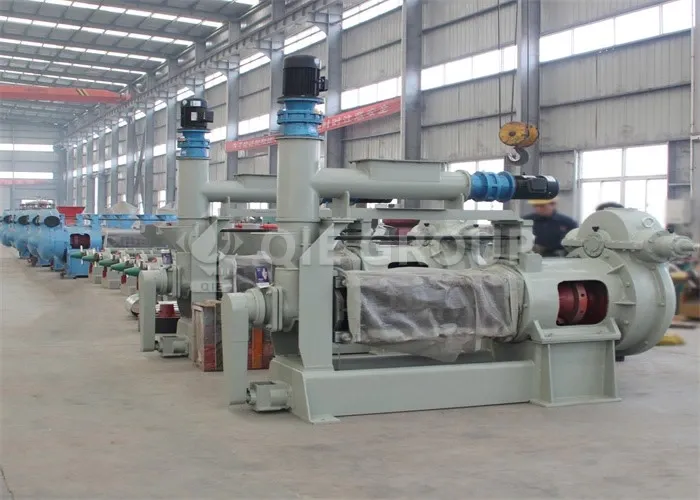
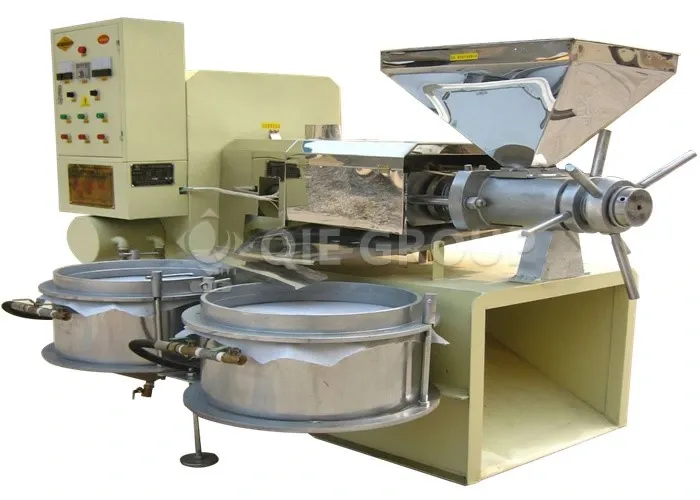
Soybeans are one of the world's most important oilseed crops and a major source of both edible oil and plant protein. Compared with high-oil-content seeds such as peanuts, sesame, and sunflower seeds, soybeans contain relatively less oil, but their abundant supply, stable production, and valuable by-products make them the preferred raw material for large-scale edible oil processing worldwide.
For investors and manufacturers planning to build a soybean oil processing plant, several questions are frequently asked:
In reality, soybean oil solvent extraction is far more than simply dissolving oil with a solvent. It is a highly integrated industrial process that combines seed pretreatment, cell structure preparation, solvent extraction, meal desolventizing, solvent recovery, crude oil processing, and refining into one continuous production system.
Every stage influences:
For modern edible oil manufacturers, the challenge is no longer whether soybean oil can be produced, but rather how to achieve:
A well-designed soybean oil solvent extraction process not only increases production efficiency but also determines the economic performance of the entire project.
In this comprehensive guide, we will explain the complete soybean oil solvent extraction process, introduce the major equipment used throughout the production line, compare high-temperature and low-temperature extraction technologies, discuss key factors affecting extraction efficiency, and provide practical recommendations for selecting the most suitable process for your soybean oil processing plant.
Whether you are planning a new soybean oil factory, expanding an existing production line, or evaluating different extraction technologies, this guide will help you better understand the engineering principles behind modern soybean oil processing.
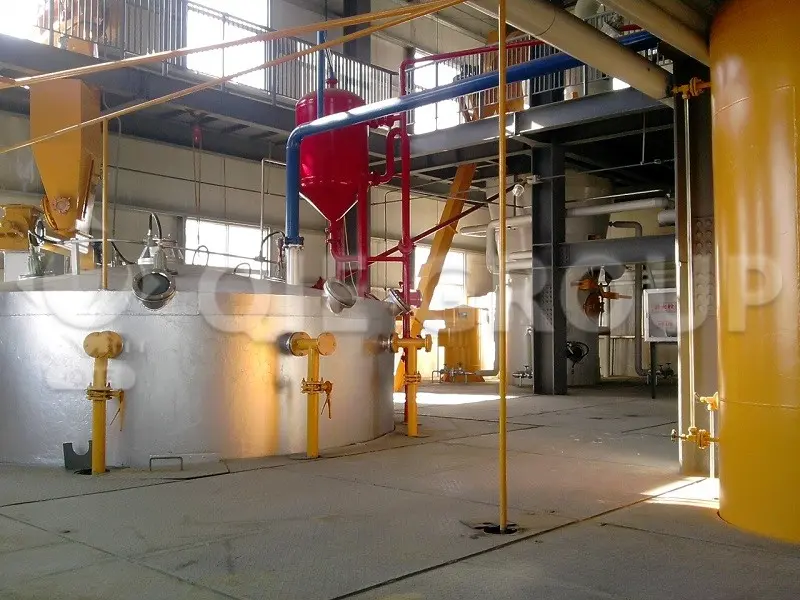
One of the most common questions from new investors is:
If soybean oil can be produced with a screw oil press, why do almost all industrial soybean oil plants use solvent extraction instead?
The answer lies in the characteristics of soybeans themselves and the economics of industrial-scale production.
Unlike peanuts or sesame seeds, soybeans are considered a low-oil-content oilseed, typically containing 18–22% oil.
When mechanical pressing alone is used, a significant amount of oil remains trapped inside the soybean meal after pressing. Although screw presses are highly efficient, they cannot fully recover the oil contained within the soybean cell structure.
For small-scale production, this oil loss may be acceptable.
However, for industrial plants processing hundreds or even thousands of tons of soybeans every day, even a small increase in residual oil represents a considerable economic loss over time.
This is why solvent extraction has become the standard technology for modern soybean oil production.
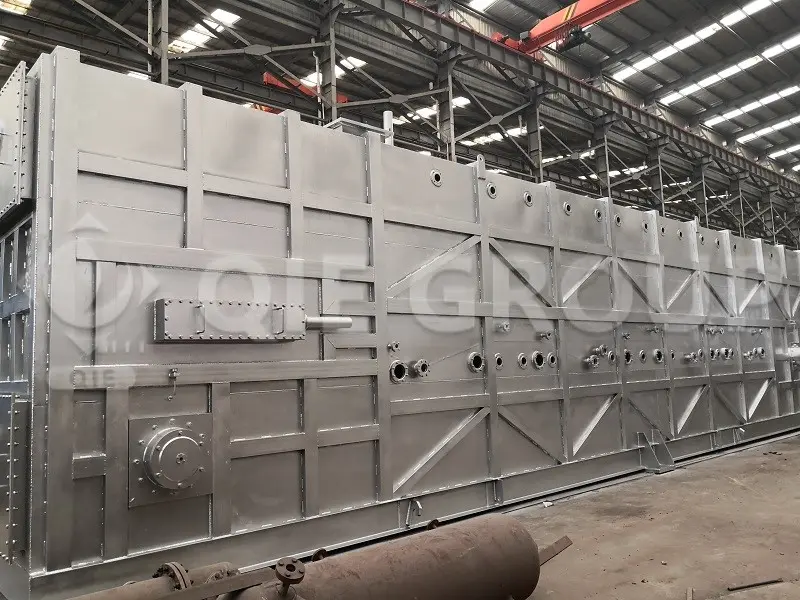
Modern solvent extraction plants use food-grade hexane to dissolve the remaining oil contained in soybean flakes.
After extraction, the solvent is removed through evaporation and steam stripping before being recycled back into the system.
With proper engineering design and optimized operating conditions, modern extraction plants can typically achieve:
These performance indicators demonstrate why solvent extraction has become the preferred solution for large-scale edible oil production.
Higher oil recovery means:
At the same time, advanced solvent recovery systems minimize solvent losses while improving plant safety and reducing environmental emissions.
Modern soybean processing is no longer focused solely on producing edible oil.
Soybean meal has become one of the most valuable co-products in the industry.
Depending on the target market, soybean extraction plants generally adopt one of two processing routes:
Low-temperature extraction combines flaking with low-temperature desolventizing technology to preserve protein functionality during processing. Because protein denaturation is minimized, the resulting white soybean flakes retain excellent functional properties and are widely used for manufacturing:
This process is especially suitable for manufacturers targeting the food industry.
High-temperature extraction incorporates an expansion process followed by a DTDC (Desolventizer-Toaster-Dryer-Cooler) system. The elevated temperature effectively removes solvent while simultaneously destroying anti-nutritional factors present in soybeans. The resulting soybean meal is widely used in:
Because of its high productivity and mature technology, this process is the preferred solution for most commercial soybean oil plants worldwide.
As the edible oil industry continues to expand, processing capacities have increased dramatically—from dozens of tons per day to several thousand tons per day.
Compared with mechanical pressing alone, solvent extraction offers several important advantages:
For these reasons, most modern soybean oil factories adopt a complete processing solution consisting of:
This integrated approach maximizes both edible oil production and soybean meal value while ensuring stable, safe, and efficient plant operation.
A complete soybean oil solvent extraction plant generally consists of the following processing stages:
Although the overall process appears straightforward, each individual step plays a critical role in determining extraction efficiency, soybean meal quality, energy consumption, solvent recovery, and ultimately the profitability of the entire plant.
Soybean oil solvent extraction is not simply a process of dissolving oil with a solvent. It is a highly integrated continuous production system consisting of pretreatment, solvent extraction, solvent recovery, crude oil processing, and meal desolventizing. Every stage directly affects oil yield, soybean meal quality, energy consumption, and the overall operating cost of the plant.
A modern soybean oil extraction plant generally follows this process:
At the same time, the extracted wet meal is transferred to a desolventizing system, where it is processed into different types of soybean meal depending on the target application.
Let's examine each stage in detail.
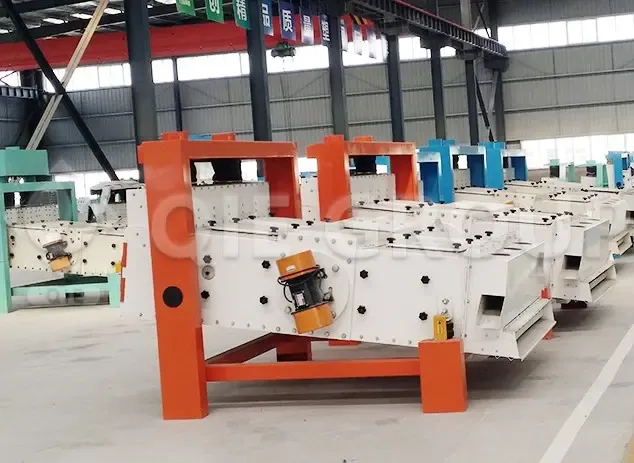
Before soybeans enter the extraction process, they must first pass through a cleaning section to remove impurities accumulated during harvesting, transportation, and storage.
Although cleaning does not directly increase oil yield, it is essential for maintaining stable plant operation. Foreign materials entering flaking mills, expanders, or extractors can reduce equipment life, increase maintenance costs, and negatively affect extraction efficiency.
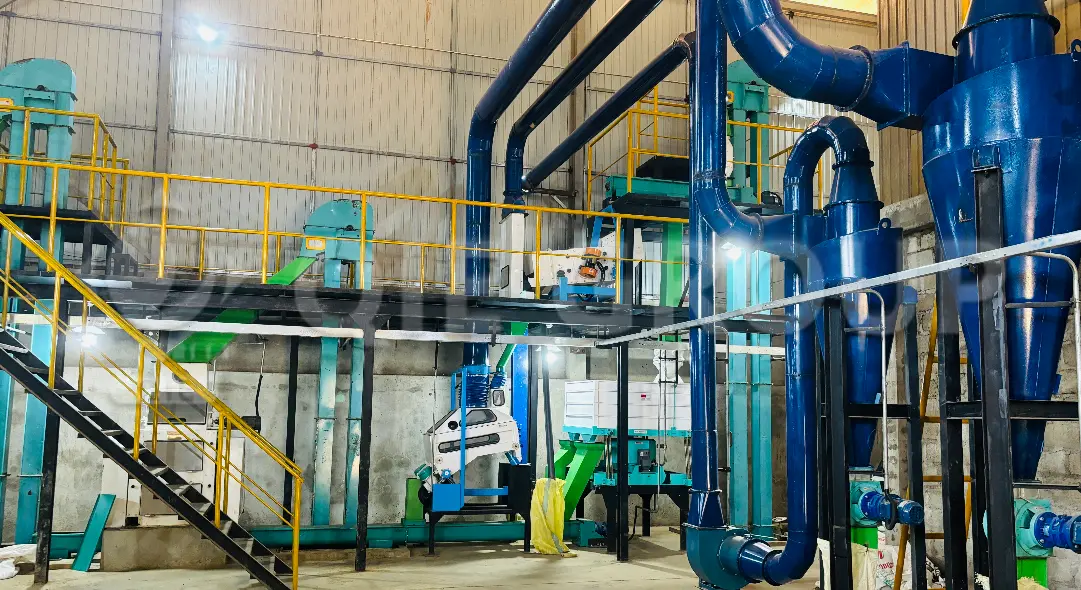
After cleaning, soybeans undergo pretreatment to prepare them for efficient solvent extraction.
This stage generally includes: Conditioning, Moisture adjustment, Crushing, and Dehulling.
Raw soybeans have a compact cellular structure that traps oil inside intact cells. Without proper preparation, solvent penetration is limited, resulting in lower extraction efficiency and higher solvent consumption.
Proper pretreatment helps to:
Modern soybean processing plants use automatic control systems to precisely regulate temperature and moisture during conditioning, ensuring consistent product quality before extraction.
After the initial pretreatment, soybeans enter one of two different processing routes depending on the final product requirements. This is one of the most important distinctions in modern soybean oil processing.
When the objective is to produce food-grade soybean protein products, processors usually choose the low-temperature extraction route.
Process Characteristics:
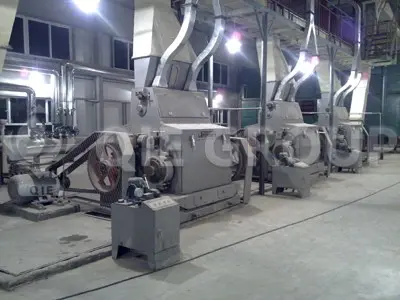
Flaking mills compress soybean kernels into thin flakes using mechanical pressure while minimizing heat generation. The flakes are typically controlled at approximately ≤0.3mm thick.
This optimized thickness provides:
Advantages:
Compared with high-temperature processing, low-temperature flaking offers several important benefits:
This process is widely used by manufacturers supplying the food and plant-based protein industries.
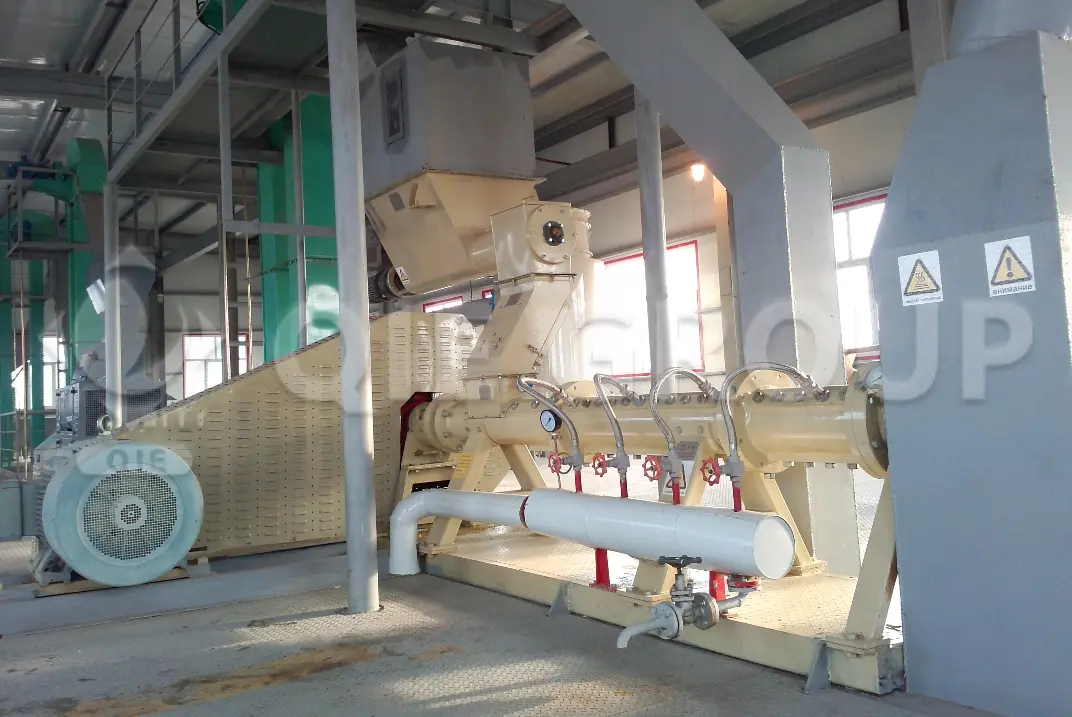
For plants primarily producing soybean meal for the feed industry, expansion technology is generally the preferred option.
Process Characteristics:
An expander subjects soybeans to high temperature, pressure, and mechanical shear. When the material exits the expander, the sudden pressure release creates a porous internal structure.
Compared with ordinary flakes, expanded material has:
High-temperature expansion also destroys certain anti-nutritional factors, making the soybean meal more suitable for livestock feed applications.
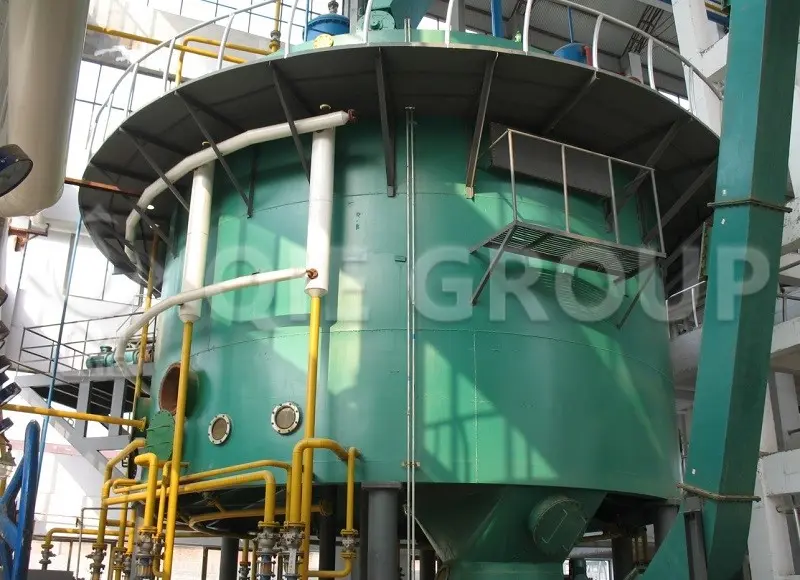
The solvent extraction section is the heart of the entire production line.
Its principle is straightforward: Food-grade hexane dissolves the oil remaining inside the soybean flakes. The resulting oil-solvent mixture is then separated through evaporation and steam stripping, while the solvent is recovered and recycled.
Several types of extractors are commonly used in industrial soybean oil plants, including:
Each extractor type has its own advantages depending on plant capacity, raw material characteristics, investment budget, and production requirements. Selecting the appropriate extractor is one of the most important engineering decisions during plant design.
After passing through the extractor, the material is divided into two separate streams.
With proper extraction design and optimized solvent circulation, modern soybean extraction plants can reduce residual oil in soybean meal to 0.5% or less, significantly improving overall oil recovery and plant profitability.
After extraction, the two material streams are processed independently.
The miscella passes through three major stages:
These operations gradually separate hexane from crude soybean oil. The recovered solvent is condensed and recycled back into the extraction process, while the crude oil is transferred to the refining section.
Modern extraction plants often incorporate multiple-effect evaporation and heat recovery systems to reduce steam consumption and improve overall energy efficiency.
Different desolventizing methods are selected depending on the desired soybean meal product.
Low-temperature desolventizing removes solvent under vacuum using indirect heating and flash evaporation. The process generally operates below 80°C, allowing soybean proteins to retain much of their natural functionality. The resulting white flakes are ideal for producing:
The DTDC system uses direct steam to remove solvent while simultaneously toasting and drying the soybean meal. Operating temperatures generally exceed 100°C. Besides removing residual solvent, this process effectively destroys anti-nutritional factors, producing soybean meal suitable for:
DTDC technology remains the most widely used desolventizing solution in large commercial soybean oil extraction plants around the world.
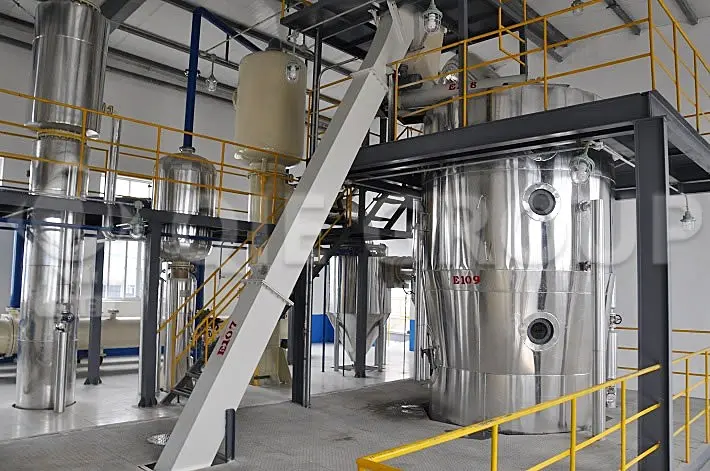
Many people assume the only difference between these two processes is the desolventizing temperature. In reality, they are designed for entirely different production objectives.
| Comparison | Low-Temperature Extraction | High-Temperature Extraction |
|---|---|---|
| Primary Objective | Maximize oil recovery while preserving protein functionality | Maximize oil recovery and produce conventional feed meal |
| Pretreatment | Flaking | Expansion |
| Desolventizing | Low-temperature vacuum desolventizing | DTDC system |
| Protein Activity | High | Reduced |
| Soybean Meal Application | Soy protein isolate, soy protein concentrate, food ingredients | Animal feed, livestock feed, soy sauce production |
| Typical Users | Food protein manufacturers | Commercial edible oil and feed producers |
Neither process is universally better than the other.
If the goal is to manufacture high-value protein products, low-temperature extraction is generally the preferred solution.
If the primary objective is large-scale edible oil production combined with conventional soybean meal, the high-temperature extraction process offers greater production efficiency and remains the industry standard.
The final process selection should always be based on raw material characteristics, target market, product portfolio, investment budget, and long-term business strategy.
One of the most important decisions when planning a soybean oil processing project is choosing the right extraction technology.
Many first-time investors ask:
The answer depends on several factors, including processing capacity, product positioning, investment budget, and long-term production goals.
Unlike high-oil-content oilseeds such as peanuts or sesame seeds, soybeans contain only 18–22% oil. Because of this relatively low oil content, most modern industrial soybean oil plants no longer rely solely on mechanical pressing. Instead, they choose either direct solvent extraction or a pre-pressing plus solvent extraction process to maximize oil recovery and overall profitability.
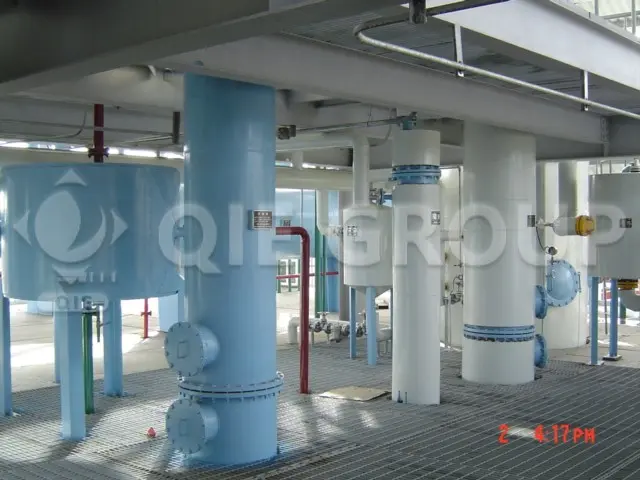
| Comparison | Mechanical Pressing | Solvent Extraction |
|---|---|---|
| Suitable Plant Capacity | Small and medium-sized plants | Medium and large industrial plants |
| Oil Recovery | Good, but some oil remains in the meal | Very high oil recovery with minimal residual oil |
| Residual Oil in Meal | Relatively high | Typically ≤0.5% under optimized conditions |
| Automation Level | Medium | High, suitable for continuous production |
| Initial Investment | Lower | Higher initial investment but better long-term returns |
| Operating Cost | Suitable for smaller production volumes | Lower unit production cost at large capacities |
| Soybean Meal Quality | Conventional feed meal | Flexible production of feed meal or high-value protein meal |
| Best Application | Local edible oil production | Commercial industrial processing and export-oriented production |
For soybean processing plants with capacities above 100 TPD, solvent extraction generally provides greater economic advantages through improved oil recovery, lower production costs per ton of oil, and higher raw material utilization.
As plant capacity increases, the benefits of solvent extraction become even more significant.
One of the most frequently asked questions from customers is:
The answer lies in decades of industrial experience and engineering optimization.
Food-grade hexane has become the preferred extraction solvent because it offers an excellent balance between extraction efficiency, energy consumption, operating cost, and solvent recovery.
Hexane dissolves vegetable oils very efficiently, allowing rapid extraction while minimizing residual oil in soybean meal. Higher extraction efficiency directly translates into improved plant profitability.
Hexane has a relatively low boiling point compared with many other organic solvents. This makes solvent recovery much easier during evaporation and steam stripping, reducing steam consumption and overall energy costs.
Modern solvent recovery systems combine multi-stage evaporation, steam stripping, condensation, mineral oil absorption, and tail gas recovery.
Typical performance includes solvent consumption of ~1.5 kg per ton and solvent recovery efficiency of 99.5% or higher.
Includes explosion-proof electrical systems, fully enclosed extraction equipment, automatic monitoring, negative-pressure ventilation, advanced fire protection, and VOC emission control technologies.
Therefore, modern extraction plants are designed not simply to use hexane, but to circulate and recover it safely and efficiently.
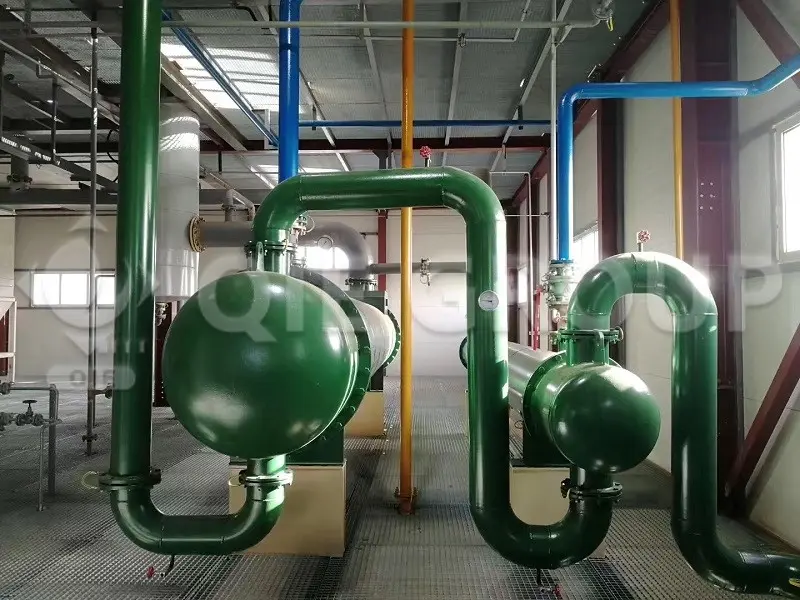
The performance of a soybean oil extraction plant depends on far more than selecting a high-quality extractor. Oil recovery is influenced by multiple engineering and process control factors working together.
Consistent soybean quality is the foundation of stable production. Key factors include: uniform maturity, appropriate moisture content, low impurity levels, and proper storage conditions. Poor-quality raw materials often result in lower extraction efficiency and increased operating costs.
Whether the plant uses flaking or expansion technology, preparing the material correctly is essential. Flakes that are too thick reduce solvent penetration. Flakes that are too thin create excessive fines, restricting solvent flow. Similarly, poorly expanded material may reduce extraction efficiency. Maintaining consistent flake thickness and material structure helps maximize oil diffusion throughout the extraction process.
Proper conditioning before extraction significantly affects solvent penetration. Maintaining appropriate moisture and temperature during pretreatment helps improve cell rupture, increase oil diffusion, reduce steam consumption, and improve plant stability. Modern automatic control systems continuously monitor these parameters to ensure consistent production.
Extraction efficiency depends on achieving the right balance. If extraction time is too short, oil recovery decreases. If extraction time is too long, production capacity declines and energy consumption increases. Advanced extraction plants automatically optimize solvent spray distribution, bed thickness, solvent flow rate, and extraction residence time. This ensures maximum oil recovery without sacrificing production efficiency.
Efficient solvent recovery contributes directly to plant profitability. Modern extraction plants utilize multiple-effect evaporators, steam strippers, condensers, heat recovery systems, and tail gas recovery units. These systems reduce solvent loss, lower steam consumption, and improve overall energy efficiency while supporting environmentally responsible production.
No single extraction process is suitable for every soybean oil project. The optimal solution depends on processing capacity, product positioning, and investment objectives.
Well suited for medium-sized industrial projects. A mature solvent extraction process combined with flaking or expansion provides stable production while maintaining reasonable investment costs. Automation configured to budget.
Benefits from continuous extractors, improved solvent circulation, heat recovery systems, PLC-based automation, and energy-saving process optimization to reduce operating costs and increase overall efficiency.
Highly automated systems integrating pretreatment, extraction, meal processing, oil refining, and utilities. Food protein markets select low-temp; feed manufacturers choose high-temp DTDC.
Requires comprehensive engineering optimization: reliable supply, product portfolio planning, utility integration, environmental compliance, intelligent automation, and future expansion capability.
At scale, plant-wide system integration plays a much greater role in long-term profitability than simply purchasing larger equipment.
Because soybeans have relatively low oil content, solvent extraction can recover significantly more oil than mechanical pressing alone, making it the preferred technology for large-scale industrial production.
With proper engineering design and optimized operating conditions, modern soybean oil extraction plants can reduce residual oil in soybean meal to 0.5% or less, maximizing raw material utilization and improving profitability.
Yes. Modern solvent extraction plants operate as fully enclosed systems equipped with explosion-proof electrical components, automatic monitoring, solvent recovery, fire protection, and ventilation systems that comply with international industrial safety standards.
If your business focuses on soy protein isolate, soy protein concentrate, or other food-grade protein products, low-temperature extraction is generally the preferred solution. If your primary objective is producing edible oil together with conventional soybean meal for animal feed, high-temperature extraction provides higher productivity and remains the industry standard.
Selecting the right equipment is only one part of the project. Successful soybean oil plants require a comprehensive evaluation of raw material supply, production capacity, target markets, utility systems, environmental regulations, automation level, and future expansion plans before determining the optimal process design.
As the global edible oil industry continues to evolve toward larger capacities, higher automation, and greater sustainability, solvent extraction has become the core technology for modern soybean oil production. Compared with mechanical pressing alone, a properly engineered solvent extraction plant not only maximizes oil recovery but also enables manufacturers to produce soybean meal tailored for either high-value food protein applications or conventional animal feed markets.
For investors planning a soybean oil processing project, selecting the right extraction process involves much more than choosing equipment. It requires balancing raw material characteristics, production capacity, product positioning, energy efficiency, environmental compliance, and long-term operating costs to achieve the best return on investment.
With more than 40 years of experience in edible oil processing technology, QIE Group provides complete EPC turnkey solutions for soybean oil processing plants, covering process design, equipment manufacturing, installation, commissioning, and technical support.
Whether you are planning a medium-capacity soybean oil extraction plant or a large-scale continuous processing facility, our engineering team can develop a customized solution tailored to your raw materials, production goals, and investment budget—helping you maximize efficiency, product quality, and long-term profitability.
Get in touch with QIE Group’s senior process engineers today to receive tailored technical proposals, plant layout designs, and ROI estimates.
Contact Our Technical Experts turnkey palm oil plant palm kernel oil plant feasibility study process design QIE Group
Coconut oil production line Dried coconut meat oil solvent extraction coconut oil refinery Vegetable oil machinery Coconut oil processing plant
shea butter processing plant cost shea butter extraction machine cold press shea butter tech cosmetic grade shea butter production unrefined shea butter press
Peanut oil production plant Peanut oil production line Peanut oil processing equipment Peanut oil investment cost
Rapeseed Oil Processing Rapeseed Oil Pressing Process Rapeseed Oil Extraction Rapeseed Oil Refining Equipment Rapeseed Oil Processing Plant
turnkey palm oil plant palm kernel oil plant feasibility study process design QIE Group
Coconut oil production line Dried coconut meat oil solvent extraction coconut oil refinery Vegetable oil machinery Coconut oil processing plant
shea butter processing plant cost shea butter extraction machine cold press shea butter tech cosmetic grade shea butter production unrefined shea butter press
Peanut oil production plant Peanut oil production line Peanut oil processing equipment Peanut oil investment cost
Rapeseed Oil Processing Rapeseed Oil Pressing Process Rapeseed Oil Extraction Rapeseed Oil Refining Equipment Rapeseed Oil Processing Plant


.png?x-oss-process=image/resize,h_100,m_lfit/format,webp)
.png?x-oss-process=image/resize,h_100,m_lfit/format,webp)
.png?x-oss-process=image/resize,h_100,m_lfit/format,webp)