
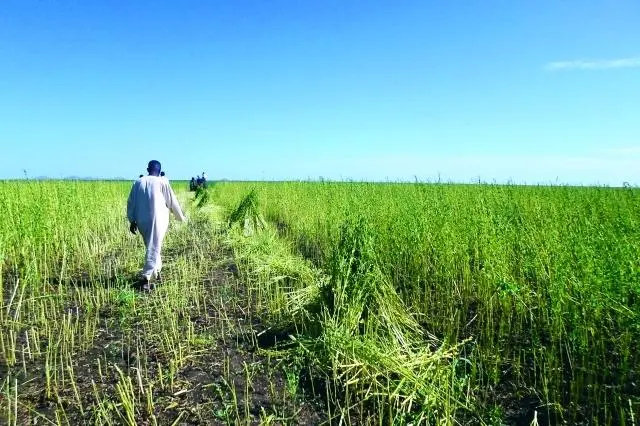
Investing in a Sudan Sesame Oil Processing project yields a highly rewarding return rate due to the dual advantages of rich resources and strong market demand:
When making a sesame processing investment, configuring a complete, automated production line delivers absolute operational and economic advantages:
Considering that raw sesame seeds in Sudan often contain a higher percentage of field impurities due to manual harvesting, combined with the relatively dry local climate, oil engineering experts strongly recommend a standardized, fully automated continuous screw pressing process.
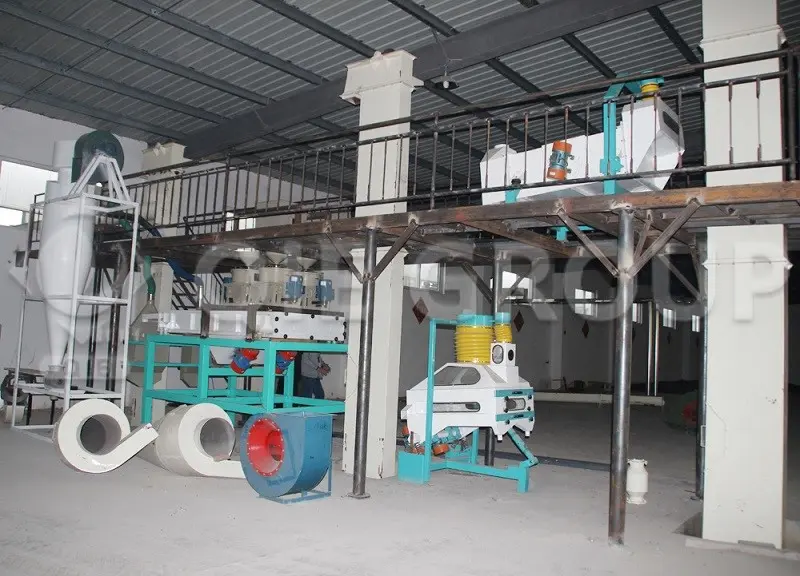
Thoroughly separates sand, stones, dirt, and stalks mixed in during manual harvesting. This reduces the raw material impurity rate to below 0.05% and traps metallic debris, vigorously protecting downstream high-precision pressing components.
Equipment: Vibratory Sieve, Gravity Destoner, Strong Magnetic SeparatorSudanese raw sesame seeds typically arrive with a moisture content under 8%. In this phase, the seed moisture is uniformly adjusted to 10% - 12%, effectively preventing the surface of the seeds from scorching during subsequent roasting.
Equipment: Conditioning CookerThe material temperature is strictly regulated between 150°C and 200°C. This step breaks down the cell structure of the sesame seeds, aggregates microscopic oil droplets, and triggers the Maillard reaction, generating the characteristic, rich aroma unique to premium pressed sesame oil.
Equipment: Rotary Drum RoasterLoad the roasted sesame seeds into the press chamber—maintained at a temperature of 100–120°C—and slowly and steadily extract the oil from the seeds.
Equipment: Screw Oil Press or Hydraulic Oil PressThe crude oil from the press undergoes initial large-particle settling in the sedimentation tank. It is then pumped into high-precision filters to intercept micro-sized suspended solids, resulting in crystal-clear, bright, and pure primary-pressed sesame oil.
Equipment: Oil Sedimentation Tank, Automatic Leaf Filter / Plate and Frame FilterA highly compatible Sesame Oil Production Line must prioritize heavy-duty wear resistance, low energy consumption, and robust physical protection against Sudan's localized environmental factors.
| Equipment Name | Core Function & Process Role | Sudan Localized Technical Features |
|---|---|---|
| Vibratory Sieve & Destoner | Sifts out large, medium, and small debris; utilizes gravity differential to thoroughly separate co-existing stones. | Specifically enlarged screening surface area to handle high impurity rates. |
| Automatic Energy-Saving Roaster | Regulates roasting under preset temperatures to achieve cell rupture and aroma release. | Upgraded with ultra-efficient thermal insulation jacket to lower heat loss. |
| Continuous Screw Oil Press | Delivers multi-stage progressive squeeze and continuous operation to separate oil from the cake. | High-chromium alloy heat-treatment extends wear life by over 2 times. |
| Automatic Leaf Filter | Filters crude oil under pressure, blocking micron-level meal residue to clarify the oil. | Hermetically sealed structure prevents ambient dust and sand contamination. |
| Gentle Degumming Assembly | Eliminates gums, hydratable phospholipids, and trace free fatty acids from the crude oil. | Physical temperature control route. Excessive deodorization is banned to keep aroma. |
| Central Control Cabinet (Optional) | Monitors roaster temperatures, press electrical currents, and pump/valve statuses in real time. | Equipped with wide-voltage stabilizer and dust-proof enclosure for local grids. |
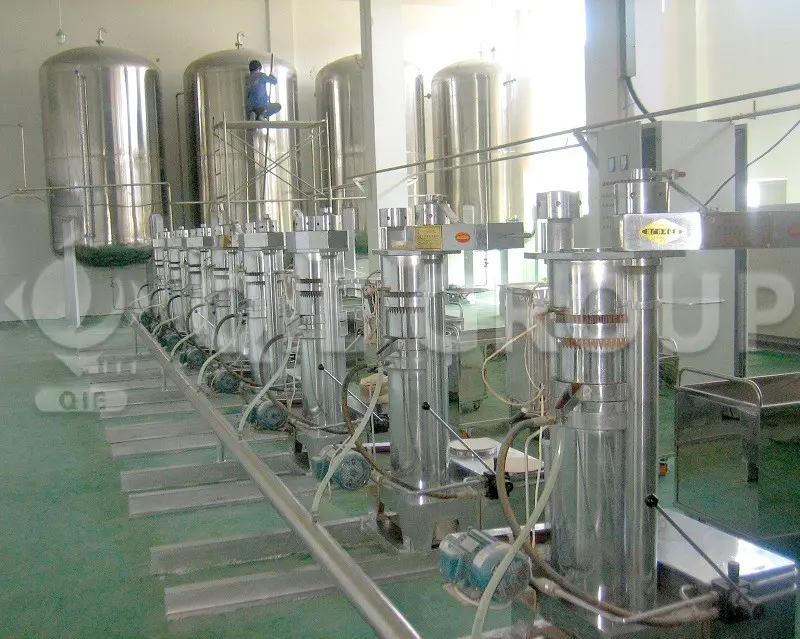
Below is a realistic and rational investment budget baseline for the Sudanese market, provided by veteran oil machinery exporters:
Ideal for local Sudanese agricultural cooperatives or private entrepreneurial investors. The complete equipment FOB price generally ranges between $150,000 and $350,000 USD. Factoring in local Sudanese steel-structure workshop construction, customs clearance, basic civil works, and installation, the total project startup capital is roughly $400,000 to $700,000 USD.
Perfect for established Sudanese mid-sized agricultural traders with reliable raw seed networks. This setup integrates automated conveying, continuous roasting-pressing systems, auto-clarification filtration, and pilot-scale gentle degumming systems. The total machinery investment sits around $400,000 to $800,000 USD.
Geared toward multinational agribusiness conglomerates or state-supported agricultural initiatives. These projects generally introduce a "Pre-pressing & Solvent Extraction" process to squeeze the residual oil in the cake down to under 1%. The overall investment for machinery and core engineering services falls between $1,000,000 and $2,500,000 USD.
When setting up a factory in Sudan, choosing a turnkey sesame oil plant (integrating design, procurement, and construction) represents the absolute best practice to guarantee a smooth plant launch:
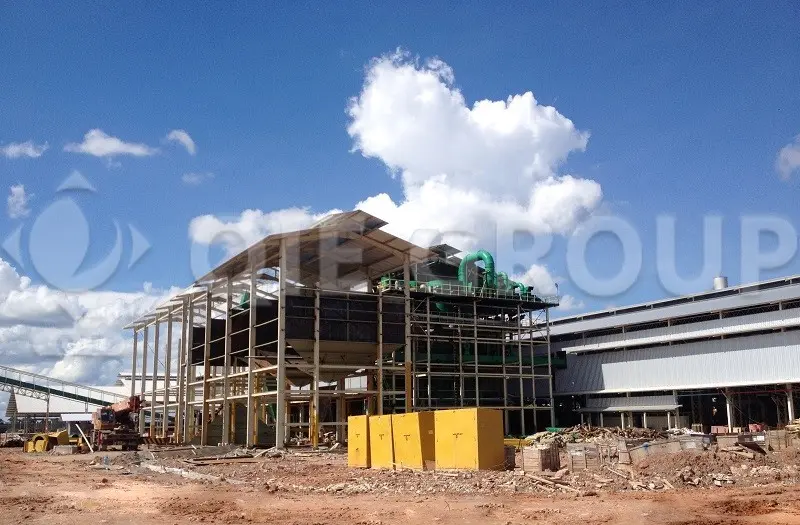
A qualified and able to deliver a cross-border sesame oil extraction project, an excellent sesame oil processing equipment supplier should comfortably fulfill the following concrete criteria:
• African Delivery Track Record: Proven success in manufacturing and delivering complete edible oil processing projects over 50 TPD within Sudan or neighboring African nations (edible oil processing project in Africa).
• Custom Engineering Capabilities: Ability to provide full 3D industrial process piping layouts and plant workshop schematics mapped out precisely according to the actual moisture and impurity rates of the investor's raw seed samples.
• All-Inclusive Wear-Parts Packages: Supplying a 1-to-2-year package of critical wear-and-tear components (such as press bars, screws, bearings, and filter cloths) along with the machinery, ensuring the plant doesn't sit idle due to local spare-part shortages.
• Industrial Certifications: Valid corporate ISO9001 Quality Management Certification, with export equipment fully compliant with international safety standards such as European CE certifications.
Let's take the highly recommended 30 TPD medium-scale standardized production line as a benchmark: The main workshop (housing cleaning, roasting, pressing, and filtration) usually requires a length of approximately 30 - 40 meters, a width of about 12 - 15 meters, and an eave height of no less than 5.5 - 6 meters to clear vertical bucket elevators. Additionally, you should budget about 300 - 500 square meters for raw seed storage and finished oil tank farms. A total footprint of 1000 - 1500 square meters is sufficient for highly efficient operations.
This is a very common challenge when establishing industrial plants in Sudan. During the plant design phase, engineering teams implement a dual-layer safeguard strategy: investors are strongly advised to integrate an industrial-grade 150kW - 250kW diesel generator set as an emergency backup power source. The central control cabinet is configured with an Automatic Transfer Switch (ATS) system. In the event of a sudden grid failure, the ATS switches over to ensure the oil presses and conveyors safely empty their contents, preventing hot materials from solidifying and jamming the machinery.
This depends entirely on your targeted consumer market. Sesame hulls contain high amounts of oxalic acid and cellulose, which impart a slightly bitter undertone to the oil.
• If your target is the Sudanese domestic market or traditional neighboring African markets, local consumers strongly prefer the intense roasted aroma produced by pressing unpeeled seeds. In this case, omitting the peeling machine significantly lowers your initial equipment budget.
• If your goal is exporting to premium markets in Europe and Japan, or supplying raw materials for high-end pharmaceutical and cosmetic applications, it is highly recommended to add an automatic washing and peeling machine after cleaning. Pressed oil from peeled sesame possesses a beautiful golden clarity and a remarkably smooth, mild flavor, which commands a higher premium globally.
For a standard 30 TPD complete turnkey project, the timeline breaks down as follows:
1. Manufacturing & Pre-Assembly: Typically takes 60 - 90 days, depending on customization details and factory scheduling.
2. Ocean Freight: Shipping from major international ports to Port Sudan generally takes around 30 - 45 days.
3. Customs Clearance & Inland Transport: Takes roughly 15 - 30 days under normal circumstances.
Therefore, investors should finalize technical specifications and secure order placements with their chosen sesame oil machinery manufacturer at least 5 to 6 months in advance to ensure the entire line is installed, calibrated, and commissioned right before the local sesame harvest season begins.
A qualified EPC contractor implements a structured "Two-Stage Training Program." Stage one takes place during factory pre-assembly testing prior to shipment, where the investor's core technical team is invited to join virtual or on-site inspections to learn mechanical principles. Stage two (the core phase) happens directly on-site in Sudan during installation. Commissioning engineers remain at the facility to provide hands-on training to local operators, covering raw material moisture testing, press current optimization, and filter cloth maintenance. Comprehensive English-language Standard Operating Procedures (SOPs) are also delivered to guarantee the local workforce can run the factory independently and safely.
Partnering with a comprehensive oil machinery conglomerate that possesses extensive EPC delivery experience in engineering design, state-of-the-art equipment manufacturing, international installation, and lifecycle technical support—such as QIE Group— presents the definitive cornerstone to ensuring your Sudanese sesame oil project rolls out efficiently, runs stably, and secures a high return on investment.
*Custom engineering proposal will be delivered within 24 business hours. turnkey edible oil plant edible oil processing plant cost oil refinery EPC Pressing vs solvent extraction Investment range for edible oil plant
Peanut oil production line Pressing and leaching Edible oil refining Increased oil yield QIE Group
Energy-saving and environmentally friendly cooking oil Market trend analysis turnkey projects Intelligent production equipment Investment in edible oil production lines
soybean pre-treatment soybean oil production line soybean oil processing plant solvent extraction efficiency oilseed pre-treatment equipment
Intelligent palm oil production line Palm fruit processing technology High efficiency oil yield Automated pressing system By-product recycling and value-added
turnkey edible oil plant edible oil processing plant cost oil refinery EPC Pressing vs solvent extraction Investment range for edible oil plant
Peanut oil production line Pressing and leaching Edible oil refining Increased oil yield QIE Group
Energy-saving and environmentally friendly cooking oil Market trend analysis turnkey projects Intelligent production equipment Investment in edible oil production lines
soybean pre-treatment soybean oil production line soybean oil processing plant solvent extraction efficiency oilseed pre-treatment equipment
Intelligent palm oil production line Palm fruit processing technology High efficiency oil yield Automated pressing system By-product recycling and value-added


.png?x-oss-process=image/resize,h_100,m_lfit/format,webp)
.png?x-oss-process=image/resize,h_100,m_lfit/format,webp)
.png?x-oss-process=image/resize,h_100,m_lfit/format,webp)


.webp?x-oss-process=image/resize,h_800,m_lfit/format,webp)


