For decision-makers planning to invest in a rice bran oil processing plant, upgrade existing production lines, or evaluate equipment selection, a deep understanding of the rice bran oil solvent extraction process and its supporting equipment is critical. Rice bran oil is rich in valuable nutrients such as oryzanol, phytosterols, and vitamin E, offering strong market prospects. However, the unique material characteristics of rice bran (susceptibility to rancidity, low bulk density, high fine-powder content) dictate that efficient "pretreatment stabilization + solvent extraction" is the optimal technical route for scalable, economical production.
This guide provides a comprehensive breakdown of process principles, core equipment, selection criteria, operational flows, engineering energy consumption metrics, and investment considerations to help you make informed engineering decisions tailored to your project.
If you need a quick overview of the rice bran oil solvent extraction process, here are the primary highlights:
As the primary byproduct of rice milling, rice bran represents a rich source of plant oil. However, processing raw rice bran poses two major technical challenges:
Fresh rice bran contains highly active lipase and phospholipase enzymes. Under suitable moisture and temperature conditions, the Free Fatty Acid (FFA) content spikes rapidly after the bran is separated from the grain, causing the Acid Value (AV) to soar. This significantly increases refining losses and severely degrades crude oil yield. "Consequently, implementing an efficient rice bran pretreatment and stabilization machine before solvent extraction is essential to control acid value fluctuations and protect oil quality."
Rice bran's oil content generally ranges from 15% to 22%. Relying solely on mechanical pressing leaves a high concentration of residual oil in the press cake, resulting in poor oil yield. For enterprises seeking to maximize profitability, mechanical pressing alone cannot satisfy the demands of large-scale industrial production.
| Comparison Item | Mechanical Pressing | Solvent Extraction |
|---|---|---|
| Oil Extraction Rate | Lower | Higher |
| Residual Oil in Meal | Higher | ≤ 0.5% |
| Automation Level | Lower | Continuous Automated Production |
| Suitable Scale | Small-to-Medium Plants | Medium-to-Large Plants |
| Long-term Operating Cost | Relatively High | More Cost-Effective at Scale |
For projects with a daily processing capacity of 50 TPD or higher, continuous solvent extraction delivers significantly better overall economic returns.
Solvent extraction lines are ideal for:
For high-capacity processing plants, continuous production increases equipment utilization while driving down unit energy consumption and labor costs.
A complete rice bran oil solvent extraction line consists of several interconnected subsystems: Pretreatment & Stabilization, Extraction, Meal Desolventizing, Miscella Evaporation, and Solvent Recovery.
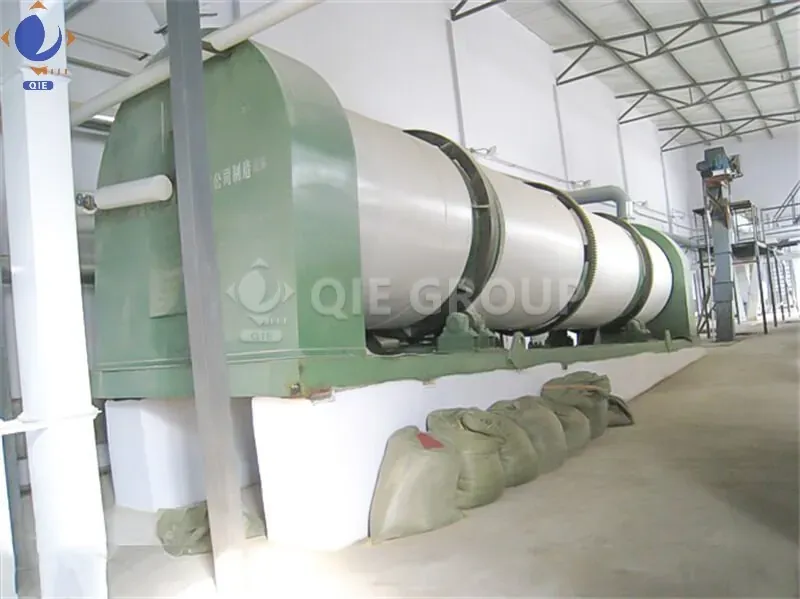
Includes cleaning, broken rice separation, stabilization (extrusion/pelletizing), and drying/conditioning. This stage controls FFA buildup, alters the material's physical structure, and prepares the bran for optimal extraction.
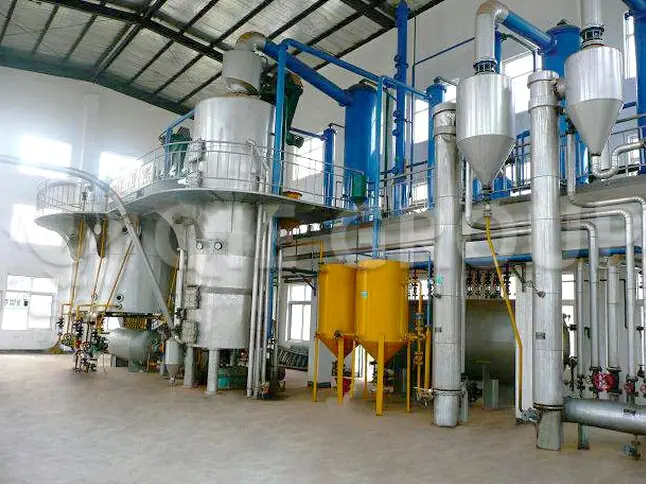
Stabilized rice bran enters the continuous extractor, contacting solvent counter-currently to yield concentrated miscella (oil-solvent mixture) and wet defatted meal. Extraction efficiency directly determines overall oil recovery.
Miscella undergoes filtration, multi-effect evaporation, and stripping to yield crude rice bran oil. Simultaneously, wet meal passes through the DTDC system to remove residual solvent, producing storable defatted rice bran meal. Escaping solvent vapors are condensed and recycled to lower operating costs and satisfy environmental compliance.
A rice bran oil extraction line is an integrated system spanning material prep, thermal energy management, solvent recycling, explosion-proof safety, and process automation. Project planning must evaluate raw material traits, target capacity, utility availability, and expansion potential rather than focusing solely on individual machinery prices.
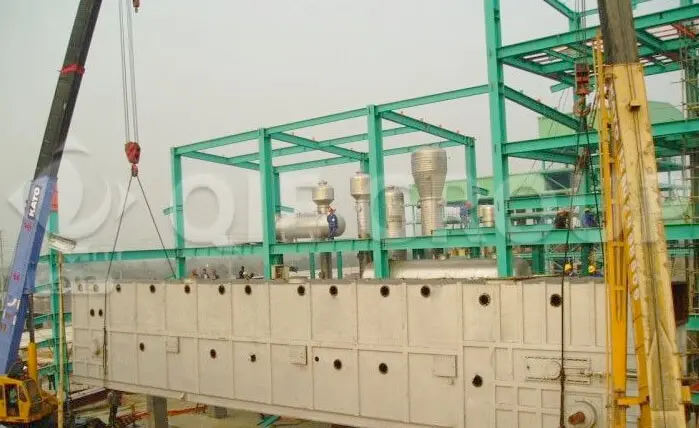
Extractor: Facilitates counter-current washing and soaking of material with solvent, dissolving oil to form miscella.
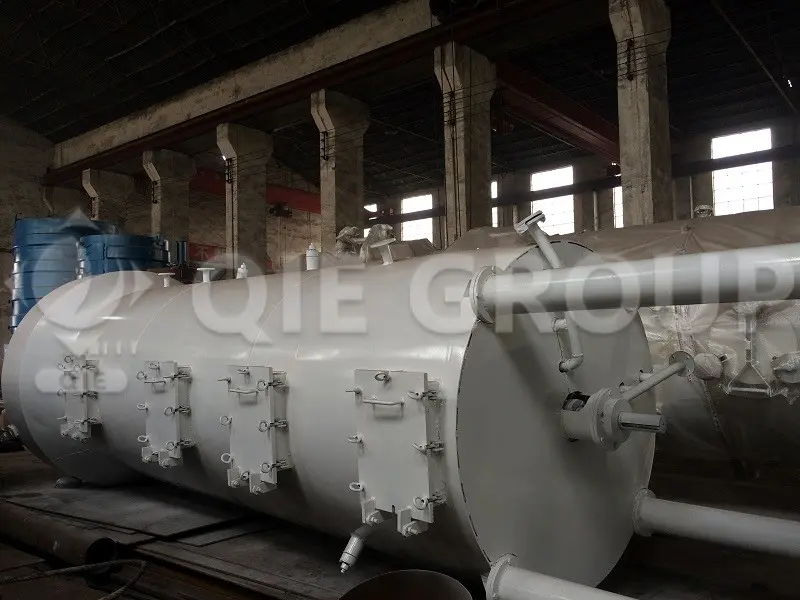
DTDC System: Combines Desolventizer, Toaster, Drier, and Cooler. Uses direct and indirect steam to strip residual solvent from wet meal, recover solvent vapor, and adjust meal moisture/temperature for safe storage.
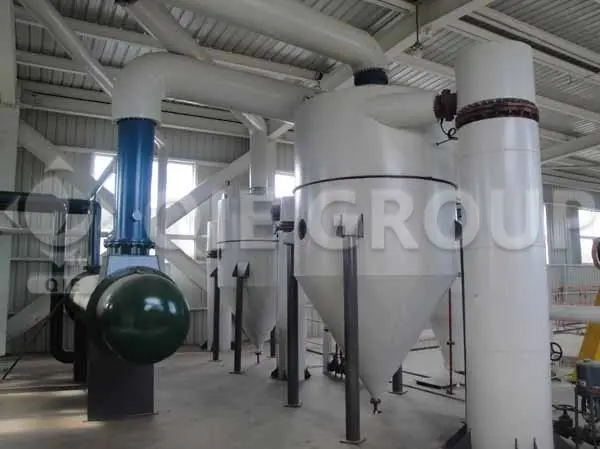
Stabilization is crucial to rice bran processing. The industry primarily relies on two methods: Extrusion Stabilization and Pelletizing Stabilization.
| Comparison Dimension | Extrusion Stabilization | Pelletizing Stabilization |
|---|---|---|
| Enzyme Inactivation | Extremely thorough via high heat/pressure; superior FFA control | Good enzyme inactivation performance |
| Physical Structure | Porous, expanded structure with minimal solvent resistance | Dense pellets with good flowability and minimal dust |
| Extraction Rate & Residual Oil | Faster extraction rate, lower meal residual oil (≤ 0.5%) | Low meal residual oil (≤ 0.5%) |
| Unit Energy Consumption | Higher electrical power consumption during extrusion | Lower installed power rating and electricity consumption |
| Ideal Application | Medium-to-large plants targeting maximum yield & high oil quality | Large-scale plants focusing on power efficiency & stable operation |
Equipment purchase price represents only a portion of the total investment for a rice bran processing plant. Long-term profitability hinges on several vital factors:
Investors must evaluate whether the entire operational setup can run reliably and yield long-term profitability over time.
Data below represents reference ranges for industrial rice bran oil extraction projects. Actual metrics vary depending on raw material quality, configuration, operational conditions, and local utilities.
| Item | Typical Reference Range | Primary Influencing Factors |
|---|---|---|
| Rice Bran Oil Content | 15% – 22% | Rice variety, milling process, bran purity |
| Dry Meal Residual Oil | ≤ 0.5% | Extraction efficiency, stabilization, design |
| Solvent Consumption | ~1.5 – 2.5 kg/t bran | Sealing design, DTDC efficiency, vent recovery |
| Steam Consumption | ~220 – 300 kg/t bran | Multi-effect negative pressure evaporation & heat integration |
| Electricity Consumption | ~28 – 42 kWh/t bran | Pretreatment route (extrusion > pelletizing), automation |
| Crude Oil Solvent Residue | Meets regional food standards | Stripper vacuum level & direct steam volume |
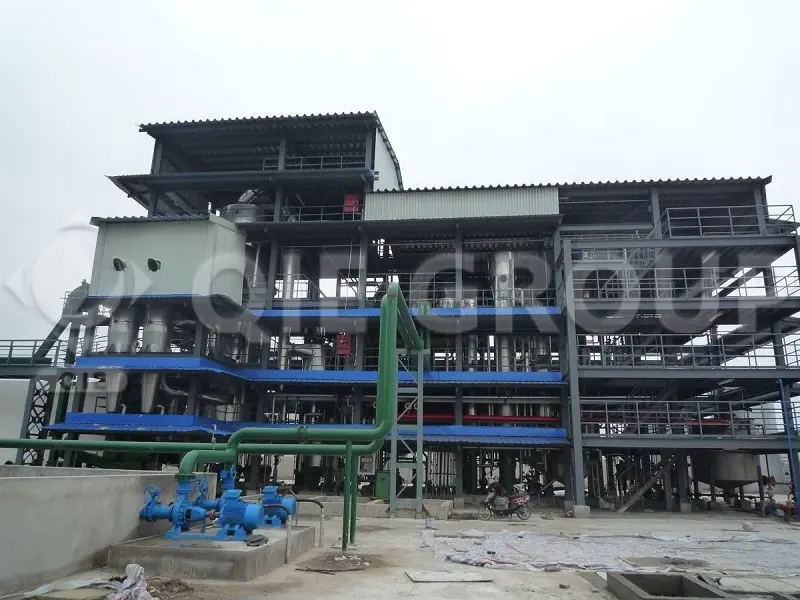
Directly controls FFA increase rate, crude oil quality, and downstream refining losses. Poor stabilization leads to excessive acid values, inflating refining costs regardless of extraction efficiency.
Governs solvent-to-material contact time and oil recovery. Extractor sizing must precisely match daily processing capacity, material traits, and potential future expansion plans.
While solvent is an operational consumable, inefficient recovery inflates long-term operational costs. High-efficiency condensers, evaporators, and vent recovery units keep consumption low.
Capacity is the single largest cost factor. Scaling from 50 TPD to 100 TPD or 300 TPD changes machinery dimensions, footprint, and utility infrastructure. Higher capacities decrease capital expenditure per ton of capacity despite raising overall project cost.
Basic Extraction Setup: Includes stabilization, extraction, desolventizing, and solvent recovery. Ideal for facilities producing and selling crude rice bran oil.
Integrated Edible Oil Plant: Includes extraction, crude oil treatment, refining, dewaxing, and retail packaging. Ideal for producers selling branded edible oil directly to commercial market channels.
Automation choices dictate upfront capital expenditure, labor requirements, and operational consistency. Advanced PLC or DCS control platforms provide real-time process monitoring, automated parameter adjustments, and interlocked safety alarms and fault diagnostics.
Project installation and infrastructure costs vary widely based on location. Critical local factors include power supply reliability, steam source availability, water supply and wastewater regulations, environmental standards, and civil construction costs.
Consequently, engineering suppliers customize plant layouts and cost estimates around specific project site conditions rather than issuing generic off-the-shelf quotations.
Direct extraction is strongly discouraged. Fresh rice bran contains highly active lipase enzymes. Without immediate stabilization, free fatty acid (FFA) levels rise rapidly, degrading crude oil quality and driving up refining losses.
Rice bran oil naturally contains high-melting-point waxes (typically 2% to 5%). Without dewaxing, the oil becomes cloudy and forms precipitates at lower temperatures, negatively impacting appearance and consumer acceptance. Dewaxing is a required step unique to high-quality rice bran oil refining.
Safety relies on comprehensive engineering design: utilizing explosion-proof electrical fittings (Class I, Div 1 / ATEX certified), maintaining positive workspace ventilation, installing online solvent leak detectors, integrating automated emergency safety interlocks, and enforcing non-sparking operational protocols.
Rice bran oil solvent extraction equipment forms the foundation for converting rice processing byproducts into high-value market goods. For investors, success relies not merely on buying machinery, but on establishing a fully integrated processing system tailored to local raw material availability and target market demands.
A successful project plan focuses on: selecting the proper stabilization route, matching extraction equipment to capacity needs, optimizing solvent recovery and energy integration, choosing the appropriate level of process automation, and structuring downstream refining capabilities for long-term growth.
Through sound engineering design and meticulous equipment selection, rice bran can be processed efficiently into premium edible oil while yielding valuable defatted meal byproducts—maximizing total returns on investment.
For investors currently planning a rice bran oil production line, we recommend a holistic feasibility evaluation during the initial stages to mitigate investment risks and secure smooth, long-term operational success.
Get customized technical proposals and equipment quotations tailored specifically to your plant capacity, raw material specifications, and local site conditions.
Consult Our Engineering Experts Palm kernel oil processing PKO processing high-yield palm kernel oil screw press solvent extraction turnkey oil processing
avocado pomace oil extraction avocado oil refining high-efficiency oil extraction low-temperature expansion vacuum negative-pressure extraction
Flaxseed oil processing line oil preprocessing section vegetable oil machinery flaxseed oil processing plant
rice bran oil production line in Vietnam commercial rice bran oil mill cost rice bran stabilization process rice bran extraction plant
edible oil processing oil extraction process pressing vs solvent extraction oilseed processing plant soybean oil extraction sunflower oil processing
Palm kernel oil processing PKO processing high-yield palm kernel oil screw press solvent extraction turnkey oil processing
avocado pomace oil extraction avocado oil refining high-efficiency oil extraction low-temperature expansion vacuum negative-pressure extraction
Flaxseed oil processing line oil preprocessing section vegetable oil machinery flaxseed oil processing plant
rice bran oil production line in Vietnam commercial rice bran oil mill cost rice bran stabilization process rice bran extraction plant
edible oil processing oil extraction process pressing vs solvent extraction oilseed processing plant soybean oil extraction sunflower oil processing
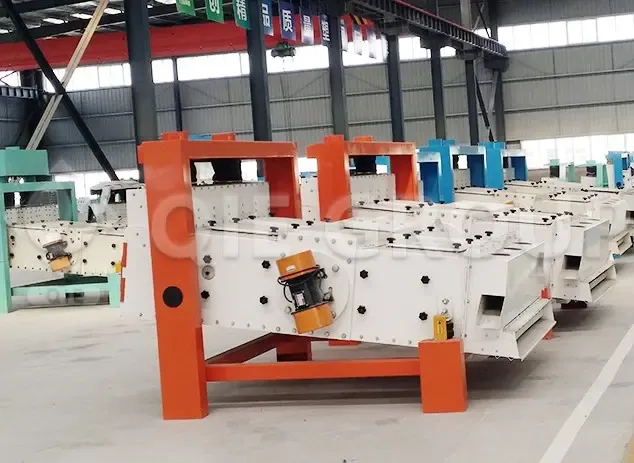
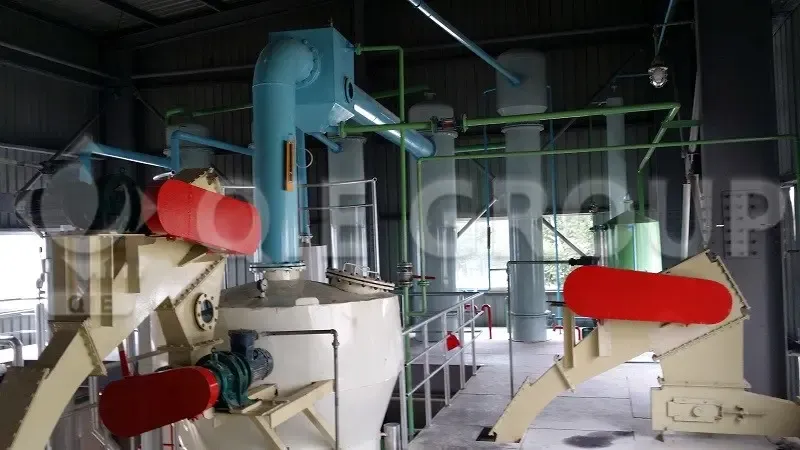





.png?x-oss-process=image/resize,h_100,m_lfit/format,webp)
.png?x-oss-process=image/resize,h_100,m_lfit/format,webp)
.png?x-oss-process=image/resize,h_100,m_lfit/format,webp)