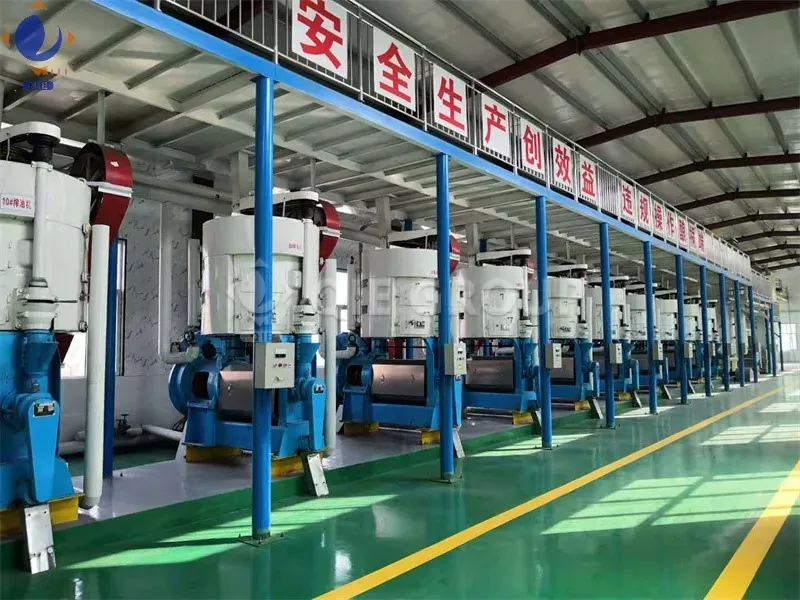
In the modern oil processing industry, rice bran is an important byproduct, and its processing efficiency directly determines the yield and quality of oil. Rice bran processed using different techniques exhibits significant differences in oil extraction rates and oil stability. The key behind this lies in the optimized management of the puffing and drying processes.
QIE Group's experience in rice bran processing demonstrates that a well-designed expansion system can not only increase production capacity but also make the leaching process more stable and energy-efficient. This is the "secret weapon" that helps oil mills achieve efficient processing and stable oil products.
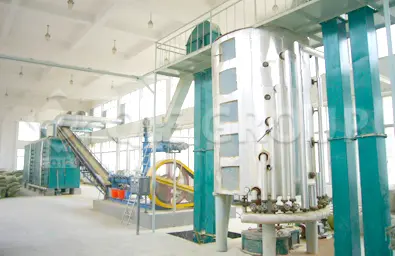
Many oil mills still rely on traditional processing methods, neglecting the profound impact of the expansion and drying stages on oil release and subsequent leaching efficiency:
Expansion process : Heat treatment breaks down the cell walls of rice bran, improving the release of oil.
Drying process : Ensures that the moisture content is reduced evenly to avoid increasing the difficulty of leaching or reducing the quality of the residue.
Energy and solvent consumption : Optimizing processes helps reduce solvent and energy usage, thereby reducing production costs.
The low processing efficiency of many oil mills is often not due to poor expansion equipment, but rather to inadequate pretreatment of raw materials.
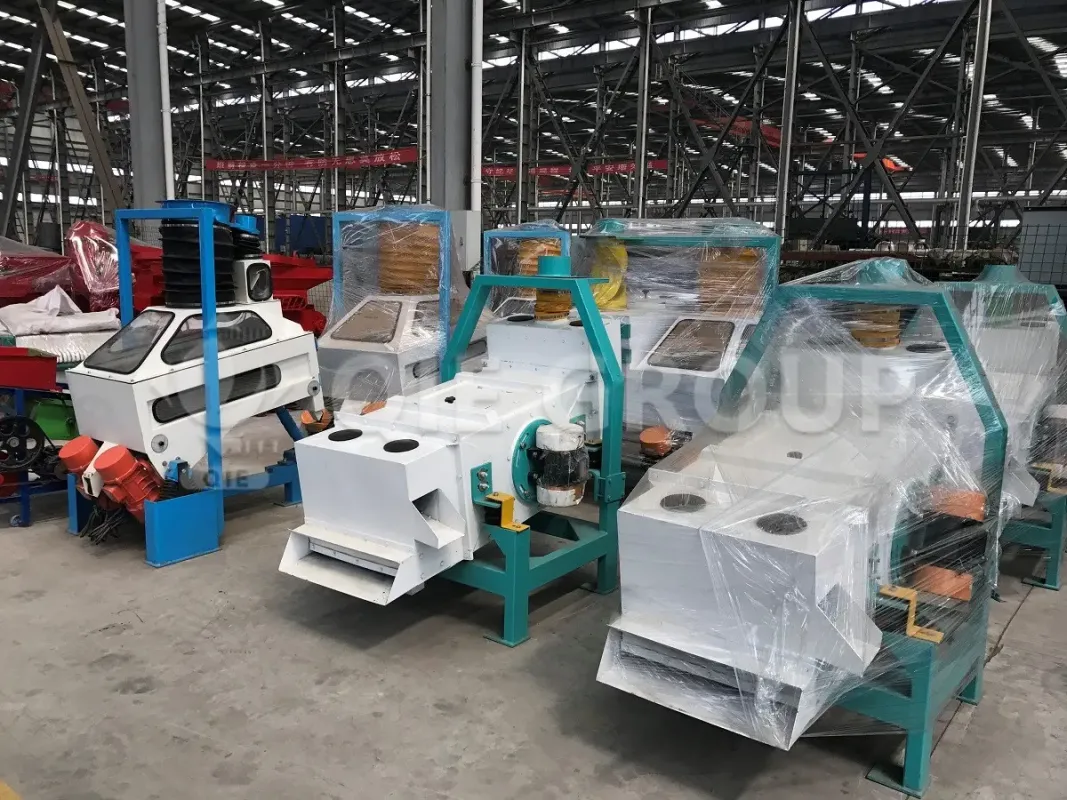
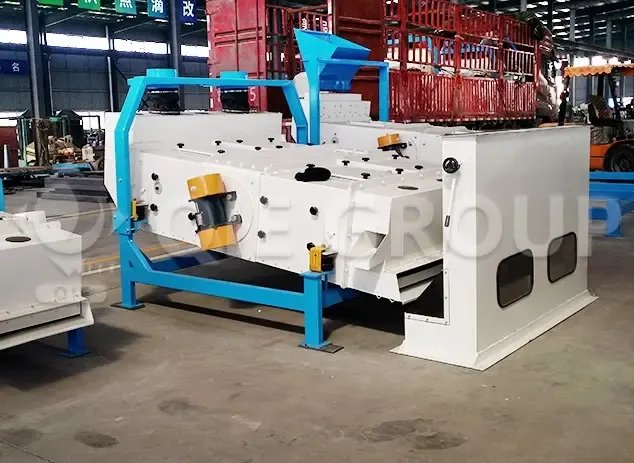
The cleaning system in a rice bran puffing workshop typically includes:
Rice bran selenium separation screen: reduces fine powder, sand and inorganic impurities, and improves puffing stability;
Gravity destoner: Further removes heavy impurities, reducing wear and energy consumption of the extruder.
This process results in cleaner rice bran with more uniform particle size, which not only protects the equipment but also makes the subsequent conditioning and puffing processes more controllable, improving the continuity of the entire production line.
Rice bran has a dense structure that locks in oils deeply. If it is not properly tempered, it will result in uneven puffing and poor solvent extraction.
Our conditioning process is approached from three directions:
Controlling moisture content improves plasticity
Increasing the temperature of the raw materials loosens the cell structure.
Reduce lipase activity and improve lipid stability
Well-conditioned rice bran is more likely to form stable particles in the puffing machine, with a consistent puffing shape, avoiding the situation of being "half-cooked", thereby further improving the solvent extraction speed and oil yield.
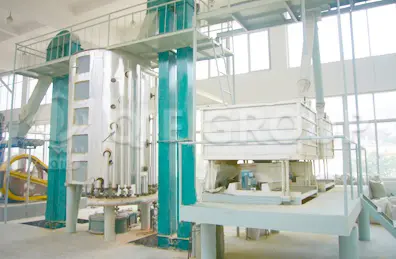
The function of an extruder is not merely to puff up rice bran, but rather to use pressure and temperature to:
Cell walls rupture, making it easier for lipids to be dissolved by solvents.
The granules are compact yet have good permeability.
The material moisture content should be maintained at a level suitable for leaching.
Surface structure facilitates the distribution of vapor and solvent.
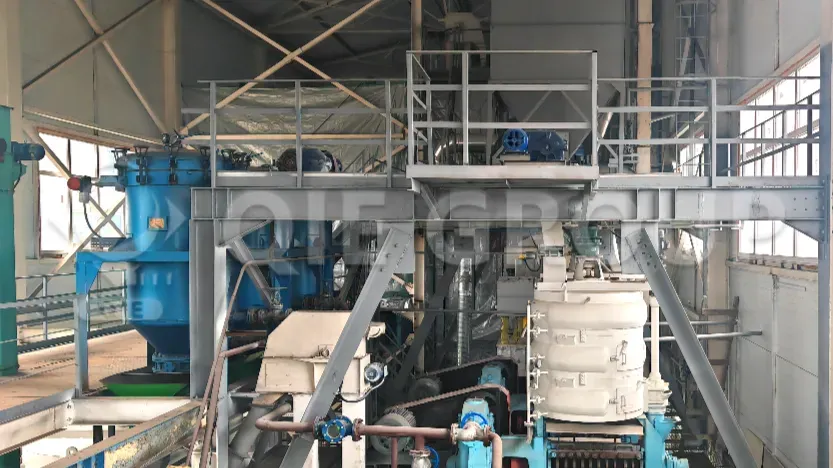
QIE Group's expansion equipment achieves the following through structural optimization and precise control:
Uniform particle shape and good permeability
Solvent consumption is reduced by 10–15% (depending on raw material conditions).
Less steam is used, resulting in a significant reduction in energy consumption.
Stable material flow, reducing material jamming and machine blockage.
This is why many customers report that even with the same rice bran raw material, the solvent extraction efficiency is still significantly improved after puffing.
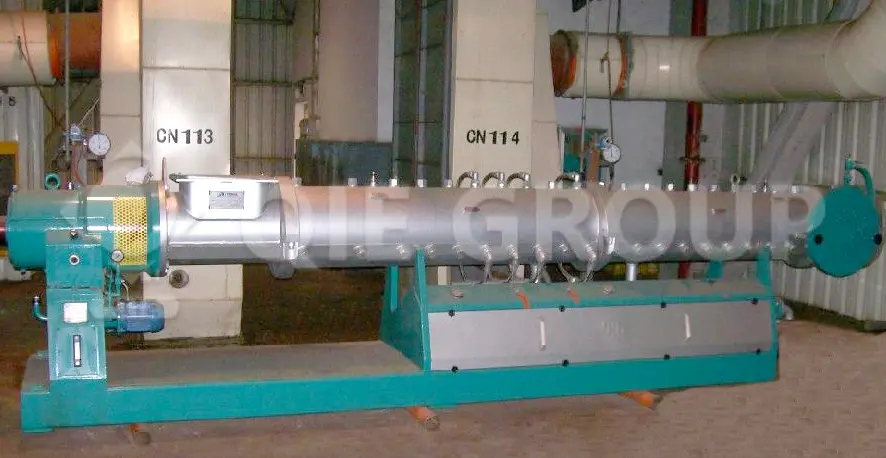
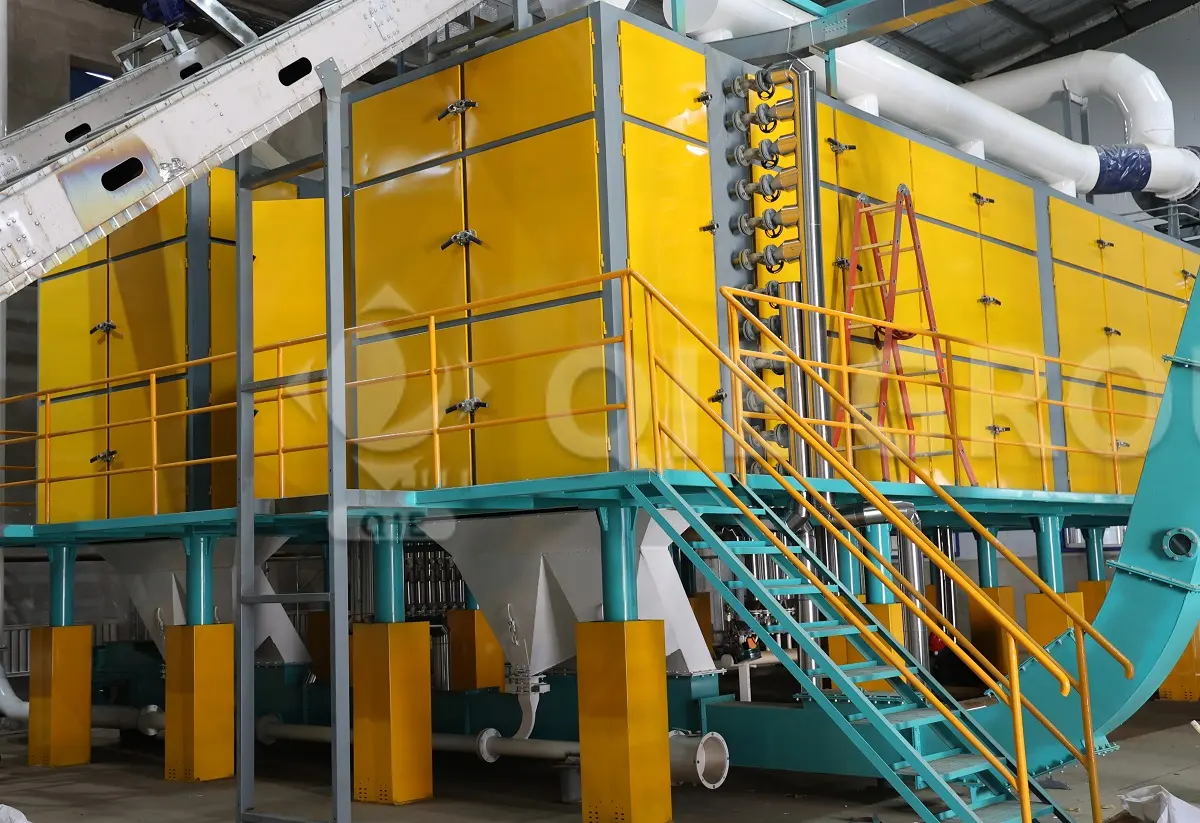
Even after puffing, rice bran still contains a certain amount of moisture. If it is not dried in time, it will affect the leaching rate, cause solvent loss, and even lead to spoilage of the rice bran.
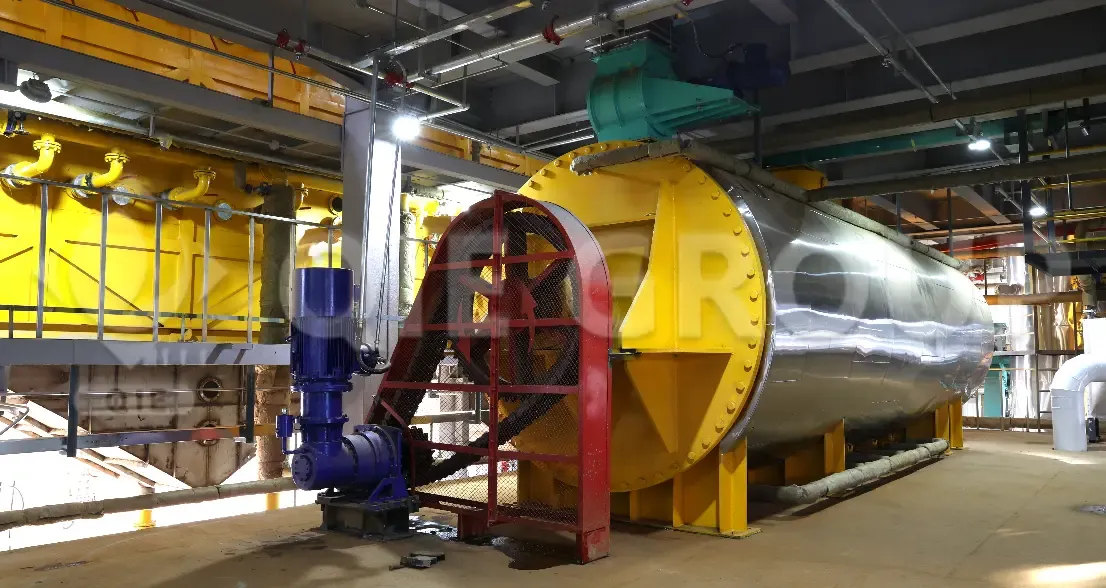
QIE Group's chain dryers offer the following advantages:
Uniform drying and controllable material residence time
Simple structure and low failure rate
Energy consumption is lower than that of traditional rotary drying equipment
Suitable for matching continuous leaching processes
Well-dried puffed rice bran not only allows for rapid solvent extraction, but also makes defatted rice bran easier to store and more conducive to the reuse of by-products (such as animal feed, high-fiber products, etc.).
Many oil mills hope to improve the efficiency of rice bran processing, but they are hampered by the lack of overall planning, resulting in incoordination between equipment, high energy consumption, and inability to release production capacity.
QIE Group's advantages lie in:
We don't just sell equipment; we provide end-to-end solutions.
From raw material intake → cleaning → conditioning → puffing → drying → extraction and refining (complete supply chain design) 👉 ( What machines are needed for a rice bran oil production line? )
All equipment has been matched under actual working conditions to avoid the problem that "single-point upgrades cannot improve overall efficiency".
Through integrated planning, oil refineries can achieve the following:
Stable operation of the processing line
Lower production costs
Better oil flavor and quality
Higher equipment utilization and ROI
This is precisely why many international clients ultimately choose us.
Based on feedback from oil mill users, this system can significantly improve the following issues:
Conditioning combined with rapid puffing can reduce lipase activity and improve oil stability.
Expanded granules have good permeability, reduce solvent consumption, and result in higher leaching efficiency. 👉( High-efficiency rice bran oil solvent extraction process | Energy-saving and environmentally friendly )
Both the puffing and drying equipment have optimized steam and electricity consumption.
From raw material cleaning to drying, the entire process is now more precise and controllable.
With the advancement of Industry 4.0, QIE Group has integrated intelligent sensing and monitoring technologies and automated adjustment technologies into its rice bran puffing system. This allows for real-time tracking of key parameters such as temperature, humidity, and pellet forming status, ensuring consistent processing quality for each batch of rice bran. Furthermore, the energy management system helps manufacturers allocate energy rationally, reducing overall energy consumption, improving environmental performance, and lowering operating costs.
We have been deeply involved in the edible oil processing industry for many years and can provide:
Design and manufacturing of rice bran puffing system
Complete rice bran oil production line planning
Intelligent workshop solutions
Project installation and technical guidance
Equipment upgrade and energy-saving renovation services
If you are evaluating how to improve rice bran processing efficiency, reduce energy consumption, and improve the quality of rice bran oil, then a well-structured puffing process is one of the most worthwhile areas to invest in.
QIE Group possesses mature rice bran pretreatment and puffing technologies that can help you optimize key processes, reduce energy consumption, and improve overall economic efficiency.
Feel free to contact us for customized solutions and technical guidance. → Soybean oil extraction equipment Oil refinery energy-saving renovation Intelligent Leaching Production Line Oil processing equipment High efficiency oil yield Soybean oil production line
Flaxseed Oil Production Line Vegetable Oil Processing Equipment Flaxseed Oil Processing Plant Flaxseed Oil Refining Equipment Flaxseed Oil Process Optimization
Castor seed oil cold press machine Castor seed oil cold pressing process Castor seed oil solvent extraction process Castor seed oil production line Castor oil processing plant Castor oil refinery
edible oil processing equipment turnkey edible oil production line edible oil processing plant edible oil refining equipment edible oil solvent extraction equipment edible oil press machine
edible oil processing equipment soybean oil processing plant palm oil production line sunflower oil refining equipment copra oil processing systems
Soybean oil extraction equipment Oil refinery energy-saving renovation Intelligent Leaching Production Line Oil processing equipment High efficiency oil yield Soybean oil production line
Flaxseed Oil Production Line Vegetable Oil Processing Equipment Flaxseed Oil Processing Plant Flaxseed Oil Refining Equipment Flaxseed Oil Process Optimization
Castor seed oil cold press machine Castor seed oil cold pressing process Castor seed oil solvent extraction process Castor seed oil production line Castor oil processing plant Castor oil refinery
edible oil processing equipment turnkey edible oil production line edible oil processing plant edible oil refining equipment edible oil solvent extraction equipment edible oil press machine
edible oil processing equipment soybean oil processing plant palm oil production line sunflower oil refining equipment copra oil processing systems







.png?x-oss-process=image/resize,h_100,m_lfit/format,webp)
.png?x-oss-process=image/resize,h_100,m_lfit/format,webp)
.png?x-oss-process=image/resize,h_100,m_lfit/format,webp)