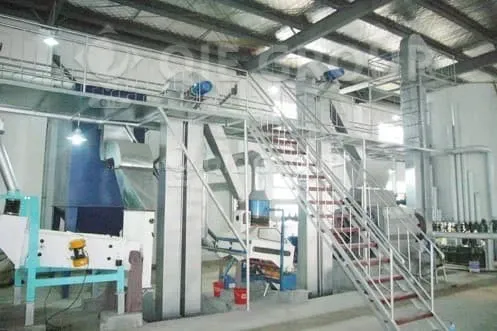
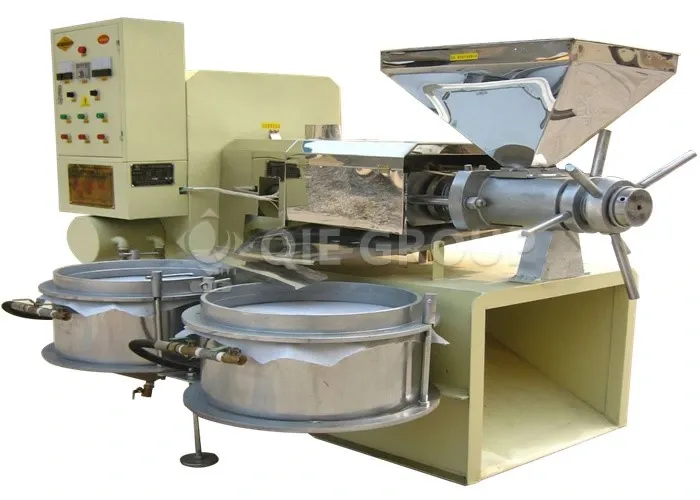
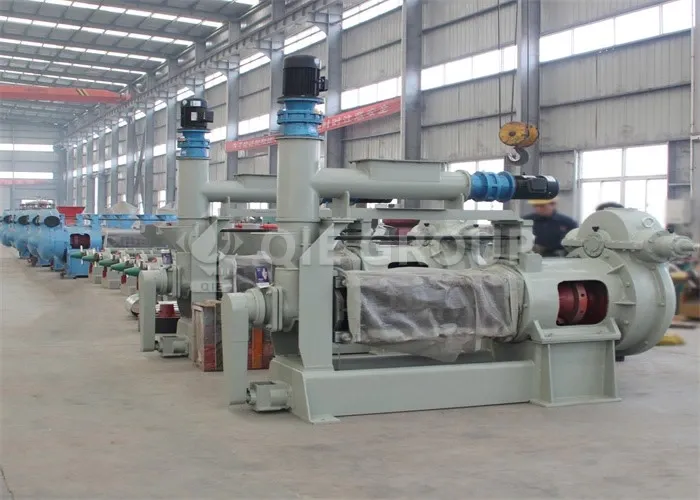
In the global vegetable oil processing industry, rapeseed oil (canola oil) has become one of the most important edible oils—second only to soybean oil and palm oil—due to its balanced fatty acid profile, high smoke point, and versatile applications. As market demand for high-quality rapeseed oil continues to grow, an increasing number of investors are exploring how to build highly efficient, low-energy, and profitable rapeseed oil production lines.
For companies preparing to establish a rapeseed oil processing plant, the most common question is: Should rapeseed oil be produced using mechanical pressing or solvent extraction?
The answer depends on product positioning, production scale, investment budget, and long-term development plans. However, for most industrial-scale producers, Pre-press+Solvent Extraction has emerged as the most mature and widely adopted process route today.
This guide provides a comprehensive overview of the rapeseed oil solvent extraction process from multiple angles—including process principles, equipment components, investment planning, economic efficiency, and plant construction advice—to serve as a practical reference for building a modern processing plant.
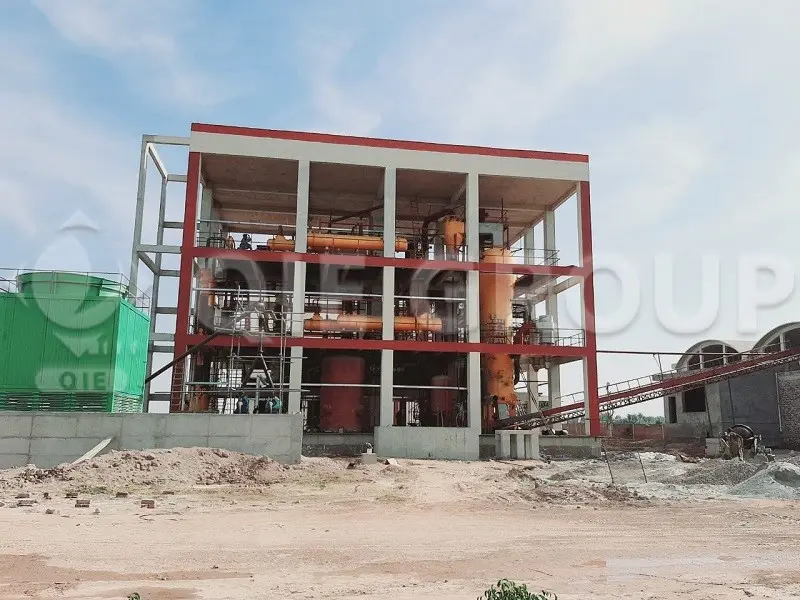
Rapeseeds have a high oil content of 35%–45%. However, using simple mechanical pressing leaves a high residual oil content of 12%–18% in the press cake. The "Pre-press + Solvent Extraction" process solves this through a two-step oil extraction approach:
Not every rapeseed oil processing project requires a solvent extraction workshop. Different product positionings, capacity scales, and investment goals demand different process routes. 👉(Rapeseed Oil Processing Hot Cold Press vs Solvent Extraction)
| Process Route | Recommended Capacity | Product Positioning | Key Advantages | Suitable Target |
|---|---|---|---|---|
| Cold Pressing | 10–20 TPD | Premium Specialty Oil | Preserves natural nutrients; ideal for boutique markets | Small processing plants, niche brands |
| Hot Pressing | 10–50 TPD | High-Aroma Rapeseed Oil | Rich, intense flavor; relatively low equipment investment | Local oil mills, small-to-medium enterprises |
| Pre-press + Solvent Extraction | 50 TPD and above | Standard Industrial Edible Oil | High oil yield, low operating cost, suitable for continuous production | Medium-to-large oil processing enterprises |
Note: The table above serves as a general reference. The actual process route should be determined holistically based on raw material quality, product positioning, environmental requirements, and investment budgets.
Before selecting equipment, investors should answer the following four questions:
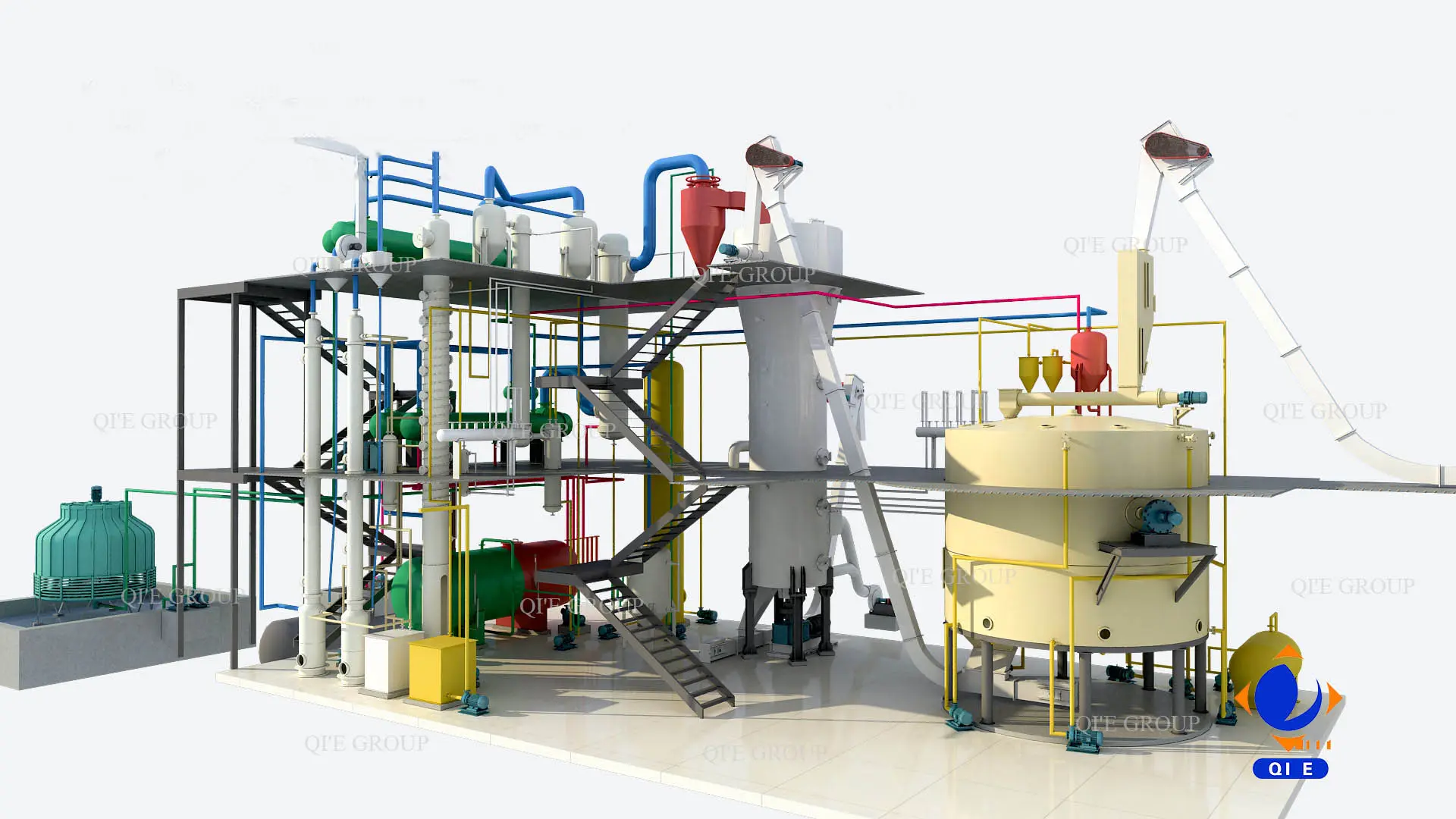
A typical rapeseed pre-press solvent extraction production line follows this step-by-step workflow:
While the flow appears straightforward, every individual stage directly impacts final oil yield, energy consumption, and product quality.
Many believe the extractor is the most critical equipment in the entire line; however, extraction efficiency is actually determined by the quality of upstream pretreatment. If raw material preparation is flawed, even advanced extraction equipment will fail to reach optimal oil yields.
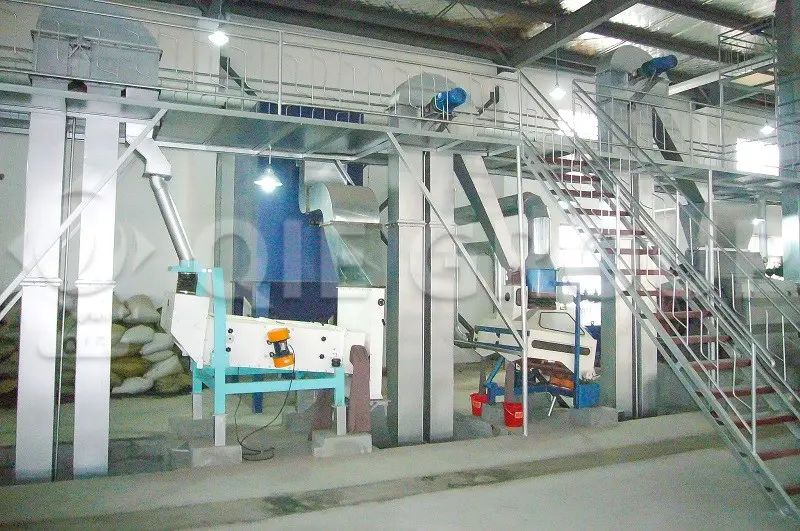
During harvesting, transport, and storage, rapseeds gather impurities such as stones, metals, sand, and straw. Vibrating screens, desoners, and magnetic separators remove these impurities prior to processing to prevent equipment wear and stabilize output quality.
Dehulling is optional depending on seed varieties, product positioning, and downstream meal applications. Proper dehulling provides key benefits including increasing protein content in rapeseed meal, reducing crude fiber content, improving extraction efficiency, and reducing downstream refining load. Note: Over-dehulling can increase raw material loss, so the process must be tailored carefully.
Crushing breaks the seeds into smaller fragments. Softening adjusts temperature and moisture to make material pliable. Flaking then presses the material into thin, uniform flakes.
Cooking heats the material while conditioning its moisture and physical structure. Proper cooking lowers oil viscosity, encourages oil droplets to coalesce, boosts pre-press efficiency, and creates an optimal porous cake structure for solvent penetration.
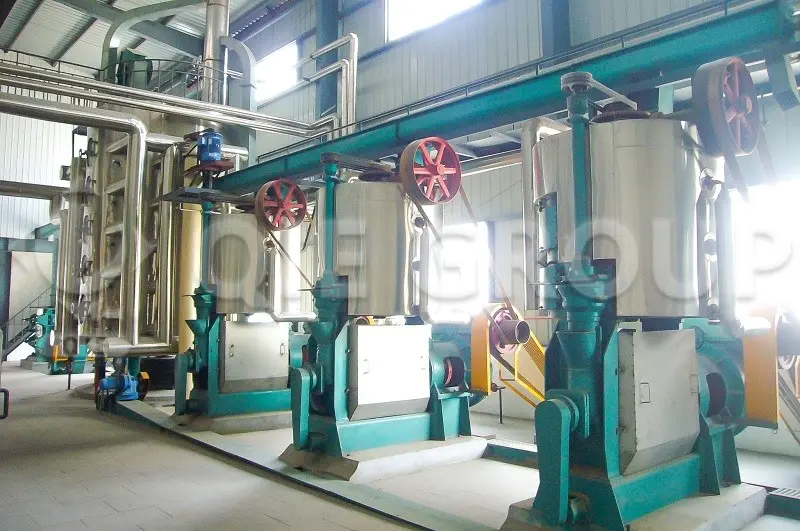
The goal of pre-pressing is not to extract every drop of oil, but to recover 60%–70% of it while forming a porous pre-press cake. The resulting crude oil is filtered and sent to refining, while the cake moves to the extraction plant.
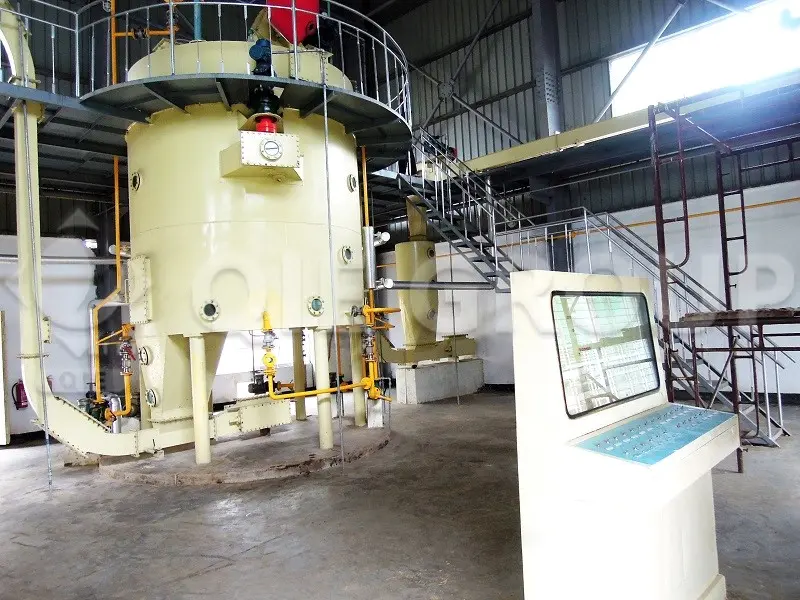
The solvent extraction section maximizes raw material utilization. It relies on the solubility of oil in food-grade solvents (typically n-hexane) to perform continuous counter-current extraction within a sealed system.
Common continuous extractor designs include Rotocel Extractor, Loop Extractor, and Drag Chain Extractor.
This stage produces two primary streams: Miscella (a mixture of extracted oil and solvent) and Wet Meal (solid seed residue containing absorbed solvent).
Post-processing directly governs environmental compliance, operational safety, and overall plant economics.
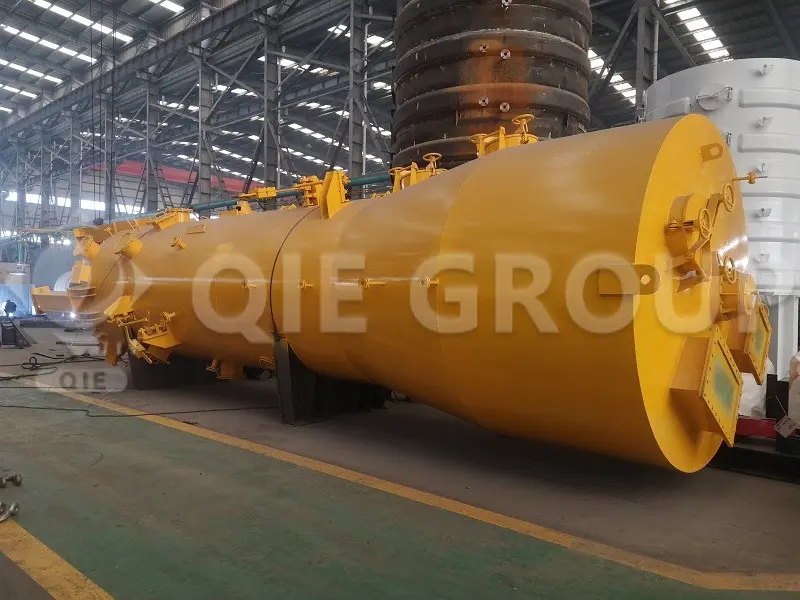
| System Category | Core Equipment | Primary Function & Advantages |
|---|---|---|
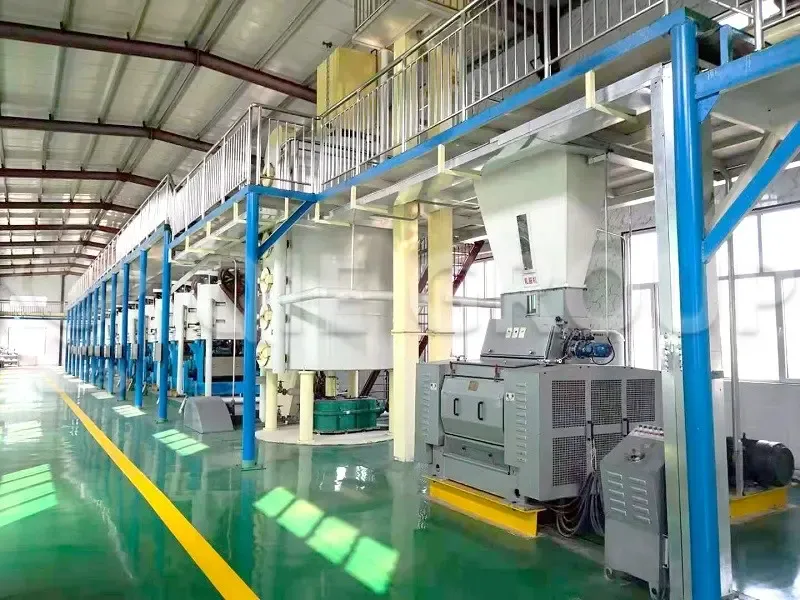
| Pretreatment & Pre-press | Vibrating screen, magnetic separator, destoner, flaking mill, layer steaming cooker, screw pre-press | Removes impurities, ruptures cell walls, regulates thermal-moisture state, pre-extracts bulk oil. |
| Solvent Extraction | Rotocel / Loop / Chain Extractor, explosion-proof solvent pumps | Maintains uniform bed depth for high-efficiency counter-current extraction. |
| DTDC Desolventizing | DTDC tower | Desolventizes, dries, and cools meal simultaneously while recovering solvent and producing high-grade meal. |
| Evaporation & Stripping | 1st Evaporator, 2nd Evaporator, Stripping Column | Uses multi-effect evaporation to recover waste heat, cleanly separating oil and solvent (oil residual solvent ≤ 50 ppm). |
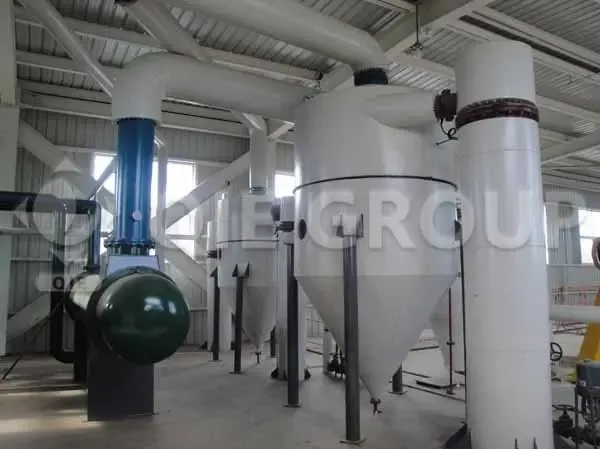
| Solvent Recovery & Eco | Condensers, water separator, mineral oil / frozen exhaust recovery, wastewater & gas treatment | Recovers solvent, lowers consumption rates, and minimizes emissions. |
| Automation Control | PLC Control System, online monitoring sensors | Full-process automation with safety interlocks. |
Building a modern rapeseed extraction plant is a complex engineering task involving process design, utility balancing, environmental safety, and future scalability. Proper initial planning prevents high operational costs and capacity bottlenecks.
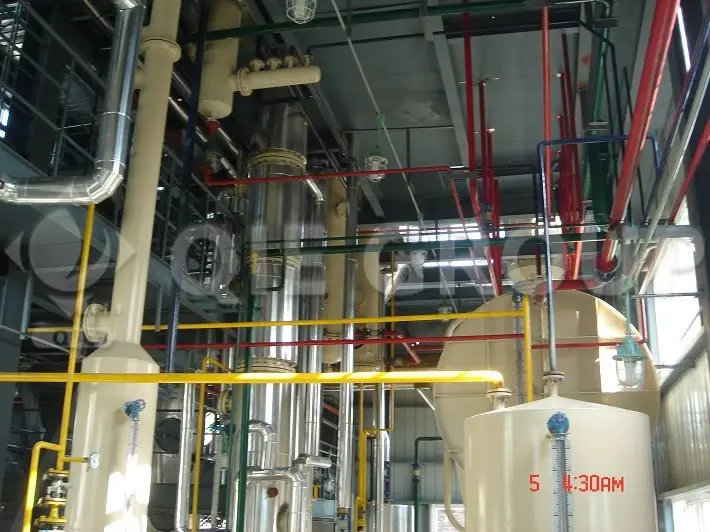
Increasingly, investors prefer EPC turnkey models for plant development. EPC unifies process engineering, equipment manufacturing, installation, commissioning, and project management under one contract, mitigating communication risks and construction delays.
As a specialized edible oil engineering provider, QIE GROUP tailors turnkey solutions—from design to commissioning—based on client raw material specs, capacity targets, and product positioning.
If you are planning to invest in a rapeseed oil extraction plant, follow this structured roadmap:
A: Absolutely safe. Modern extraction runs under closed, negative-pressure environments. The wet meal is desolventized in the DTDC system (residual solvent ≤ 100 ppm), and crude oil undergoes stripping (residual solvent ≤ 50 ppm). Subsequent high-temperature vacuum deodorization in refining removes trace solvents completely, meeting all international safety standards.
A: No. High-aroma and traditional small-press oils rely on high-temperature roasting and mechanical pressing to form and preserve distinct aroma compounds. For specialty flavored oils or plants processing under 30 TPD, hot pressing is recommended. For industrial scale, maximum yield, and cost efficiency, Pre-press + Solvent Extraction remains the gold standard.
A: Focus on reducing consumption and maximizing yield:
1. Use multi-effect evaporation and exhaust recovery to keep solvent consumption around 1.5 kg/t.
2. Use automated PLC controls to regulate cooking and flaking precisely, keeping final meal residual oil ≤ 0.5% to maximize total oil recovery.
Whether you plan to build a new 150 TPD solvent extraction plant or upgrade an existing processing line, equipment selection and plant layouts must be tailored to your specific needs.
Get a tailored proposal including equipment list, footprint layout, and investment budget within 24 hours.
 Corn germ oil production process Corn oil processing equipment Corn oil production line Corn oil refining process Corn oil dewaxing technology Investment in edible oil production lines
soybean oil processing plant start soybean oil business edible oil extraction machine soybean meal production soybean oil solvent extraction
Oil refinery energy conservation and consumption reduction Oil and fat processing solutions Intelligent upgrading of oil plants Edible oil equipment renovation Oil refinery efficiency improvement and quality enhancement
Coconut oil production process Pressed coconut oil Coconut oil yield Coconut oil production line Coconut oil processing plant
Kazakhstan sunflower seed oil production line Sunflower oil processing equipment Sunflower seed oil refining and dewaxing Edible oil turnkey project
Corn germ oil production process Corn oil processing equipment Corn oil production line Corn oil refining process Corn oil dewaxing technology Investment in edible oil production lines
soybean oil processing plant start soybean oil business edible oil extraction machine soybean meal production soybean oil solvent extraction
Oil refinery energy conservation and consumption reduction Oil and fat processing solutions Intelligent upgrading of oil plants Edible oil equipment renovation Oil refinery efficiency improvement and quality enhancement
Coconut oil production process Pressed coconut oil Coconut oil yield Coconut oil production line Coconut oil processing plant
Kazakhstan sunflower seed oil production line Sunflower oil processing equipment Sunflower seed oil refining and dewaxing Edible oil turnkey project



.png?x-oss-process=image/resize,h_100,m_lfit/format,webp)
.png?x-oss-process=image/resize,h_100,m_lfit/format,webp)
.png?x-oss-process=image/resize,h_100,m_lfit/format,webp)