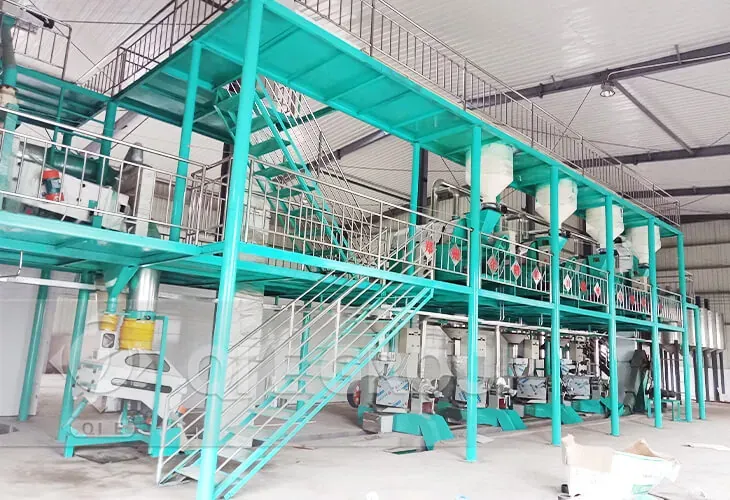
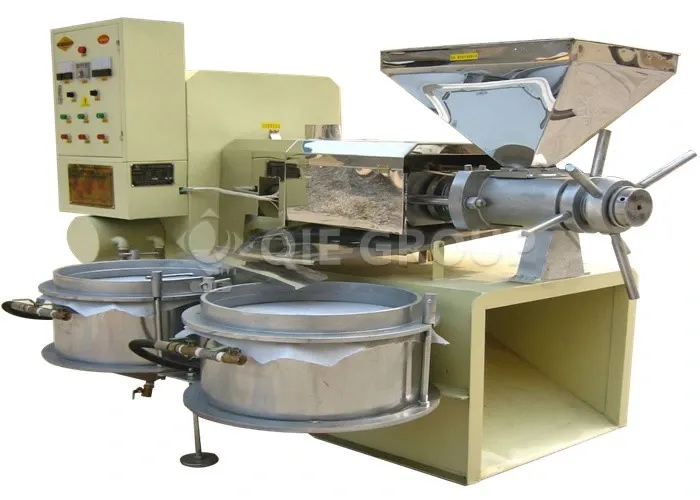
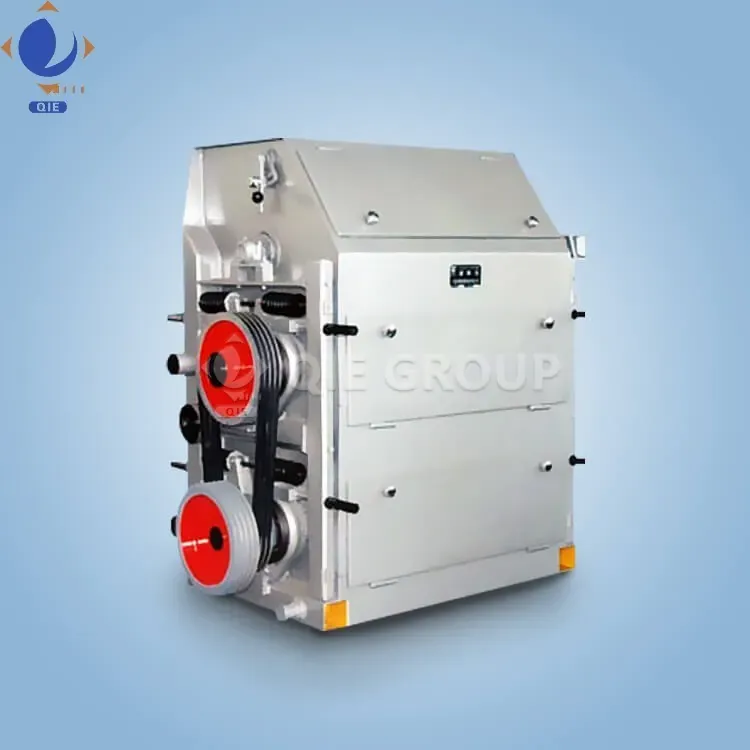
Crude peanut oil typically undergoes refining processes such as degumming, neutralization (deacidification), bleaching, and deodorization to reduce the content of phospholipids, free fatty acids (FFA), pigments, and odoriferous substances, thereby improving oil stability and quality.
In actual production, not all peanut oil projects adopt identical flowcharts. The specific refining route needs to be tailored based on crude oil quality, target product standards, production scale, and whether chemical or physical refining is chosen.
Peanut oil refining differs from the extraction stages (pressing or solvent extraction) used to obtain oil from peanut kernels. Crude oil contains impurities such as phospholipids, free fatty acids, pigments, moisture, and trace metals, which must be removed step-by-step through different mechanisms.

The refining performance depends on raw material quality, sequence of operations, separation efficiency, and equipment matching. Below is a breakdown of a typical chemical refining section:
| Refining Step | Processing Target | Core Mechanism | Typical Equipment |
|---|---|---|---|
| Degumming | Remove hydratable and non-hydratable phospholipids | Hydration agglomeration / Acid conversion & centrifugal separation | High-shear mixers, hydration reaction tanks, disc centrifuges |
| Neutralization (Deacidification) | Reduce free fatty acids (FFA) and control acid value | Alkali neutralization reaction forming soapstock followed by separation | Neutralization tanks / Continuous centrifuges, soapstock separators, washing & drying towers |
| Bleaching | Remove pigments and polar trace impurities | Physical and chemical adsorption using activated bleaching earth / activated carbon | Vacuum bleaching towers, leaf filters / plate and frame filters |
| Deodorization | Remove volatile odoriferous compounds, peroxides, and residual solvents | High-temperature, high-vacuum steam stripping distillation | Continuous / Batch deodorization towers, vacuum systems, heat exchangers |
Degumming is an essential pretreatment step in peanut oil refining. Its primary objective is to remove phospholipids and gums from crude peanut oil, enhancing the efficiency of subsequent neutralization, bleaching, and deodorization.

Phospholipids are mainly classified into hydratable phospholipids (HP) and non-hydratable phospholipids (NHP). Different types of phospholipids require distinct treatment methods:
Water degumming involves adding water to hydrate the hydrophilic phospholipids, causing them to swell into colloidal aggregates, which are then removed using separation equipment.
For non-hydratable phospholipids (bound phospholipids), phosphoric acid or citric acid is added to decompose and convert them into hydratable forms before separation.
Degumming efficiency is mainly influenced by crude oil phosphorus content, agent selection, mixing efficiency, reaction parameters, and separation performance.
Particularly when adopting a physical refining route, thorough degumming is critical, as residual phospholipids can adversely affect downstream deacidification and final oil quality.
The primary goal of the deacidification stage is to control the acid value and prevent oxidative rancidity of the oil.

Principle: Sodium hydroxide (NaOH) solution is introduced to react with free fatty acids, generating soapstock, which is then removed via centrifugation. Subsequent water washing removes residual soap, and vacuum drying eliminates moisture.
Principle: Instead of using chemical alkali solutions, free fatty acids are directly stripped and removed via steam distillation under high temperature and high vacuum. The byproduct is a fatty acid distillate.
Therefore, physical refining is not universally applicable to all peanut oil projects; the choice must be evaluated based on crude oil specifications and project objectives.
Bleaching utilizes the microporous structure of adsorbents to adsorb chlorophyll, carotenoids, trace metals, and polar impurities from crude oil, improving oil clarity and color metrics.
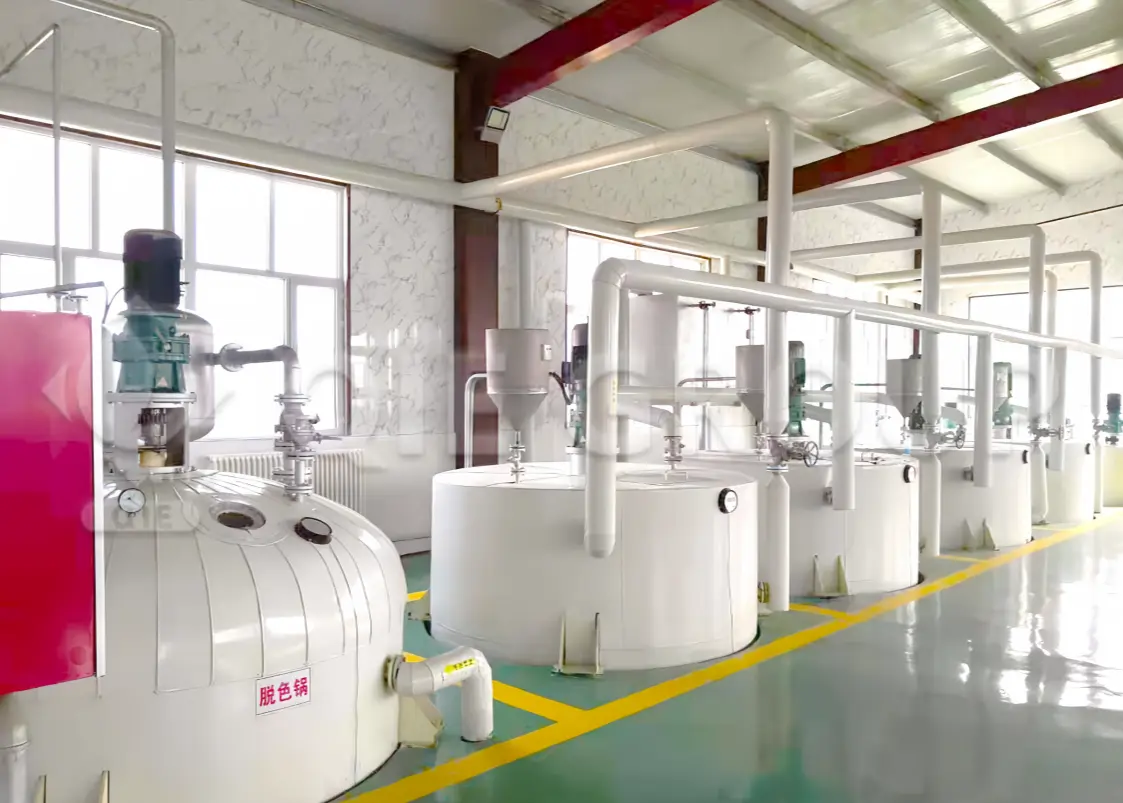
Bleaching performance primarily depends on:
Deodorization is the final critical step in peanut oil refining. Its main role is to remove volatile odoriferous substances from the oil, enhancing taste and stability.
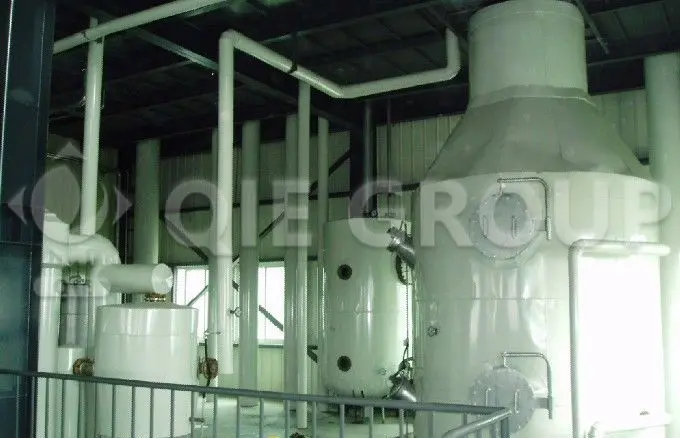
Principle: Deodorization takes advantage of volatility differences between volatile compounds and triglycerides. Under high temperature and high vacuum, direct steam stripping separates volatile odor compounds from the oil.
Typical Process Flow: Bleached Oil ➔ Heating ➔ Deodorization Tower ➔ Steam Stripping ➔ Volatiles Separation ➔ Refined Peanut Oil
Deodorization performance is jointly influenced by temperature conditions, vacuum level, sparging steam volume, retention time, and pretreatment quality.
It should be noted that different target product positions require different deodorization strategies:
Consequently, the deodorization process must be tailored to the final product specifications.
| Comparison Item | Chemical Refining | Physical Refining |
|---|---|---|
| FFA Removal Mechanism | Alkali neutralization reaction, generating soapstock | High-temperature vacuum steam distillation stripping |
| Pretreatment Requirements | Lower requirement for degumming; can tolerate moderate phosphorus levels | Extremely strict degumming requirement; phosphorus must be thoroughly removed |
| Byproducts & Environment | Generates soapstock and washing wastewater; higher treatment cost | No soapstock; produces high-purity fatty acid distillate; minimal wastewater |
| Neutral Oil Loss | Higher (due to neutral oil entrainment in soapstock) | Lower (no soapstock entrainment loss) |
| Applicable Scenarios | High FFA crude oil, fluctuating raw material quality, small-to-medium scale plants | Low phosphorus crude oil, large-scale production, low oil loss targets |
Process Selection Basis: Decisions must be made by evaluating crude oil acid value, phospholipid content, capacity, environmental requirements, and product positioning. For example, crude oil with a high acid value favors chemical refining, whereas low-acid crude oil can utilize physical refining to reduce oil loss and environmental impact.
It is important to note that the refining loss of peanut oil differs from the oil extraction yield. While the extraction yield is primarily influenced by the oil content of the raw material, pretreatment, and the extraction process itself, refining loss occurs during the post-processing stage of the crude oil. For more information on the factors affecting peanut oil extraction yield, you can explore the topics of peanut oil extraction rates and methods for optimizing oil recovery.
| Common Anomaly | Possible Cause | Inspection & Optimization Measures |
|---|---|---|
| High residual phosphorus after degumming | Inadequate mixing, insufficient degumming agent, improper centrifugal separation temperature | Re-calibrate acid/water dosing; increase centrifuge separation speed and mixer shear rate. |
| Acid value off-target after neutralization | Incorrect alkali concentration, fluctuating crude oil FFA, insufficient neutralization reaction time | Re-test crude oil FFA; precisely calculate caustic concentration and excess alkali ratio. |
| Unsatisfactory color after bleaching | Damp/dampened adsorbent, low bleaching temperature, insufficient vacuum causing oil oxidation | Replace activated bleaching earth; inspect bleaching tower vacuum system and heating coils. |
| Persistent off-odor after deodorization | Incomplete degumming/deacidification pretreatment, low deodorization temperature, insufficient stripping steam | Check residual phosphorus and FFA in pre-sections; elevate deodorization temperature and direct steam supply. |
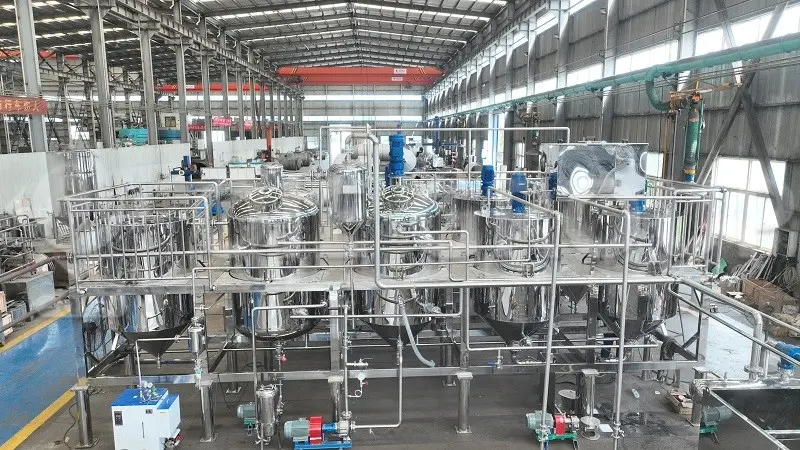
Equipment processing capacity must match project planning and operational requirements. Key factors to consider include daily processing volume (t/d), operating hours, future expansion plans, and automation requirements.
Varying crude peanut oil parameters impact the refining route and equipment configuration. Key parameters include FFA / Acid value, Phospholipid/Phosphorus content, Moisture and impurities, Initial color, and Target product standards.
For instance: If crude oil contains high gum content, degumming treatment must be reinforced; if physical refining is planned, pretreatment quality must be strictly controlled.
A complete peanut oil refining plant typically encompasses:
When developing a peanut oil refining project, equipment selection depends not only on the performance of individual units but, more importantly, on the compatibility of the entire system. For comprehensive projects encompassing raw material processing, oil extraction, and refining, a complete peanut oil production line configuration can be tailored to meet specific capacity requirements.
Variations in crude oil quality, capacity scale, and product positioning mean that refining routes and equipment selections vary significantly.
To evaluate, build, or upgrade your peanut oil refining plant, please provide our engineering team with the following key parameters:
We will provide customized end-to-end solutions ranging from process design and equipment manufacturing to installation, commissioning, and operator training.
 palm oil processing plant smart palm oil mill palm oil pretreatment process palm oil pressing line palm oil processing equipment
Rice Bran Oil Plant Bangladesh Rice Bran Oil Extraction Machine Rice Bran Oil Refinery Cost Rice Bran Stabilization Rice Bran Oil Solvent Extraction Process
shea butter processing plant cost shea butter extraction machine cold press shea butter tech cosmetic grade shea butter production unrefined shea butter press
peanut oil pressing peanut oil solvent extraction peanut oil processing peanut oil pressing vs solvent extraction peanut oil prepress extraction peanut oil processing plant
soybean preprocessing soybean oil extraction efficiency oil yield optimization soybean extrusion puffing machine soybean oil production line