
When undertaking edible oil projects in South Africa, many investors don't first ask about equipment models, but rather two more practical questions: What range will the total investment fall into? And should they opt for pressing, solvent extraction, or an integrated pressing and refining model?
Focusing solely on the price list of individual pieces of equipment in the early stages often underestimates the devastating impact of local civil engineering, utilities, installation timelines, and load-shedding on the project's ROI (Return on Investment). For commercial peanut oil plants, costs are never simply explained by a single equipment list; they are more like a complex engineering decision-making model.
The South African market has its own characteristics: on the one hand, there is a stable demand for vegetable oil in the region; on the other hand, the investment environment, energy costs, logistics conditions, food standards compliance, financing costs, and local construction organization capabilities all directly affect the speed of project implementation and the final capital expenditure.
Based on QIE Group's years of experience in EPC projects in major peanut-producing regions such as the North West and Free State, the capital structure (CAPEX) of South African plants is usually not dominated by equipment costs; rather, hidden costs account for a very high percentage.

Investment in commercial peanut oil processing plants in South Africa can typically be determined by daily processing capacity. While each project has different specifications, based on engineering experience, they can be broadly categorized as follows:
Estimate range: $150,000 - $400,000
Core equipment: pretreatment (cleaning, dehulling, crushing/rolling), screw press, plate and frame/centrifugal filter, etc.
Core logic: Target local community markets or sell directly from farms.
Experts advise that the key is simple operation and durability. The cost premium at this stage mainly lies in the "precision of coarse oil filtration." If you want to sell in local supermarkets, you must configure a small peanut oil refining unit .
Estimate range: $500,000 - $900,000
Core equipment: Based on the small-scale line, add more efficient pre-processing (such as steam cooker) and continuous pressing line.
Core logic: Supply regional distribution networks or chain supermarkets.
Configuration shift: At this point, "oil yield" begins to determine profitability. Fully continuous pretreatment and physical/chemical refining must be implemented, along with basic PLC automation control, to hedge against the risk of a shortage of skilled workers in South Africa.

Estimated cost range: Starting from US$1.5 million (customizable based on process complexity)
Core equipment: Complete pretreatment, pre-pressing, solvent extraction (extractor, DTDC descaling machine, solvent recovery), fully continuous refining, and automated filling lines.
Core logic: Moving towards capital operation. At this point, "pre-pressing + leaching" is a must.
Transformative Engineering Change: Residual Oil Recovery Bonus: Leaching processes can reduce residual oil to below 1%. For a 500 TPD project, this 1% oil recovery rate can generate millions of dollars in additional net profit annually.
Energy efficiency management: Negative pressure evaporation and cascaded utilization of heat energy must be adopted. In South Africa, where electricity prices are high, even a small reduction in electricity consumption per ton of oil translates into a significant cost advantage.
System integration: The entire plant is controlled by PLC, enabling real-time monitoring from the central control room.
There is no single answer to this question; it really depends on your raw material scale, target market, and capital structure.
| Comparison items | Mechanical pressing | Pre-pressing + Solvent extraction |
|---|---|---|
| Investment Sensitivity | Sensitive to equipment unit price | Sensitive to utilities (electricity, steam, solvents) |
| Residual oil content control | 6% - 8% | < 1% |
| South African market fit | Suitable for rapid production and farm value-added | Suitable for industrial park development and full industrial chain layout |
| Applicable capacity | Small and medium-sized | More than 100 tons/day is more economical |
| Investment return logic | The focus is on low barriers to entry and rapid production. | The focus is on long-term oil recovery rate and economies of scale. |
| Technical threshold | Relatively low | High risk, requires professional EPC management of solvent safety. |
Practical advice: If the raw material supply is not concentrated in the early stages, it is rational to start with crushing. However, for large projects, we recommend "crushing in the first phase and reserving leaching interfaces in the second phase." This flexible approach is more stable than a one-time heavy asset investment.
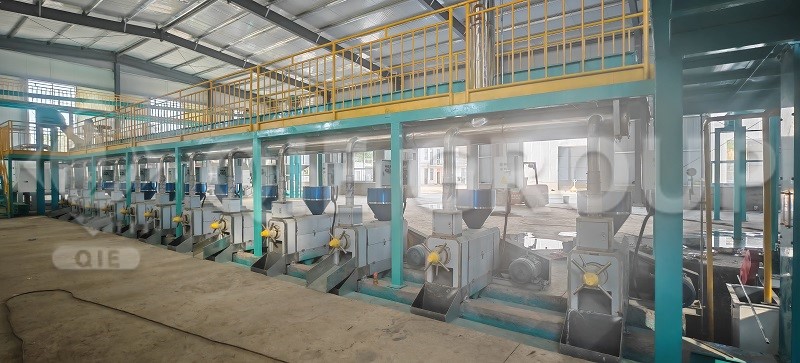
Many customers are debating whether refining equipment is necessary. From an engineering perspective, the answer is not necessarily:
Selling crude oil: This involves selling to downstream refineries or oil traders. The advantages are quick capital recovery, low investment, and a focus on raw material sourcing.
Selling refined oil products: entering retail outlets and restaurant chains. While refined oil increases equipment and operating costs, it also means higher product premiums and complete control over the end-user profit chain.
Energy hedging solutions: In response to the high electricity prices in South Africa, we typically recommend that customers with 100TPD+ configure peanut shell biomass boilers to generate steam from waste peanut shells, which can offset more than 30% of energy costs.
Unstable power supply (load-shedding): We integrated emergency material discharge logic into the electrical control design to prevent sudden power outages from causing the pressing chamber to block. This is an experience that we learned by "falling down" on the field in South Africa.
Logistics and Customs Clearance: Demurrage fees at ports (such as Durban) should not be underestimated. The advantage of EPC turnkey projects is that they can coordinate loading and unload, avoiding the high miscellaneous fees caused by multiple customs clearances for scattered equipment.
The biggest problem with multinational projects is "unclear interfaces." When equipment, design, civil engineering, and installation are handled by different companies, they often pass the buck when problems arise.
The core value of the EPC model lies in the fact that the QIE Group assumes ultimate responsibility for system performance. Material balance: This avoids the awkward situation where upstream processing is too rapid while downstream refining cannot keep up.
Cost transparency: Clearly outline equipment, factory construction guidance, and auxiliary facilities in one go to prevent the budget from getting out of control during construction.
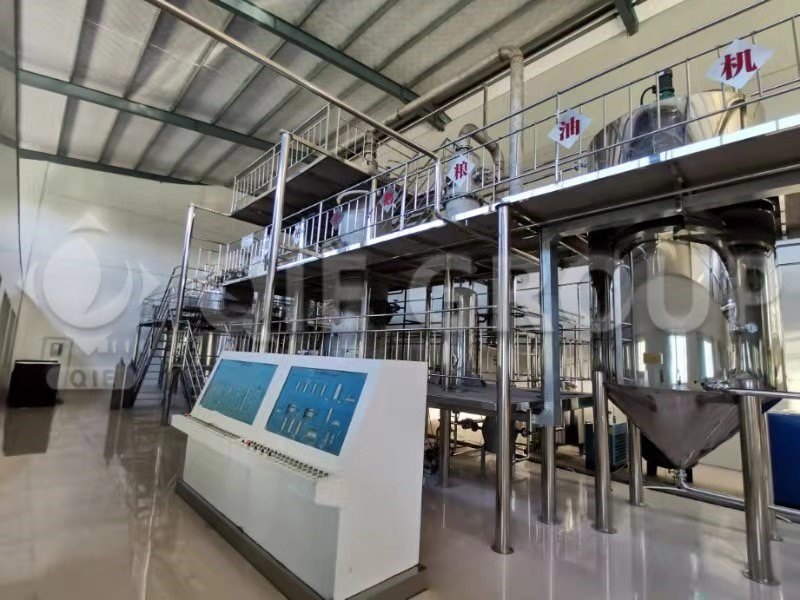
Q: What is the minimum profit margin required to invest in a peanut oil plant in South Africa?
A: If it's farm-operated retail, 20-30 TPD is sufficient; if you want to enter a nationwide distribution network, 100 TPD+ is the entry threshold for large-scale competition.
Q: What impact do the shell content and moisture content of peanut raw materials in South Africa have on investment?
A: Extremely high. High moisture content in the raw materials necessitates the addition of a high-efficiency drying system. The QIE Group adjusts the pre-processing configuration based on the characteristics of peanuts from different production areas to prevent excessive losses during later pressing.
Q: How long does a project construction cycle usually take?
A: For projects with a 100TPD (Projects Per Day) scale, the time from contract signing to manufacturing, shipping, and on-site delivery is typically 8-12 months. The EPC (Engineering, Procurement, and Construction) model saves at least 3 months compared to piecemeal procurement because it allows for parallel progress in design and construction.
Q: How does the QIE Group ensure that its equipment meets South African standards?
A: Our solution not only meets international standards, but also meets the stringent requirements of South Africa's SANS regarding the acid value, residual solvents, and color of vegetable oils, ensuring that it meets the standards as soon as production begins.
In real-world projects, the biggest fear isn't a high budget, but rather a wrong direction. A more actionable sequence of decisions is usually:
First, examine the raw materials: annual supply, seasonality, shell content, and whether the procurement radius is stable.
Looking at the market: should we sell crude oil, refined oil, or also consider the value of by-products?
Then determine the process: pure pressing, pressing + refining, or pre-pressing + solvent extraction + refining.
Further determine the scale: based on the operating rate and raw material security, do not blindly pursue large production capacity.
Finally, we developed a general contracting plan: clearly outlining the equipment, civil engineering, public utilities, installation, and commissioning all at once.
If the above logical order is reversed—for example, looking at a "low-cost equipment solution" first and then going back to add process and civil engineering details—unbudgeted expenses are highly likely to occur later in the project. For overseas investments, this discrepancy is often much more expensive than the equipment itself.
If you are comparing different capacity, pressing, and solvent extraction routes, or if you would like to understand the process configuration and construction boundaries of a commercial peanut oil processing plant in South Africa, please contact the QIE Group. We will guide you through every step, from process and total investment to operating costs.
Reference for turnkey solutions for peanut oil processing plants turnkey edible oil plant edible oil processing plant cost oil refinery EPC Pressing vs solvent extraction Investment range for edible oil plant
sunflower oil processing plant high-yield sunflower oil production premium sunflower oil plant design sunflower oil dewaxing and refining turnkey sunflower oil plant
cottonseed oil pressing cottonseed oil refining free gossypol control chemical refining physical refining
Palm kernel oil processing PKO processing high-yield palm kernel oil screw press solvent extraction turnkey oil processing
Kazakhstan sunflower seed oil production line Sunflower oil processing equipment Sunflower seed oil refining and dewaxing Edible oil turnkey project
turnkey edible oil plant edible oil processing plant cost oil refinery EPC Pressing vs solvent extraction Investment range for edible oil plant
sunflower oil processing plant high-yield sunflower oil production premium sunflower oil plant design sunflower oil dewaxing and refining turnkey sunflower oil plant
cottonseed oil pressing cottonseed oil refining free gossypol control chemical refining physical refining
Palm kernel oil processing PKO processing high-yield palm kernel oil screw press solvent extraction turnkey oil processing
Kazakhstan sunflower seed oil production line Sunflower oil processing equipment Sunflower seed oil refining and dewaxing Edible oil turnkey project







.png?x-oss-process=image/resize,h_100,m_lfit/format,webp)
.png?x-oss-process=image/resize,h_100,m_lfit/format,webp)
.png?x-oss-process=image/resize,h_100,m_lfit/format,webp)


