
In the commercial palm oil industry, success depends not only on plantation resources and market conditions, but more importantly on a well-designed, efficient, and stable production line. For investors, mill owners, and project engineers, every step—from fresh fruit bunches (FFB) to refined, bleached, and deodorized palm oil (RBD Palm Oil)—directly impacts oil yield, product quality, operational cost, and long-term profitability.
This guide provides a practical, engineering-oriented overview of a modern palm oil production line and explains the key processes, equipment selection, and integration logic required for a profitable plant.
A common misunderstanding is thinking that purchasing several presses is enough to start production. In reality, isolated equipment leads to:
3%–8% lower yield from the same raw material
Higher free fatty acids (FFA) and unstable product color
Increased steam and electricity consumption
Frequent downtime and maintenance losses
A profitable plant must be built as a Turnkey Palm Oil Factory, covering raw material receiving, sterilization, pressing, CPO clarification, kernel recovery, and RBD refining.
Fresh FFB should ideally enter sterilization within 24 hours after harvesting. Otherwise, lipase activity increases FFA levels, damaging oil value and raising refining costs. Proper layout, heat balance, and material flow control are essential to maintain competitiveness.
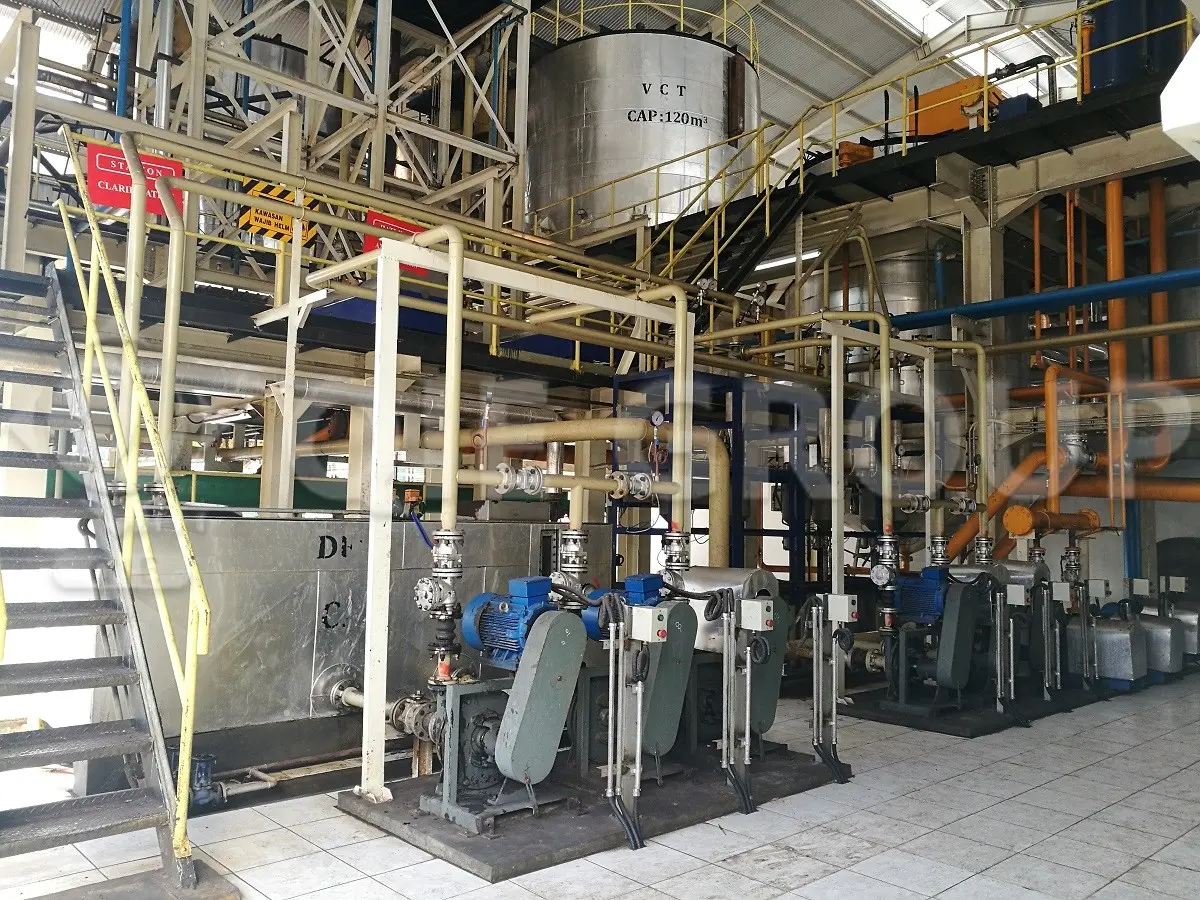
Purpose: Storage, weighing, cleaning, and stable feeding for continuous production.
Recommended Equipment:
Weighbridge & unloading station
Inclined storage or conveyor feeding system
Washing/cleaning tank (optional)
✔ Engineering tip: Hydraulic batch unloading with traceability improves feeding stability and batch management.
Steam: 145°C, 90–120 minutes
Function: Enzyme inactivation, softening fruit, lowering FFA
Equipment: Vertical/Horizontal sterilizer + boiler system 👉 ( What is the role of a palm fruit sterilizer? )
QIE Engineering Suggestion: Vertical sterilization with vacuum exhaust improves heat transfer uniformity and minimizes oil darkening.

Separates fruits from empty fruit bunches (EFB)
EFB can be reused as biomass boiler fuel or fertilizer
Heating at 95–100°C followed by screw pressing
Wear-resistant alloy steel (2Cr13) for longer service life
High oil yield with lower residual content in press cake 👉 ( Twin screw palm fruit oil press machine )
The press cake output is a mixture of oil, water, fruit fibers, and impurities, which must undergo multi-stage processing to produce qualified Crude Palm Oil (CPO).
Objective: Achieve moisture ≤0.3% and impurities ≤0.02% to prepare for refining.
Key Equipment:
Vibrating screen + settling clarification tank
Centrifuge / Vacuum drying system
Plate frame filter or membrane filtration system
📌 Hot water circulation control is critical for cost efficiency:
Too low temperature → poor separation
Too high temperature → steam wastage and higher energy consumption
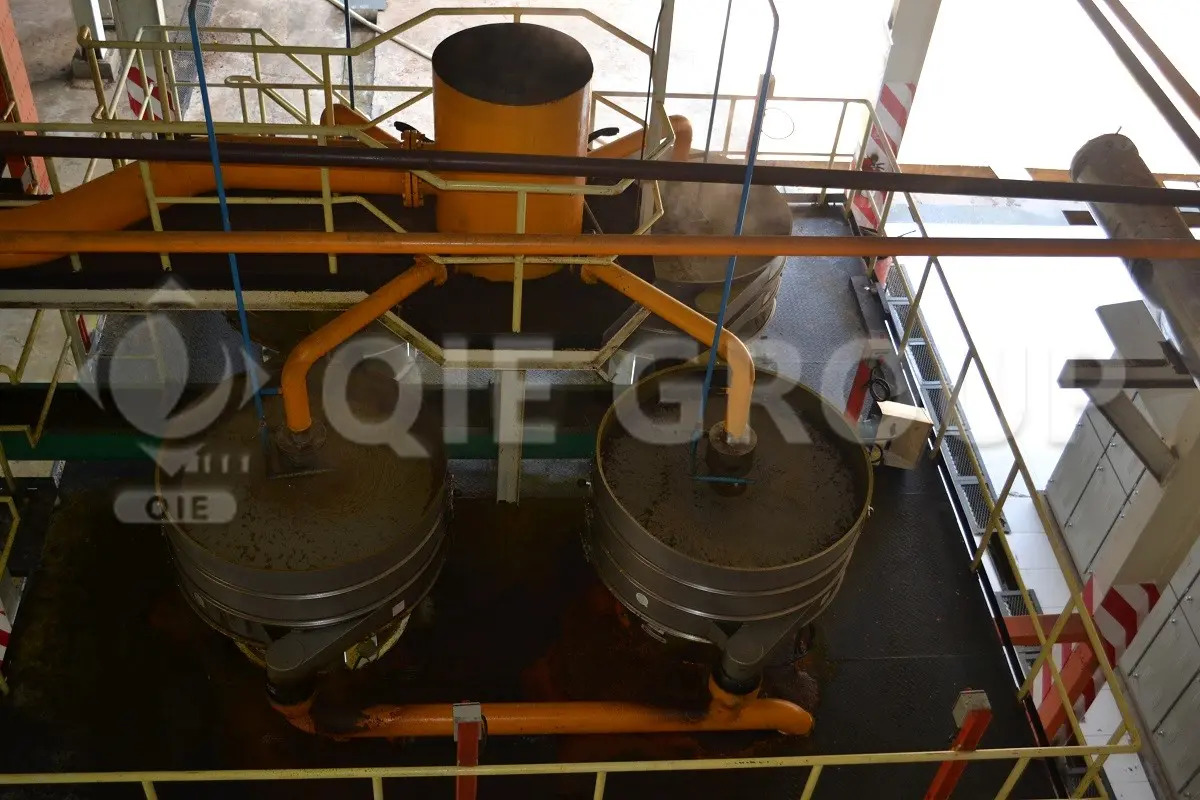
Process Flow:
Press cake → Fiber & hard shells → Crushing → Air / Gravity separation → Palm Kernel (PKO)
Value Significance:
PKO usually commands a higher price than CPO
EFB/fiber can be used as boiler fuel to form an energy self-sufficient loop
Enhances plant profitability and resilience to market fluctuations
| Stage | Objective | Key Equipment |
|---|---|---|
| Degumming | Remove phospholipids/colloids | Degumming tank, centrifuge |
| eacidification | Reduce FFA & improve stability | Alkali refining tank |
| Decolorization | Remove pigments & oxidation compounds | Bleaching tower, clay mixer |
| eodorization | Remove odor compounds for final taste | Deodorizing tower, steam system |
QIE GROUP Engineering Highlights:
Optional Batch / Semi-Continuous / Fully Continuous operation modes to suit different production scales.
Full-line PLC automation control ensures consistent batch quality and reduces human error.
High-efficiency heat recovery system reuses thermal energy, achieving 10–15% energy savings.
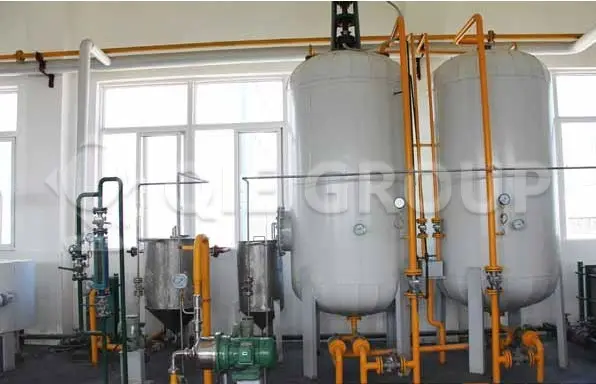
PLC / SCADA centralized control room
Steam & heat recovery for reduced energy loss
EFB/fiber biomass boiler for partial self-supply
Wastewater management and environmental compliance
✔ QIE GROUP can provide energy budget sheets, steam consumption charts, and boiler sizing support.
| FFB Daily Capacity (TPH) | Recommended Configuration | Suitable Customer Type | Key Considerations |
|---|---|---|---|
| 5–10 TPH | Standard Entry-Level Line | Self-supply plantation / First-time investors | ROI cycle, steam source for boiler |
| 20–30 TPH | Commercial Production Line | Regional oil suppliers | Oil yield, clarification quality, maintenance cost |
| 45–60 TPH | Medium-Large Processing Plant | Export trade / branded oil production | Consistent quality, automation optimization |
| 80–120 TPH | Turnkey Project | Group investment, overseas plant | Total Cost of Ownership (TCO), expansion potential |
📌 Engineering Tip: In regions with unstable power grids, high steam cost, or limited boiler fuel, semi-continuous or batch lines may be more reliable than fully continuous refining.
Q1: Does raw material quality affect refining cost and yield?
Yes. Lower FFA and fresher FFB reduce losses. We can calculate estimated refining loss based on your sample.
Q2: If the refined oil has odor, is the deodorizing tower the problem?
Not always. Incorrect temperature, vacuum, or steam rate is usually the cause. Parameter calibration solves most cases.
Q3: Can the plant meet export standards (EU / Middle East / Africa)?
Yes. We support CE/ISO/Halal certification assistance and provide testing parameter guidance.
Q4: What are the energy consumption levels?
Depends on capacity and configuration. We provide a consumption estimation sheet before order confirmation.
Q5: What is included in a turnkey project?
Factory layout, equipment manufacturing, installation, commissioning, operator training, capacity run-off, and hand-over.
A palm oil production line is a coordinated system involving raw material management, thermal engineering, automation, and refining chemistry. Early-stage planning and correct equipment matching prevent production losses and improve ROI.
If you are planning a new or expanded palm oil production line project, please contact us to obtain:
📍 Capacity and budget estimation
📍 Equipment configuration and process selection
📍 Investment return period analysis
Learn more about our palm oil production process now → palm oil sterilization process palm oil processing plant palm oil production line palm oil mill plant Palm Fruit Sterilizer
Corn germ oil press Corn oil production line Corn oil processing equipment Corn oil refining equipment Corn oil processing plant Corn germ oil factory
Sunflower oil equipment How much oil can be produced from one ton of sunflower seeds? Sunflower seed press Sunflower oil production line Edible oil processing equipment Sunflower seed oil yield
20 tons/day edible oil production line price Edible Oil Factory Cost Oil press price 20 tons oil press per day Edible oil processing plant
African shea butter oil processing plant shea butter oil production line shea butter oil refinery QIE Group equipment shea butter oil extraction equipment
palm oil sterilization process palm oil processing plant palm oil production line palm oil mill plant Palm Fruit Sterilizer
Corn germ oil press Corn oil production line Corn oil processing equipment Corn oil refining equipment Corn oil processing plant Corn germ oil factory
Sunflower oil equipment How much oil can be produced from one ton of sunflower seeds? Sunflower seed press Sunflower oil production line Edible oil processing equipment Sunflower seed oil yield
20 tons/day edible oil production line price Edible Oil Factory Cost Oil press price 20 tons oil press per day Edible oil processing plant
African shea butter oil processing plant shea butter oil production line shea butter oil refinery QIE Group equipment shea butter oil extraction equipment


.png?x-oss-process=image/resize,h_100,m_lfit/format,webp)
.png?x-oss-process=image/resize,h_100,m_lfit/format,webp)
.png?x-oss-process=image/resize,h_100,m_lfit/format,webp)


