If you are looking for:
QIE Group will provide you with complete engineering and business solutions, including capacity planning, process flow, equipment configuration, cost analysis, case data, and profit forecasting, to help you make quick decisions and investments.
Based on the supply of raw materials (FFB fresh fruit bunches), palm oil processing plant projects can be divided into three strategic phases:
| Production capacity | Applicable Scenarios | Core technical features | Business Objectives |
|---|---|---|---|
| 1-3 TPH | Independent farms, private investors | Compact semi-continuous process, low maintenance cost | Quick start, low-risk market validation |
| 5 TPH | Regional processing centers, medium-sized enterprises | Fully continuous production and initial biomass energy self-sufficiency | Achieve economies of scale and stabilize oil grades |
| 10 TPH | Industrial-grade commercial factory | PLC fully automatic control, steam turbine generator set | Extreme unit cost, dominating the local market |
An efficient commercial mill requires precise process control. QIE's fully continuous process is designed to maximize oil yield and strictly control FFA (free fatty acids).
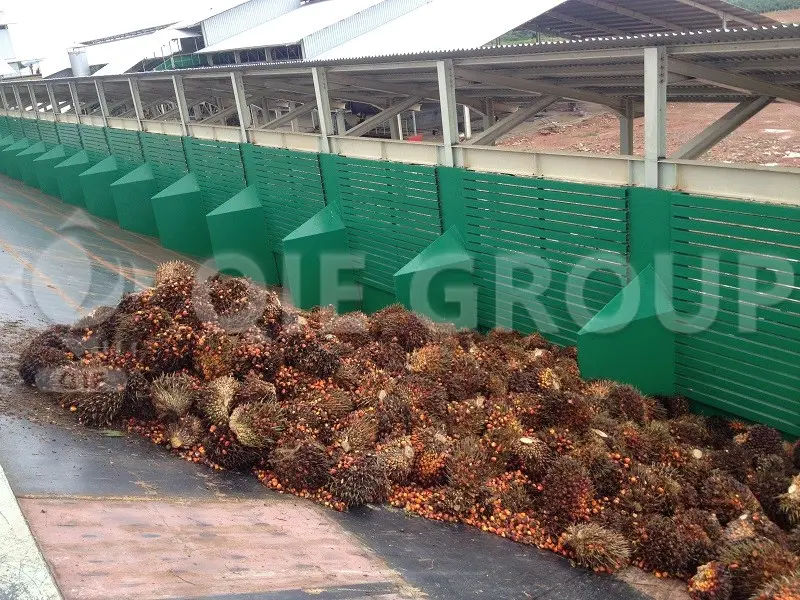
Fresh palm fruit bunches (FFB) are fed into the loading platform. QIE's design incorporates a ramp receiving platform that utilizes gravity unloading to reduce mechanical damage and control FFA from the source.
Process: Place the fruit bunches in saturated steam at 0.3 MPa and heat for 60-90 minutes.
QIE Technical Highlights: In our 5-10 TPH program, we employ an automated vertical sterilization tank . This not only softens the fruit and facilitates threshing, but also thoroughly eliminates lipase, ensuring that the crude oil does not degrade during subsequent storage.
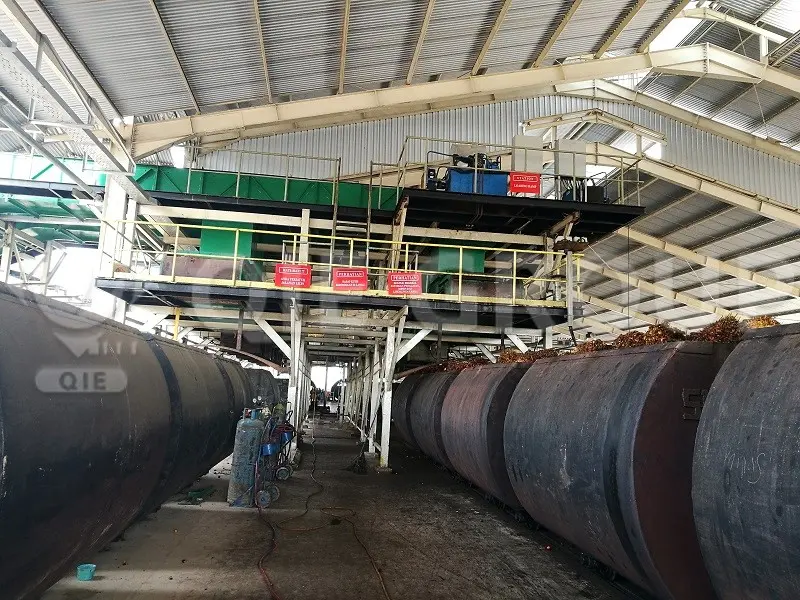
After sterilization, the fruit bunches enter the threshing machine. Through high-speed rotation and impact, the fruit is completely separated from the empty fruit bunches (EFB). The threshing rate can reach over 99.5%.
Before pressing, the fruit enters a cooking tank for secondary heating and mechanical agitation. This step is crucial, as it breaks down the cellular structure of the palm pulp, allowing the oil to "free" from the fibers, preparing it for efficient pressing.
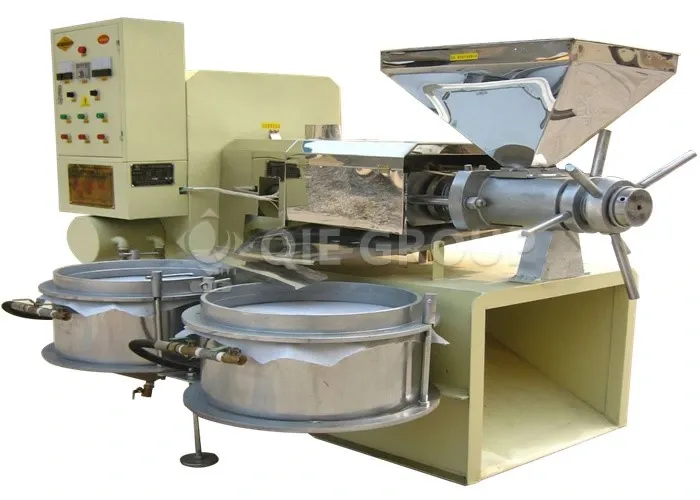
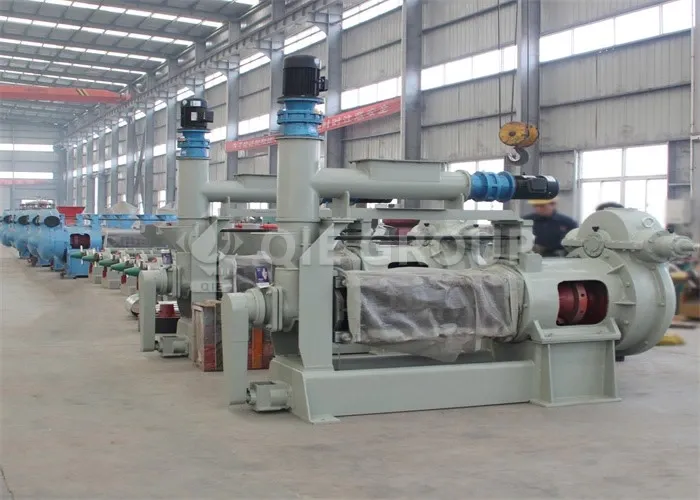
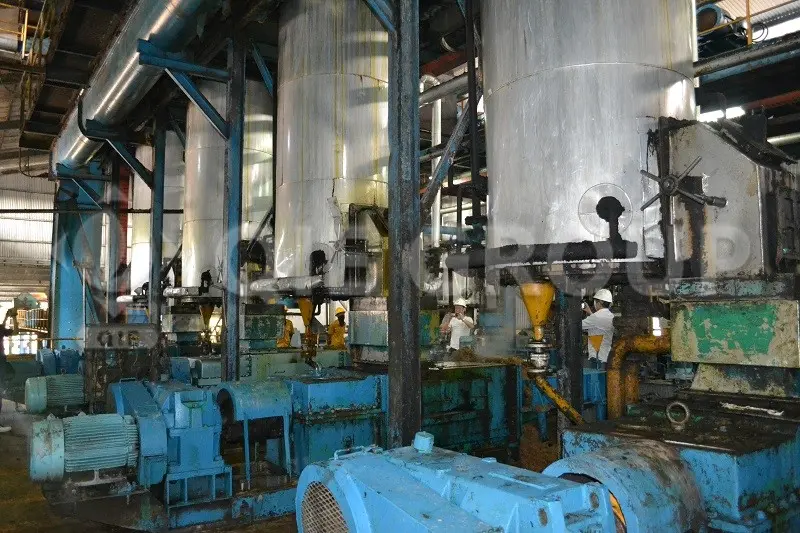
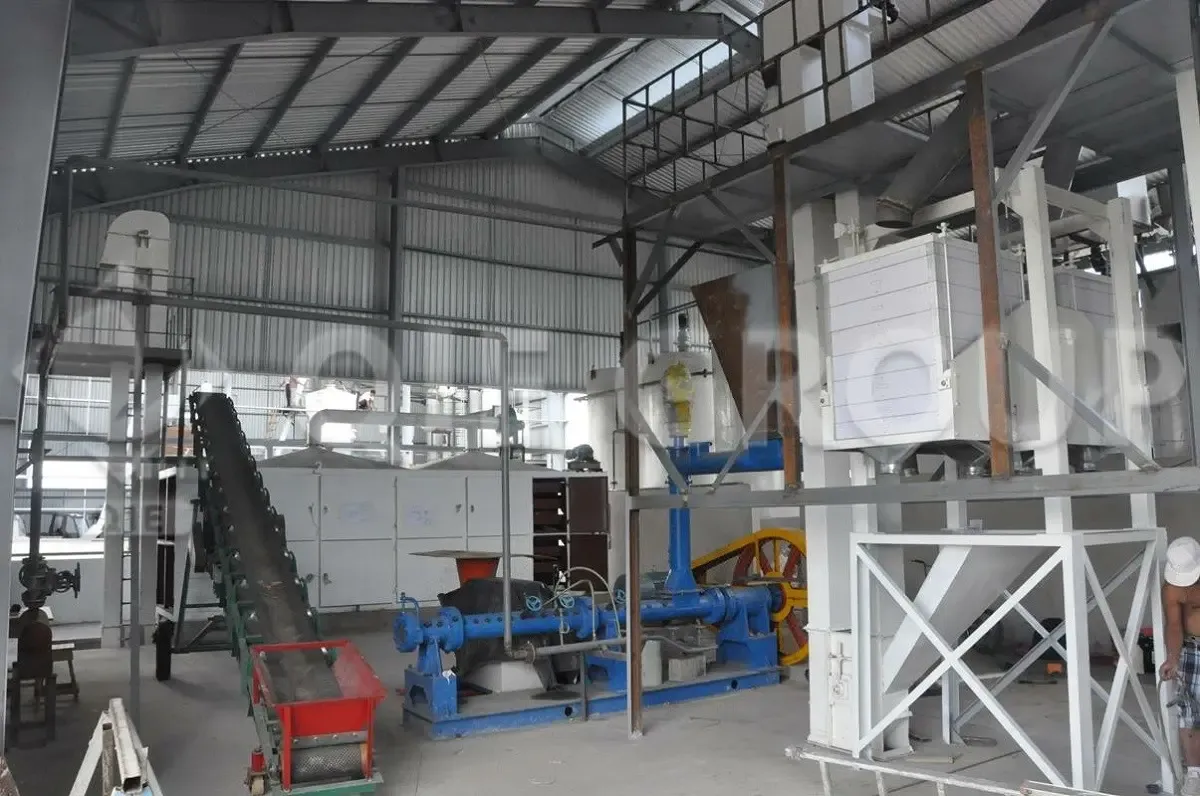
This is the heart of the entire factory. QIE's twin-screw oil press generates tremendous extrusion force through two screws rotating in opposite directions.
Key outputs: Produces a mixture of oil, water, and dirt, and fiber cake.
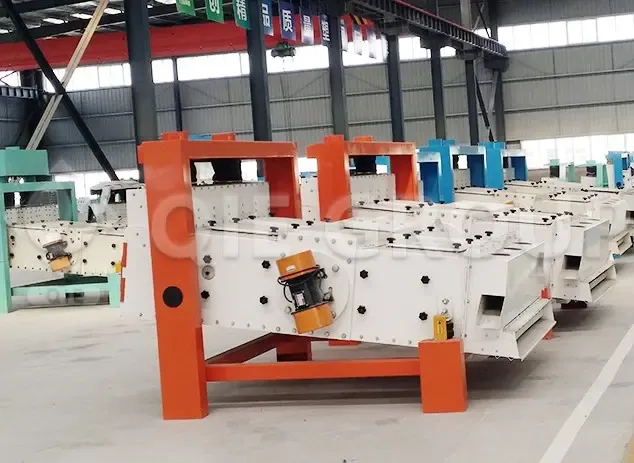
Primary filtration: Vibrating screen removes large fiber particles.
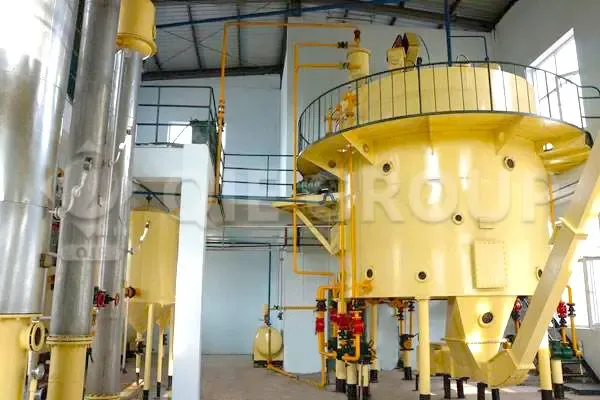
Deep clarification: Oil-water separation is carried out using a continuous clarification tank.
Fine filtration: Removing minute impurities using a plate and frame filter press.
Vacuum drying: This is standard equipment in a 10 TPH plant. Residual moisture is removed in a vacuum environment (controlled below 0.1%), effectively preventing oil oxidation.
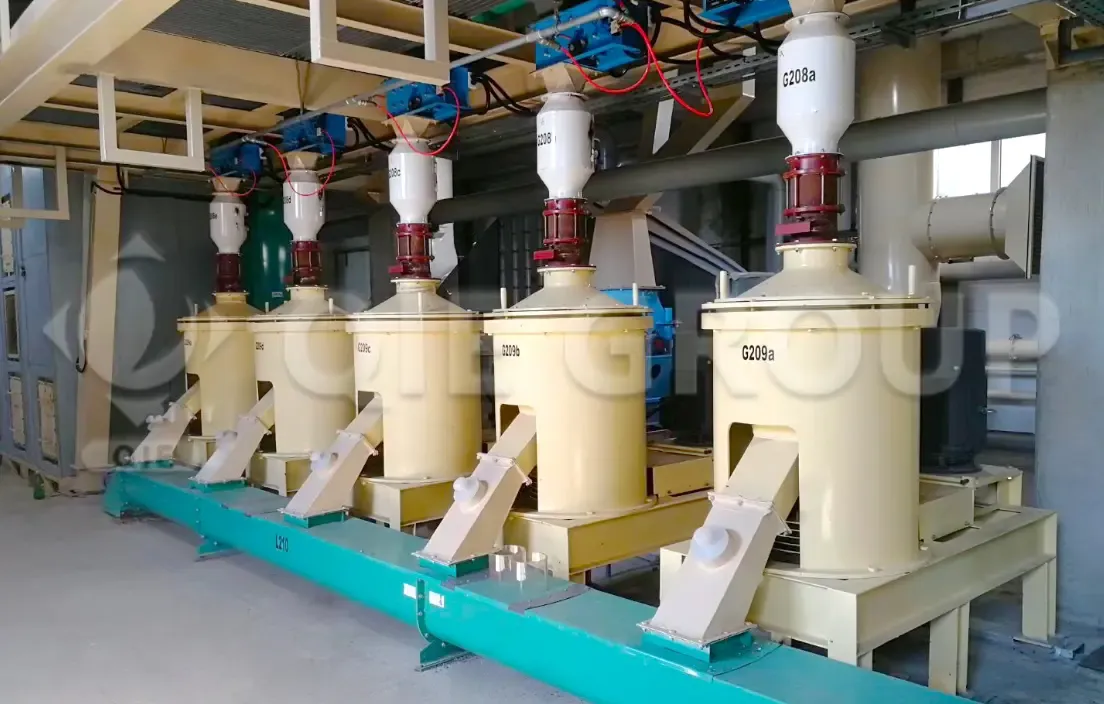
After pressing, the fiber cake is crushed and separated into fibers (sent to the boiler) and palm kernels by an air separation system. The palm kernels are dried and can be sold externally or used in the QIE palm kernel oil production line.
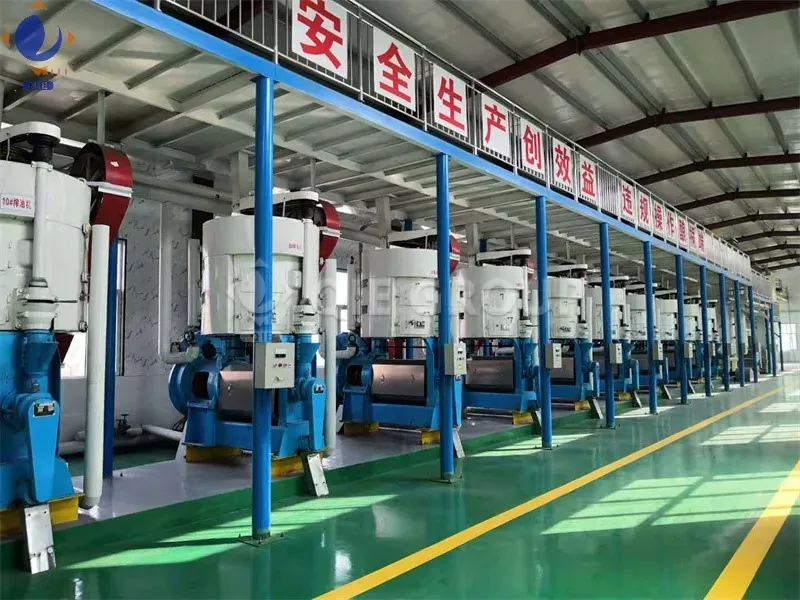
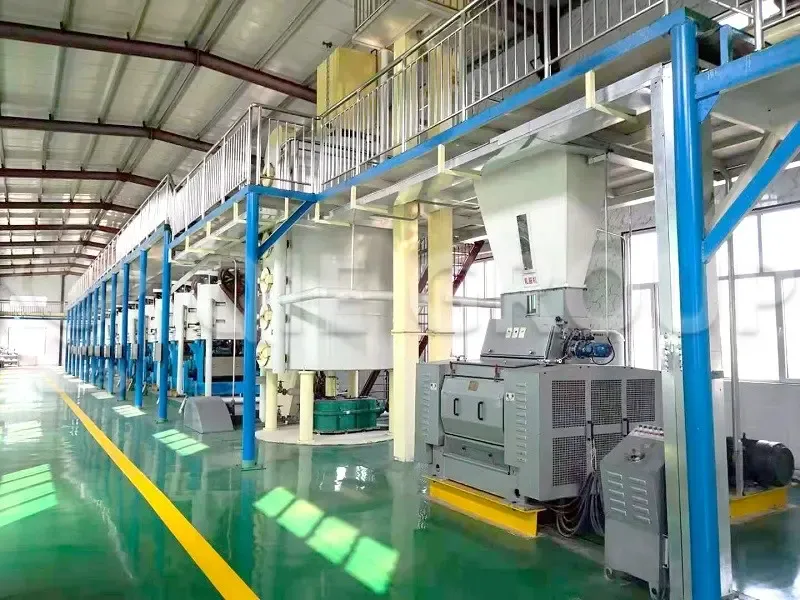
When production capacity reaches 10 TPH, QIE introduces cutting-edge automation technology to ensure the stability of high-intensity operations 24/7:
Unlike small, manually adjustable equipment, the 10 TPH production line comes standard with PLC automated control.
A 10 TPH plant produces approximately 15-20 tons of palm fiber and shells daily. QIE's high-efficiency industrial boilers are capable of:
We use high-strength alloy steel (20CrMnTi) to manufacture our twin-screw press.
High-quality inquiries stem from a clear profit outlook. Take a 10 TPH production line as an example:
Processing capacity: 100 tons of FFB per day (running for 10 hours).
Oil production: Based on a 22% oil extraction rate, the daily output is 22 tons of CPO.
Cost advantages: Energy costs are close to zero (self-sufficient); PLC reduces labor input by 40%.
Profitability Outlook: With sufficient raw material supply, core equipment investment can typically be covered by net profit within 12-14 months, excluding land and civil engineering costs.
In 2026, environmental compliance will be the "birth certificate" for factories:
Wastewater Treatment (POME): QIE offers a three-stage anaerobic digester solution, and the treated water meets local irrigation standards.
Zero-waste utilization: Empty fruit bunches (EFB) are crushed and returned to the field as organic fertilizer, and palm shells are sold or used as biomass energy.
Choosing the QIE Group means choosing a certain industrial future:
Real-world case studies: A proven track record of successfully delivering multiple palm oil processing projects in regions such as Africa.
Material Guarantee: Core components undergo double heat treatment, improving wear resistance by 50% compared to ordinary models on the market.
Expert Training: We not only install the machines, but also train your engineers to master PLC operation and routine preventative maintenance.
Phased Expansion: Our strategy supports a "start with 5 TPH, then upgrade to 10 TPH with one click" expansion path, protecting your investment flexibility.
A: There are no limitations. QIE's continuous production line uses hydraulically adjustable pressing technology. For the thick-shelled Dura variety with larger pits, we can adjust the pressure to protect the pits from being crushed; for the high-yielding thin-shelled Tenera variety, we can maximize the pressing pressure. This flexibility ensures that you get the optimal oil yield (OER) regardless of the type of fruit you source.
A: The key to oil quality lies in the "speed of fermentation elimination" and the "efficiency of water removal".
A: Absolutely. The essence of QIE's design lies in modular expansion. We reserve "parallel connection points" for you during the initial layout. When your daily processing capacity exceeds 100 tons, you can double your capacity simply by adding a pressing unit or upgrading the boiler capacity, without dismantling the old equipment. This "scalable" plant design greatly protects your initial investment.
A: This is the core advantage of our 1-10 TPH solution. By equipping the plant with biomass boilers and turbine units, it can achieve "electricity self-circulation." Utilizing waste palm fiber and nutshells to generate electricity, you can not only completely eliminate your dependence on the public power grid, but also save tens of thousands of dollars in fuel costs annually.
A: We offer a "preventative maintenance spare parts package" that covers all wear parts needed for the first year of operation (such as screws, seals, and filter cloths). Additionally, our PLC system supports remote diagnostics—as long as there is a network connection, our engineers can perform system optimization and troubleshooting for you from our Zhengzhou headquarters.
Building a palm oil processing plant is a complex undertaking. QIE Group offers turnkey solutions covering the entire lifecycle, from investment assessment and plant layout to equipment manufacturing and commissioning training.
 sunflower oil processing plant high-yield sunflower oil production premium sunflower oil plant design sunflower oil dewaxing and refining turnkey sunflower oil plant
olive pomace solvent extraction olive pomace oil processing turnkey edible oil plant olive pomace oil recovery edible oil EPC project
Intelligent management Oil yield of edible oil plants Automated manufacturing Improved production efficiency Energy saving
sunflower oil production line clear sunflower oil turnkey oil plant physical refining high-quality edible oil
Oil refinery energy consumption optimization Increase oil yield Smart leaching technology Energy-saving pressing solution Refined and energy-saving design
sunflower oil processing plant high-yield sunflower oil production premium sunflower oil plant design sunflower oil dewaxing and refining turnkey sunflower oil plant
olive pomace solvent extraction olive pomace oil processing turnkey edible oil plant olive pomace oil recovery edible oil EPC project
Intelligent management Oil yield of edible oil plants Automated manufacturing Improved production efficiency Energy saving
sunflower oil production line clear sunflower oil turnkey oil plant physical refining high-quality edible oil
Oil refinery energy consumption optimization Increase oil yield Smart leaching technology Energy-saving pressing solution Refined and energy-saving design






.png?x-oss-process=image/resize,h_100,m_lfit/format,webp)
.png?x-oss-process=image/resize,h_100,m_lfit/format,webp)
.png?x-oss-process=image/resize,h_100,m_lfit/format,webp)