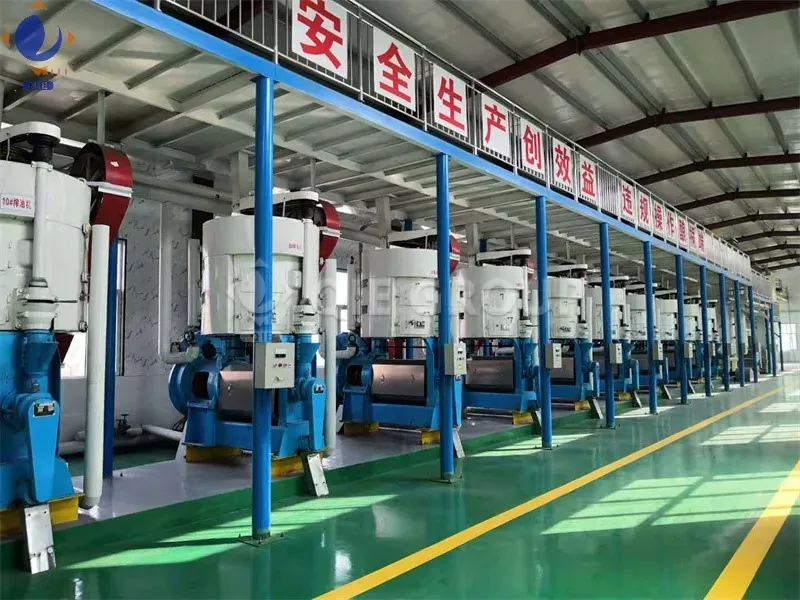
In the palm oil industry, investors often lose money not because they didn't buy equipment, but because they bought the wrong "solution." Disorganized layouts leading to forklift blockages, frequent press shaft breakages, and dark-colored refined oil—these problems can become black holes that devour profits from the very first day of production.
QIE Group has been working in palm oil crushing and refining plants for over 40 years. As an engineering supplier, we understand that customers don't want a pile of cold steel; they want a profitable machine that runs smoothly, produces a lot, and requires minimal maintenance. Currently, we have completed hundreds of EPC projects in more than 30 countries, including Indonesia, Nigeria, and Côte d'Ivoire, helping our clients consistently achieve over 98% of their production capacity.
Many civil engineering designs only consider equipment placement, neglecting logistics. Our designers incorporate 3D modeling from the initial design stage.
Ramp-style Discharge: Addressing the large volume and easy stacking characteristics of Fresh Fruit Bunches (FFB), we designed a ramp platform with high-pressure spraying. Utilizing gravity feeding reduces fuel consumption by at least two loaders.
Zero-Cross Logistics: We ensure independent paths for raw material entry, Empty Fruit Bunch (EFB) discharge, and finished oil transport. This physical isolation between the crushing and refining sectors is vital for RSPO (Roundtable on Sustainable Palm Oil) and food-grade audit compliance.
Energy Loop: We adhere to the "Waste-to-Fuel" principle. Fiber and shells from the pressing stage are fed directly into the boiler to provide steam and power for the entire plant, drastically reducing reliance on expensive diesel.
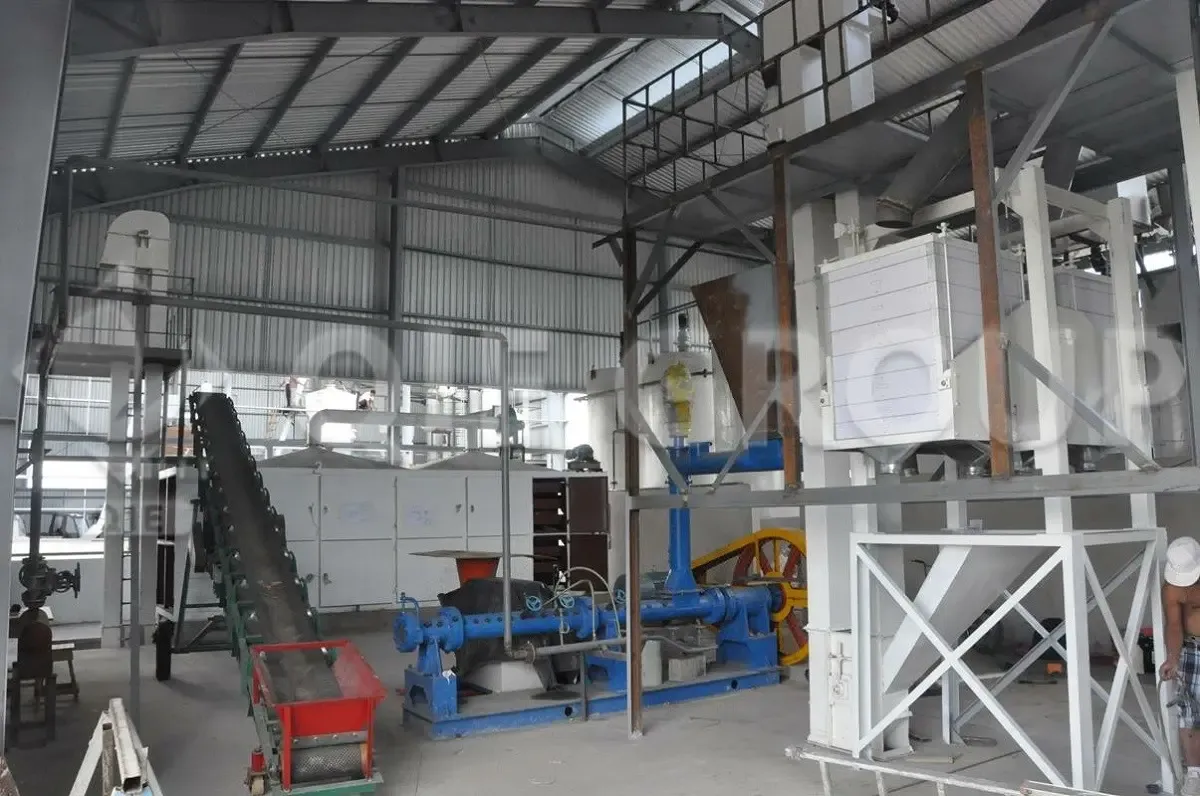
The complete palm oil processing flow not only determines the oil yield but also directly affects the acid value, color, odor, and subsequent sales grade. QIE Group typically configures its solutions according to a system of "Sterilization — Threshing — Digesting — Pressing — Clarification — Refining & Fractionation," ensuring a stable connection between each step from fresh fruit to finished oil.
Sterilization control: Horizontal or vertical sterilization tanks are used, and the pressure is controlled at around 3.0 bar to quickly deactivate lipase and keep the increase in free fatty acids (FFA) at an extremely low level.
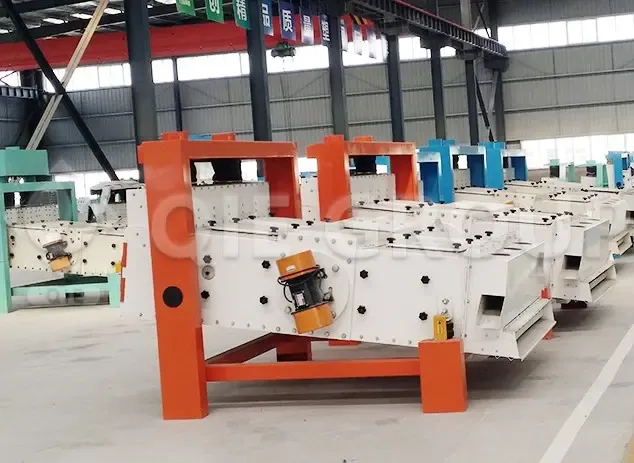
Customized fruit stripping: Uneven ripeness of fruit bunches can cause the fruit stripper to jam. The QIE fruit stripper's spindle speed is precisely controlled at 10 rpm, and with its flexible toothed claws, it can maintain a 95% separation rate even when processing small fruit bunches.
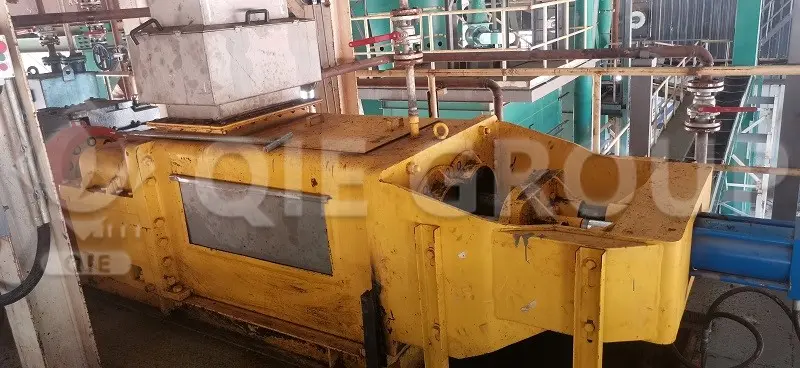
Double-layer reinforced press shaft: Palm fruit contains a large amount of sand and hard fibers. Our press screw is not made of ordinary carbon steel, but uses multi-layer wear-resistant welding technology, combined with a 40Cr alloy shaft, which allows it to last more than 5,000 hours under high pressure than conventional equipment.
Residual oil content is relentlessly reduced: By precisely adjusting the hydraulic taper, we reduce the residual oil content of the press cake to below 5%. Taking a 10 TPH production line as an example, compared to the industry average, this can generate hundreds of thousands of dollars more in profit annually.
If the refining system is not properly matched, your oil can only be sold at the lowest price.
Staged degumming: To address the differences in phospholipid content in palm oil from different origins, we use PLC to adjust the amount of acid added in real time to ensure that the FFA (free fatty acid) content is stably controlled at ≤0.12%.
Fractionation yield optimization: Our fractionation system employs automated crystallization curve control. This allows for a 2%-3% increase in yield when separating palm oil (Oleins), ensuring that every ton of crude oil produces the highest value liquid oil.
Based on project experience in multiple countries around the world, we offer the following TPH (tons per hour) configuration recommendations for different investment scales:
| Production capacity | Applicable Scenarios | Core configuration features |
|---|---|---|
| 1-5 TPH | Family farms, early stages of business | Modular design, extremely fast installation, focusing on low investment and high return. |
| 10-20 TPH | Medium-sized plantations and regional processing centers | Semi-automatic operation, equipped with a high-efficiency sterilization and centrifugal purification system |
| 30-60 TPH | Large-scale industrial oil and fat processing plant | The entire line is PLC controlled, with multi-stage heat recovery, focusing on extremely low unit energy consumption. |
| 60 TPH+ | National-level EPC project | Includes deep processing of by-products (biogas power generation, fiberboard utilization). |
We've seen too many low-end products bought at installation sites to "save money," which eventually had to be discontinued due to oil leaks and excessive vibration.
PLC central control cystem: This isn't just for show. In remote areas, skilled workers are hard to find, so PLCs automatically monitor temperature, flow rate, and pressure. If the data becomes abnormal, the system will automatically alarm or even shut down to prevent damage to core components.
On-site troubleshooting tips: Our installation team will check the slope of every pipe on-site. If the slope is incorrect, the grease will solidify inside the pipes after shutdown, causing a disaster the next time it's turned on. Only engineers who have spent 20 years on construction sites understand this kind of detail.

| Index | Industry standard solutions | QIE Deep Optimization Solution | Reference benefits |
|---|---|---|---|
| Residual oil content of pressed cake | 8% - 12% | ≤ 5% | Significantly reduces oil loss and directly increases output value. |
| Equipment wear life | Frequent downtime for welding | Increased by 1.5 times | Reduce downtime and lower maintenance costs |
| Electricity consumption per ton of fuel | >25 kWh | ≤ 25 kWh | Highly competitive in regions with high electricity costs |
| Installation cycle | More than 120 days | Approximately 90 days | Seize the peak harvest season and recover funds early. |
Environmentally Friendly (ESG): Provides POME (palm oil mill wastewater) treatment solutions and supports biogas recovery.
Regular inspections: Providing remote diagnostics and regular on-site technical support for key global clients.
Expansion capacity reservation: Pipeline interfaces are reserved in the initial design to ensure that there is no need to start from scratch when the production capacity is upgraded in the future.
Q: How much land area is needed to build a 10 TPH palm oil mill?
A: A typical production workshop requires approximately 2000-3000 square meters, excluding the FFB storage yard and wastewater treatment area. QIE can provide customized layout plans based on your specific terrain.
Q: Can your equipment process different varieties of palm fruit from Indonesia and Africa?
A: Yes. We will fine-tune the compression ratio of the press and the mesh spacing of the fruit thresher according to the fiber content of the variety and the size of the pit.
Q: Our factory site is irregularly shaped, will it be able to accommodate the equipment?
A: No problem. We offer customized layouts; we'll design L-shaped or U-shaped production lines based on your terrain (even if it's a long, narrow, or triangular plot).
If you are evaluating palm oil investments, expanding your palm oil production line , or looking for a reliable turnkey project partner, we can provide customized solutions, process recommendations, and equipment lists based on your raw material conditions, production capacity, local energy availability, and budget requirements.
Get a turnkey solution for QIE Group's palm oil processing plant now
 Edible oil production line Oil plant equipment Intelligent production Oil yield Energy saving and environmental protection
turnkey edible oil plant edible oil processing plant edible oil processing line EPC edible oil plant design and construction
soybean oil production line soybean oil processing pretreatment pressing extraction refining edible oil processing equipment efficient soybean oil line
Vegetable oil processing industry Edible oil processing technology Vegetable oil refining trend Oil processing plant design Oil refinery automation Edible oil turnkey project Oil extraction and refining
complete rapeseed oil processing line rapeseed oil refinery rapeseed oil production plant rapeseed oil processing equipment pre-press solvent extraction
Edible oil production line Oil plant equipment Intelligent production Oil yield Energy saving and environmental protection
turnkey edible oil plant edible oil processing plant edible oil processing line EPC edible oil plant design and construction
soybean oil production line soybean oil processing pretreatment pressing extraction refining edible oil processing equipment efficient soybean oil line
Vegetable oil processing industry Edible oil processing technology Vegetable oil refining trend Oil processing plant design Oil refinery automation Edible oil turnkey project Oil extraction and refining
complete rapeseed oil processing line rapeseed oil refinery rapeseed oil production plant rapeseed oil processing equipment pre-press solvent extraction





.png?x-oss-process=image/resize,h_100,m_lfit/format,webp)
.png?x-oss-process=image/resize,h_100,m_lfit/format,webp)
.png?x-oss-process=image/resize,h_100,m_lfit/format,webp)