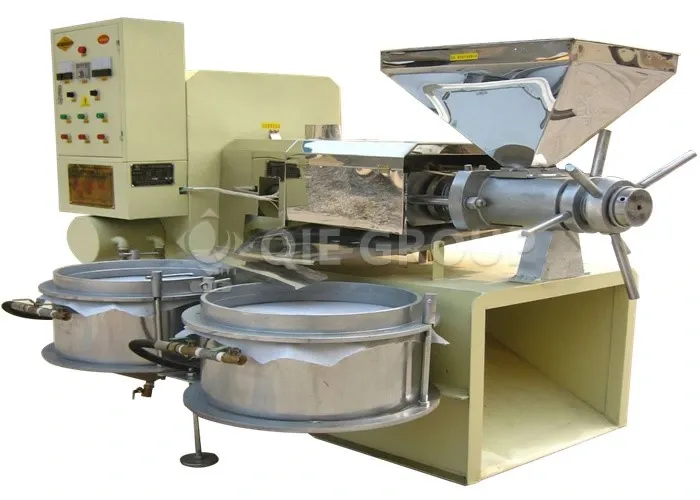
Building a new palm oil mill requires more than purchasing a set of machines. The machinery supplier you choose can directly affect the mill's processing capacity, oil recovery, energy consumption, maintenance costs, and long-term operating stability.
Therefore, supplier selection should not start with:
“Which company offers the lowest price?”
A better question is:
Who can provide the right process solution for my FFB and capacity, demonstrate real manufacturing and engineering capabilities, deliver and commission the project successfully, and provide long-term technical support?
For new palm oil mill projects, production line expansions, or equipment upgrades, the following procurement framework can help you evaluate suppliers systematically.
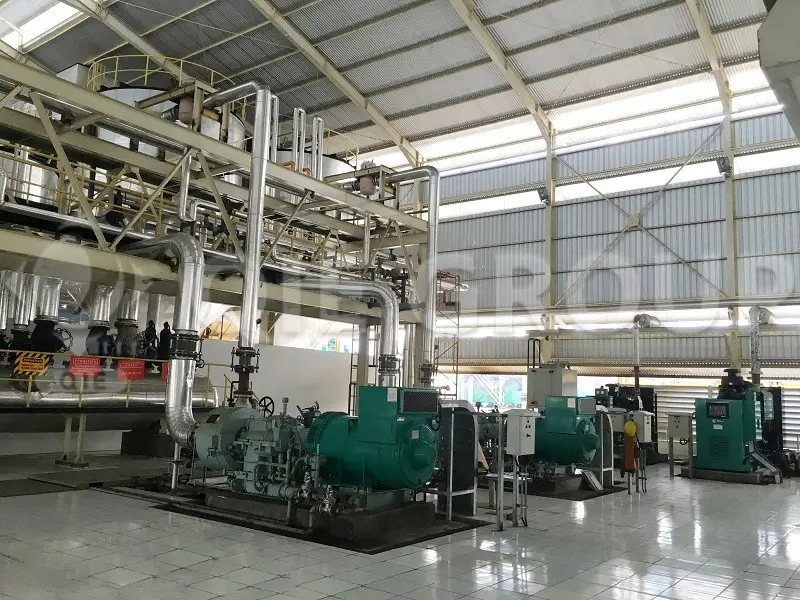
Before requesting quotations, you can initially screen suppliers based on five key areas.
Does the supplier truly understand palm oil mill processing rather than simply selling machinery? Key points to verify include:
If a supplier claims to be a manufacturer, you should verify what it actually manufactures. Ask:
For a Palm Oil Mill operating continuously over the long term, equipment materials, machining accuracy, and wear-part quality can all affect maintenance frequency and operating costs.
A Palm Oil Mill is not simply a combination of several independent machines. A complete system may include:
The supplier should clearly explain which equipment is supplied directly by them, which equipment comes from third parties, and how the different systems are integrated. If a supplier can only provide individual machines but cannot handle process interfaces, piping, electrical systems, or automation, coordination risks may increase for a new plant.
A new Palm Oil Mill involves Process Design, Plant Layout, Civil Foundation Guidance, Piping, Electrical System, Automation, Utility Integration, Installation, Commissioning, and Operator Training.
Determine whether the supplier offers Equipment Supply or an EPC/Turnkey Solution. Clearly define the actual EPC scope instead of relying only on the word “Turnkey”.
Palm Oil Mills need continuous operation. Before purchasing, inquire about:
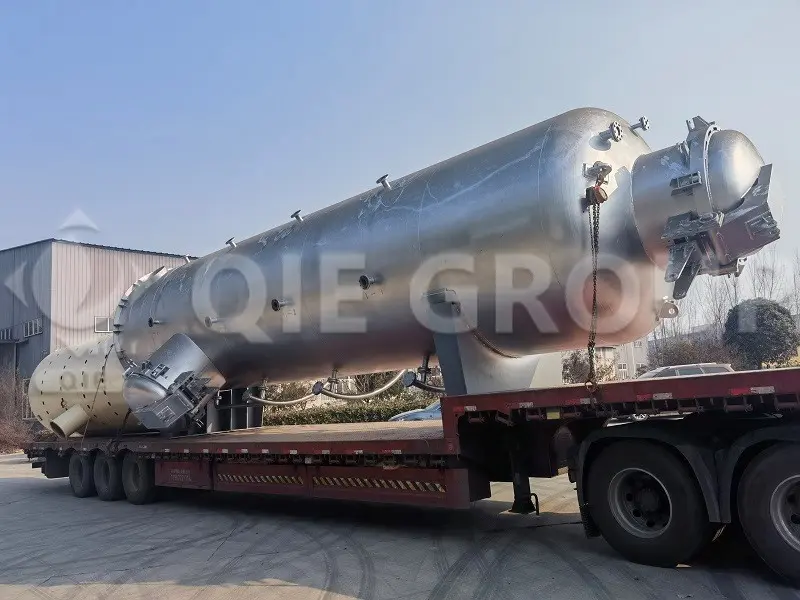
Ask suppliers for: Factory information, Core equipment manufacturing details, Material specifications, Quality inspection procedures, Equipment testing records, and Relevant certificates.
For high-wear components (press components, screens, sleeves, seals): What materials are used? What is the expected service life? Recommended replacement interval? Prices of wear parts? Long-term supply security? Consider total cost over operating life, not just initial price.
Clearly distinguish between Estimated Performance and Guaranteed Performance. Request explicit figures for:
Also confirm under what FFB quality, operating hours, and process conditions these performance figures were obtained. Incorporate Key Performance Indicators (KPIs) and acceptance conditions directly into the contract.
Whether your project requires a small-scale mill, 10 TPH, 20 TPH, 30 TPH, 60 TPH, or larger, do not look at the TPH figure alone. Confirm:
FFB quality and maturity affect the entire mill. Provide suppliers with real raw material info: FFB maturity, quality, moisture, impurities, sand/soil content, and seasonal variations.
⚠️ Red Flag: If a supplier immediately provides a fixed solution without asking about local FFB characteristics, examine their proposal with extreme caution.
This critical issue is often overlooked during procurement. When requesting quotations from suppliers, use this checklist to clarify scope inclusion:
| Item Scope | Included? | Item Scope | Included? |
|---|---|---|---|
| Process Design | ? | Boiler & Generator | ? |
| PFD / P&ID | ? | Installation Guidance / Execution | ? |
| Equipment Supply | ? | Commissioning | ? |
| Plant Layout & Civil Drawings | ? | Operator & Maintenance Training | ? |
| Piping & Cable Trays | ? | Initial Spare Parts | ? |
| Electrical System & PLC / SCADA | ? | Transportation & Insurance | ? |
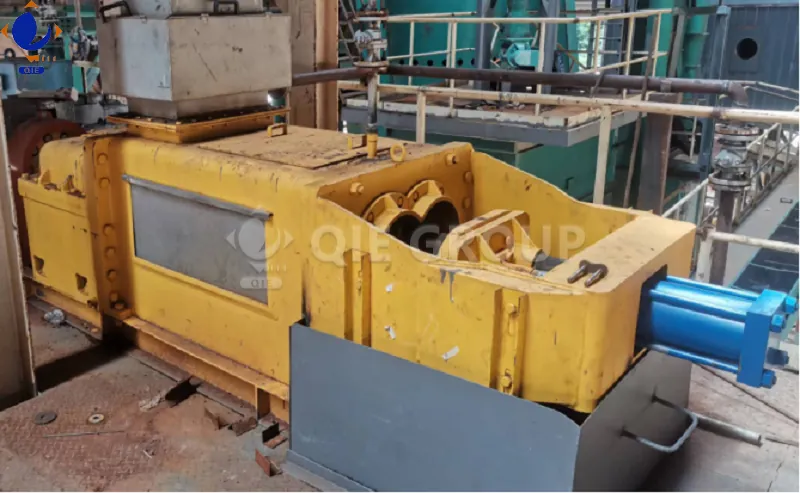
Different projects require different types of suppliers. Choose based on your project scope:
| Comparison | Manufacturer | Trading Company | EPC / Turnkey Supplier |
|---|---|---|---|
| Core Equipment Manufacturing | Strong | Depends on 3rd parties | Manufacturing / System Integration |
| Process Engineering | Basic / Medium | Limited | Strong |
| System Integration | Medium | Relatively weak | Strong |
| Installation & Commissioning | Can provide | Usually limited | Usually comprehensive |
| After-Sales Service | Direct support | Depends on 3rd parties | Integrated support |
| Suitable Projects | Individual machines / partial expansion | Standard equipment procurement | New plants / large-scale complete projects |
Do not simply accept a supplier's statement: “We have many years of experience.” Request verifiable project information including:
If possible, also request: Project photos, Operation videos, Project completion documents, Client references, and Site visits. Ideally, reference projects should closely match your project's capacity, location, and scope.
Equipment delivery does not mean that the palm oil mill is ready for normal production. Clarify the following before purchasing:
Who is responsible for installation? How many engineers will the supplier send? How long will it take? What personnel and resources must the client provide locally?
Who is responsible for commissioning? Will a performance test be conducted? How will final project acceptance be determined and signed off?
Will operators and maintenance personnel be trained? How long will training last? Are comprehensive operation and maintenance manuals provided?
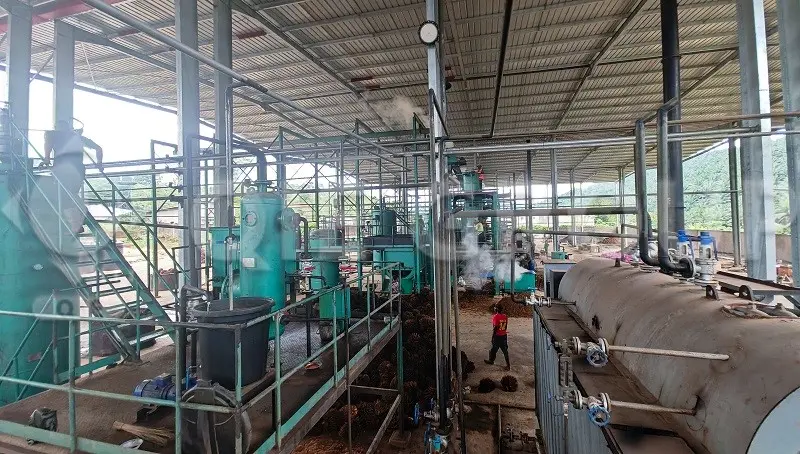
The actual procurement cost should not be limited to the initial equipment quotation.
When comparing suppliers, weigh the equipment price against energy consumption, spare parts cost, maintenance frequency, wear-part service life, warranty terms, technical support, and expected downtime risk. A supplier offering a lower initial machinery price may result in significantly higher overall operating costs over a 3-to-5-year period due to frequent wear-part replacements or lower oil extraction efficiency.
To achieve a true Apple-to-Apple Comparison, ask all candidate suppliers to submit documents categorized identically:
| Comparison Item | What to Check |
|---|---|
| Processing Capacity | Whether it meets the actual FFB processing requirement |
| Raw Material Adaptability | Whether local FFB characteristics are considered |
| Equipment Configuration | Whether the equipment scope is complete |
| Equipment Materials | Materials of critical components |
| Performance Guarantee | Whether clear guarantees are provided |
| Utility Consumption | Power, water, and steam requirements |
| Automation Level | Manual / PLC / SCADA system capabilities |
| Scope of Supply | Whether hidden costs may exist |
| Battery Limits | Whether responsibilities are clearly defined |
| Installation & Commissioning | Whether included in proposal scope |
| Spare Parts | Initial spare parts and long-term supply plan |
| Warranty | Scope and duration terms |
| Delivery & Experience | Manufacturing schedule and verifiable references |
| TCO & Price | Long-term operating cost vs. overall initial investment |
* Note: Price should be one evaluation factor, never the sole deciding factor.
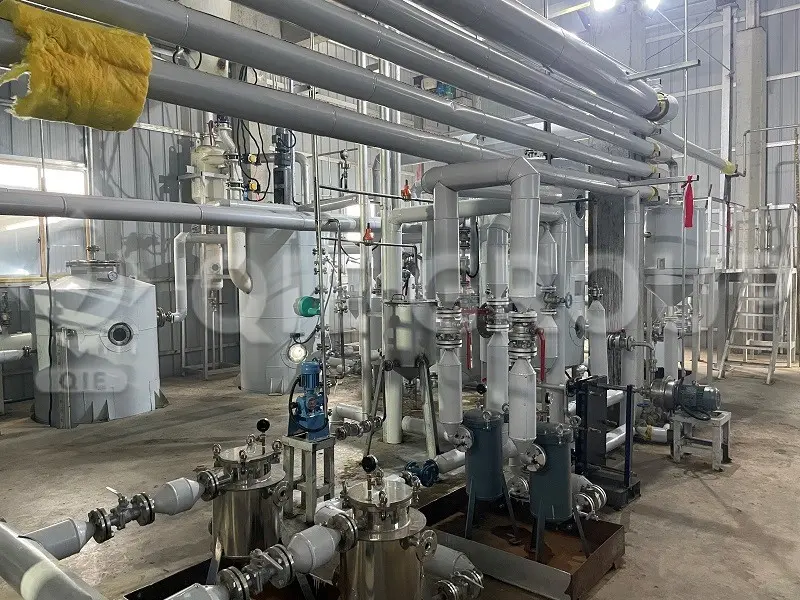
Evaluate candidate suppliers in this structured logical sequence:
Zhengzhou QIE Grain and Oil Machinery Co., Ltd. provides palm oil processing equipment and engineering solutions for customers planning new plants, expansions, or equipment upgrades.
Depending on your project scope, our services can include:
Ask all three suppliers to submit technical and commercial proposals based on the same FFB processing capacity, raw material conditions, equipment scope, and performance requirements. Then compare equipment configuration, Performance Guarantees, project experience, battery limits, TCO, and price.
If you only need an individual replacement machine, a specialized manufacturer may be sufficient. If you are building a complete new Palm Oil Mill and need process engineering, equipment integration, installation, and commissioning, an EPC / Turnkey supplier should be strongly considered.
In addition to equipment prices, the quotation should clearly define the equipment list, technical specifications, PFD/P&ID, layout drawings, utility demands, installation, commissioning, spare parts, warranty terms, delivery schedule, and clearly listed included/excluded scopes.
A Battery Limit defines the precise responsibility boundary between the supplier and the client. Clearly defining Battery Limits prevents disputes and unexpected additional costs involving equipment connections, piping, electrical systems, boilers, utilities, and installation tasks.
Not necessarily. For a palm oil mill, you must evaluate technical solutions, equipment quality, performance guarantees, project experience, EPC capabilities, after-sales support, and TCO. The lowest initial price rarely translates to the lowest long-term operational cost.
Choosing a palm oil mill machinery supplier is not simply about purchasing several machines. It means choosing a long-term technical and engineering partner that directly influences your plant's operational profitability and stability.
A reliable supplier should be able to:
Understand your FFB → Design appropriate process → Supply suitable equipment → Define project boundaries → Complete installation & commissioning → Support performance → Provide long-term spare parts & service.
Therefore, before making your final decision, do not only ask: “How much is your Palm Oil Mill?”
Also ask: “What exactly is included, what performance can you guarantee, what similar projects have you completed, and what support will you provide after commissioning?”
 turnkey vegetable oil production line EPC oil processing plant edible oil refinery design global oil extraction line QIE Group
Coconut oil production process Pressed coconut oil Coconut oil yield Coconut oil production line Coconut oil processing plant
avocado pomace oil extraction avocado oil refining high-efficiency oil extraction low-temperature expansion vacuum negative-pressure extraction
edible oil processing plant oil mill energy saving solvent extraction efficiency crude oil refining system oil extraction EPC contractor
rice bran oil processing rice bran oil production rice bran oil plant oil extraction turnkey solution
turnkey vegetable oil production line EPC oil processing plant edible oil refinery design global oil extraction line QIE Group
Coconut oil production process Pressed coconut oil Coconut oil yield Coconut oil production line Coconut oil processing plant
avocado pomace oil extraction avocado oil refining high-efficiency oil extraction low-temperature expansion vacuum negative-pressure extraction
edible oil processing plant oil mill energy saving solvent extraction efficiency crude oil refining system oil extraction EPC contractor
rice bran oil processing rice bran oil production rice bran oil plant oil extraction turnkey solution





.png?x-oss-process=image/resize,h_100,m_lfit/format,webp)
.png?x-oss-process=image/resize,h_100,m_lfit/format,webp)
.png?x-oss-process=image/resize,h_100,m_lfit/format,webp)