
Palm kernel oil (PKO) is extracted from the kernels inside palm fruits, which is different from palm oil extracted from the fruit’s mesocarp. A typical palm kernel oil production process includes cleaning, cracking, shell/kernel separation, conditioning, pressing, filtration, and storage. For projects requiring higher oil recovery, prepressing and solvent extraction can be added. If the final product is intended for edible applications, a palm kernel oil refining system may also be required.
A typical palm kernel oil production process can be arranged as follows:
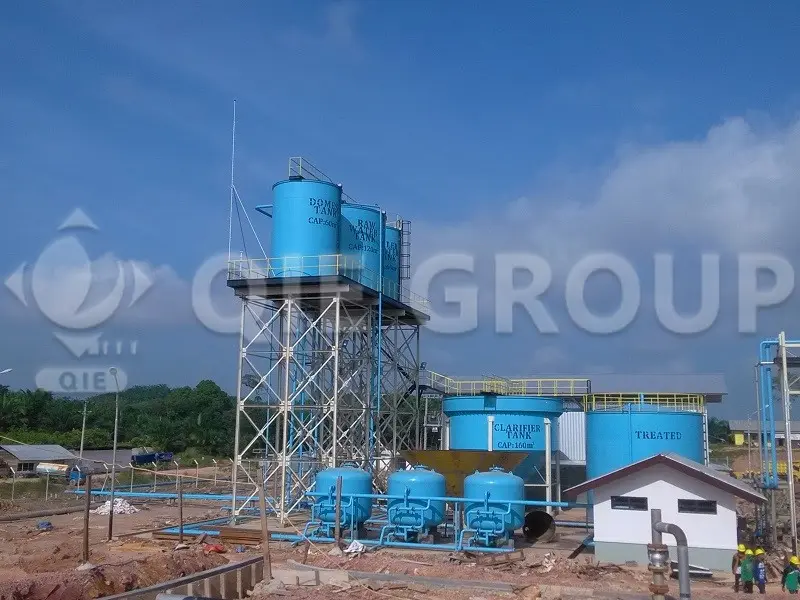
For projects requiring higher oil recovery, an additional extraction section can be introduced:
Not every palm kernel oil plant requires the same process configuration. For example, if the raw material has already been separated from the shell, cracking and shell/kernel separation equipment may not be necessary. Whether flaking or other additional pretreatment steps are required should also be determined according to the raw material characteristics and process design.
The main equipment used in a palm kernel oil production line includes the following:
| Processing Stage | Main Equipment | Main Function |
|---|---|---|
| Cleaning | Vibrating screen, magnetic separator, dust removal system | Remove impurities and foreign materials |
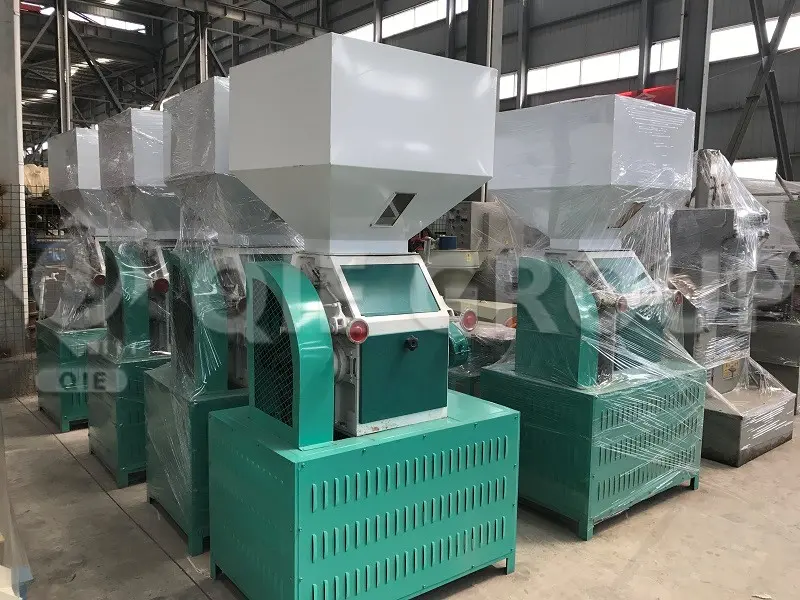
| Cracking & Separation | Palm kernel cracker, shell/kernel separation equipment | Crack the kernels and separate shells from kernels |
| Conditioning | Conditioner, heating system | Adjust moisture and temperature before pressing |
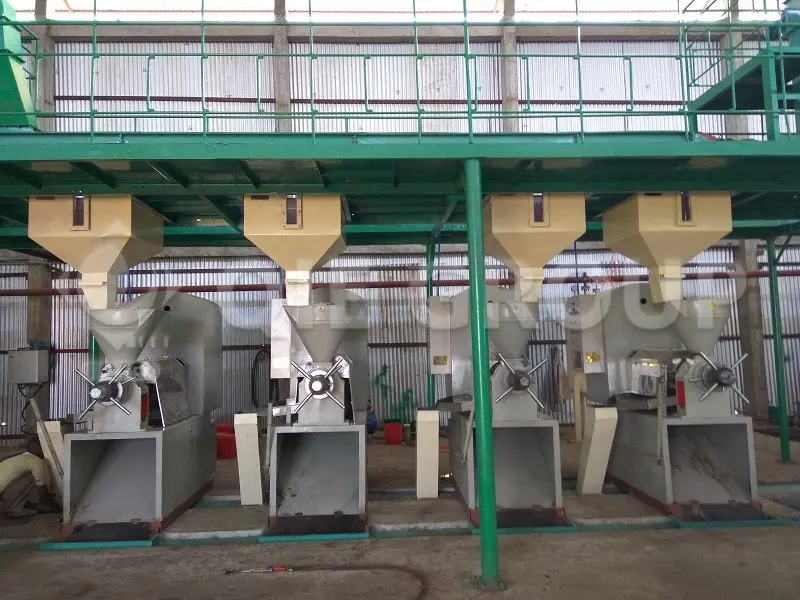
| Oil Pressing | Screw oil press | Mechanically extract oil from palm kernels |
| Filtration | Oil filter or clarification equipment | Remove suspended solids from crude oil |
| Storage | Oil storage tanks, pumps and pipelines | Store and transfer crude palm kernel oil |
The exact equipment combination should be selected according to the raw material condition, production capacity, oil recovery target, and final product requirements.
Cleaning is the first step in palm kernel processing. Raw palm kernels may contain stones, dust, metal particles, fiber, shell fragments, and other impurities. Common cleaning equipment includes:
✓ Effective cleaning protects downstream equipment and helps maintain stable processing conditions.
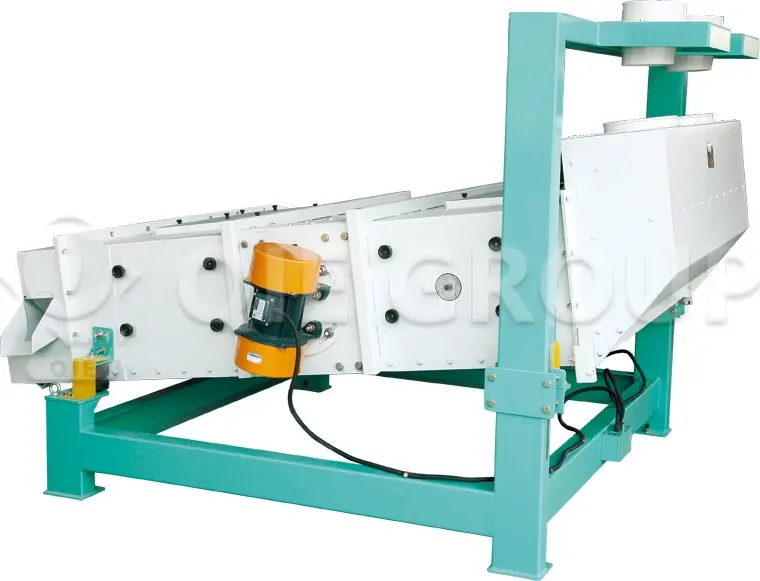
If the raw material still contains shells, cracking and shell/kernel separation are important parts of the pretreatment section. A palm kernel cracker is used to break the hard shell and release the kernel. After cracking, separation equipment removes shell fragments from the kernels.
Note: This stage should not be treated as mandatory for every project. If the purchased raw material has already been properly separated and supplied as clean palm kernels, this equipment may not be required. The configuration should therefore be based on the actual condition of the raw material entering the plant.
Before mechanical pressing, palm kernels may require conditioning to achieve suitable moisture and temperature conditions. A conditioning system can include:
Proper conditioning can improve the stability of pressing and help the screw press operate under suitable processing conditions. The exact conditioning parameters should be determined according to the characteristics of the palm kernels and the selected pressing equipment rather than using a fixed temperature or moisture value for every project.
The screw oil press is the core equipment for mechanical palm kernel oil extraction. The prepared kernels enter the pressing chamber, where mechanical pressure gradually separates the oil from the solid material. The resulting products are crude palm kernel oil and Press cake.
Mechanical pressing is widely used because it provides continuous operation and can be integrated into different production capacities. For commercial projects, the selection of the screw press should consider:
The equipment configuration should be determined through process engineering rather than simply selecting a press based on its nominal capacity.
Crude palm kernel oil discharged from the screw press normally contains suspended solids and fine particles. Filtration or clarification equipment is therefore used before storage or further processing.
Purpose: Improve physical cleanliness for storage or subsequent refining.
After filtration, crude palm kernel oil can be transferred to storage tanks.
Designed according to production capacity, storage time, temperature, and layout.
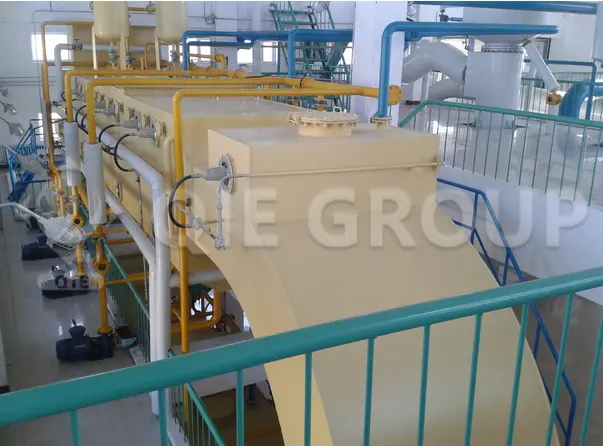
Mechanical pressing is not the only option for palm kernel oil extraction. For projects with higher oil recovery requirements, prepressing followed by solvent extraction can be considered. In this configuration, the palm kernels are first mechanically pressed. The resulting press cake still contains a certain amount of residual oil, which can then be processed through solvent extraction.
| Aspect | Mechanical Pressing | Prepressing + Solvent Extraction |
|---|---|---|
| Process | Mechanical oil extraction | Mechanical pressing followed by solvent extraction |
| Equipment complexity | Relatively simple | More complex |
| Oil recovery | Depends on raw material and press conditions | Can achieve higher overall oil recovery |
| Investment | Generally lower | Generally higher |
| Operation | Easier to operate | Requires more process control |
| Safety requirements | Relatively straightforward | Requires strict solvent handling and safety systems |
| Suitable applications | Many small and medium-scale projects | Projects prioritizing higher oil recovery |
Solvent extraction is not automatically required for every palm kernel oil plant. The appropriate process route should be evaluated according to processing capacity, kernel oil content, target residual oil, investment budget, energy availability, environmental and safety requirements, and local regulations. For larger projects or applications where maximizing oil recovery is a major priority, prepressing combined with solvent extraction may be worth evaluating.
The crude palm kernel oil obtained after pressing or extraction may be suitable for some industrial applications. However, if the objective is to produce refined edible palm kernel oil, additional edible oil refining equipment is normally required.
Depending on the required product specifications and application, additional processes such as dewaxing or winterization may also be considered.
Not every palm kernel oil project requires the same refining configuration. The final product standard and application should be confirmed before determining the refining process.
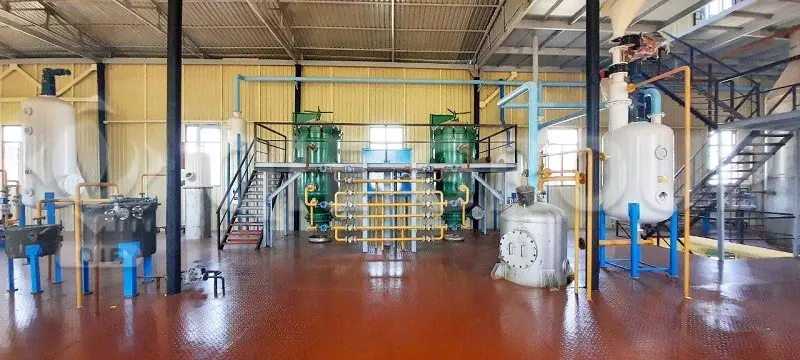
There is no single equipment configuration suitable for every palm kernel oil project.
Focuses on a relatively simple mechanical pressing line consisting of:
Suitable when the project prioritizes relatively simple operation and moderate investment.
As processing capacity increases, the plant may require:
The final configuration should be determined through engineering calculations and process design rather than applying a fixed equipment list to every capacity.
When selecting palm kernel oil processing equipment, investors should consider at least six factors:
The cost of a palm kernel oil production plant cannot be determined from equipment prices alone. Major cost factors include:
For this reason, suppliers normally need project-specific information before preparing an accurate quotation.
A palm kernel oil production line should be designed as an integrated system rather than as a collection of individual machines. QIE GROUP can provide process design and equipment configuration covering different stages of palm kernel oil processing, including:
The final solution can be adapted to the raw material condition, processing capacity, target oil recovery, final product specifications, plant utilities, and local project requirements. For a complete project, engineering support can also cover equipment layout, process integration, auxiliary systems, installation guidance, and commissioning support according to the project scope.
The core equipment normally includes cleaning equipment, cracking and shell/kernel separation equipment when required, conditioning equipment, screw oil presses, filtration equipment, and oil storage tanks. Larger or higher-recovery projects may also require solvent extraction and refining systems.
No. It depends on the raw material. If the material enters the plant as whole palm nuts, cracking and shell/kernel separation are normally required. If the supplier provides already-separated palm kernels, these machines may not be necessary.
Neither process is universally better. Mechanical pressing generally has a simpler process and lower equipment complexity, while prepressing combined with solvent extraction can be considered when higher overall oil recovery is important. The choice depends on capacity, oil recovery targets, investment, utilities, safety, and environmental requirements.
If the target product is refined edible palm kernel oil, a suitable refining process is normally required. If the crude oil is intended for certain industrial applications, the downstream processing requirements may be different.
Palm kernel press cake can be used as a feed or further processed to recover additional oil, depending on its composition, quality, local regulations, and the project's intended application.
To prepare a project-specific equipment configuration and quotation, provide the raw material condition, required processing capacity, target product, country, and whether you need crude or refined palm kernel oil. These details allow the process route, equipment configuration, and engineering scope to be evaluated more accurately.
The equipment required for palm kernel oil production depends mainly on the raw material condition, processing capacity, extraction method, oil recovery target, and final product requirements. A basic mechanical pressing plant may include cleaning, cracking/separation when required, conditioning, screw pressing, filtration, and storage. For projects requiring higher oil recovery, prepressing and solvent extraction can be added. If refined edible palm kernel oil is required, a suitable refining section should also be included.
If you are planning a palm kernel oil processing plant, provide your raw material type, TPD capacity, target product, and project country. We can help determine the appropriate process route, equipment configuration, and project scope for your application.
Get a Customized Project Quote rice bran oil processing rice bran oil production rice bran oil plant oil extraction turnkey solution
Coconut oil production line Dried coconut meat oil solvent extraction coconut oil refinery Vegetable oil machinery Coconut oil processing plant
Rapeseed Oil Processing Rapeseed Oil Pressing Process Rapeseed Oil Extraction Rapeseed Oil Refining Equipment Rapeseed Oil Processing Plant
rice bran oil solvent extraction equipment rice bran oil extraction plant rice bran oil processing plant rice bran oil production line rice bran oil extraction machine rice bran oil solvent extraction process,
palm oil production line palm oil pressing equipment palm fruit processing palm kernel oil extraction palm oil refining
rice bran oil processing rice bran oil production rice bran oil plant oil extraction turnkey solution
Coconut oil production line Dried coconut meat oil solvent extraction coconut oil refinery Vegetable oil machinery Coconut oil processing plant
Rapeseed Oil Processing Rapeseed Oil Pressing Process Rapeseed Oil Extraction Rapeseed Oil Refining Equipment Rapeseed Oil Processing Plant
rice bran oil solvent extraction equipment rice bran oil extraction plant rice bran oil processing plant rice bran oil production line rice bran oil extraction machine rice bran oil solvent extraction process,
palm oil production line palm oil pressing equipment palm fruit processing palm kernel oil extraction palm oil refining




.png?x-oss-process=image/resize,h_100,m_lfit/format,webp)
.png?x-oss-process=image/resize,h_100,m_lfit/format,webp)
.png?x-oss-process=image/resize,h_100,m_lfit/format,webp)



.webp?x-oss-process=image/resize,h_800,m_lfit/format,webp)


