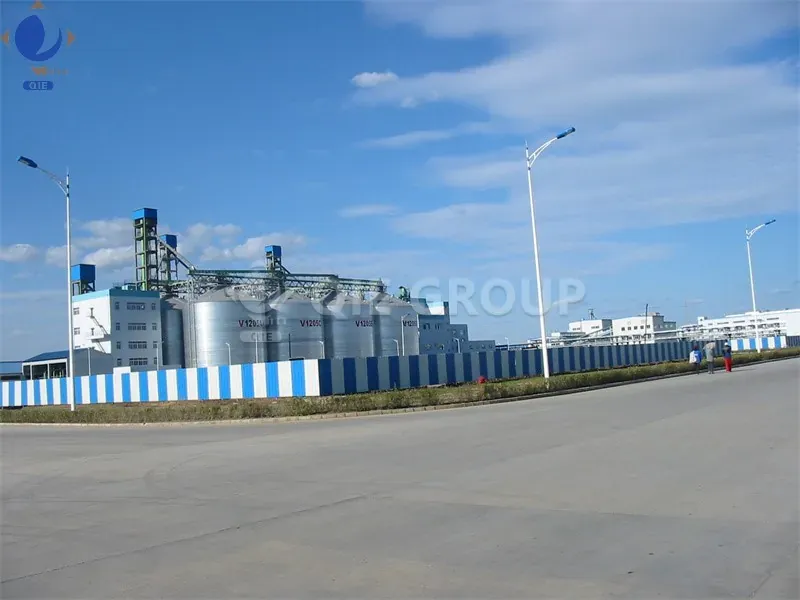
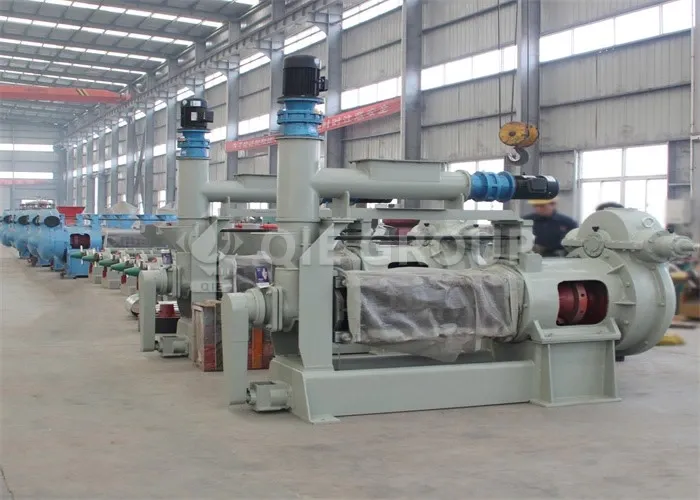
In the global vegetable oil market, Palm Kernel Oil (PKO) stands out due to its high lauric acid content, making it indispensable for oleochemicals, specialty fats, and personal care products. However, with the increasing volatility of raw material prices, the extraction yield has shifted from a "technical metric" to the core determinant of project bankability.
For a medium-to-large scale crushing plant, a 1% increase in oil yield translates to:
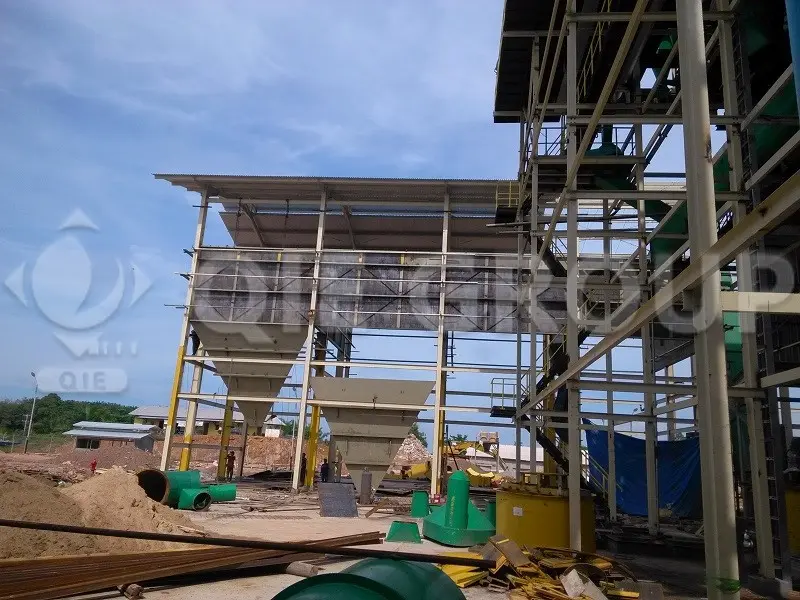
From an engineering perspective, PKO extraction is a highly integrated continuous system. Any deviation in a single stage can amplify downstream, resulting in reduced oil yield, higher energy consumption, or unstable operation.
Industry Pain Point: High shell content in the kernel feed. Shells contain no oil and act as sponges, absorbing oil during pressing. Every 1% of shell increase results in roughly a 0.5% loss in oil yield and accelerates equipment wear.
QIE Solution: We utilize multi-stage air classification and circulatory vibrating screens to ensure shell content < 5% and impurities < 0.5% before pressing.
Engineering Insight: Finer is not always better. Excessive fines lead to "slippage" in the press or "channeling" during solvent extraction.
Core Parameter: Using specialized roller crushers to break kernels into 2–4 pieces (size: 2–4 mm), minimizing dust while maximizing surface area for oil release.
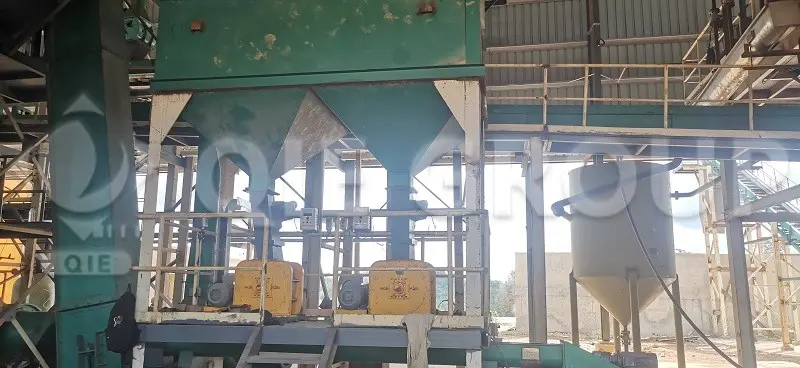
Moisture Control: Strictly maintained at 6.5% – 7.0% for optimal pressing plasticity.
Temperature Gradient: Utilizing multi-layer vertical conditioners with a residence time of ≥ 30 minutes to reduce oil viscosity and rupture cell walls effectively.
Based on years of design, commissioning, and operational feedback, QIE has established a mature, replicable, high-yield process pathway.
The stability of this section directly affects subsequent pressing and solvent extraction efficiency.
Depending on plant scale and investment strategy, two paths are typically applied:
(Small/Medium < 50 TPD): High-efficiency Double-Stage Pressing, achieving cake residual oil of 6% – 8%.
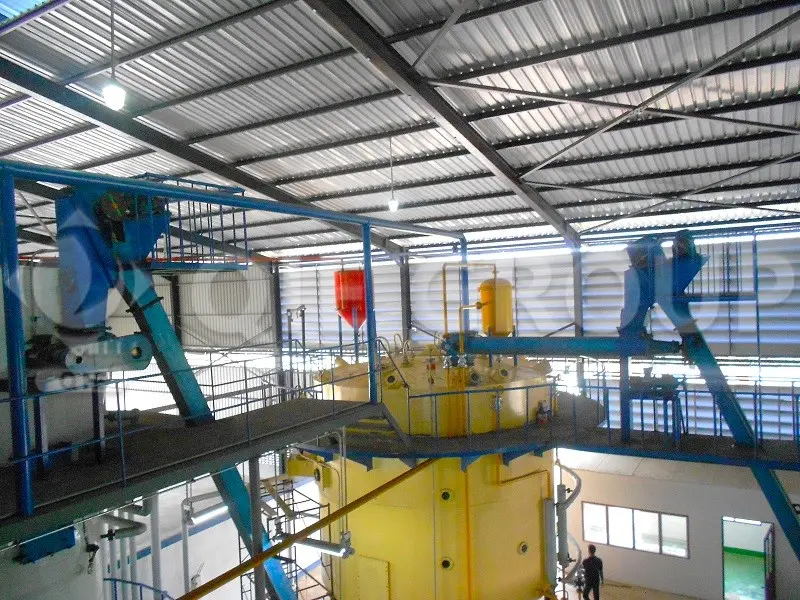
(Large-Scale > 50 TPD): Pre-pressing + Solvent Extraction, reducing meal residual oil to < 1.0%.
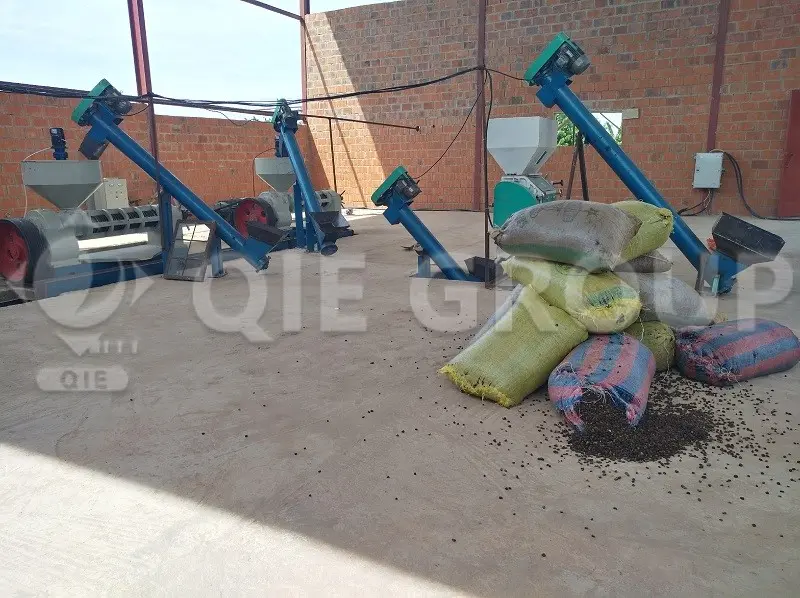
Efficient extraction relies not on excess solvent, but on open, permeable cake structure.
Difference Between Palm Oil and Palm Kernel Oil Processing
It is critical to understand that: Palm Kernel Oil Processing ≠ Palm Oil Processing
| Feature | Palm Oil | Palm Kernel Oil |
|---|---|---|
| Raw material | Fruit pulp | Kernel |
| Oil release | Easy | Dense |
| Process focus | Gentle treatment | Crushing + Conditioning |
| Yield sensitivity | Fruit freshness | Shell content, particle size, moisture |
PKO requires more engineering experience, not just better machinery. 🔗 (Complete palm oil production line: FFB to refined palm oil)
Core Equipment and Technical Parameters
| Key Metric | Conventional Solution | QIE High-Efficiency Solution | Customer Value |
|---|---|---|---|
| PKO Overall Oil Yield | 42%–44% | 46%–48.5% | Significantly increased output |
| Cake Residual Oil | 8%–10% | <1.0% | Maximum oil recovery |
| Solvent Loss | >3.0 kg/t | <2.0 kg/t | Lower operational cost |
| Wear Parts Life | 3–5 months | 8–12 months | Reduced downtime |
| Control | Manual | PLC/SCADA | Stability, fewer errors |
Case Study: A 200 TPD PKO project in Southeast Asia.
Diagnosis: The plant initially faced high residual oil in the meal. QIE engineers identified that improper moisture during pre-pressing caused a "compacted" cake structure, preventing solvent penetration.
The Fix:
1. Adjusted steam injection in the conditioner to raise moisture to 6.8%.
2. Optimized the solvent spray frequency and pump pressure.
Result: Residual oil dropped from 1.35% to 0.85%, generating an additional $220,000 USD in annual profit for the client.
❌ Pursuing extremely low residual oil → shortened equipment life
❌ Overheating → higher refining cost
❌ Ignoring raw material variability → unstable long-term yield
High oil yield is always the result of system balance, not a single extreme point.
Q: Why does PKO pressing cause high wear?
A: Kernel shells are hard. QIE applies ultra-high-speed tungsten carbide coating on screws and cages, improving wear resistance 3x vs standard manganese steel.
Q: What scale is suitable for solvent extraction?
A: Typically ≥50–100 TPD. Scale is needed to justify investment in complex solvent recovery systems.
Q: What is the theoretical oil content of palm kernel?
A: 45%–50%. The engineering target is to approach this limit safely and efficiently.
Would you like to evaluate the optimization potential of your current plant?
QIE Group provides:
Contact QIE Group now for a customized solution for your project
 Пресс для масла из зародышей кукурузы Линия по производству кукурузного масла Оборудование для переработки кукурузного масла Оборудование для рафинации кукурузного масла Завод по переработке кукурузного масла Завод по производству кукурузного масла
Линия по производству экстракции соевого масла Полностью автоматическое оборудование для переработки нефти Процесс выщелачивания растворителем Оборудование для рафинации пищевого масла 30 тонн соевого масла производится в день
Оборудование для предварительной обработки масла из рисовых отрубей Линия по производству экспандирования и экстракции рисовых отрубей Оборудование для рафинации масла из рисовых отрубей Проект «под ключ» линии по производству масла из рисовых отрубей План конфигурации линии по производству мелкого рисового масла Цена оборудования для производства масла из рисовых отрубей мощностью 50 тонн в день
предварительная обработка сои Линия по производству соевого масла завод по переработке соевого масла эффективность экстракции растворителем Оборудование для предварительной обработки масличных семян
Интеллектуальная линия по производству пальмового масла Технология переработки плодов пальмы Высокий выход масла Автоматизированная система прессования Переработка побочных продуктов и добавленная стоимость
Пресс для масла из зародышей кукурузы Линия по производству кукурузного масла Оборудование для переработки кукурузного масла Оборудование для рафинации кукурузного масла Завод по переработке кукурузного масла Завод по производству кукурузного масла
Линия по производству экстракции соевого масла Полностью автоматическое оборудование для переработки нефти Процесс выщелачивания растворителем Оборудование для рафинации пищевого масла 30 тонн соевого масла производится в день
Оборудование для предварительной обработки масла из рисовых отрубей Линия по производству экспандирования и экстракции рисовых отрубей Оборудование для рафинации масла из рисовых отрубей Проект «под ключ» линии по производству масла из рисовых отрубей План конфигурации линии по производству мелкого рисового масла Цена оборудования для производства масла из рисовых отрубей мощностью 50 тонн в день
предварительная обработка сои Линия по производству соевого масла завод по переработке соевого масла эффективность экстракции растворителем Оборудование для предварительной обработки масличных семян
Интеллектуальная линия по производству пальмового масла Технология переработки плодов пальмы Высокий выход масла Автоматизированная система прессования Переработка побочных продуктов и добавленная стоимость



.png?x-oss-process=image/resize,h_100,m_lfit/format,webp)
.png?x-oss-process=image/resize,h_100,m_lfit/format,webp)
.png?x-oss-process=image/resize,h_100,m_lfit/format,webp)