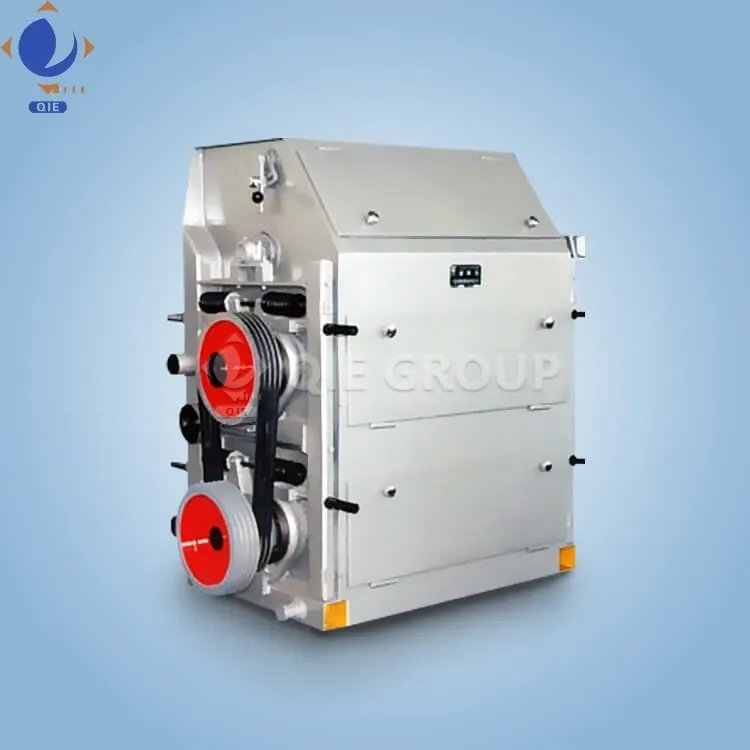
The global palm oil market is experiencing sustained and stable growth. Palm oil is not only a leading edible oil feedstock globally, but it is also widely used in the manufacture of biofuels, chemical products, and daily consumer goods. With increasing global emphasis on sustainable and green energy, the demand for palm oil continues to rise, leading to a stronger market demand for efficient and energy-saving palm oil production lines.
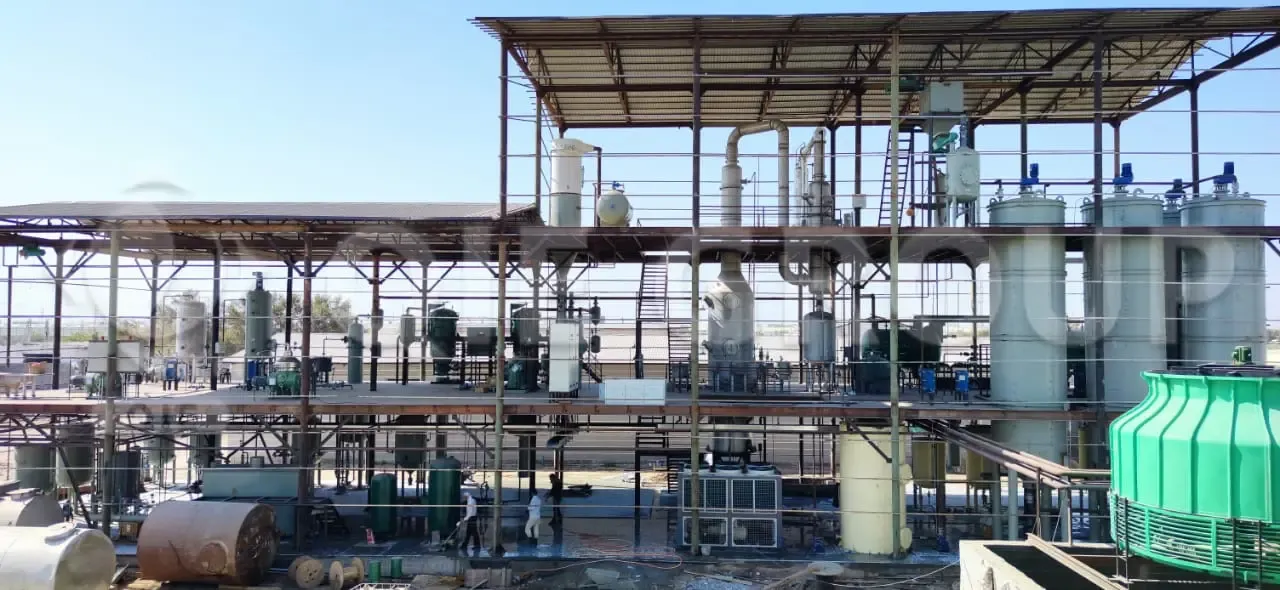
So, how can a company stand out in fierce market competition? The rationality of equipment configuration is crucial. It directly affects oil yield, energy consumption, and the quality of finished oil, thus determining the company's profitability and market competitiveness. An efficient palm oil processing plant not only needs advanced palm oil processing equipment but also intelligent and energy-saving designs to reduce production costs, improve quality, and enhance environmental performance.
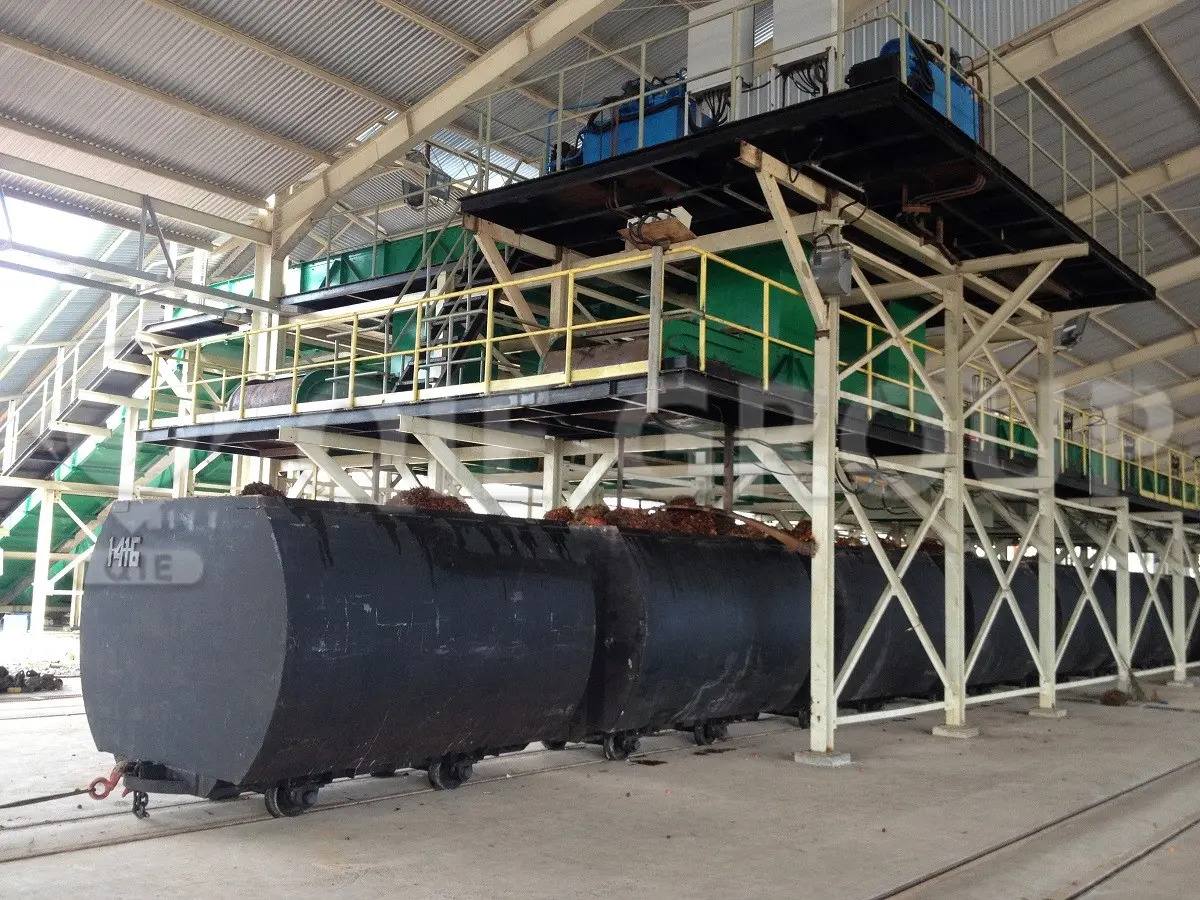
A complete palm oil production line generally includes the following key stages:
Each step has its specific technological objectives and control priorities. Good equipment matching and process design are the cornerstones of achieving efficient production.
The core task of the sterilization stage is to break down the cell membrane structure of palm fruit pulp with hot steam, making it easier for oils to be released. This equipment requires a stable temperature control of around 135℃ and a steam pressure of 150~200 kPa, while adopting an energy-saving fully enclosed steam circulation system to minimize energy consumption.
QIE Group's sterilization equipment is equipped with an intelligent temperature control module, supporting remote monitoring and adjustment. The sterilization effect is uniform across each batch, providing a high-efficiency foundation for subsequent pressing processes. Imagine operators in the production workshop monitoring the temperature and pressure of each steam furnace in real time via a control panel to ensure stable sterilization – this scenario significantly enhances production reliability.
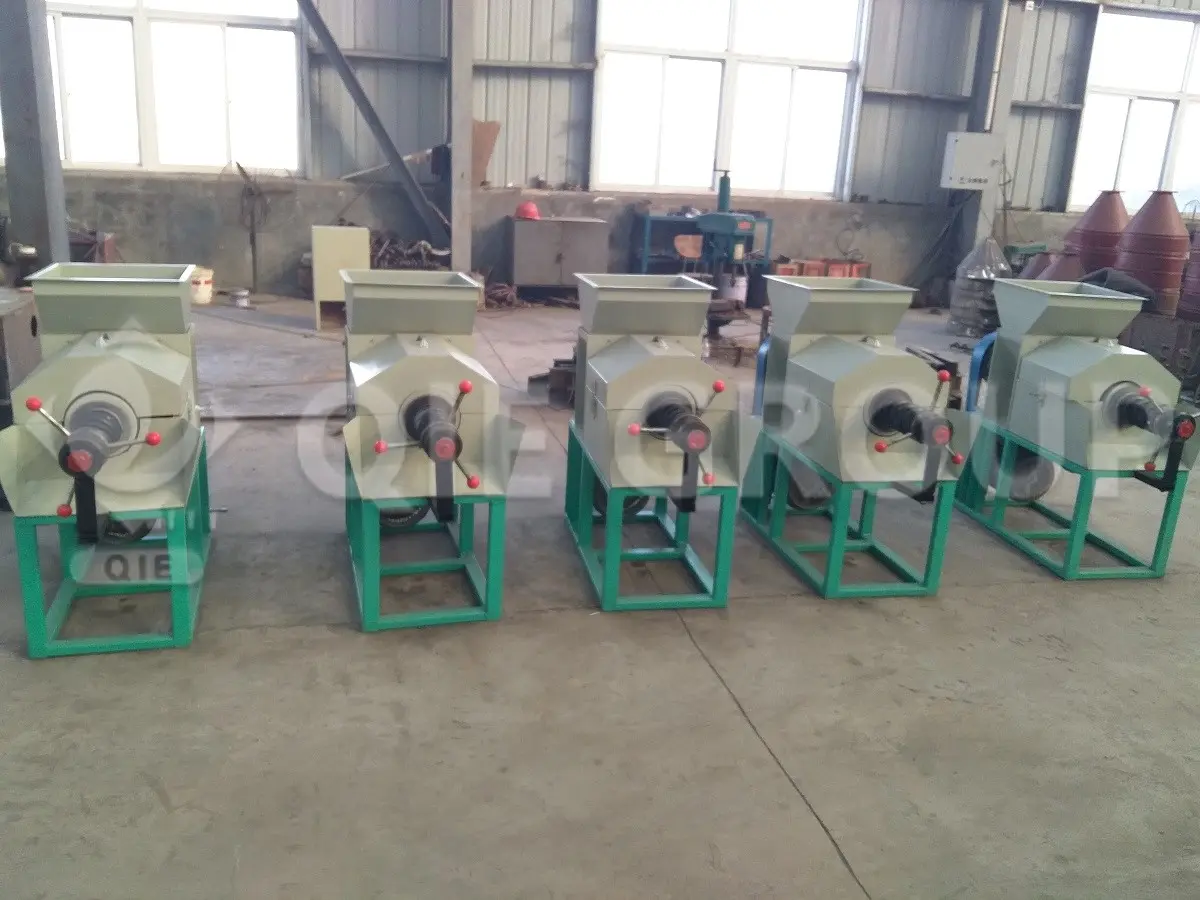
The palm oil press is the core equipment in a palm oil production line, and its performance directly determines the oil yield. 👉 Learn about the twin-screw palm fruit oil press to increase oil yield .
QIE Group employs a screw press principle, utilizing an adjustable screw pitch design to flexibly adjust the pressing force on the pulp, reducing residual oil content to below 6% compared to traditional machinery. Furthermore, wear-resistant screw shaft materials and an automatic slag removal system ensure long-term, high-efficiency machine operation, reducing maintenance cycles.
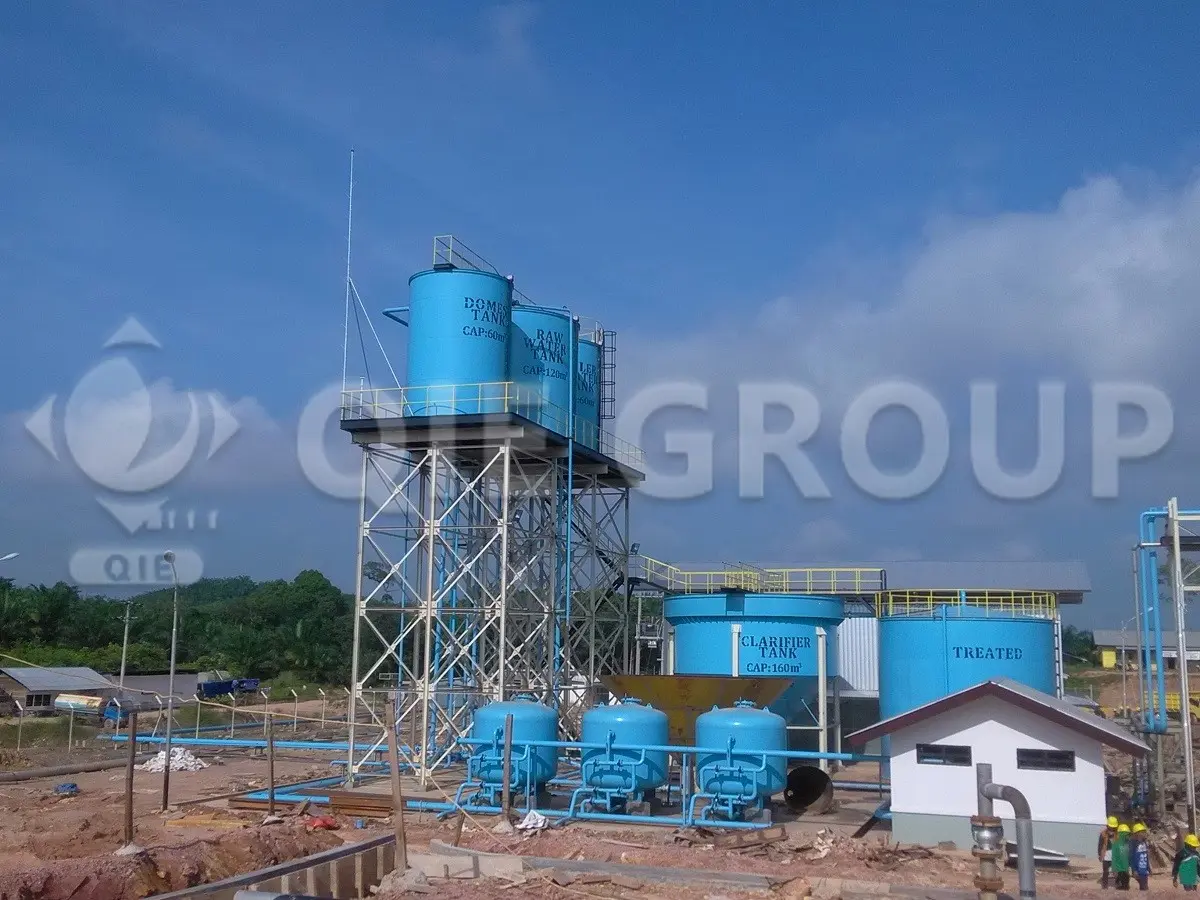
The core task of the clarification stage is to remove sludge and moisture to ensure the purification of crude oil.
QIE Group's clarification system employs multi-stage filtration and automatic sedimentation design, combined with a remote automated control system, to ensure stable oil quality while optimizing energy consumption. The system is equipped with intelligent sensors to monitor oil purity in real time, enhancing process controllability.
Refining is key to improving the quality of palm oil, including degumming, deacidification, decolorization, deodorization, and crystallization fractionation.
QIE Group's refining equipment supports both physical and chemical processes, meeting the diverse needs of users of different scales. Equipment features include a high-efficiency deodorization tower design, precise temperature control in the dewaxing equipment, winterization equipment to ensure the stability of oil products in winter, and all equipment is equipped with comprehensive safety and environmental standards.
The combined effect of these devices ensures that palm oil meets international quality standards and is suitable for use in various fields such as edible oil, industrial oil, and chemical raw materials.
Production efficiency depends not only on the equipment itself, but is also affected by many other factors:
| factor | Impact and Optimization Suggestions |
|---|---|
| Moisture content of raw materials | Excessive moisture content affects the efficiency of oil separation. It is recommended to strictly control the water content within the range of 12%-15% to ensure sufficient sterilization. |
| Equipment compatibility | The capacity of each piece of equipment needs to be reasonably matched to avoid bottlenecks, ensure smooth production processes, and improve utilization rates. |
| Steam utilization rate | Optimize steam recovery and pipeline insulation in processes such as sterilization and fermentation to reduce energy waste. |
| level of automation | By introducing intelligent monitoring and data analysis, predictive maintenance and process parameter optimization can be achieved, thereby improving stability and oil yield. |
Case Study : In a palm oil mill project in Southeast Asia, we upgraded the entire production line to full automation and optimized the fermentation parameters, resulting in a 12% increase in overall production capacity, an approximately 1.3 percentage point increase in oil yield, and a 10% reduction in energy consumption.
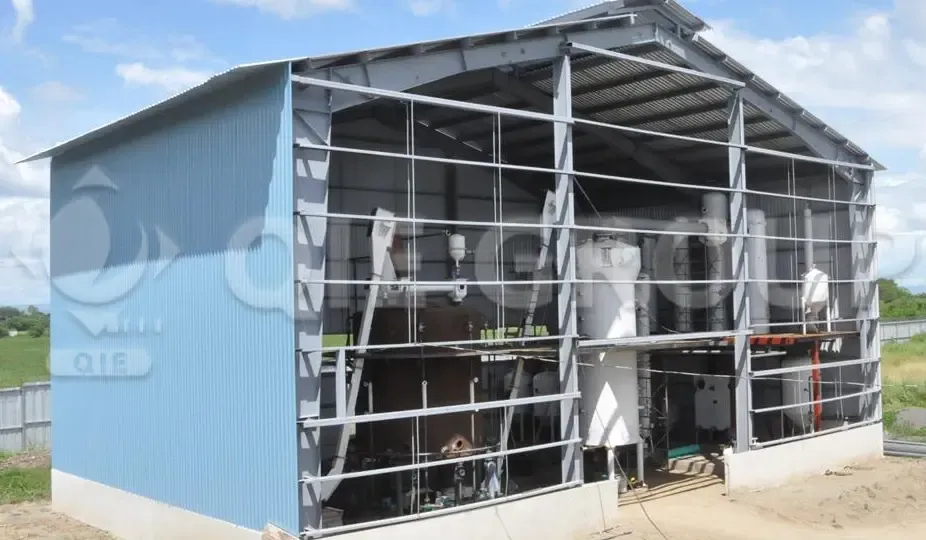
With over 40 years of experience in the palm oil industry, the QIE Group not only provides individual equipment but also focuses on the design and delivery of turnkey projects for entire plants. Our clients are located worldwide, particularly in Southeast Asia, Africa, and South America, where we have established a comprehensive installation and after-sales service system to ensure the long-term, efficient, and stable operation of our equipment.
With a professional technical team and advanced energy-saving automation technology, we help our customers achieve high oil yield, low energy consumption, and high-quality product standards, and are committed to promoting the palm oil industry towards intelligent and green upgrading.
 Mustard seed oil production line Mustard oil press Mustard oil extraction machine Mustard oil refining equipment Small mustard seed oil plant equipment
rapeseed oil processing plant rapeseed oil production line edible oil equipment rapeseed oil refining equipment rapeseed oil press machine
canola oil production line canola oil press edible oil plant oil refining equipment canola oil processing equipment
Linseed oil production line Turnkey service Small and Medium Enterprises Production line construction Stable and efficient operation
5 tons/day sunflower oil refining equipment Small sunflower oil refining production line Mini Edible Oil Refinery Sunflower oil degumming and deacidification process Comparison between physical refining and chemical refining Sunflower Oil Refinery Investment Cost
Mustard seed oil production line Mustard oil press Mustard oil extraction machine Mustard oil refining equipment Small mustard seed oil plant equipment
rapeseed oil processing plant rapeseed oil production line edible oil equipment rapeseed oil refining equipment rapeseed oil press machine
canola oil production line canola oil press edible oil plant oil refining equipment canola oil processing equipment
Linseed oil production line Turnkey service Small and Medium Enterprises Production line construction Stable and efficient operation
5 tons/day sunflower oil refining equipment Small sunflower oil refining production line Mini Edible Oil Refinery Sunflower oil degumming and deacidification process Comparison between physical refining and chemical refining Sunflower Oil Refinery Investment Cost




.png?x-oss-process=image/resize,h_100,m_lfit/format,webp)
.png?x-oss-process=image/resize,h_100,m_lfit/format,webp)
.png?x-oss-process=image/resize,h_100,m_lfit/format,webp)