
In today’s global fats and oils processing sector, crushers and refiners are facing an unprecedented margin squeeze. Volatile raw material costs, surging energy prices, and stringent consumer demands regarding oil color, flavor, and food safety (such as the strict mitigation of trans fatty acids) are forcing plant managers to completely rethink line-wide operational efficiency.
Leveraging over 40 years of international EPC experience, QIE Group breaks this bottleneck by deeply integrating intelligent automation, energy-saving designs, and equipment optimization to deliver high-ROI, from concept to production turnkey processing solutions.
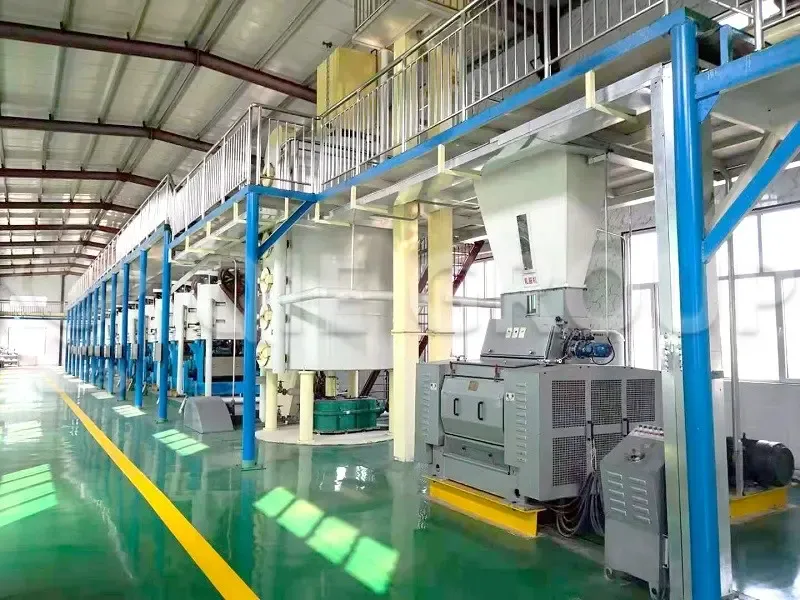
Edible oil processing is a continuous mass-transfer process. Any impurities allowed into the downstream stages exponentially accelerate the mechanical wear of flaking mills and screw presses, while severely contaminating the crude oil quality.
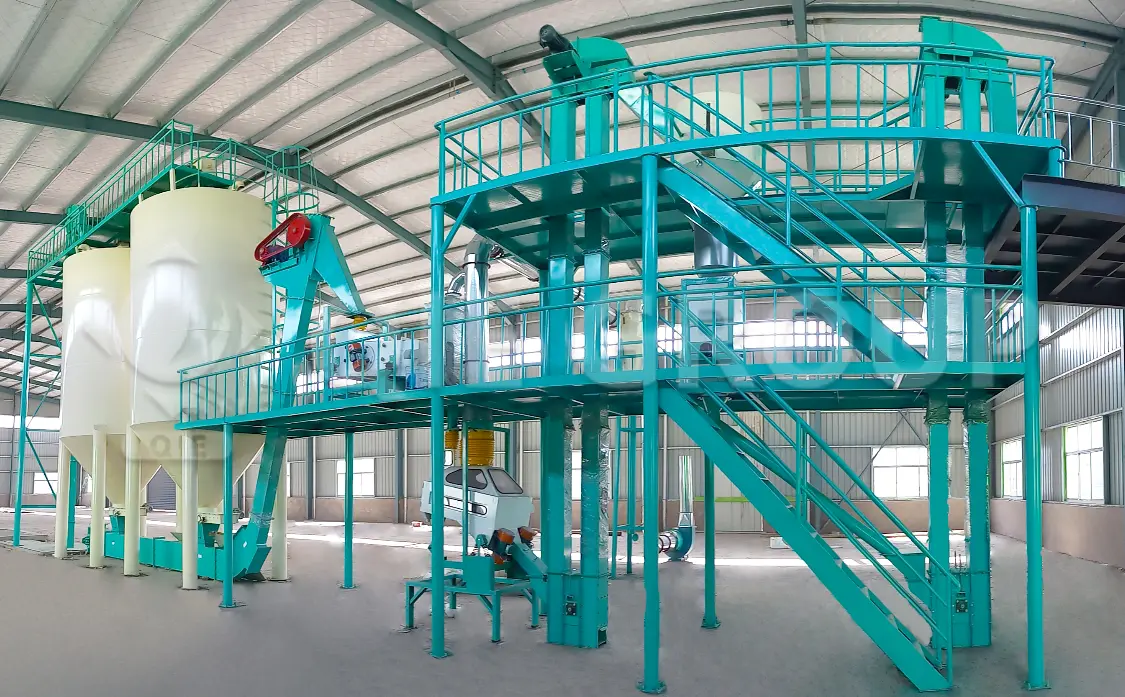
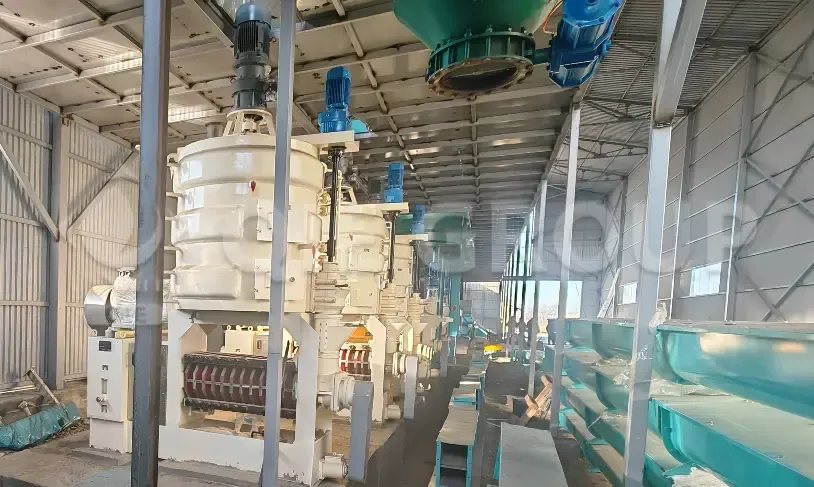
Extracting every single drop of oil while holding hexane/solvent losses to an absolute minimum is the ultimate test of a plant's process engineering. QIE Group’s coupled pre-pressing and solvent extraction process strikes the ideal balance between processing flexibility and Operating Expenses (OPEX).
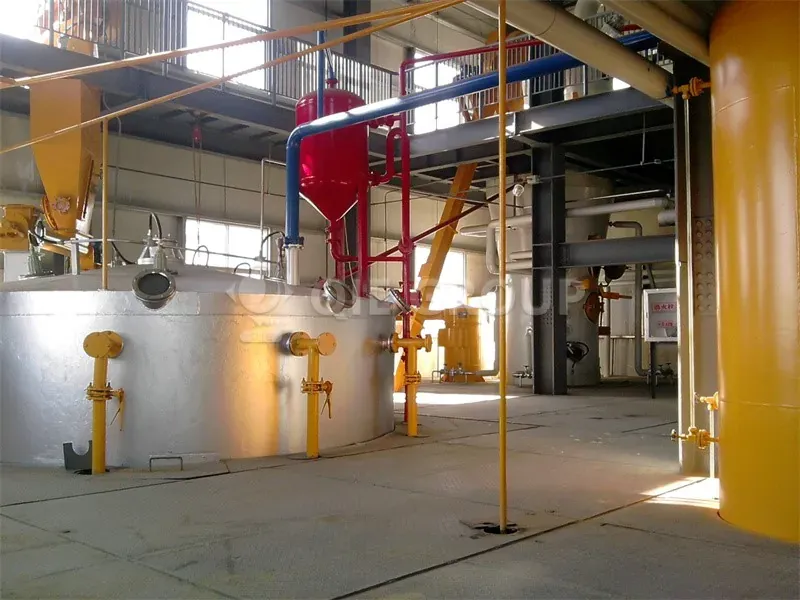
Inside the extraction plant, traditional designs often suffer from the "channeling effect" due to uneven material beds, leaving large pockets of seed un-extracted. Our engineering team resolves this by optimizing the extractor bed-depth geometry paired with a multi-stage counter-current solvent washing loop. This builds a highly efficient mass-transfer model that reliably suppresses residual oil in the meal to ≤ 0.5%. For a mid-to-large-scale processing plant, this fractional yield recovery translates directly into millions of dollars in net annual profit.
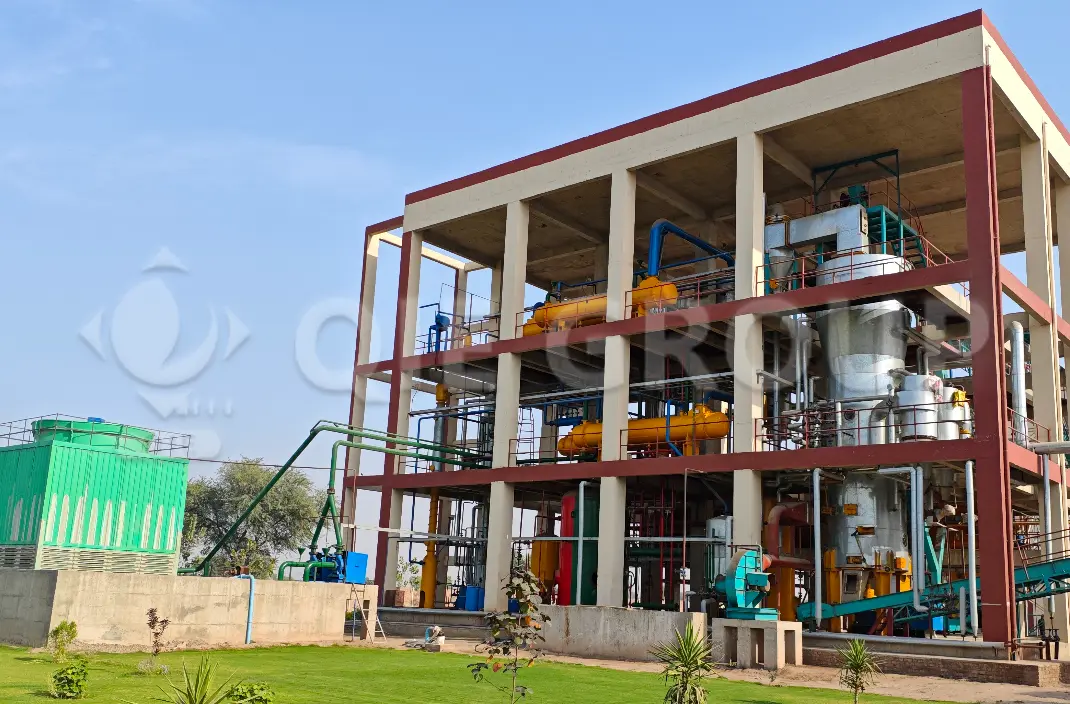
The refinery determines the final market premium of the product. Traditional refining setups often suffer from high steam consumption and excessive neutral oil losses during neutralizing. QIE Group’s continuous bleaching and deodorizing refining system revolutionizes this stage through advanced thermodynamic and barometric controls:
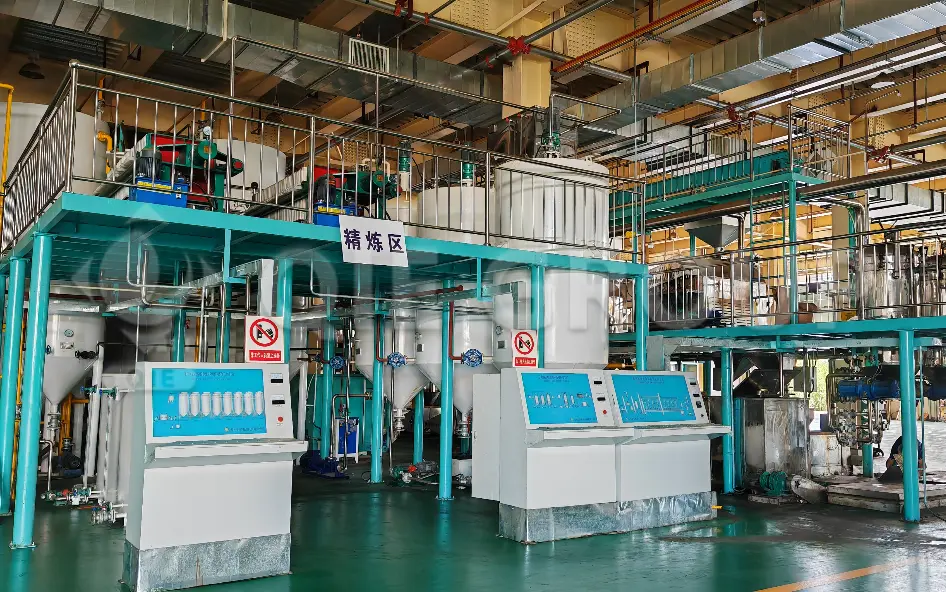
Traditional oil mills rely heavily on operator guesswork and legacy habits, which often leads to delayed process adjustments and out-of-spec product batches. QIE Group deploys a fully integrated PLC + SCADA automation suite to digitize the entire plant floor:
In industrial oilseed engineering, there is no such thing as a one-size-fits-all blueprint. Soybeans demand high-throughput continuous extraction; peanuts require low-thermal processing to preserve premium aroma; sunflower seeds require precise winterization to remove waxes; and crude palm oil requires immediate FFA control.
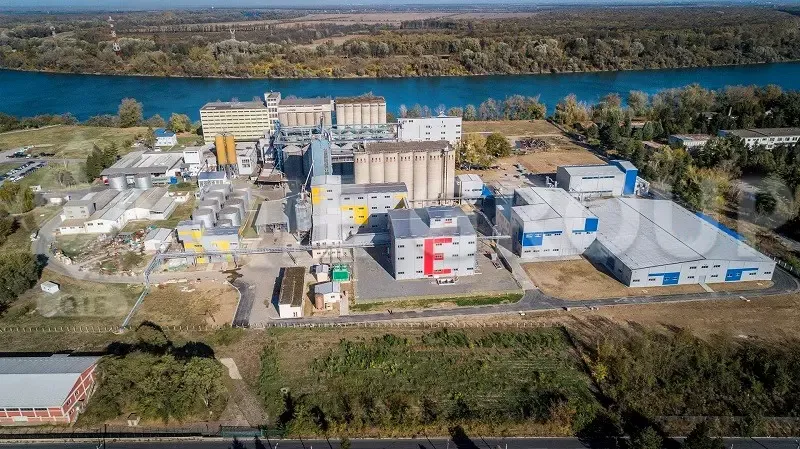
Backed by an extensive global footprint of turnkey EPC projects, QIE Group’s engineering designs offer exceptional modular flexibility. Whether configuring a 50 TPD startup facility or engineering a massive 2,000 TPD multi-seed integrated crushing complex, we adapts its layouts to match localized climates, seed qualities, and local fuel/energy structures based on a massive historical feedstock database.
Investing in an edible oil processing line means buying a sustainable, highly efficient cash-flow engine.
| Performance Indicators | Fragmented/Legacy Lines | QIE Integrated Solutions | Direct Financial Impact |
|---|---|---|---|
| Meal Residual Oil Rate | 1.0% - 1.5% | ≤ 0.5% | Maximizes yield, extracting peak value from every ton of raw material. |
| Utility Energy Profile | Baseline consumption (100%) | Reduced by 10% - 15% | Builds a permanent cost defense against volatile global energy prices. |
| Line-Wide Shift Staffing | Requires 8 - 12 operators/shift | 2 - 3 operators (Control Room) | De-risks operations from labor dependencies; slashes long-term OPEX. |
Whether you are planning a greenfield edible oil plant or upgrading an existing brownfield crushing workshop for better energy efficiency, contact QIE Group’s Engineering Board for a tailored engineering valuation.
 turnkey palm oil plant palm kernel oil plant feasibility study process design QIE Group
Oil refinery energy conservation and consumption reduction Oil and fat processing solutions Intelligent upgrading of oil plants Edible oil equipment renovation Oil refinery efficiency improvement and quality enhancement
Coconut oil production process Pressed coconut oil Coconut oil yield Coconut oil production line Coconut oil processing plant
Palm kernel oil processing PKO processing high-yield palm kernel oil screw press solvent extraction turnkey oil processing
Flaxseed oil processing line oil preprocessing section vegetable oil machinery flaxseed oil processing plant
turnkey palm oil plant palm kernel oil plant feasibility study process design QIE Group
Oil refinery energy conservation and consumption reduction Oil and fat processing solutions Intelligent upgrading of oil plants Edible oil equipment renovation Oil refinery efficiency improvement and quality enhancement
Coconut oil production process Pressed coconut oil Coconut oil yield Coconut oil production line Coconut oil processing plant
Palm kernel oil processing PKO processing high-yield palm kernel oil screw press solvent extraction turnkey oil processing
Flaxseed oil processing line oil preprocessing section vegetable oil machinery flaxseed oil processing plant





.png?x-oss-process=image/resize,h_100,m_lfit/format,webp)
.png?x-oss-process=image/resize,h_100,m_lfit/format,webp)
.png?x-oss-process=image/resize,h_100,m_lfit/format,webp)


