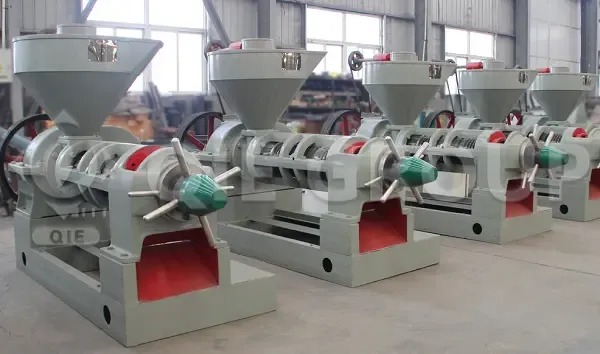
How much oil can be obtained from sunflower seeds depends mainly on the oil content of the seeds and the actual oil recovery rate of the processing system.
For example, if sunflower seeds contain 40% oil, 1 ton of seeds theoretically contains about 400 kg of oil. However, the actual crude oil recovered will be lower because some oil remains in the press cake or meal and some processing losses are unavoidable.
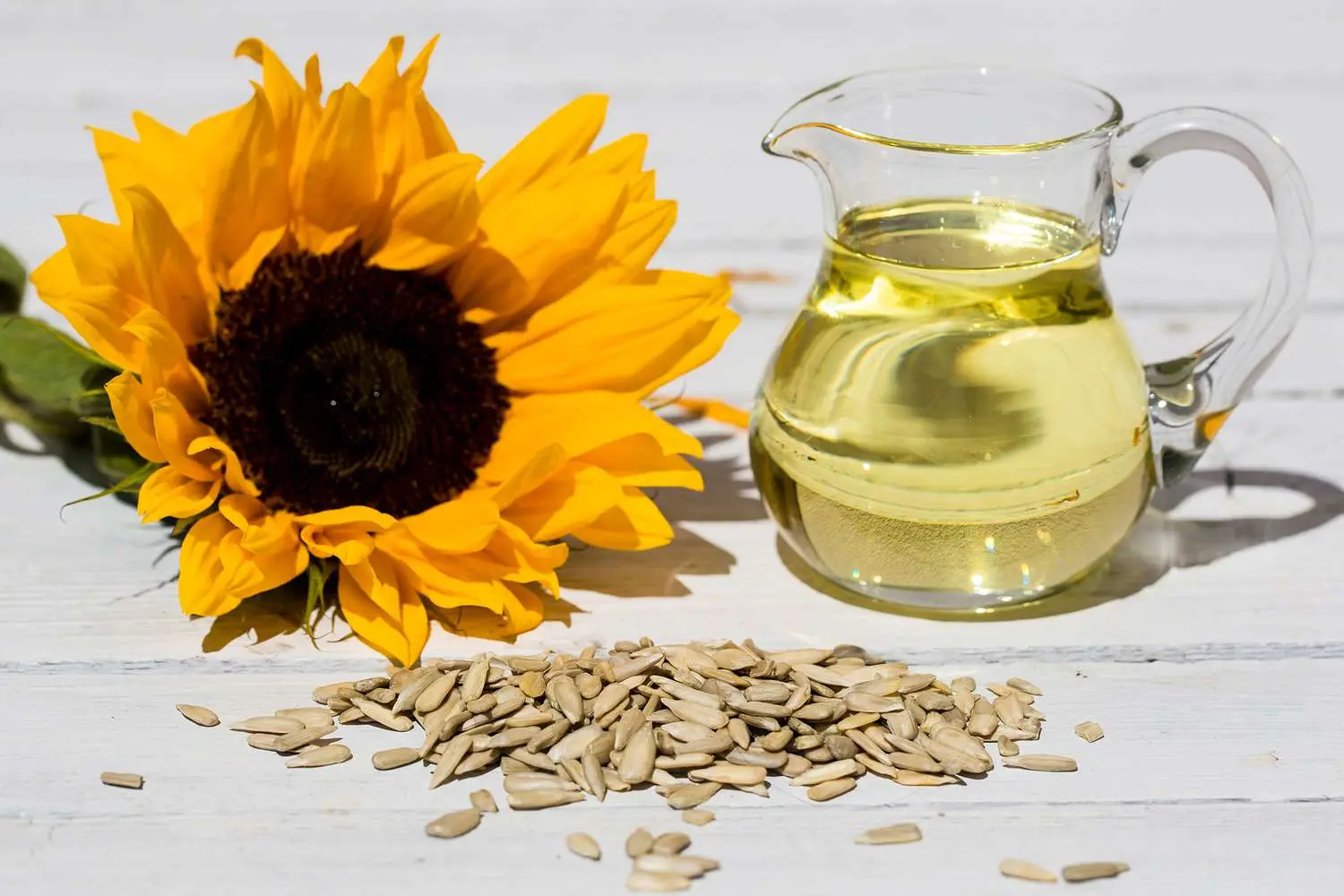
A simple way to estimate the theoretical oil content is:
| Sunflower seeds | At 35% oil content | At 40% oil content | At 45% oil content |
|---|---|---|---|
| 1 kg | 0.35 kg | 0.40 kg | 0.45 kg |
| 100 kg | 35 kg | 40 kg | 45 kg |
| 1 ton | 350 kg | 400 kg | 450 kg |
These figures represent the theoretical amount of oil contained in the seeds, not the actual amount of crude oil produced by the processing plant. Actual output depends on the selected extraction technology and operating conditions.
Actual oil recovery is affected by several factors:
A useful project-level calculation is:
For example, if 1 ton of sunflower seeds contains 40% oil and the processing system achieves a 90% actual oil recovery rate:
1,000 kg × 40% × 90% = approximately 360 kg of recovered crude oil
For example, assuming:
The actual recovery rate should be determined according to the raw material analysis, pretreatment process, extraction method and equipment configuration.
The amount of sunflower seeds required for 1 liter of oil depends on oil content, actual recovery and oil density.
For example, assuming:
Then: 1 kg of sunflower seeds × 40% × 90% = 0.36 kg of recovered oil
Converting the recovered oil to volume: 0.36 ÷ 0.92 ≈ 0.39 liters
Therefore, under these assumptions:
Approximately 2.6 kg of sunflower seeds are required to produce 1 liter of oil.
This is a reference calculation rather than a fixed production ratio. Actual seed consumption can vary depending on oil content, moisture, hull content, impurities, pretreatment and the selected extraction technology.
For smaller or medium-scale sunflower oil production, mechanical pressing is commonly considered because of its relatively simple process and equipment requirements.
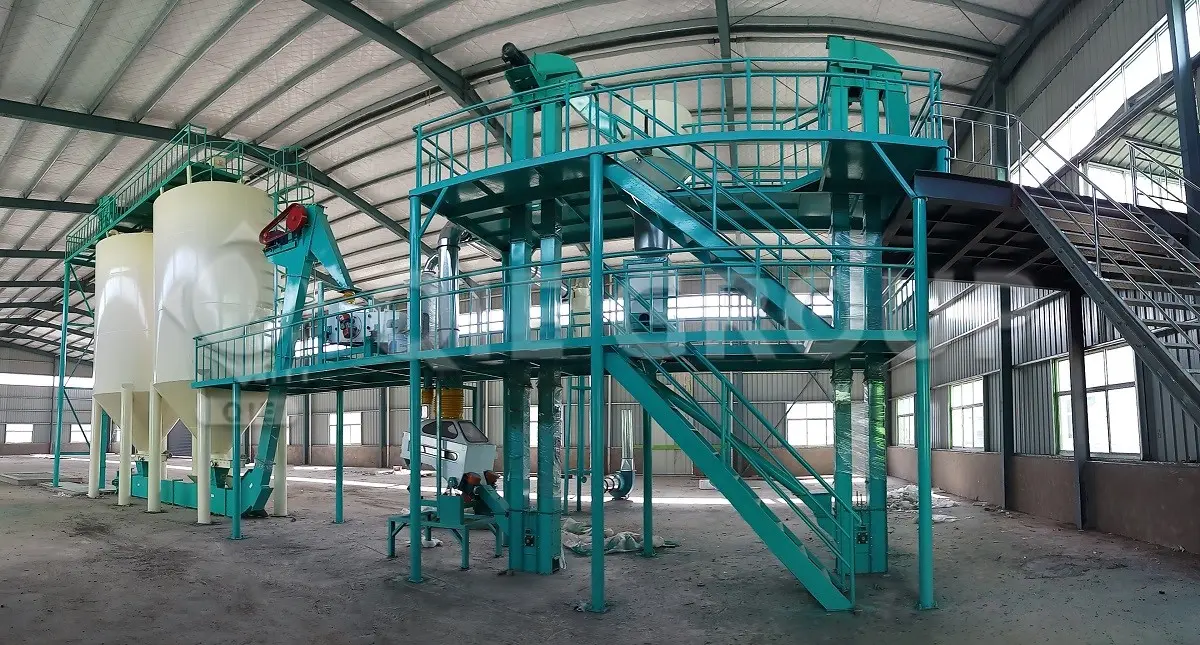
For projects where maximum oil recovery is a major objective, a pre-pressing + solvent extraction process can recover more of the oil remaining in the press cake.
The suitable process depends on:
Therefore, the best process should be selected based on the complete project conditions rather than oil content alone.
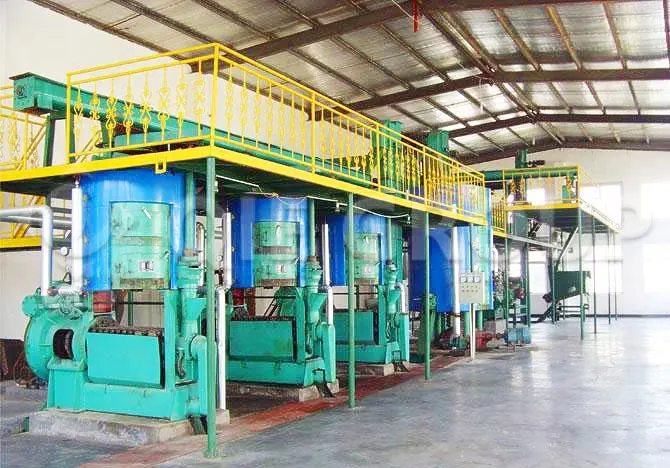
If the final product is edible refined sunflower oil, recovering crude oil is only one part of the process.
A typical process may include:
For a detailed explanation of the complete process, see the sunflower oil production process.
For sunflower oil, dewaxing or winterization may be an important part of the refining process when the target product requires good clarity and low-temperature stability.
The final process configuration should be selected according to the raw material, capacity and required finished-oil quality.
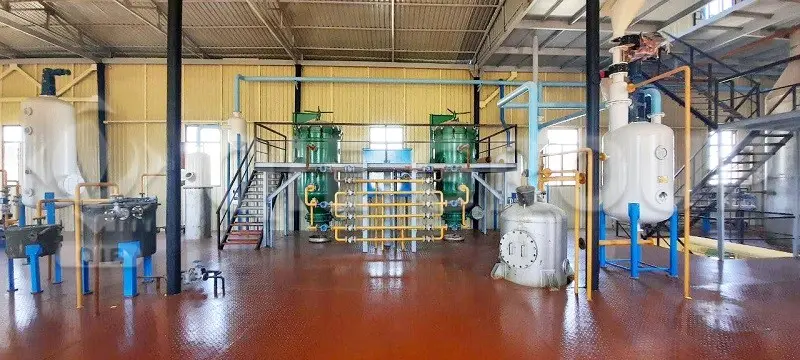
For a more accurate estimate, we can evaluate your project based on:
Based on these parameters, the processing route and equipment configuration can be designed for your specific sunflower oil project.
For customers planning a complete project, see the sunflower oil production line to learn more about the relevant processing equipment and plant configuration.
Have your sunflower seed analysis and target processing capacity? Contact QIE for a project-specific oil yield estimate and processing solution.
Sunflower seed oil content refers to the amount of oil naturally contained in the seeds. Oil recovery rate refers to how much of that oil can actually be recovered during processing. Therefore, a seed with 40% oil content does not necessarily produce 400 kg of crude oil from 1 ton of seeds.
Theoretical oil content represents the oil contained in the raw material, while actual output is affected by oil remaining in the press cake or meal, processing losses, raw material quality, and equipment efficiency. For this reason, actual crude oil production is normally lower than the theoretical calculation.
Yes. Moisture affects seed preparation, flaking, pressing performance, and oil separation. Excessive or insufficient moisture can reduce processing efficiency, so moisture should be considered when determining the appropriate pretreatment and extraction conditions.
Yes. Different sunflower varieties can have different oil contents and hull ratios. Since the starting oil content varies, the potential oil output from the same weight of seeds can also vary.
Mechanical pressing is commonly used for smaller or medium-scale sunflower oil production, while pre-pressing followed by solvent extraction can achieve higher overall oil recovery for suitable large-scale projects. The appropriate process depends on raw material characteristics, plant capacity, investment, operating costs, and the required recovery rate.
Get professional project evaluation, customized oil yield calculations, and complete processing equipment solutions from QIE experts today.
Contact Us for Solution & Quote Mustard Seed Screw Oil Press Mustard seed pretreatment equipment Equipment configuration plan for mustard oil plant What to do if mustard seeds have low oil yield? Indian mustard oil factory equipment mustard oil refinery
Edible oil processing plant construction Edible oil processing equipment Edible oil processing production line Edible oil pressing equipment Edible oil refining equipment Edible oil plant turnkey project Oil refinery construction plan
Rapeseed oil press machine rapeseed oil refining machine Rapeseed oil processing plant Rapeseed oil pretreatment equipment Small rapeseed oil mill plant Rapeseed oil filter
Small oil press equipment How much does it cost to open an oil mill? Selection of edible oil processing equipment A Beginner's Guide to Opening an Oil Plant Oil mill investment budget Edible oil production line
Edible oil processing plant Grease equipment Edible oil press Solvent extraction equipment Edible oil factory investment Edible oil refining