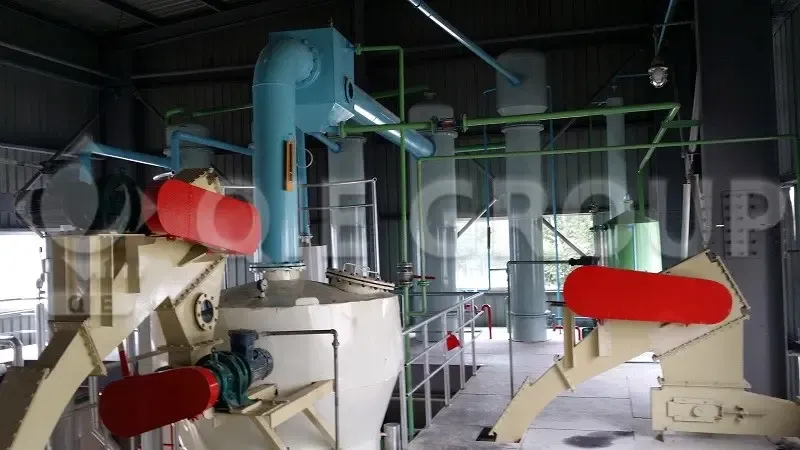
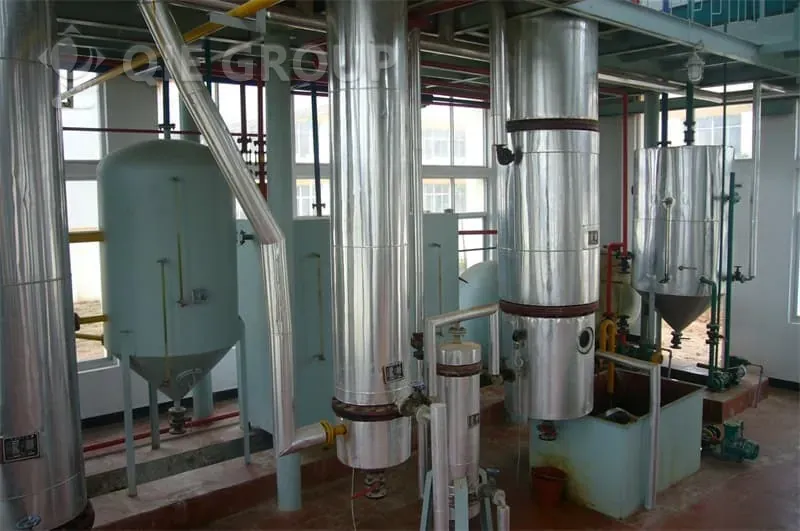
When planning peanut oil extraction or considering the construction of a peanut oil processing plant, one of the first questions people ask is:
These questions cannot be answered simply by multiplying the peanut weight by its oil content.
Peanuts are generally considered a high-oil-content oilseed. However, the theoretical oil content of peanuts is not the same as the actual amount of oil recovered during processing. The theoretical oil content indicates how much oil is contained in the raw material, while the actual oil yield is affected by factors such as the oil content of the peanuts, moisture content, pretreatment conditions, pressing efficiency, residual oil in the peanut cake, and processing losses.
Therefore, when estimating peanut oil production, it is important to distinguish between:
This article explains how much oil can be obtained from 1 kg, 100 kg, and 1 ton of peanuts, how to convert the oil weight into liters, and how different processing technologies affect actual oil recovery.
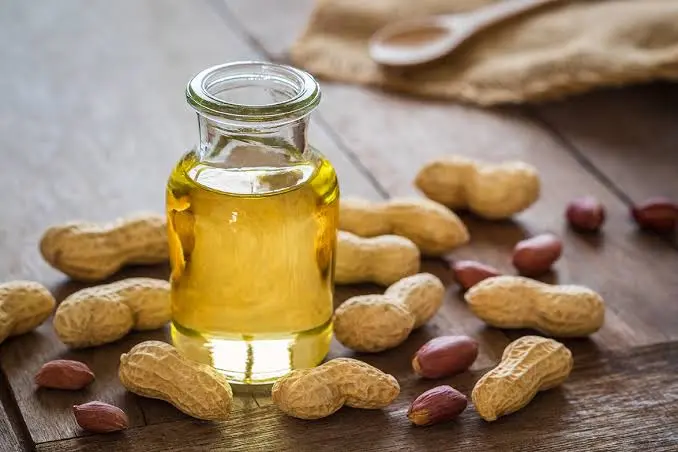
The actual oil content of peanuts varies depending on the variety, origin, raw material condition, and testing method. For the calculations below, 45%–55% is used as an example range for theoretical oil content.
It is important to understand that 45%–55% represents the theoretical oil contained in the peanuts. It does not mean that the same amount of crude oil will necessarily be recovered through pressing.
| Peanut Weight | Theoretical Oil Content (Based on 45%–55%) | Example Mechanical Pressing Output* |
|---|---|---|
| 1 kg | 0.45–0.55 kg | Approx. 0.35–0.40 kg |
| 100 kg | 45–55 kg | Approx. 35–40 kg |
| 1 ton (1,000 kg) | 450–550 kg | Approx. 350–400 kg |
*The mechanical pressing figures above are only example estimates used to illustrate the calculation method. They are not fixed values for all peanut raw materials or pressing plants. Actual project output should be calculated based on raw material test results, pretreatment conditions, equipment parameters, and residual oil in the press cake.
Therefore, if you only need a quick estimate:
• 1 kg of peanuts: theoretically contains about 0.45–0.55 kg of oil, while an example mechanical pressing output is about 0.35–0.40 kg of crude oil.
• 100 kg of peanuts: theoretically contains about 45–55 kg of oil, while an example mechanical pressing output is about 35–40 kg of crude oil.
• 1 ton of peanuts: theoretically contains about 450–550 kg of oil, while an example mechanical pressing output is about 350–400 kg of crude oil.
The first step is to calculate the theoretical oil content.
The formula is:
If the peanut oil content is assumed to be 45%–55%:
Therefore, 1 kg of peanuts theoretically contains about 0.45–0.55 kg of oil. However, this does not mean that a pressing machine will directly produce 0.45–0.55 kg of peanut oil.
During mechanical pressing, part of the oil remains in the peanut cake. There may also be some oil losses during filtration, conveying, and other processing stages.
If 35%–40% of the original peanut weight is used as an example range for mechanical pressing output:
Therefore:
The actual result should be determined based on the specific peanut raw material and operating conditions of the equipment.
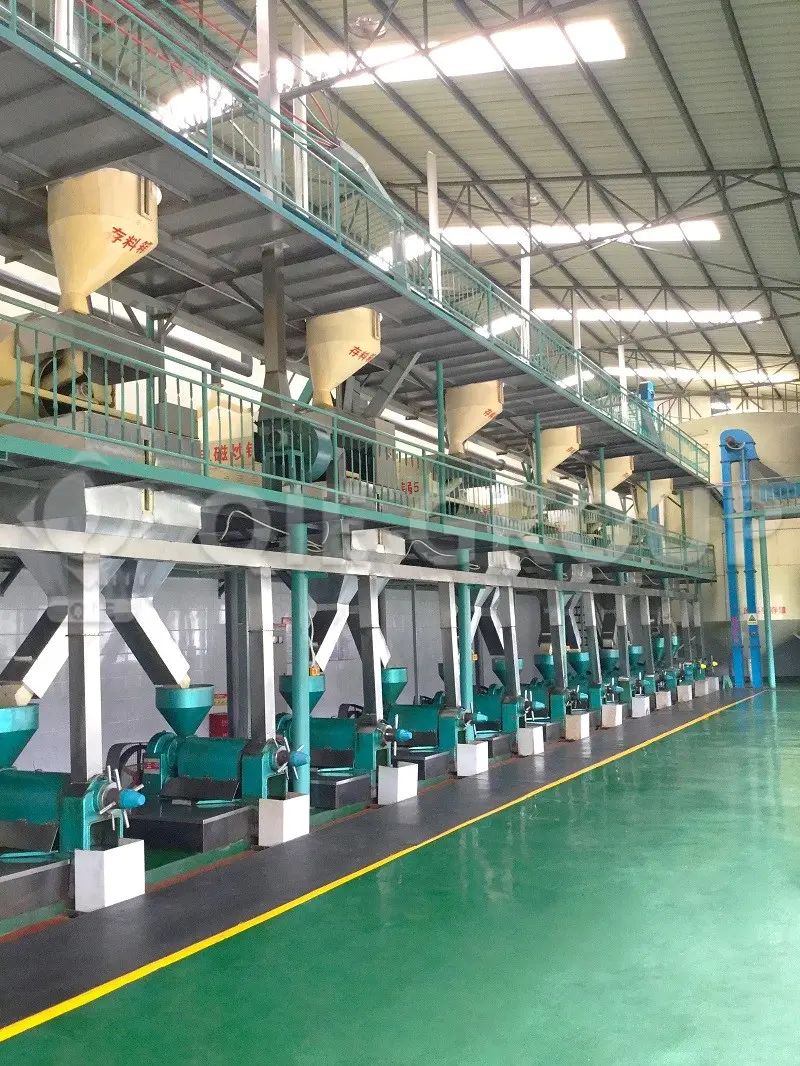
The calculation for 100 kg of peanuts follows the same principle.
Using an example oil content of 45%–55%:
Therefore, 100 kg of peanuts theoretically contains about 45–55 kg of oil.
If 35%–40% of the original peanut weight is used as an example:
Therefore:
This range is intended to explain the calculation method and is not a fixed production figure for every peanut oil plant. If the oil content, moisture content, or residual oil in the press cake changes, the actual crude oil output will also change.
One ton of peanuts equals 1,000 kg.
If the peanut oil content is 45%–55%:
Therefore:
However, this represents the theoretical oil contained in the raw material.
If 35%–40% of the original peanut weight is used as an example range for mechanical pressing output:
Therefore:
This figure is closer to what users usually mean when asking “how much oil can be extracted from 1 ton of peanuts,” but the actual plant output still needs to be calculated according to the specific processing technology.
In addition to oil weight, many users also ask:
How many liters of peanut oil can be produced from 1 ton of peanuts?
Because kilograms and liters are different units, oil density must be used for the conversion.
The formula is:
Peanut oil density can generally be estimated at approximately 0.91–0.92 kg/L.
The theoretical oil content of 1 ton of peanuts is:
Converted into volume:
Therefore:
The 490–600 liters above represent the theoretical oil content converted into volume, not the actual volume of finished peanut oil that a commercial processing plant can sell.
If the mechanical pressing output is estimated at 350–400 kg of crude oil:
Therefore:
The actual volume of finished peanut oil will also be affected by filtration losses, refining losses, and the required product specifications.
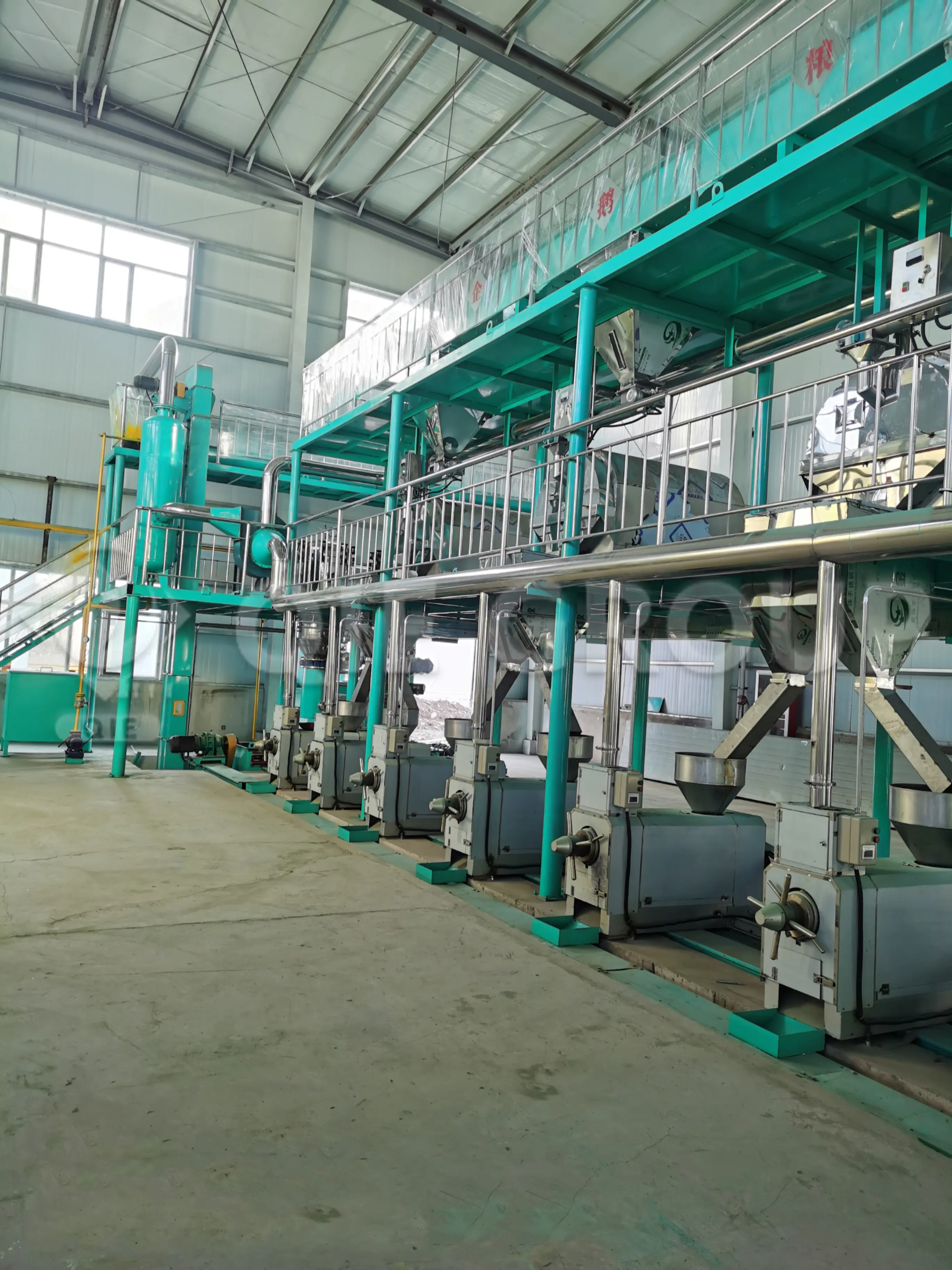
This is another common question when calculating peanut oil production.
If the example mechanical pressing range is used, the weight of 1 liter of peanut oil should first be calculated.
Assuming peanut oil has a density of 0.91–0.92 kg/L:
If the mechanical pressing output is estimated at 35%–40% of the original peanut weight:
Therefore:
In other words:
However, this is only an estimate.
If the raw material has a different oil content, moisture level, or residual oil content in the press cake, or if a pre-pressing + solvent extraction process is used, the actual amount of peanuts required will change.
For a commercial project, it is not appropriate to use “how many kilograms of peanuts are needed for 1 liter of oil” as a fixed production specification. A material balance should be developed based on the actual raw material and processing technology.
This is one of the most common misunderstandings when calculating peanut oil production.
For example, if 1 ton of peanuts has an oil content of 50%, the theoretical oil content is:
However, this does not mean that the pressing machine will necessarily collect 500 kg of crude oil.
There are several reasons:
Mechanical pressing uses physical pressure to release oil from the oilseed. After pressing, a certain amount of residual oil remains in the peanut cake.
The following factors can affect pretreatment and pressing performance:
Peanuts generally need appropriate pretreatment, such as cleaning, crushing, and cooking, before entering the pressing equipment. If pretreatment is not properly controlled, even a high-performance press may not achieve the expected oil recovery.
Crude oil may also experience certain losses during filtration, conveying, and subsequent refining.
Therefore:
These three concepts should be clearly distinguished.
Peanuts normally require appropriate pretreatment before entering the pressing equipment.
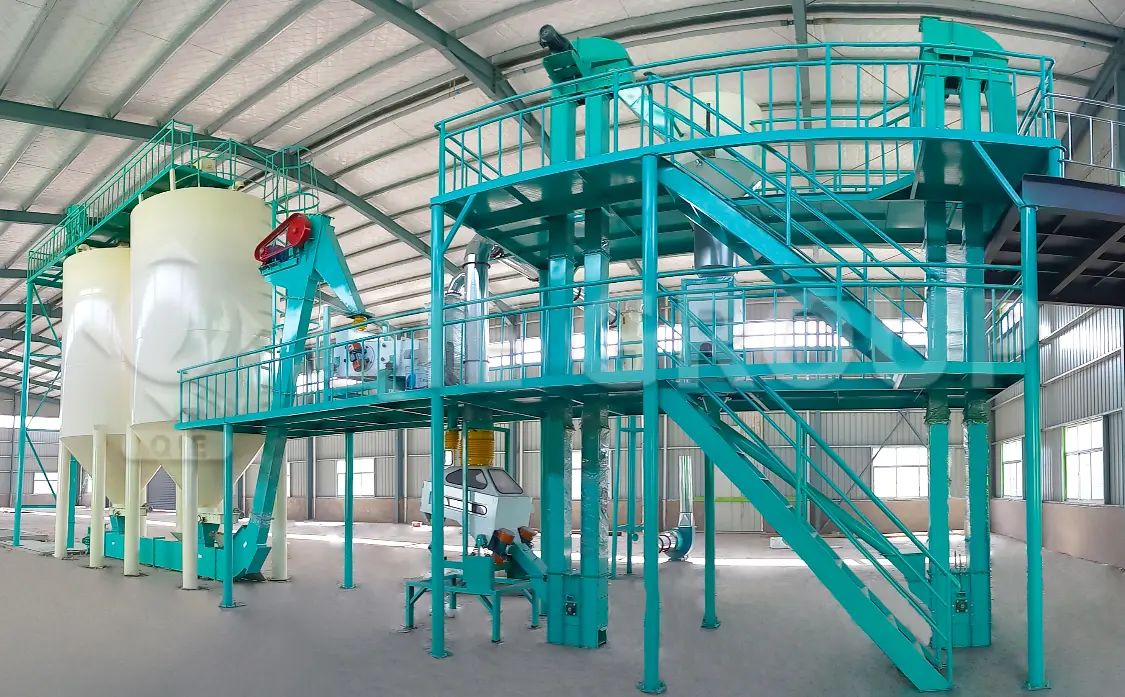
A typical process may include:
Cleaning removes soil, stones, metal particles, and other impurities. This protects downstream equipment and improves processing conditions.
Crushing reduces the particle size of peanuts to a condition suitable for further processing and helps improve oil release.
Cooking adjusts the temperature and moisture conditions of the material and changes the structure of the peanut tissue, making oil release easier during pressing.
For flavored or aromatic peanut oil production, cooking conditions can also affect the final aroma and flavor of the peanut oil.
Therefore, pretreatment is not simply about adding more equipment. Its purpose is to ensure that the raw material enters the pressing equipment in a condition that is suitable for efficient oil release.
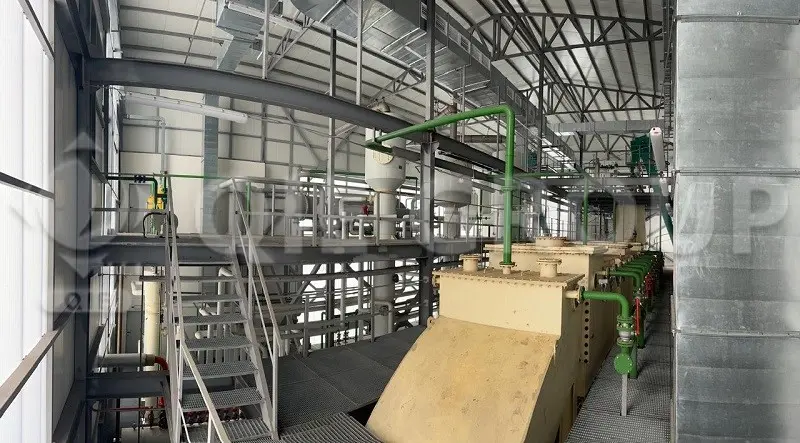
For large-scale peanut oil production, relying only on a single mechanical pressing stage may not maximize the recovery of oil contained in the raw material.
Depending on processing capacity, product positioning, and project economics, different processing routes can be considered.
A common large-scale processing route is:
The functions of the main stages are:
• Pre-pressing: Mechanical pressing is first used to recover a large portion of the readily recoverable oil while producing press cake suitable for further processing.
• Solvent extraction: Residual oil in the pre-pressed cake is further recovered to improve overall oil utilization.
• Refining: The extracted crude oil can undergo appropriate processes such as degumming, deacidification, bleaching, and deodorization to produce finished oil that meets the required product specifications.
For this type of process, project design should not focus only on one “pressing yield.” Instead, it should consider the overall:
Therefore, the final oil output of a large-scale peanut oil processing plant should be calculated through a complete material balance.
If you are planning to build a peanut oil processing line, process selection should not be based only on “which method has a higher oil yield.” Product positioning, processing capacity, investment, and operating costs should also be considered.
| Comparison | Mechanical Pressing | Pre-pressing + Solvent Extraction |
|---|---|---|
| Main method | Mechanical pressing | Pre-pressing followed by solvent extraction |
| Main focus | Flavor, equipment flexibility, product characteristics | Overall oil recovery and continuous production |
| Typical application | Small- or medium-scale pressing projects and flavored oil production | Large-scale industrial production |
| Further processing | Filtration or refining depending on product requirements | Solvent extraction, crude oil treatment, and refining |
| Oil remaining in cake | Some oil remains after pressing | Residual oil is further recovered |
| Process characteristics | Relatively simple process | More complete system with more equipment |
For investors comparing the two routes, peanut oil solvent extraction can provide more information about the extraction section and its role in recovering residual oil from press cake.
Therefore, the appropriate process should be selected based on:
If a project processes 100 tons of peanuts per day, it is not appropriate to simply calculate:
A more reliable approach is to establish a complete material balance.
For example: 100 tons of peanuts per day. The actual amount of raw material entering the production line should first be confirmed.
Suppose laboratory testing determines the actual oil content of the peanuts. The calculation is:
For example, if the actual oil content is 50%:
This is only the theoretical amount of oil contained in the raw material.
If mechanical pressing is used, the calculation should consider:
If pre-pressing + solvent extraction is used, additional factors include:
A commercial project can use the following calculation framework:
The overall recovery rate and subsequent processing yield should not be replaced with one fixed industry-wide number.
They should be calculated based on actual raw material test results, the selected processing route, and equipment parameters.
Therefore, if a customer asks:
“How many tons of peanut oil can a 100 TPD peanut oil plant produce per day?”
The correct project calculation should be based on actual raw material data and a complete process design rather than simply applying a general “oil per ton of peanuts” figure.
Before determining the peanut oil processing technology and equipment configuration, it is recommended to obtain as much accurate raw material data as possible.
Important parameters generally include:
• Peanut Oil Content: This is an important basis for calculating theoretical oil content and designing the oil recovery system.
• Moisture Content: Moisture affects pretreatment, pressing, and subsequent oil processing conditions.
• Impurity Content: The impurity level affects the cleaning system and equipment operation.
• Peanut Variety and Raw Material Condition: Different varieties and raw material conditions may have different oil contents and processing characteristics.
• Target Product: For example, flavored peanut oil, refined peanut oil, or food-grade commercial peanut oil. Different product positioning can affect the pretreatment, pressing, solvent extraction, and refining processes.
Therefore, before building a peanut oil processing plant, it is advisable to obtain raw material test data first and then determine the process and equipment configuration.
The design objectives of small and large projects are generally different.
They often focus more on:
Mechanical pressing may be suitable for some projects where flavored peanut oil is the main product.
If you are evaluating equipment configuration for a complete project, the peanut oil production plant equipment list provides a more detailed overview of pretreatment, pressing, extraction, and refining equipment.
They generally focus more on:
Therefore, a large-scale project needs to be considered as a complete processing system rather than simply selecting a single oil press.
If you only need a quick estimate, there are three concepts to remember.
1. Theoretical Oil Content: Peanut weight × Actual oil content. This is used to calculate the theoretical amount of oil contained in the raw material.
2. Actual Crude Oil Output: This depends on Raw material × Oil content × Oil recovery efficiency. This is used to estimate how much crude oil can actually be recovered during processing.
3. Final Finished Oil Output: The calculation must also consider filtration, refining, and other processing losses.
Therefore:
A higher theoretical oil content does not necessarily mean a higher final finished oil output. What really determines the economics of a commercial project is the overall oil recovery efficiency of the processing system and the final product yield.
If 45%–55% is used as an example range for theoretical oil content, and 35%–40% of the original peanut weight is used as an example range for mechanical pressing output, the calculation is:
| Peanut Weight | Theoretical Oil Content | Example Mechanical Pressing Output |
|---|---|---|
| 1 kg | 0.45–0.55 kg | Approx. 0.35–0.40 kg |
| 100 kg | 45–55 kg | Approx. 35–40 kg |
| 1 ton | 450–550 kg | Approx. 350–400 kg |
Converted into volume:
Based on the example parameters above:
However, all of these figures are estimates rather than fixed production specifications applicable to every peanut oil plant.
Actual peanut oil production depends on:
Therefore, for a commercial peanut oil processing project, the most reliable approach is not to simply apply a fixed “oil per ton of peanuts” figure. Instead, a complete material balance should be developed based on actual raw material test data, target processing capacity, and product positioning.
QIE GROUP can provide process design, equipment configuration, and complete peanut oil processing line solutions based on peanut raw material characteristics, processing capacity, and target product requirements.
Because oil content represents the theoretical amount of oil contained in the raw material, while mechanical pressing cannot recover all of the oil in a single pressing stage. Some oil remains in the peanut cake, while additional losses may occur during filtration and other processing stages. Therefore: Oil content ≠ pressing yield ≠ finished oil yield.
Yes. In large-scale production, pre-pressed peanut cake still contains residual oil. Further solvent extraction can recover part of this residual oil and improve overall oil utilization.
There is no single process that is suitable for every project. Mechanical pressing is often suitable for projects that focus on peanut flavor, equipment flexibility, and a relatively simple production process. Pre-pressing + solvent extraction is generally more suitable for projects that focus on large-scale continuous production and overall oil recovery. The final process selection should be based on the raw material, processing capacity, product positioning, investment budget, and local operating conditions.
Because the raw materials and processing conditions can vary between factories. Important factors include actual peanut oil content, moisture content, pretreatment conditions, pressing equipment, residual oil in cake, whether pre-pressing + solvent extraction is used, and filtration/refining losses. Therefore, commercial projects should use actual data to establish a material balance rather than relying on a fixed production ratio.
The following information is generally recommended: peanut oil content, moisture content, impurity content, peanut variety, daily processing capacity, target product, whether flavored peanut oil will be produced, whether solvent extraction is required, and whether refining is required. These parameters can help the engineering team determine a more appropriate process route and equipment configuration.
Partner with QIE GROUP for professional process design, customized equipment configuration, turnkey EPC solutions, and expert technical support tailored to your raw materials and business goals.
Get a Custom Project Proposal & Quote Today rice bran oil production line in Vietnam commercial rice bran oil mill cost rice bran stabilization process rice bran extraction plant
Palm oil processing plant Palm oil startups Palm oil processing equipment Low-cost palm oil production Small palm oil mill
Sunflower oil processing plant Sunflower oil processing equipment Edible oil production process Sunflower oil processing technology Steps to start a sunflower seed oil factory
copra oil production plant cost copra oil processing plant cost copra oil processing plant copra oil production line copra oil processing equipment copra oil extraction plant copra oil refinery plant
edible oil processing plant oilseed pretreatment extraction continuous oil refining system oil mill EPC turnkey solutions PLC SCADA oil plant automation