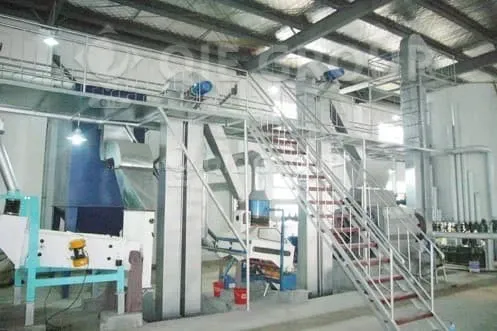
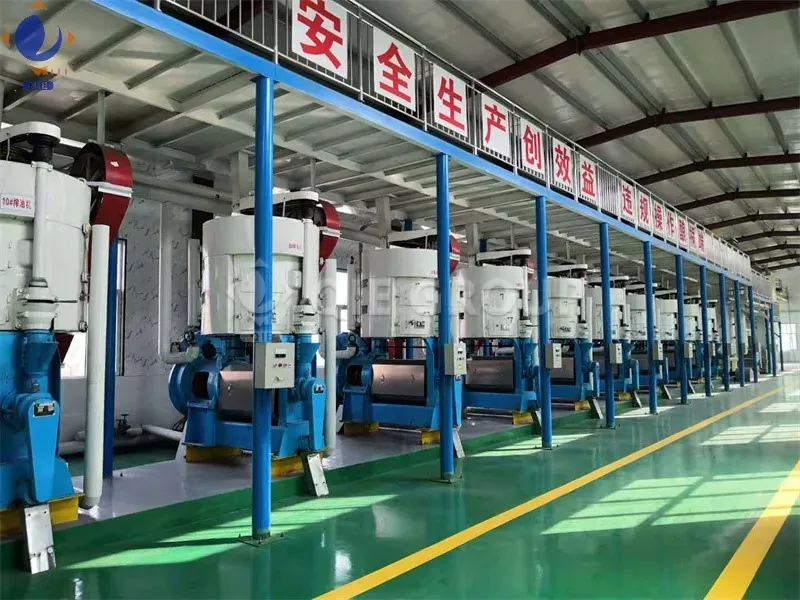
The global vegetable oil market is undergoing profound changes. According to data from the Food and Agriculture Organization of the United Nations (FAO) and industry research, global consumption of edible vegetable oils is projected to exceed 260 million tons by 2030, representing an increase of approximately 25% from current levels. This growth is not only driven by population growth and consumption upgrades in emerging economies, but is also closely related to the increasing demand for health, nutrition, and sustainability.
So, where is the future of the vegetable oil processing industry headed? In short, the industry will revolve around three main directions: more energy-efficient and environmentally friendly production systems, smarter and more stable processing plants, and higher value-added oil products. This means that the investment logic has shifted from "expanding production capacity" to "building comprehensive competitiveness."
Population growth, urbanization, and the expansion of the food industry are the core drivers of increasing demand for vegetable oils. Edible oil consumption still has significant room for growth, particularly in India, Southeast Asia, the Middle East, and Africa.
At the same time, the market is becoming clearly segmented:
👉 Key conclusion: In the future, companies will compete not only on "oil," but also on "performance" and "application scenarios."
With increasingly stringent environmental regulations (such as EUDR), oil processing companies must address issues such as wastewater and exhaust gas treatment, odor control, solvent loss management, and the handling of clay and by-products.
For example, in the solvent extraction process: advanced plants consume 1.5 kg/ton of raw material; ordinary plants consume significantly more.
👉 The difference is essentially a long-term profit gap.
The refining and solvent extraction processes have a high energy consumption rate, including steam consumption, heat transfer oil system energy consumption, and solvent recovery energy consumption.
Against the backdrop of escalating global energy price volatility: reducing unit energy consumption = improving resilience to risks + increasing profit margins
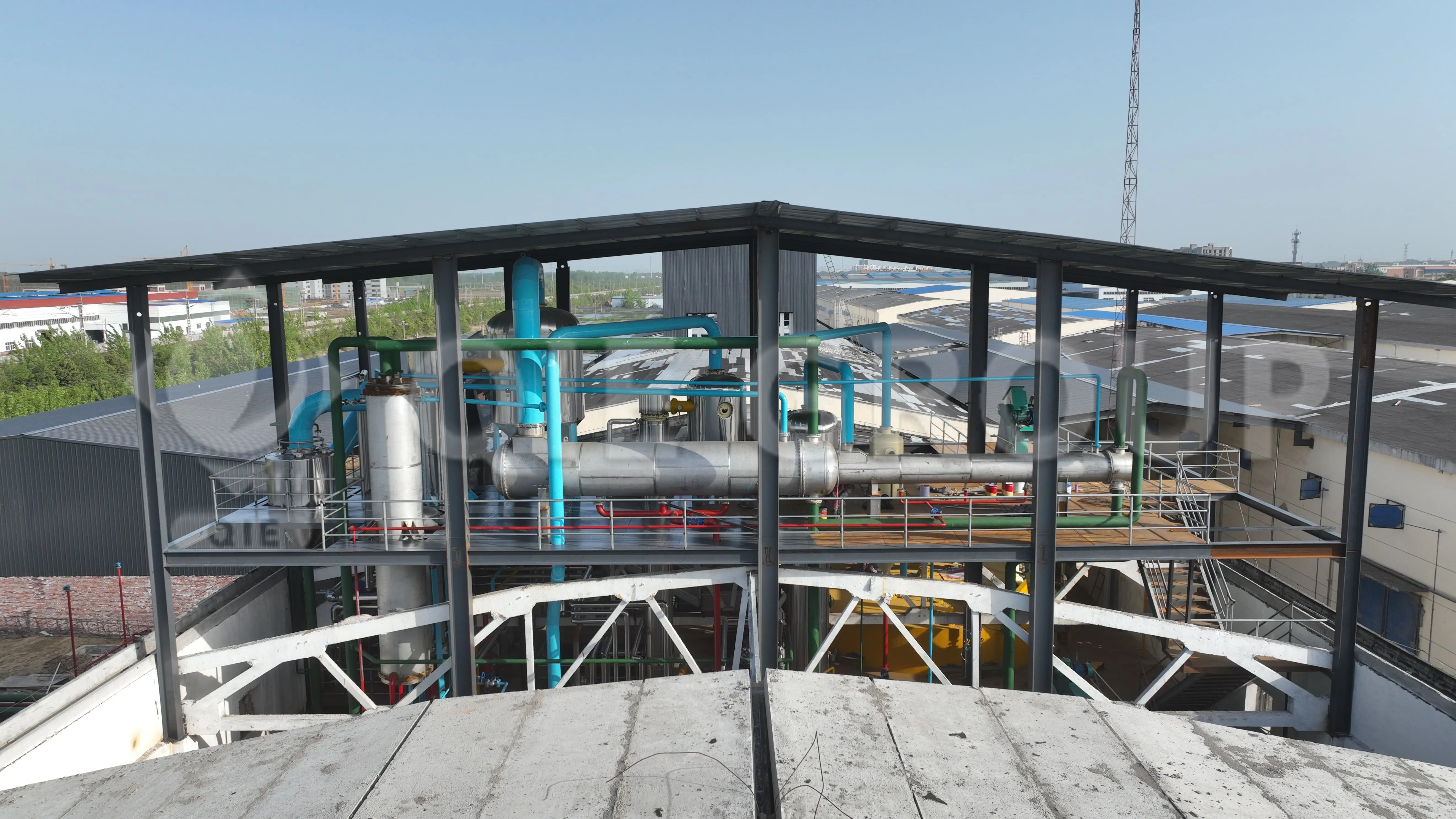
In many older factories, operational experience often relies on a few key personnel. This model can be maintained when raw material fluctuations are minimal, but once the moisture, impurities, and fatty acid composition of the raw materials change, production parameters are prone to instability. Now, more and more companies are deploying PLC, SCADA, and MES systems to connect raw material receiving, pretreatment, pressing, leaching, refining, filling, and warehousing.
👉 The key value is not reducing labor, but stabilizing quality and improving capacity utilization.
Refining technology optimization: Physical refining, due to its lower chemical consumption and wastewater discharge, is gradually replacing traditional chemical refining, especially suitable for oils with high free fatty acid content such as palm oil and coconut oil. New decolorizing agents and efficient deodorization tower designs (such as soft deodorization technology) are also constantly emerging.
Innovations in solvent extraction technology: New leaching technologies aimed at improving solvent recovery rates and reducing residues (such as the improved DTDC descaling machine design) and safer, more environmentally friendly solvents (such as the exploratory application of isohexane) are gaining attention.
Energy recovery and utilization: The widespread application of waste heat recovery systems (such as utilizing deodorized distillates, steam condensate, and flue gas waste heat) has significantly reduced the steam and fuel consumption of plants.
Different oils require different processing methods:
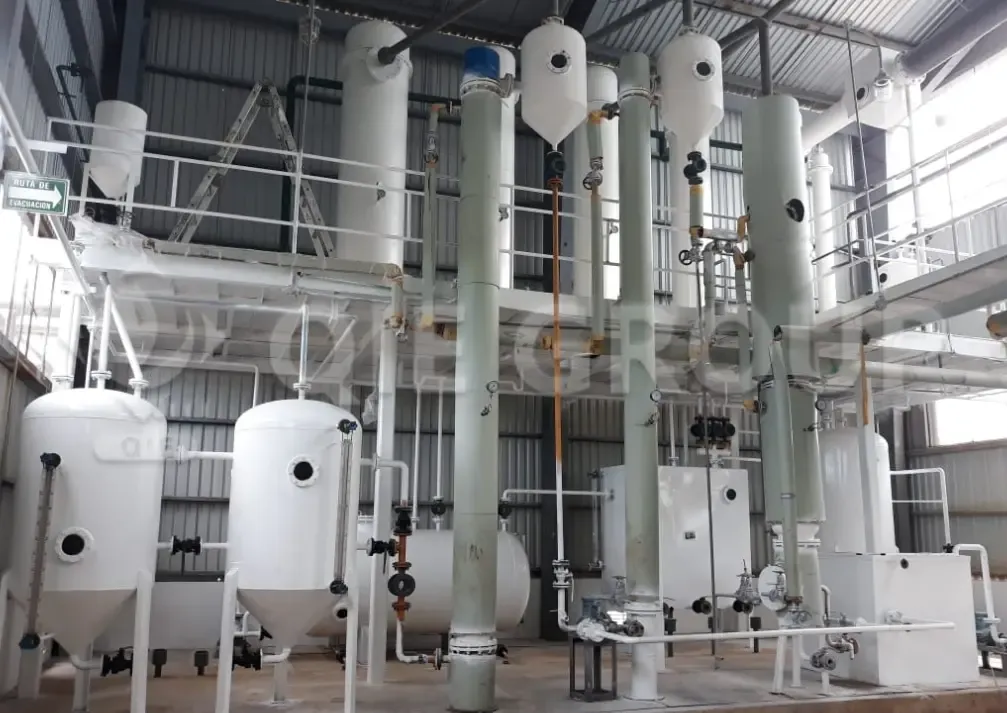
Soybeans: Emphasis on solvent extraction efficiency; Rapeseed: Focus on peeling and steaming/roasting; Peanuts: Focus on flavor preservation; Rice bran: Treat rancidity and waxiness 👉 ( Soybean oil solvent extraction equipment )
Key control points:
Pressing section: pretreatment quality, steaming and frying uniformity, residual oil content
Solvent extraction section: bed thickness, mixed oil concentration, solvent extraction efficiency
Refining stage: Optimized combination of degumming, deacidification, decolorization, and deodorization.
👉 Key conclusion: A mature process finds the optimal balance between quality, yield, and energy consumption.
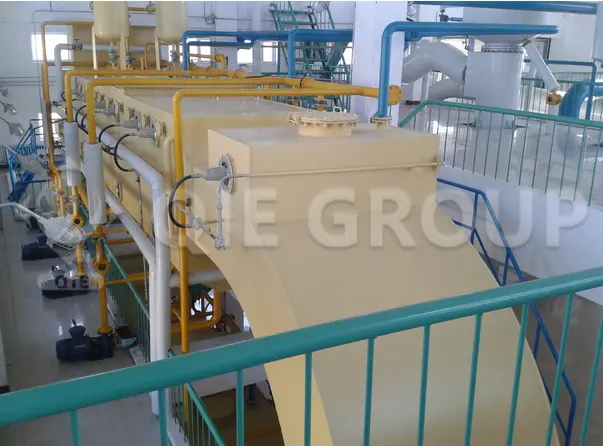
Modern oil refineries are establishing a complete data system:
👉 When factories can analyze data by shift, oil type, and work section, efficiency is significantly improved.
Consumers' growing health awareness is driving demand for physically refined oils, low-trans-fat oils, and oils rich in natural antioxidants (such as vitamin E and phytosterols). Advances in refining technology have made it possible to remove impurities while retaining more nutrients.
Specialty plant oils such as palm kernel oil, coconut oil, flaxseed oil, walnut oil, and avocado oil are in high demand in the high-end food, health product, and personal care product sectors due to their unique functional properties (medium-chain fatty acids, omega-3 fatty acids, and specific flavors). This requires processing plants to have the ability to handle diverse oilseeds and adopt customized processes (such as low-temperature pressing and supercritical fluid extraction).
Especially in export-oriented markets, the quality thresholds and certification requirements for specialty oil products are higher, which in turn forms relatively stable competitive barriers. The future of the vegetable oil industry may not be that all companies pursue the same large scale, but rather that some focus on bulk sales, some on high-end products, and some on formulated and functional oils.
To meet the specific needs of food industry customers (such as melting point, taste, and oxidative stability) and the nutritional needs of different population groups, customized blended oils and fortified oils (with added vitamins A/D, phytosterol esters, etc.) have become important directions for product innovation. This requires processing plants to have strong R&D capabilities and flexible formulation, refining, and blending processes.
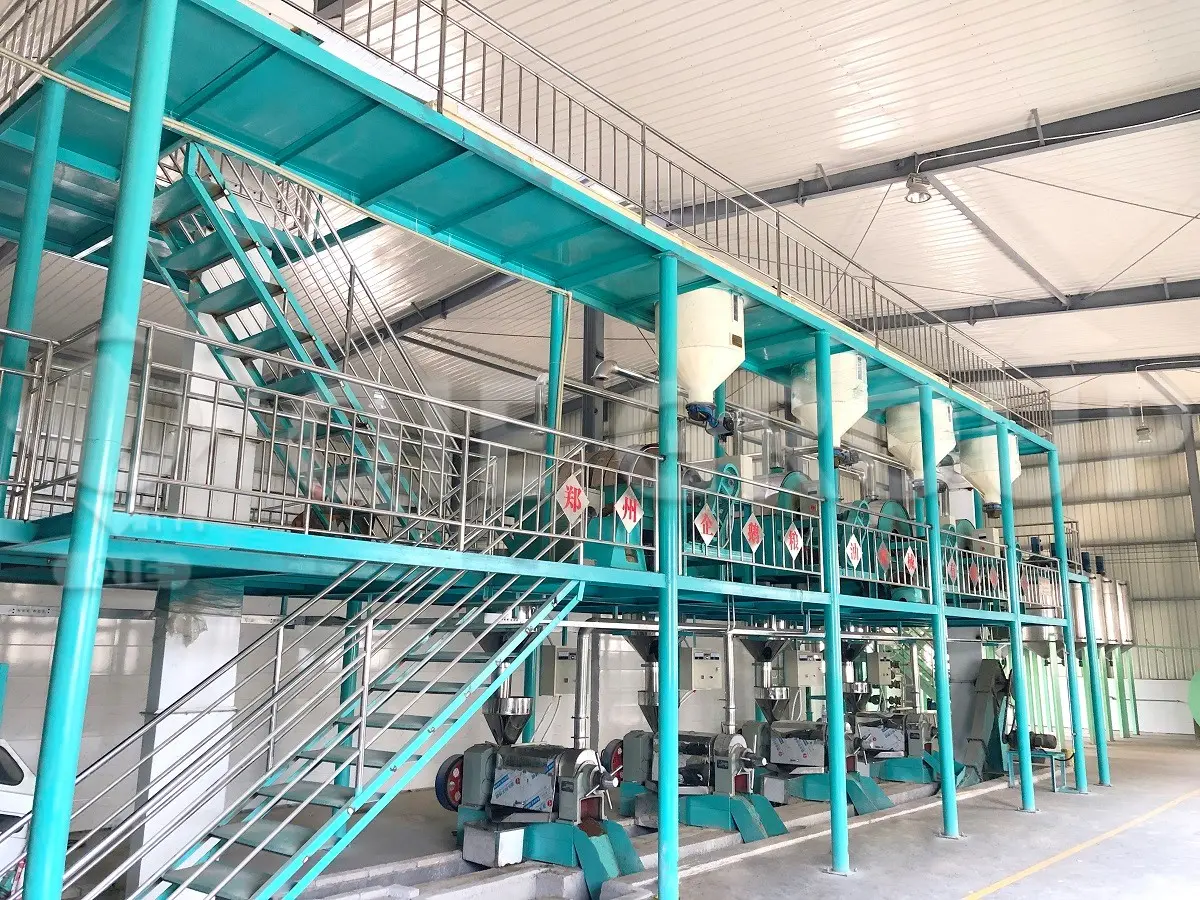
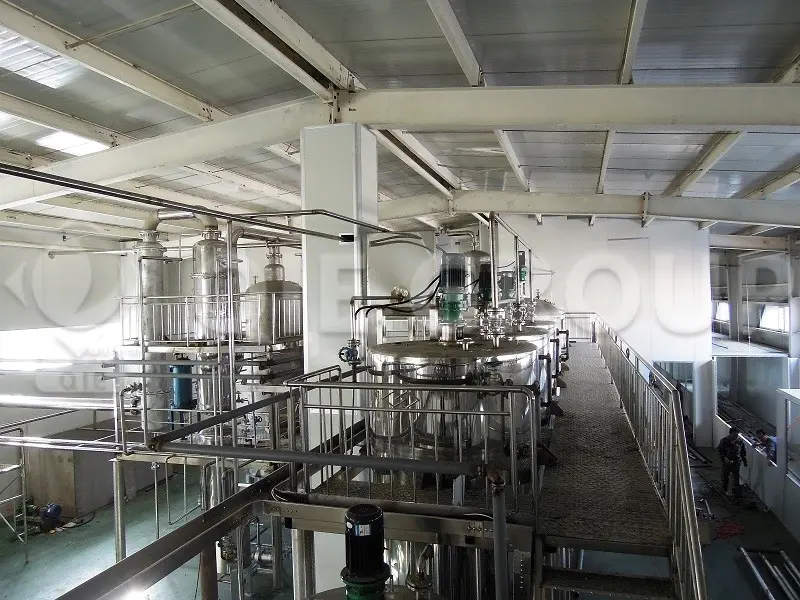
In vegetable oil projects, the most common problems clients encounter are not with the parameters of a single piece of equipment, but rather with the coordination of the entire system: insufficient raw material compatibility, poor process integration, high energy consumption, large fluctuations in finished product quality, and difficulties in later expansion. It is precisely for this reason that turnkey projects increasingly emphasize a systems perspective.
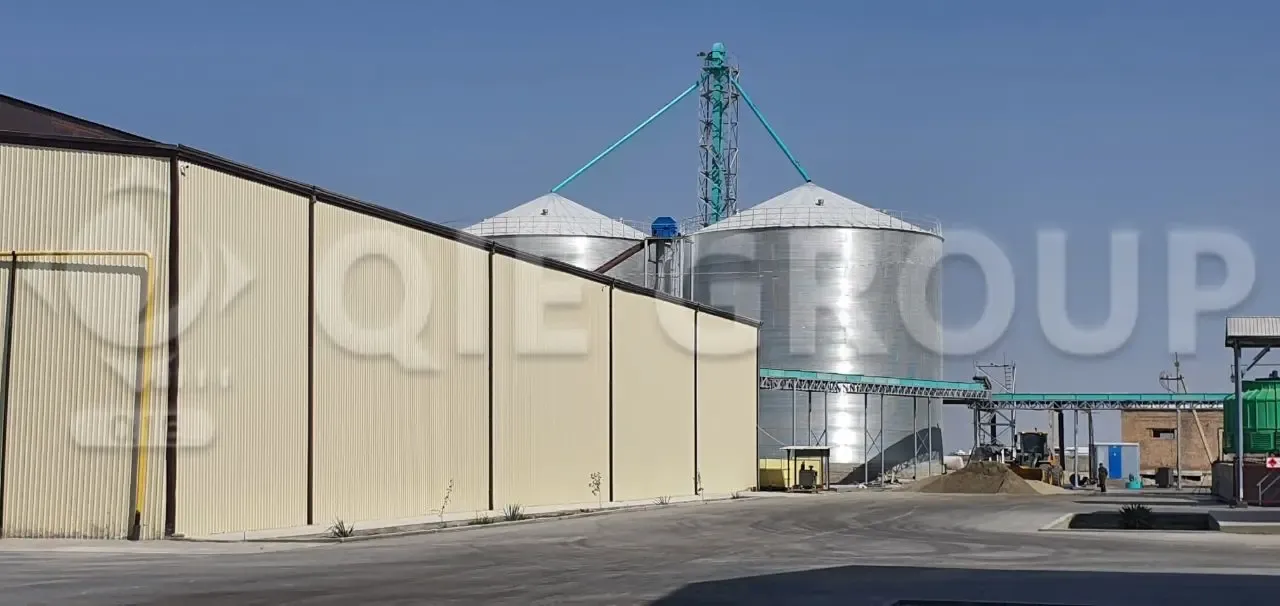
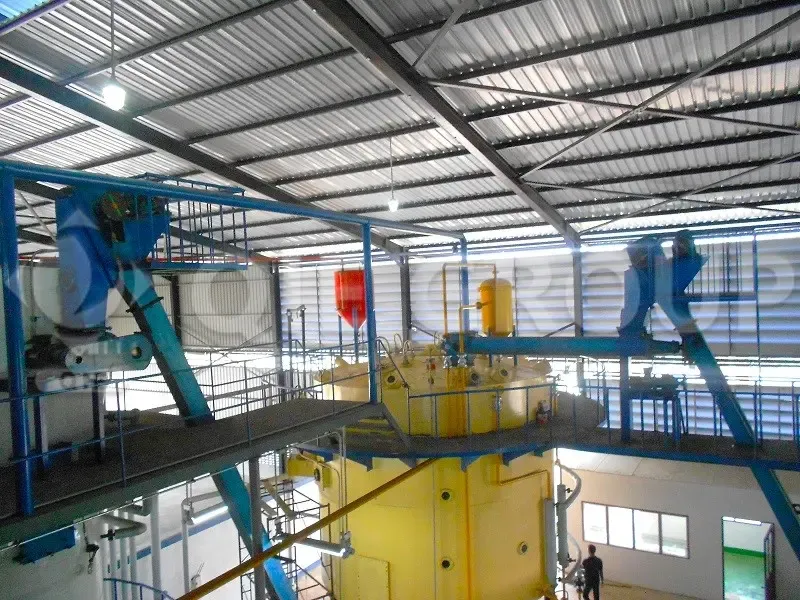
Our advantage in oil processing projects lies primarily in our comprehensive supply chain capabilities—from initial capacity planning, process package design, equipment selection, and factory layout, to installation, commissioning, operator training, technology upgrades, and subsequent optimization. For new factories, this model reduces communication costs and time risks; for renovations of existing plants, it facilitates targeted upgrades based on existing infrastructure, rather than simply replacing equipment. 👉 ( Turnkey Edible Oil Factory Solution )
| Energy-saving and environmentally friendly turnkey projects | It covers pretreatment, pressing, solvent extraction, refining, filling and utilities, while taking into account energy optimization, environmental protection and safety design. |
| Customized processes for multiple oils | Differentiated processing routes are matched for different raw materials such as soybeans, rapeseed, peanuts, sunflower seeds, palm seeds, flax seeds, and palm kernels. |
| Automation and Digital Systems | Integrating PLC control, process monitoring, and process parameter management into the production system enhances stability and traceability. |
| Old factory upgrade and renovation plan | To address issues such as high energy consumption, significant losses, and quality fluctuations in outdated production lines, implement partial or overall upgrade solutions. |
Project coverage: 100 TPD – 3000+ TPD; Asia, Africa, South America, and other regions.
👉 Core value: Not just delivering equipment, but ensuring the factory is truly operational.
The core trends of the future vegetable oil processing industry can be summarized as follows:
Green development: Environmental compliance and energy conservation and emission reduction are irreversible trends, corporate social responsibility, and key to cost competitiveness.
Intelligentization: Data-driven automated and intelligent factories are the cornerstone for improving efficiency, quality, and safety.
Premiumization and diversification: Meeting consumers' higher demands for health, nutrition, flavor and functionality, and expanding into the specialty oil and customized oil market.
Flexibility: It can quickly respond to market changes, handle various oils, and produce a variety of products.
Investment advice:
Forward-looking factory planning: reserving space for expansion and upgrades
Prioritize the introduction of advanced technologies: energy saving, automation, and quality control.
Choosing a reliable engineering partner: Ensuring the long-term stable operation of the project.
Q1: Which vegetable oil processing method yields the highest profit?
In large-scale production, leaching combined with efficient refining is currently the most economical solution, while energy consumption and losses must be controlled.
Q2: How to reduce energy consumption in oil plants?
Key methods include: waste heat recovery systems, steam optimization, and efficient deodorization technology.
Q3: What is the future development direction of refining technology?
Key trends: physical refining, cryogenic processing, and automated control.
Whether it's optimizing pressing, leaching, or refining systems, choosing the right technology path and engineering solution will directly determine your competitiveness over the next 10 years. QIE Group can provide customized turnkey solutions based on your raw material type, capacity requirements, and investment budget.
For customized solutions and investment assessments, please contact us. vegetable oil production line turnkey edible oil plant edible oil processing plant oil refining equipment oil pressing machine
500 TPD edible oil production line edible oil processing oil engineering pressing process solvent extraction refining equipment automation control
Palm kernel oil processing PKO processing high-yield palm kernel oil screw press solvent extraction turnkey oil processing
sunflower seed oil processing sunflower oil pretreatment turnkey sunflower oil production line oil refining stability dehulled sunflower seed
complete rapeseed oil processing line rapeseed oil refinery rapeseed oil production plant rapeseed oil processing equipment pre-press solvent extraction
vegetable oil production line turnkey edible oil plant edible oil processing plant oil refining equipment oil pressing machine
500 TPD edible oil production line edible oil processing oil engineering pressing process solvent extraction refining equipment automation control
Palm kernel oil processing PKO processing high-yield palm kernel oil screw press solvent extraction turnkey oil processing
sunflower seed oil processing sunflower oil pretreatment turnkey sunflower oil production line oil refining stability dehulled sunflower seed
complete rapeseed oil processing line rapeseed oil refinery rapeseed oil production plant rapeseed oil processing equipment pre-press solvent extraction





.png?x-oss-process=image/resize,h_100,m_lfit/format,webp)
.png?x-oss-process=image/resize,h_100,m_lfit/format,webp)
.png?x-oss-process=image/resize,h_100,m_lfit/format,webp)