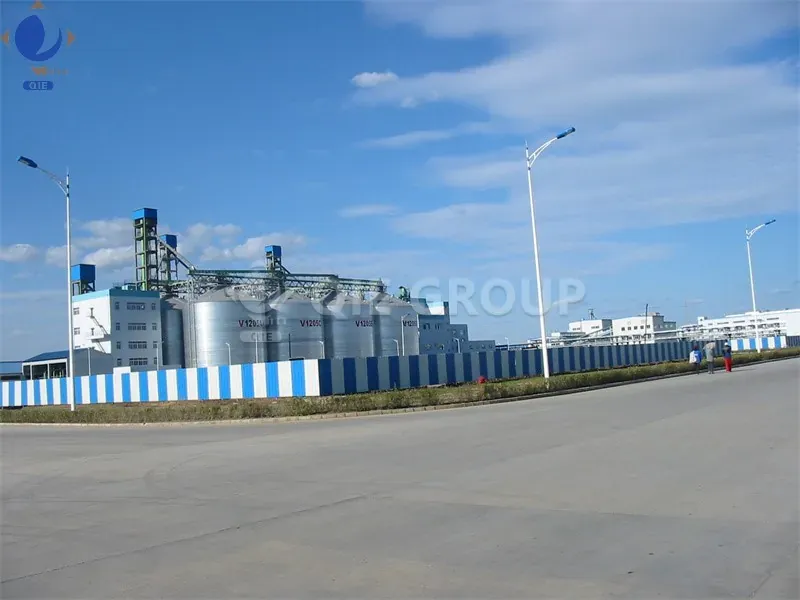
With the growing global demand for high-quality vegetable oils, soybean oil processing technology is upgrading from traditional “workshop-style” setups to highly automated, energy-efficient, and continuous production systems. Many plant managers often ask:
“How can we build a soybean oil production line that ensures high oil yield while maintaining efficiency and stability?”
From an engineering perspective, a mature soybean oil production line typically includes:
Pretreatment → Pressing → Solvent Extraction → Refining → Finished Oil Storage & Packaging
Each step directly affects production cost, oil yield, and final product quality. Without proper planning, later stages may suffer from higher energy consumption, residual oil, and unstable quality.
This is why many factories choose a one-stop turnkey solution from QIE Group, ensuring consistent planning, equipment, energy management, safety, and installation guidance—making your line closer to “ready-to-run” from day one.
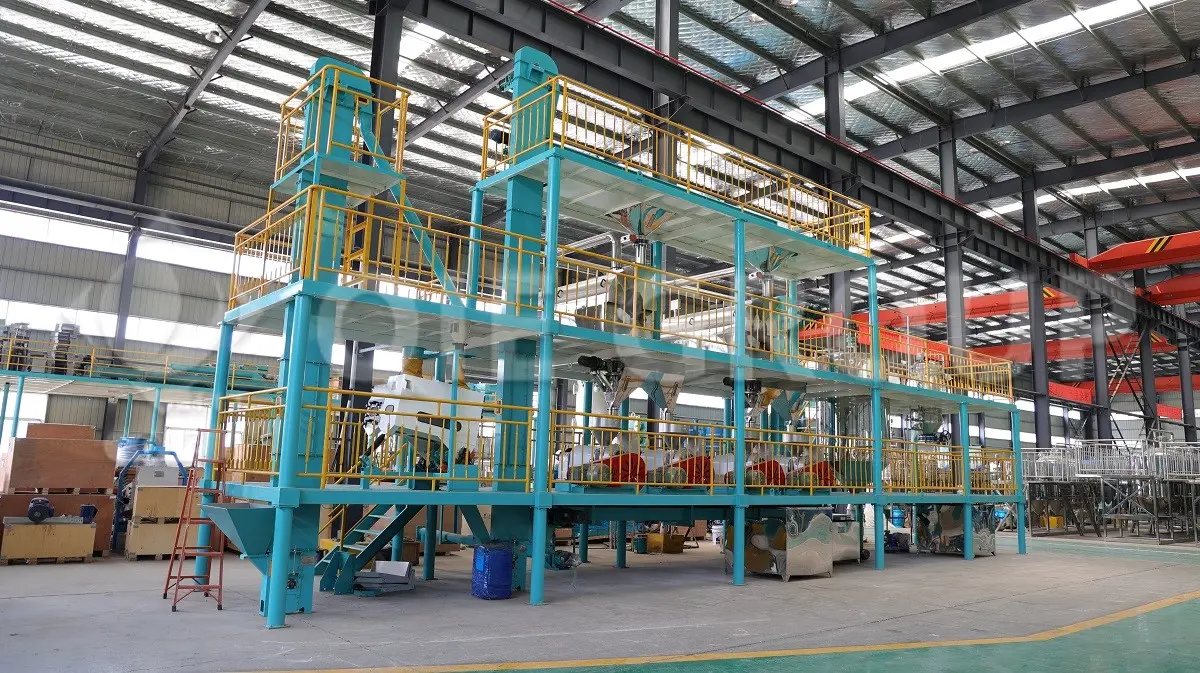
Pretreatment is not optional; it directly impacts pressing and extraction efficiency. Standard pretreatment includes:
Cleaning: Remove metal, stones, and impurities to protect equipment
Crushing: Increase contact surface for better oil release
Conditioning: Stabilize moisture and temperature for optimal processing
Dehulling: Reduce fiber content and improve downstream oil yield
QIE Group emphasizes parameter control rather than relying on experience, stabilizing moisture, particle size, and temperature for predictable downstream performance.
📌 Tip: Poor pretreatment cannot be fixed by pressing or extraction equipment later.
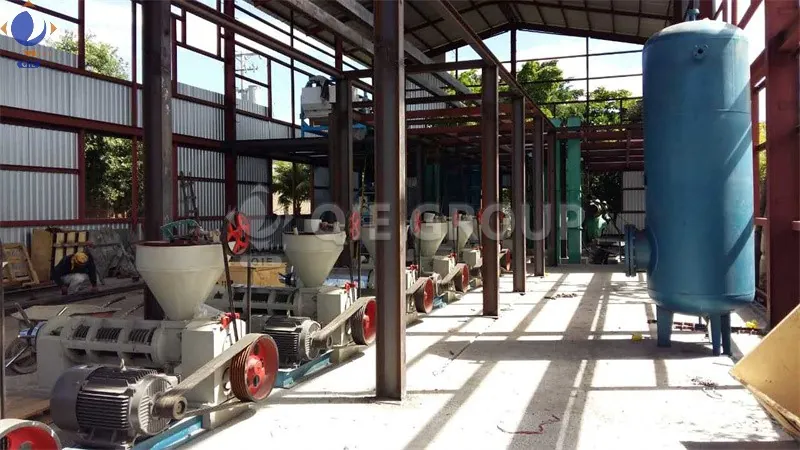
Pressing is more than just squeezing oil—it involves precise pressure, temperature, and discharge control to maximize oil extraction while avoiding machine fouling and energy waste.
A well-designed pressing section ensures:
Stable oil yield
Residual oil within a reasonable range
Minimal downtime for maintenance 👉( Soybean oil screw press machine )
Typically, residual oil can be controlled at 6%–8%, depending on line configuration and raw material quality, enabling more efficient subsequent solvent extraction.
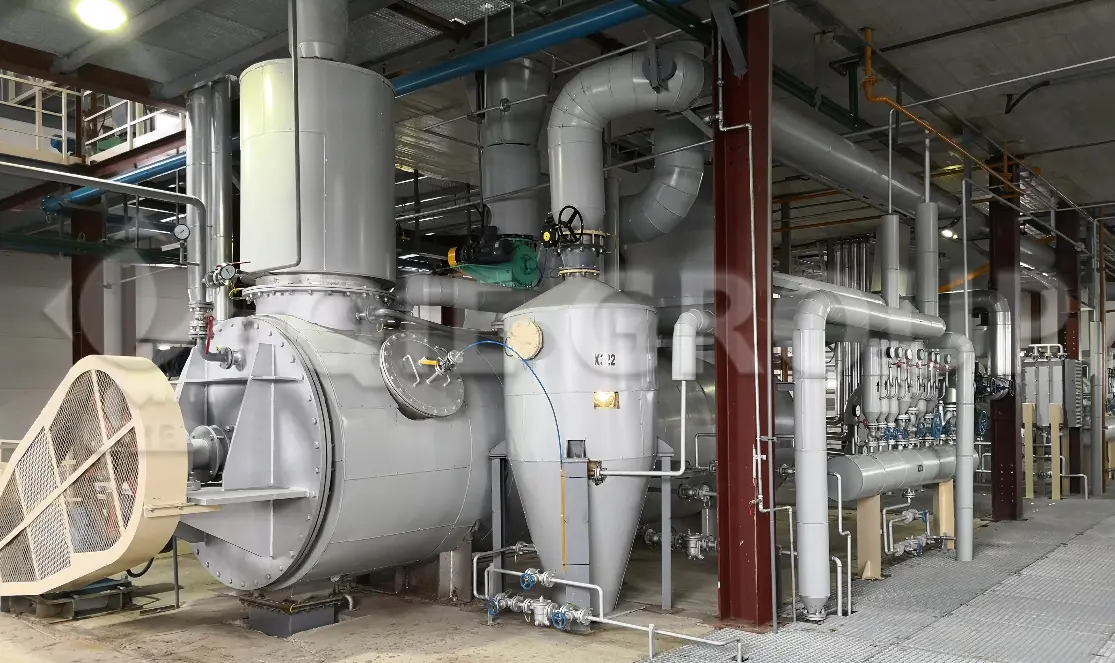
If pressing is “coarse extraction,” solvent extraction is “fine extraction.”
Efficient extraction involves:
Countercurrent extraction systems to improve oil recovery
Energy-saving desolventizing design to reduce solvent consumption
Smart drying systems to meet residual solvent standards safely 👉( Soybean oil solvent extraction equipment )
QIE Group's advantage lies in system-level design, not just individual machines, applying an engineering approach rather than “stacking equipment.”
Refining determines whether the oil can enter supermarkets, OEM, or export markets.
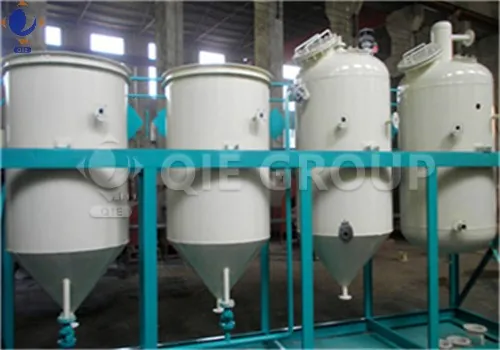
Core process: Degumming → Deacidification → Decolorization → Deodorization
Goals:
Consistent color and clarity
Controlled acid value and peroxide value
Compliance with food safety and export standards 👉( Soybean oil refinery plant )
Automation and online monitoring are essential to avoid color, odor, and flavor fluctuations caused by manual adjustments.
Some plants experience:
Excellent individual equipment but poor system integration
Low oil yield and high energy consumption
Compliance issues with export or quality standards
The problem is usually system-level planning, not the equipment itself.
QIE Group provides:
✅ Process design & workshop layout
✅ Equipment selection & parameter matching
✅ Energy, safety, and oil recovery optimization
✅ Installation guidance & staff training
For 50–3000 TPD capacity planning, a full-chain engineering approach is recommended.
Q1: How to choose the production capacity, e.g., 100TPD vs. 300TPD?
A: It depends on raw material supply, target market, and budget. Small plants are typically 10–50TPD, medium 50–100TPD, large or export-oriented plants 100TPD+. Once your daily output is clear, we can provide an initial equipment configuration plan.
Q2: Can I just do pressing, or is solvent extraction necessary?
A: Pressing-only is feasible for limited budgets, but for higher oil yield, lower residual oil, and commercial production, the “pre-press + solvent extraction” combination is generally preferred.
Q3: What is the investment range for a complete production line?
A: Costs vary with capacity, automation level, process standards, and whether the product is for export. Providing your capacity and target market allows an estimated budget range.
Q4: What basic conditions should be confirmed before construction?
A: Workshop size, steam/electricity supply, safety standards (especially for solvent sections), and product use (domestic or export) must be determined in advance.
Q5: Can QIE Group provide full turnkey delivery?
A: Yes—design, manufacturing, installation guidance, and training support are included. Stage-based cooperation is also possible.
If you are considering building or upgrading your soybean oil processing project, whether for initial consultation, capacity planning, or understanding equipment and process options, we are ready to assist you starting from a single conversation.
Contact us to get an initial plan and recommendations tailored to your plant → Corn germ oil press Corn oil production line Corn oil processing equipment Corn oil refining equipment Corn oil processing plant Corn germ oil factory
Sunflower oil equipment How much oil can be produced from one ton of sunflower seeds? Sunflower seed press Sunflower oil production line Edible oil processing equipment Sunflower seed oil yield
Palm Kernel Oil Processing Plant Palm Kernel Oil Refiner Palm kernel oil production line Small Palm Oil Press
Soybean oil press machine Soybean oil solvent extraction equipment Soybean oil processing plant Soybean oil production line Soybean oil refinery plant
Intelligent palm oil production line Palm fruit processing technology High efficiency oil yield Automated pressing system By-product recycling and value-added
Corn germ oil press Corn oil production line Corn oil processing equipment Corn oil refining equipment Corn oil processing plant Corn germ oil factory
Sunflower oil equipment How much oil can be produced from one ton of sunflower seeds? Sunflower seed press Sunflower oil production line Edible oil processing equipment Sunflower seed oil yield
Palm Kernel Oil Processing Plant Palm Kernel Oil Refiner Palm kernel oil production line Small Palm Oil Press
Soybean oil press machine Soybean oil solvent extraction equipment Soybean oil processing plant Soybean oil production line Soybean oil refinery plant
Intelligent palm oil production line Palm fruit processing technology High efficiency oil yield Automated pressing system By-product recycling and value-added


.png?x-oss-process=image/resize,h_100,m_lfit/format,webp)
.png?x-oss-process=image/resize,h_100,m_lfit/format,webp)
.png?x-oss-process=image/resize,h_100,m_lfit/format,webp)