
In today's competitive edible oil industry, the real gap between processing plants is no longer defined by a single piece of equipment—but by the overall efficiency of the entire production system. With volatile raw material prices, rising energy costs, and stricter environmental regulations, more oil processing companies are rethinking their strategy:
Instead of simply expanding capacity, how can we improve efficiency per ton of output?
Based on QIE Group's experience across multiple 300TPD–1000TPD projects, one trend is clear: Systematic optimization often delivers more stable and sustainable profit growth than capacity expansion alone.
In the past, companies focused more on pressing capacity, leaching efficiency, and refining quality. But now, the decision-making logic is changing: How much electricity and steam is consumed per ton of oil? Is the oil yield stable? Is raw material loss controllable? Is the data traceable and analyzable?
In common production processes (such as sunflower seed oil processing technology , soybean oil extraction process , and edible oil refining process ), energy consumption is closely related to oil yield.
Taking soybean oil, rapeseed oil, and sunflower seed oil as examples:
Through system optimization (including processes and equipment), oil refineries can typically achieve the following:
In other words, energy saving is not just about "saving a little electricity." It also affects equipment lifespan, production line stability, oil yield, product consistency, and management efficiency, ultimately directly impacting the company's profit structure.

Many oil plants don't lack investment; rather, their investments fail to create synergy. For example, replacing a single oil press with a high-efficiency one might improve the efficiency of a local process, but if pretreatment is unstable, steam parameters fluctuate, or the leaching system control lags, the overall benefits will still be diminished. The following types of problems are particularly common in traditional plants:
Unreasonable production scheduling, frequent start-ups and shutdowns, and long equipment standby times can lead to "hidden losses" of electricity and steam. In some factories, the idle time can even reach 6%–12%.
Wear and tear on the press, decreased heat exchange efficiency, and insufficient heat transfer in the leaching system are often "chronic" problems that are easily overlooked. Companies only realize the problems have accumulated when the oil yield declines.
Key parameters such as temperature, vacuum level, moisture content, and steaming/frying time are highly susceptible to fluctuations in oil quality if not monitored in real time. This is especially true for medium to large-sized oil mills.
👉 Even a 0.5% difference in oil yield can result in a very significant difference in annual profits.
In refining, deodorization, and steam systems, a large amount of heat energy is directly emitted. However, with proper design, this heat can be fully recovered and reused.
Unlike upgrading individual equipment, we emphasize system optimization around the overall plant operation logic. The core of this approach is to integrate production process optimization, high-efficiency equipment upgrades, intelligent monitoring and data analysis, and waste heat recovery and recycling into a feasible upgrade path.
The value of this type of systematic transformation lies in the fact that it not only helps companies reduce current energy consumption, but also enables factories to continuously identify problems, continuously improve processes, and continuously increase returns.
Process optimization is often the first and most easily underestimated step in many projects. By systematically analyzing the processes of raw material intake, pretreatment, pressing, leaching, refining, and storage and transportation, the energy consumption level, capacity matching, and operational bottlenecks of each process can be clearly identified.
For example, rationally scheduling production capacity effectively reduces heat loss caused by frequent start-ups and shutdowns; optimizing material flow routes can reduce intermediate storage and transfer times; and standardizing the cycle time of each process helps reduce local congestion and waiting. For instance, in several soybean oil processing projects , process optimization alone has achieved the following:
These improvements may not seem as "obvious" as adding new equipment, but they often have a faster return on investment and are more suitable as a starting point for oil plant upgrades.
Upgrading key equipment after system optimization results in more stable performance. For example:
In real-world projects, this type of modification typically results in: a more stable oil yield + lower unit energy consumption.
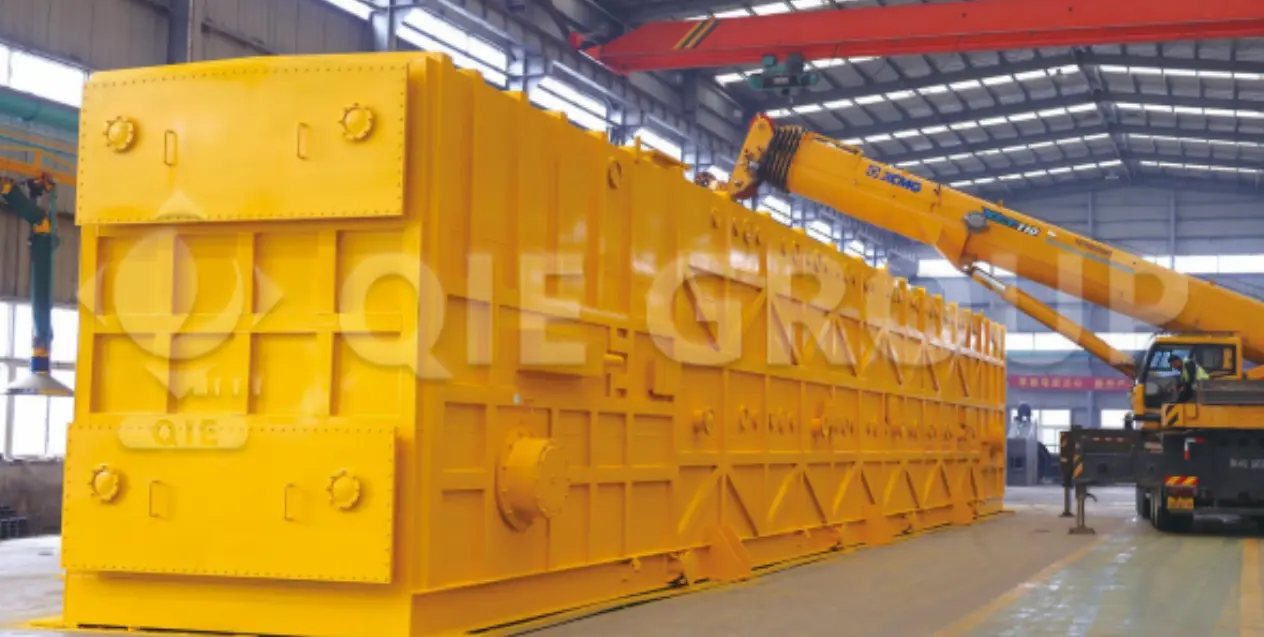
As production capacity expands, experience alone is no longer sufficient to support refined management. Intelligent systems enable real-time monitoring of: energy consumption (electricity/steam), oil yield, temperature, pressure, flow rate, and vacuum level.
In the past, many on-site adjustments relied on the experience of veteran workers, which is certainly valuable. However, as production scales up, relying solely on human supervision is no longer sufficient to meet the requirements of refined management. With the help of a data analytics platform, management can see more intuitively:
Shifting from "experience-based management" to "data-driven" is also a core component of modern oil refinery intelligent upgrade solutions .
In the oil processing industry, waste heat recovery is often the most underestimated energy-saving aspect. Especially in refining, evaporation, deodorization, and steam systems, a large amount of heat energy that cannot be recycled will directly result in wasted costs.
With proper design, waste heat can be used for: raw material preheating, process water heating, and auxiliary system energy supply. This typically achieves the following:
From an environmental perspective, waste heat utilization can also help companies reduce carbon emission pressure.
| Optimize Project | Common status before upgrade | Reference improvement range after upgrade | Significance for business operations |
|---|---|---|---|
| Unit power consumption | Significant fluctuations and potential losses due to idling. | Decrease of 5%–12% | Reduce direct manufacturing costs |
| Steam consumption | Low heat utilization efficiency | Decrease of 8%–15% | Reduce energy expenditure and emissions pressure |
| Oil yield | Significantly affected by fluctuations in raw materials and operations | Increase by 0.3%–1.0% | Directly increases profit per ton of oil |
| Raw material loss | Inaccurate statistics and lagging management | Decrease of 2%–5% | Improve resource utilization efficiency |
| Product stability | Quality fluctuations leading to rework or adjustments | Significant improvement | Enhance market competitiveness |
| Decision efficiency | Reliant on experience, slow reaction time | Data-driven, faster response | Facilitates capacity expansion and investment planning |
Note: Actual results depend on the quality of raw materials, equipment infrastructure, and management level.
Because an oil refinery is essentially a strongly coupled system:
👉 Single-point optimization is easily offset by other aspects.
👉 Only system optimization can generate sustainable benefits.
This is why future competition among oil refineries will no longer be just about production capacity, but about system efficiency.
Q1: What is the ROI for an oil plant energy-saving upgrade?
Typically 1–3 years, depending on the scope and baseline efficiency.
Q2: Is it possible to upgrade without replacing the entire plant?
Yes. Partial upgrades combined with system optimization can still deliver significant improvements.
Q3: Which sections should be prioritized first?
Priority should be given to: pretreatment system, steam and heat exchange system, and refining section.
A clear shift is taking place in the oil processing industry: from "scale priority" to "efficiency priority." In the future, more competitive oil mills will often possess: lower energy consumption, more stable oil yield, a clearer data system, and more refined management capabilities.
QIE Group offers more than just equipment; it provides comprehensive upgrade solutions from processes to management, helping companies build more stable profitability in uncertain markets.
Does your oil plant have any of the following problems? High energy consumption, unstable oil yield, decreased equipment efficiency, and lack of data support for management.
We can provide customized energy-saving and intelligent upgrade solutions based on your raw material type, production capacity, and existing equipment configuration.
 turnkey edible oil plant edible oil processing plant edible oil processing line EPC edible oil plant design and construction
turnkey vegetable oil production line EPC oil processing plant edible oil refinery design global oil extraction line QIE Group
edible oil processing oil extraction process pressing vs solvent extraction oilseed processing plant soybean oil extraction sunflower oil processing
Hot-pressed sesame oil Sesame oil yield Sesame oil production process Energy-saving and efficiency-enhancing equipment Aroma Enhancement Solution
sunflower oil production line clear sunflower oil turnkey oil plant physical refining high-quality edible oil
turnkey edible oil plant edible oil processing plant edible oil processing line EPC edible oil plant design and construction
turnkey vegetable oil production line EPC oil processing plant edible oil refinery design global oil extraction line QIE Group
edible oil processing oil extraction process pressing vs solvent extraction oilseed processing plant soybean oil extraction sunflower oil processing
Hot-pressed sesame oil Sesame oil yield Sesame oil production process Energy-saving and efficiency-enhancing equipment Aroma Enhancement Solution
sunflower oil production line clear sunflower oil turnkey oil plant physical refining high-quality edible oil




.png?x-oss-process=image/resize,h_100,m_lfit/format,webp)
.png?x-oss-process=image/resize,h_100,m_lfit/format,webp)
.png?x-oss-process=image/resize,h_100,m_lfit/format,webp)


