
When planning a cottonseed oil project, investors and plant managers often face three major pain points: frequent fluctuations in oil quality, high refining losses, and difficulty controlling overall operating costs. These challenges often stem from insufficient understanding of cottonseed's unique characteristics and the interplay of processing steps.
Drawing on QIE GROUP's experience in multiple global cottonseed oil projects, this article analyzes the core engineering challenges of cottonseed oil production and provides practical solutions for plant design, process selection, and operation.
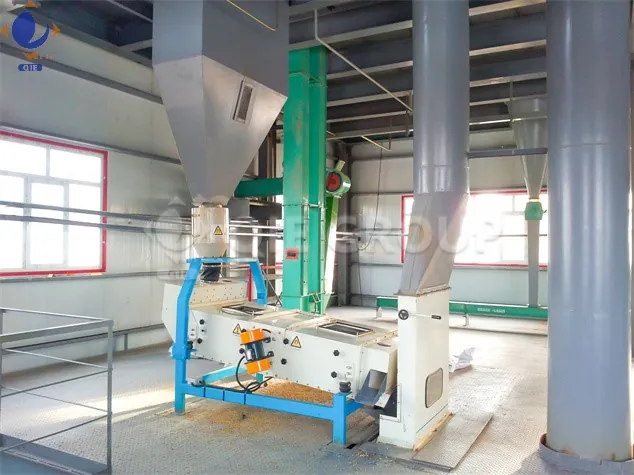
Moderate oil content: Cotton kernels contain about 18–25% oil, but are encased in a hard, fiber-rich, and pigment-rich hull. Efficient hull-kernel separation (dehulling, decortication, kernel separation) is critical for pressing efficiency and crude oil quality.
High gossypol content: Free gossypol in cottonseed oil can cause dark color, bitter taste, and refining difficulty. Food-grade cottonseed oil typically requires FG <0.9–1.0%.
High wax content: Cottonseed oil contains more wax than soybean or canola oil, requiring winterization for low-temperature clarity and smooth mouthfeel.
Complex non-oil components: Phospholipids, pigments, and trace metals increase refining difficulty. 👉(Cottonseed oil pretreatment process)
Free gossypol reduces bleaching efficiency, increases neutralization losses, and reacts at high temperature to form dark compounds.
Controlling free gossypol is a continuous task throughout the process: from roasting, pressing/solvent extraction, to refining operations.
Pressing: Temperature and moisture must be carefully controlled; deviations can lower oil yield or degrade oil quality.
Refining: High free gossypol, pigments, and wax lead to higher refining losses compared to soybean or canola oil. Neutralization, bleaching, winterization, and deodorization require optimized design.
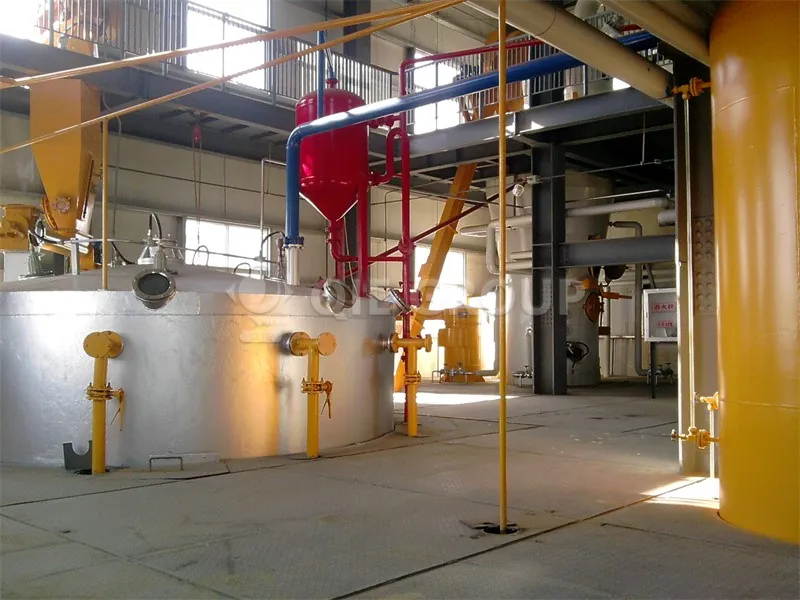
Free gossypol control throughout the process: Transform free gossypol into bound form early and minimize migration to the oil phase.
Removal of pigments and wax: Balance bleaching efficiency, cost, and solid waste generation.
Crude oil quality fluctuations: Differences in origin, variety, and storage conditions require robust processing systems.
Direct pressing vs. pre-pressing + solvent extraction
Direct pressing: Suitable for small-scale (<100 TPD) industrial/fodder oils or zero-solvent requirements, but oil yield is low and refining losses are high. 👉(Cottonseed oil press machine)
Pre-pressing + solvent extraction: Suitable for ≥100 TPD food-grade oil production, maximizing yield (>95%) but requires higher investment and solvent safety management.
Refining method selection
Chemical refining: Flexible, effective at removing free gossypol, but high neutral oil loss and wastewater generation.
Physical refining: Lower losses, no wastewater, but raw oil quality must be extremely high—rarely feasible for cottonseed oil directly.
Optimizing refining losses requires full-process coordination: crude oil quality, degumming, neutralization, decolorization, deodorization.
Integrated energy use (steam, hot oil, condensate) impacts overall operating cost.
Free gossypol and oil quality control throughout the process: establish CCPs (Critical Control Points) and real-time process adjustments.
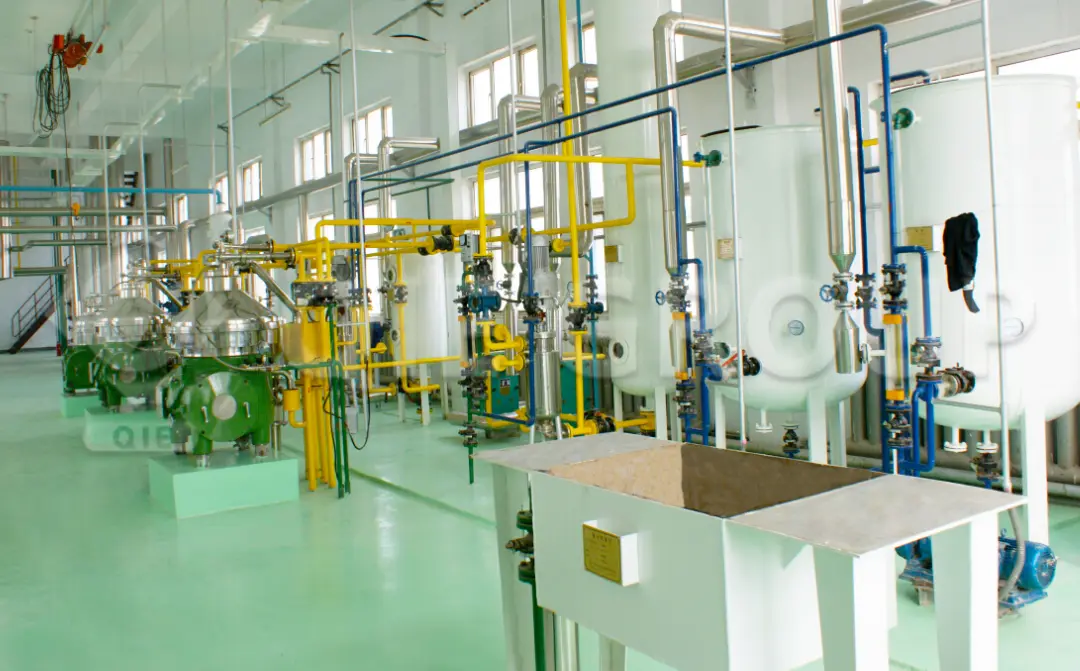
Direct pressing: Small scale, limited budget, industrial/fodder oil, can accept lower yield and higher refining difficulty.
Pre-press + solvent extraction: Medium to large scale, food-grade production, aiming for maximum yield and profitability, requires careful process optimization and solvent management.
Chemical refining: Suitable for fluctuating crude oil quality, high free gossypol, and high color requirements.
Physical refining: Only feasible if pre-treatment is extremely efficient, free gossypol is very low, and investment can support reduced losses.
Higher oil quality → stronger process conditions → higher energy consumption and refining loss.
Lower energy/loss → milder conditions → less tolerant to poor-quality raw oil.
Stable operation → higher equipment investment → may operate below optimal efficiency.
Principle: There is no absolute best solution, only the optimal solution based on market requirements, raw oil variability, refining loss targets, and investment payback.
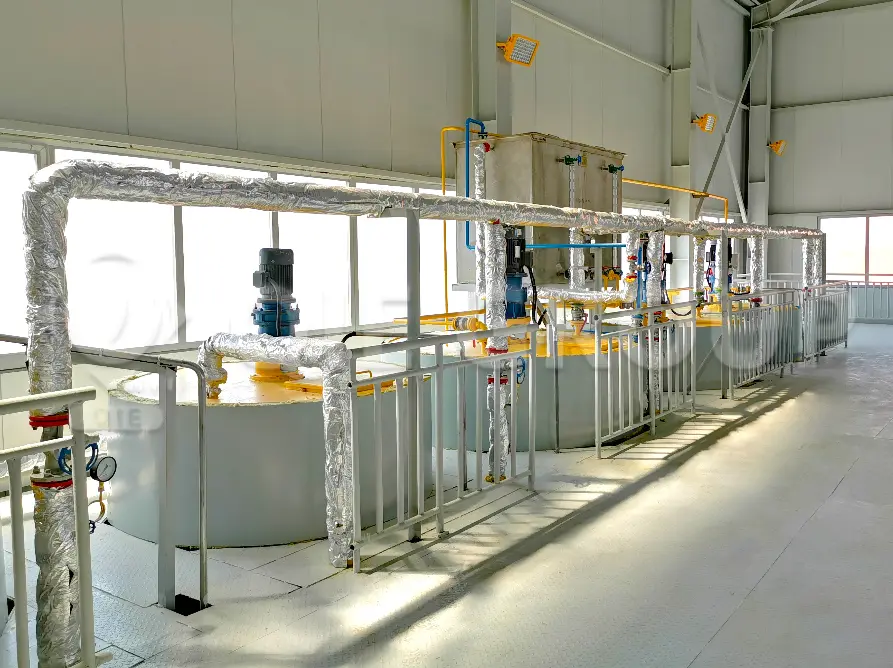
| Mistake | Potential Consequences |
|---|---|
| Ignoring pre-treatment efficiency | High hull content → higher pigments, wax, and impurities → increased refining loss, darker oil |
| Oversimplifying pressing | Uneven roasting → high residual oil or FG migration → crude oil difficult to refine |
| Blindly choosing physical refining | Crude oil does not meet requirements → low neutralization efficiency, frequent downtime, higher costs |
| Selecting equipment/auxiliaries based on price only | Low-efficiency centrifuge or filter → high oil loss, high bleaching clay consumption → high overall cost |
| Underestimating FG monitoring | No real-time detection → FG exceeds limits → customer complaints, brand risk, export compliance issues |
Raw material is the starting point: Analyze variety, origin, impurity content, and free gossypol levels.
Pre-treatment determines the outcome: Cleaning, dehulling, crushing, and roasting affect pressing yield and refining loss.
Free gossypol control throughout the process: From raw material reception to refining, maintain monitoring and control.
Robustness over theoretical optimum: Favor flexible, error-tolerant solutions over lab-optimal designs.
Life Cycle Cost Analysis (LCCA): Evaluate equipment efficiency, reliability, lifespan, and impact on upstream/downstream processes.
Maintainability and local support: Equipment must be easy to maintain, spare parts accessible, and supplier support reliable.
Q1: What are typical refining losses for cottonseed oil?
Chemical refining: 4–6%; physical refining: <3% theoretically, but rarely feasible for direct application.
Q2: Why is cottonseed oil harder to physically refine than soybean oil?
High free gossypol pigments, and wax require deep degumming, bleaching, and winterization; otherwise, the deacidification tower fouls and efficiency drops.
Q3: Common reasons for winterization failure?
Insufficient wax dissolution, too rapid cooling, low filtration efficiency, and high pigment content in crude oil.
Q4: How to effectively control free gossypol?
Monitor roasting, pressing/solvent extraction temperature and moisture, and chemical refining conditions; rapid free gossypol testing is critical.
Q5: How to choose between chemical and physical refining?
Variable quality crude, high free gossypol, high-end export markets → chemical refining.
Very high-quality crude, sufficient investment, aiming for low loss → physical refining (requires full cost verification).
Thorough understanding of cottonseed raw material properties and process limits.
Scientific engineering decision-making beyond equipment parameters.
Rational trade-offs among oil quality, yield, cost, and operational stability.
Avoiding common mistakes and controlling free gossypol throughout the process.
Following robust, life-cycle-cost-aware, and adaptable engineering principles.
By adhering to these guidelines, investors and project teams can ensure long-term economical, stable, and efficient operation of cottonseed oil pressing and refining plants, providing reliable production of food-grade cottonseed oil.
 cold press oil press hot press oil press edible oil processing plant solvent extraction oil oil mill equipment edible oil production line
sesame oil production line sesame oil refining plant small scale sesame oil expeller sesame oil processing plant sesame oil press machine sesame oil mill plant
Rice bran oil pretreatment equipment Rice bran expansion and extraction production line Rice bran oil refining equipment Rice bran oil production line turnkey project Small rice bran oil production line configuration plan Price of 50 tons per day rice bran oil equipment
Sunflower oil yield Sunflower oil production process Dehulling process Mechanical pressing Oil refining
Sunflower oil equipment How much oil can be produced from one ton of sunflower seeds? Sunflower seed press Sunflower oil production line Edible oil processing equipment Sunflower seed oil yield
cold press oil press hot press oil press edible oil processing plant solvent extraction oil oil mill equipment edible oil production line
sesame oil production line sesame oil refining plant small scale sesame oil expeller sesame oil processing plant sesame oil press machine sesame oil mill plant
Rice bran oil pretreatment equipment Rice bran expansion and extraction production line Rice bran oil refining equipment Rice bran oil production line turnkey project Small rice bran oil production line configuration plan Price of 50 tons per day rice bran oil equipment
Sunflower oil yield Sunflower oil production process Dehulling process Mechanical pressing Oil refining
Sunflower oil equipment How much oil can be produced from one ton of sunflower seeds? Sunflower seed press Sunflower oil production line Edible oil processing equipment Sunflower seed oil yield
.webp?x-oss-process=image/resize,h_800,m_lfit/format,webp)


.png?x-oss-process=image/resize,h_100,m_lfit/format,webp)
.png?x-oss-process=image/resize,h_100,m_lfit/format,webp)
.png?x-oss-process=image/resize,h_100,m_lfit/format,webp)


