
Why do identical shea nuts yield completely different results in color, odor, free fatty acid (FFA) levels, and active nutrient retention when processed at different plants?
Producing cosmetic-grade (Class A) unrefined shea butter relies entirely on maintaining extraction temperatures below 60°C to preserve up to 7%–11% of vital unsaponifiable matter. QIE GROUP optimizes this process by introducing advanced West African source-moisture control (<8%) and low-intervention physical extraction through our tailored global EPC turnkey solutions.
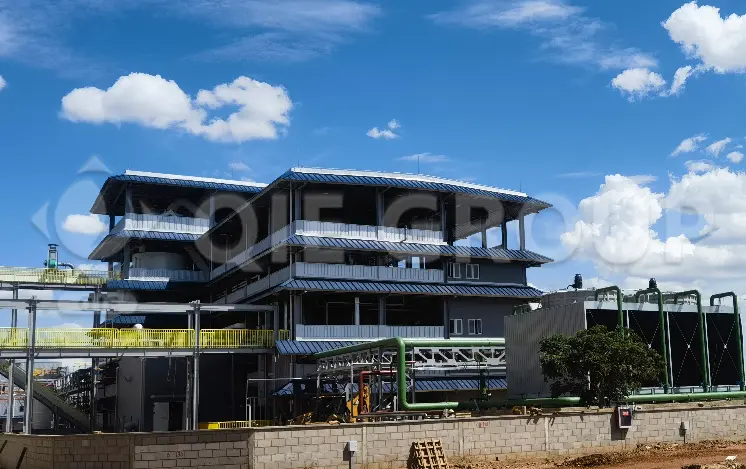
In the global high-end cosmetics and specialty fats markets, unrefined shea butter commands a premium price due to its high concentration of unsaponifiable matter, triterpene alcohols, and vitamins A and E.
However, many international investors face a critical bottleneck: Why do identical shea nuts yield completely different results in color, odor, free fatty acid (FFA) levels, and active nutrient retention when processed at different plants?
The answer lies entirely in the processing technology and engineering layout. High-premium shea butter does not rely on complex chemical refining; instead, it depends on "low-intervention, high-retention" physical extraction. As a global oils and fats engineering EPC contractor with 43 years of experience, we break down the optimal technological pathways for a high-performance shea butter production line designed for premium-grade output.
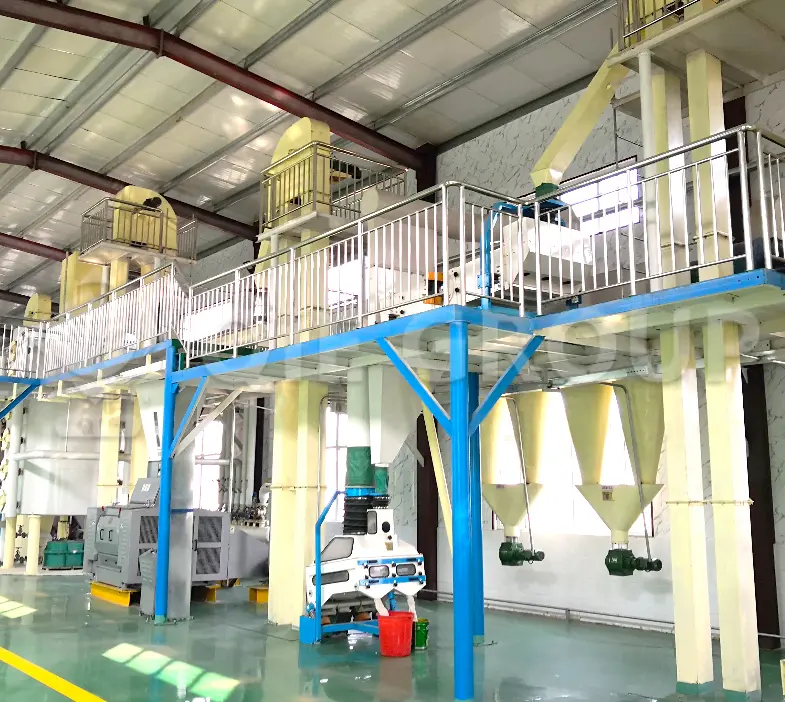
The condition of the raw material before entering the press determines the overall oil yield and final product grade. Our smart pretreatment process is built on three essential phases:
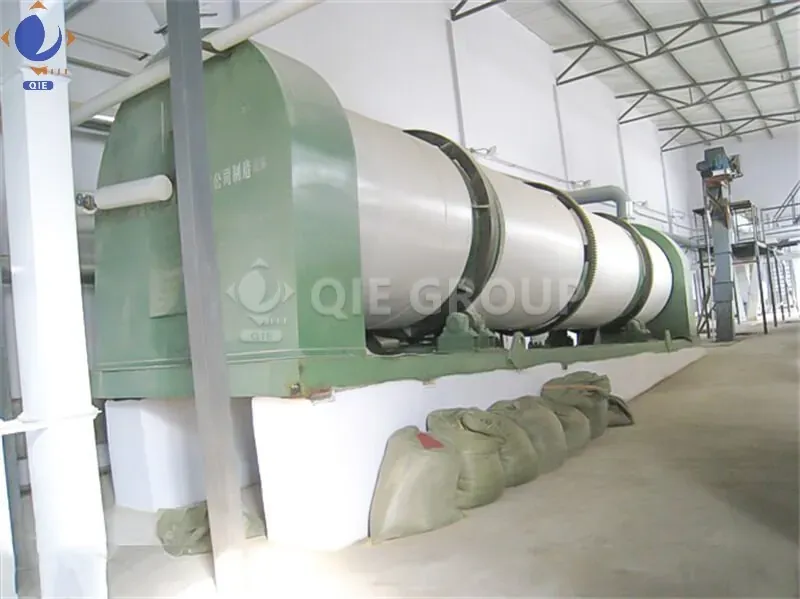
The spike of Free Fatty Acids (FFA) in shea kernels typically begins during traditional water-boiling and sun-drying phases. We have engineered a rotary mechanical decorticating and low-energy biomass drying system. By precisely stabilizing raw shea nut moisture at 7%–8%, we halt lipase hydrolysis at the source, securing a low FFA baseline.
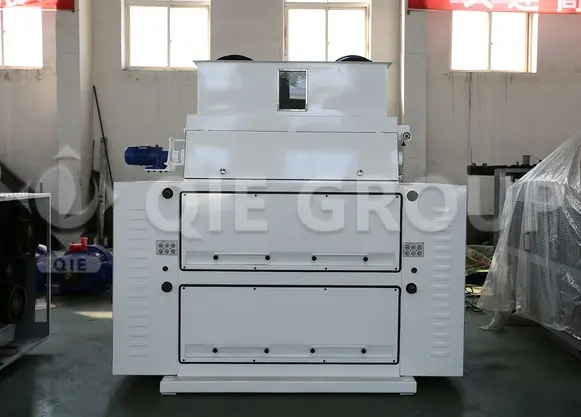
Utilizing high-efficiency vibratory screens, gravity de-stoners, and strong magnetic separators, this phase eliminates sand, stones, and metallic impurities. This protects the pressing screws or hydraulic systems from premature mechanical wear.
Shea kernels are highly dense and tough; pressing them whole often leads to machine jamming. We utilize custom high-strength crushers to reduce kernels to an optimal particle size, unlocking oil potential while strictly eliminating localized friction heat.
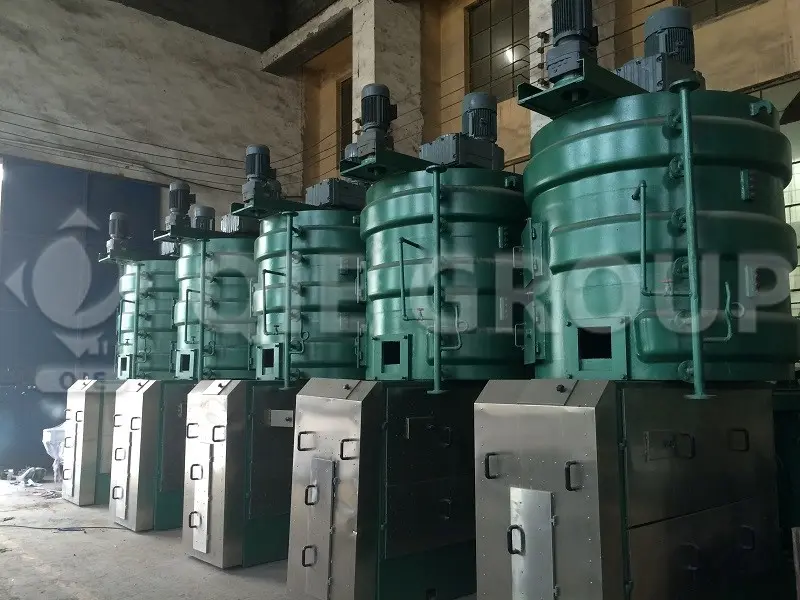
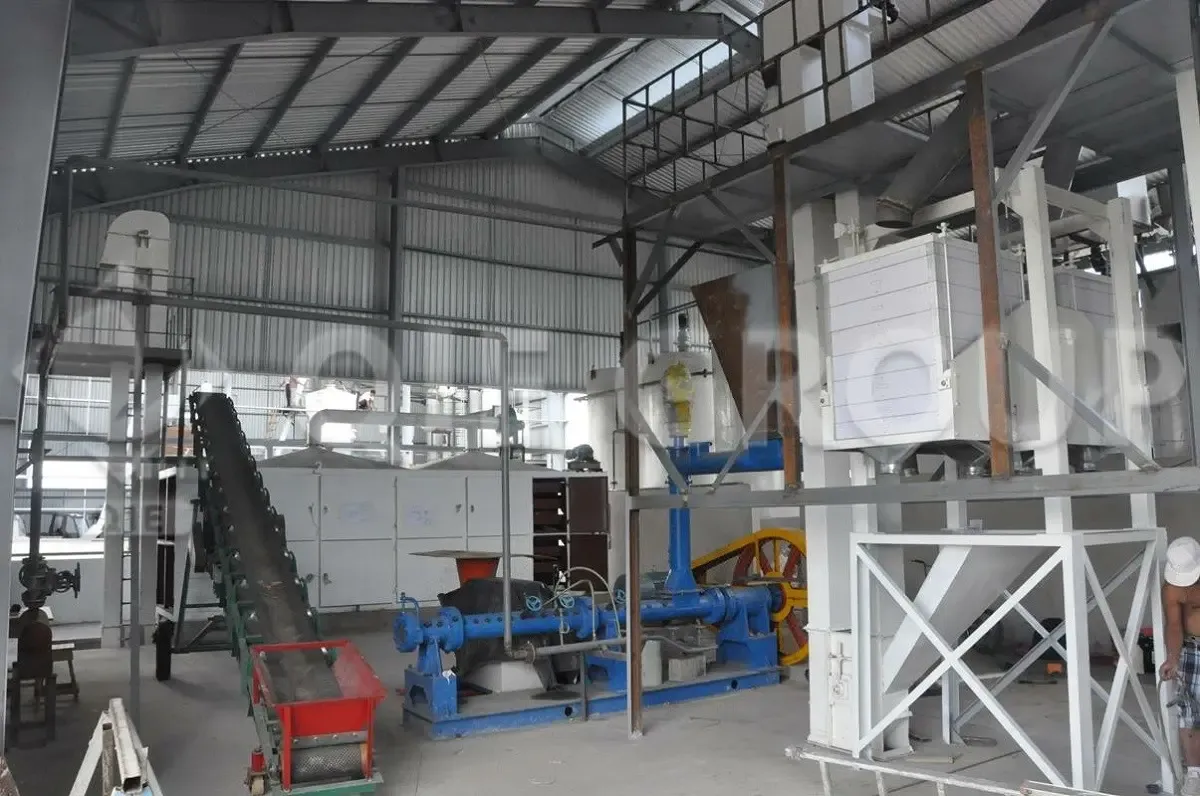
To prevent solvent residues and high-temperature desolventization from destroying active ingredients, we completely exclude solvent extraction (hexane extraction) for premium lines. We offer two highly mature, 100% physical pressing pathways:
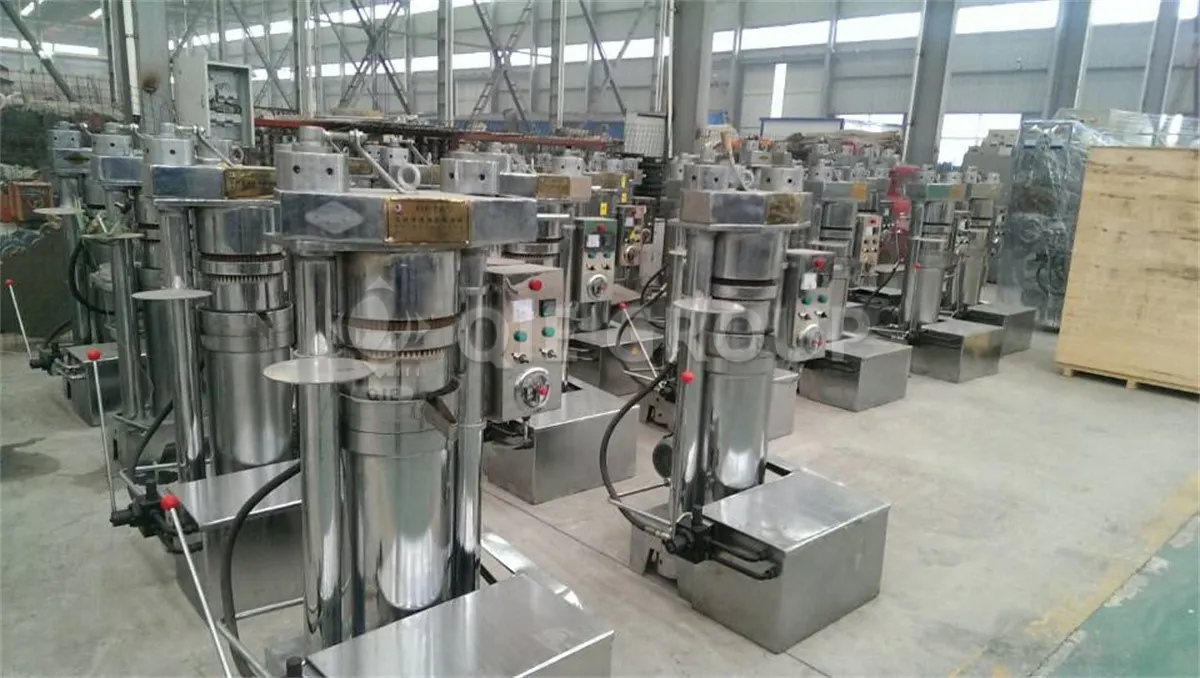
| Engineering Indicators | Continuous Screw Pressing Line | Low-Temperature Hydraulic Pressing Line |
|---|---|---|
| Operation Mode | Continuous dynamic screw extrusion | Batch-based static hydraulic (Multi-unit automation) |
| Max Temperature | Slight mechanical friction heat, oil zone ≈ 70°C-80°C | Near-zero friction heat, process stays ≤ 50°C (Extra Virgin) |
| Cake Residual Oil | ≤ 6%—7% (High extraction efficiency) | ≈ 10%—12% (Smooth pressing) |
| Unsaponifiables | Retains ≈ 70%—80%, ideal for standard industrial specs | ≥ 95% Perfect retention, zero thermal degradation |
| Daily Capacity | 5 TPD to 100 TPD+ medium-to-large mills | 5 TPD to 20+ TPD premium customized plants |
| Business Objective | Mass production economies of scale, lower OPEX | Ultimate purity, highest premium margins, Class A Organic |
The essence of premium shea butter lies in its "unrefined" natural potency. Heavy chemical refining (degumming, deacidification, decolorization, deodorization) strips away the crucial unsaponifiable matter.
QIE GROUP Insight
"The soul of premium shea butter lies in its 'unrefined' state. Any high-intensity chemical treatment or high-temperature deodorization turns this premium fat into lifelike, ordinary oil. We advocates a 'low-intervention' pathway, resolving impurities purely through physical means to guarantee product premium."
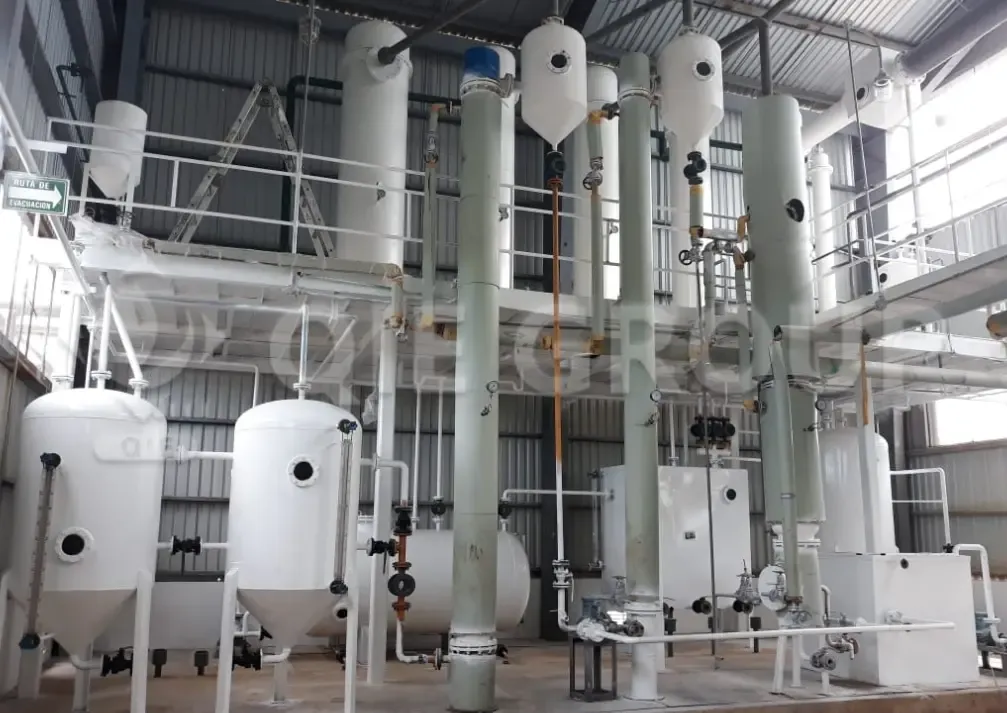
We advocates a physical clarification system. Immediately after pressing, the crude oil passes through an automatic discharge filtration system or high-efficiency physical sedimentation tanks at ambient temperatures, cleanly separating micro-particles and plant fiber debris.
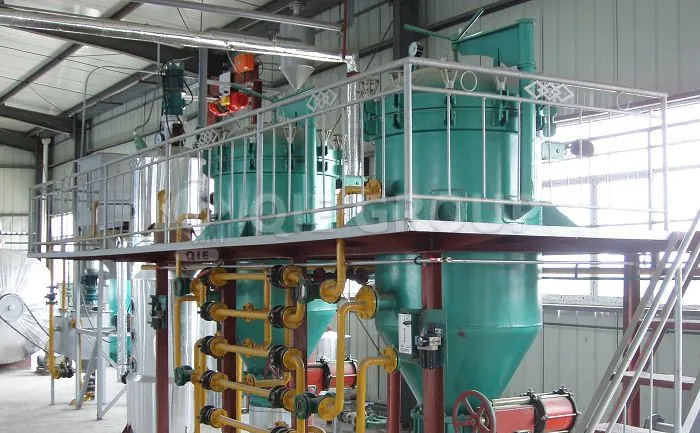
💡 The resulting unrefined shea butter yields a Free Fatty Acid (FFA) level consistently below 1% and a Peroxide Value (PV) under 2 meq/kg. Without a single chemical intervention, the end product directly complies with international Class A cosmetic and food-grade standards.
Operating a processing facility in primary sourcing regions like West Africa requires managing specific localized challenges, such as volatile power grids and unique labor structures.
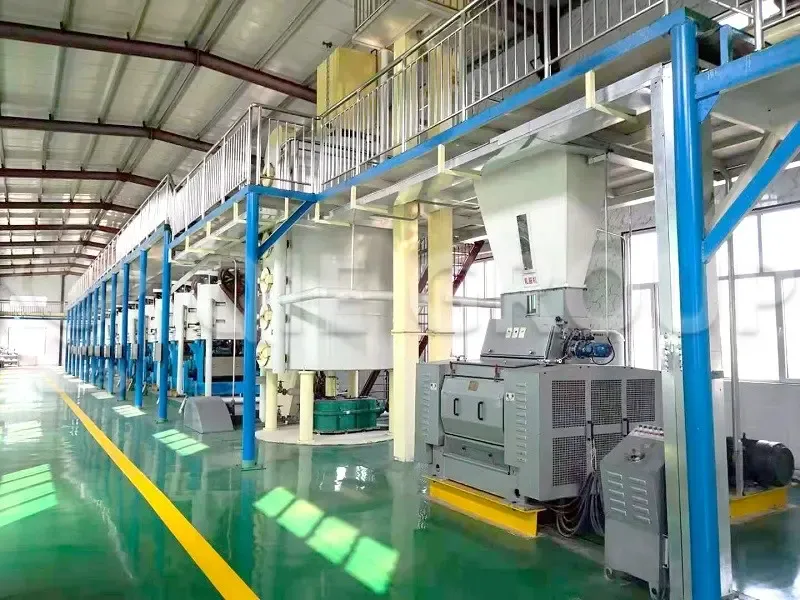
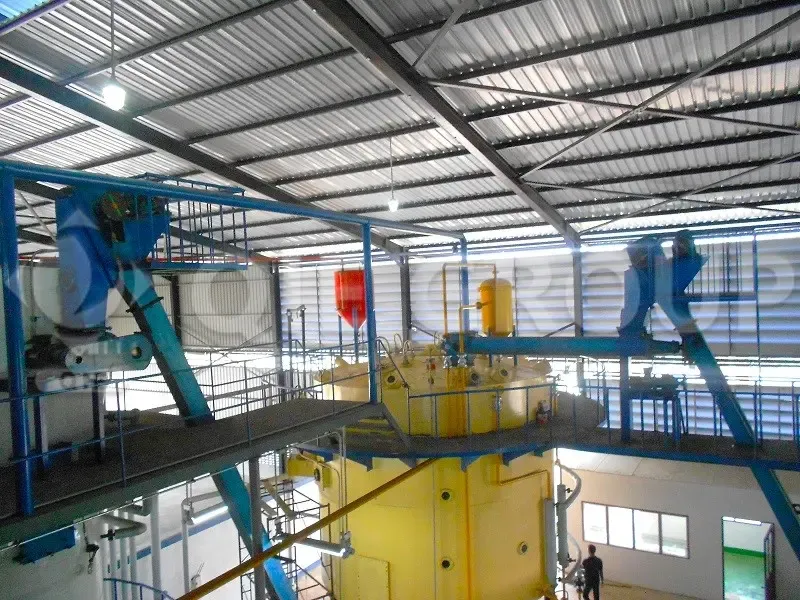
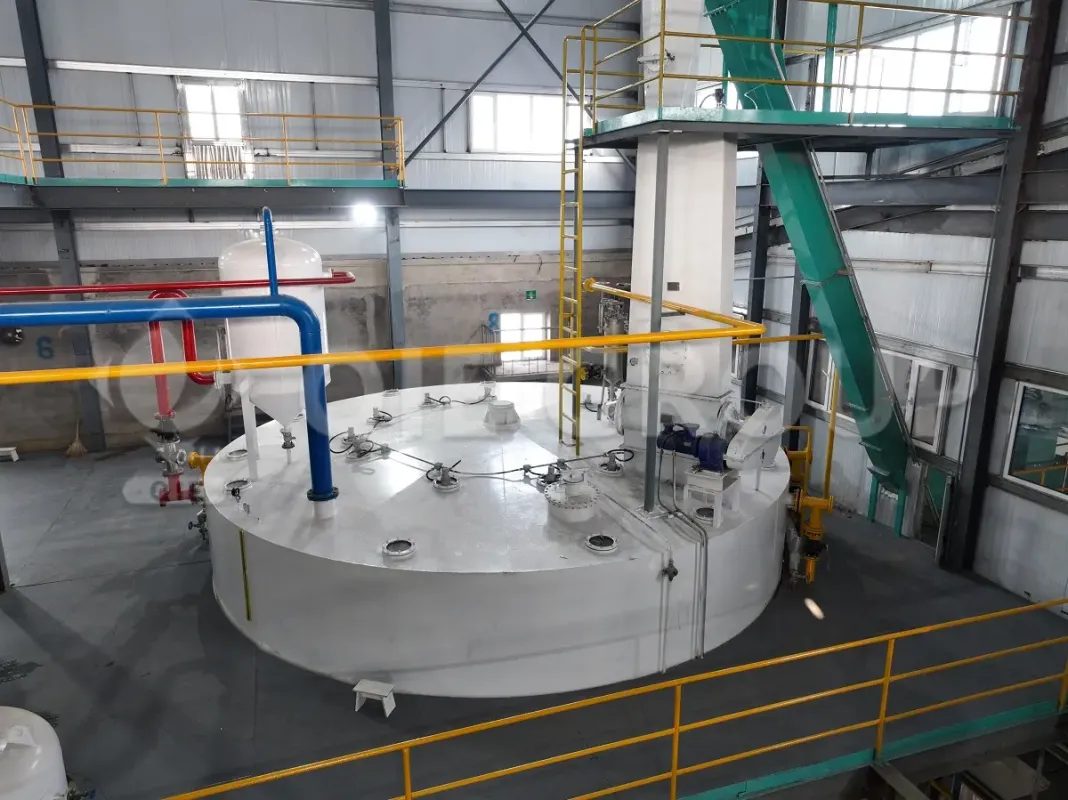
QIE GROUP provides comprehensive, full-lifecycle EPC Turnkey Solutions, covering process flow engineering, plant layout design, precision machinery manufacturing, secure international logistics, on-site overseas installation/commissioning, and localized operator training. Our systems feature smart PLC control panels, enabling one-touch remote monitoring of critical plant metrics to maximize uptime and reduce OPEX.
Traditional handcrafted methods struggle with temperature control, water purity, and processing delays, causing Free Fatty Acids (FFA) and peroxide values to spike, which results in a dark color and burnt odor. Our automated line uses a fully enclosed, temperature-controlled physical process that deactivates destructive lipolytic enzymes while locking in natural nutrients, producing premium, light-colored butter.
Shea butter has a melting point between 32°C - 45°C. We integrate automated steam or electrical heat-tracing systems combined with high-density insulation across all transport pipelines, filtration units, storage tanks, and press bodies. This keeps the material at its optimal fluid temperature without overheating the bioactive compounds.
Our export machinery features a "high-redundancy wear-resistant design." Core wear components are forged from high-spec alloy steel, extending operational lifespans by 1.5 to 2 times compared to standard models. Every turnkey project includes a 1-to-2-year supply of essential spare parts. Furthermore, our engineers provide remote SCADA diagnostics and scheduled on-site technical audits.
Shea cake is rich in fiber and natural tannins, making it unsuitable for direct animal feed. In QIE GROUP’s plant layouts, we configure this byproduct as fuel for biomass boilers to power the pretreatment drying and heat-tracing lines, or compress it into biomass briquettes for local industrial sale. This "energy loop" reduces overall factory OPEX by up to 30%.
Ready to capture the high-margin organic cosmetics market or upgrade an existing processing facility? Partner with an experienced engineering team that understands both West African logistics and international quality standards.
Contact QIE GROUP today to receive:
 vegetable oil production line turnkey edible oil plant edible oil processing plant oil refining equipment oil pressing machine
edible oil processing oil extraction process pressing vs solvent extraction oilseed processing plant soybean oil extraction sunflower oil processing
Palm kernel oil processing PKO processing high-yield palm kernel oil screw press solvent extraction turnkey oil processing
Shea butter production line Shea butter processing plant Shea butter processing equipment Investment Costs of Shea Butter Plants in Nigeria Shea butter processing
Rice bran oil processing technology Rice bran oil solvent extraction equipment Rice bran oil press Rice bran oil processing plant Solvent leaching and pressing
vegetable oil production line turnkey edible oil plant edible oil processing plant oil refining equipment oil pressing machine
edible oil processing oil extraction process pressing vs solvent extraction oilseed processing plant soybean oil extraction sunflower oil processing
Palm kernel oil processing PKO processing high-yield palm kernel oil screw press solvent extraction turnkey oil processing
Shea butter production line Shea butter processing plant Shea butter processing equipment Investment Costs of Shea Butter Plants in Nigeria Shea butter processing
Rice bran oil processing technology Rice bran oil solvent extraction equipment Rice bran oil press Rice bran oil processing plant Solvent leaching and pressing






.png?x-oss-process=image/resize,h_100,m_lfit/format,webp)
.png?x-oss-process=image/resize,h_100,m_lfit/format,webp)
.png?x-oss-process=image/resize,h_100,m_lfit/format,webp)


.webp?x-oss-process=image/resize,h_800,m_lfit/format,webp)


