Against the backdrop of upgraded global edible oil market demand in 2026, premium copra oil is experiencing a new wave of investment due to its wide application in food processing, medium-chain triglyceride (MCT) extraction, and healthy oils.
As a leading oleochemical engineering EPC (Engineering, Procurement, and Construction) service provider, QIE Group leverages its years of practical experience in Southeast Asia and Africa to offer you one-stop turnkey engineering solutions, from raw material pretreatment, high-efficiency pressing, solvent extraction to RBD (Refined Raw Materials) refining.
Depending on the production scale and oil requirements, the production of copra oil mainly follows these processes:
Suitable for: Small and medium-sized production or high-end oil products that emphasize coconut flavor.
Advantages: The oil has a rich flavor and retains the unique aroma of coconut; it is more suitable for cold-pressing production.
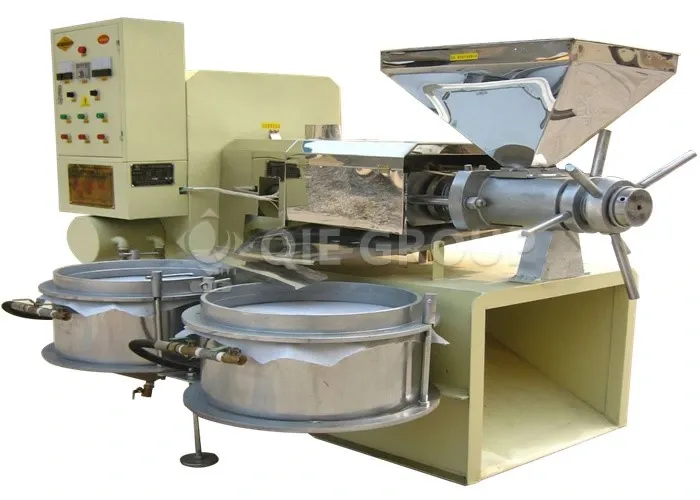
Features: The residual oil content is about 6%-8%, and the oil yield is slightly lower than that of the combined process; it can achieve low-temperature pressing to retain the natural active ingredients of coconut (such as vitamin E and lauric acid).
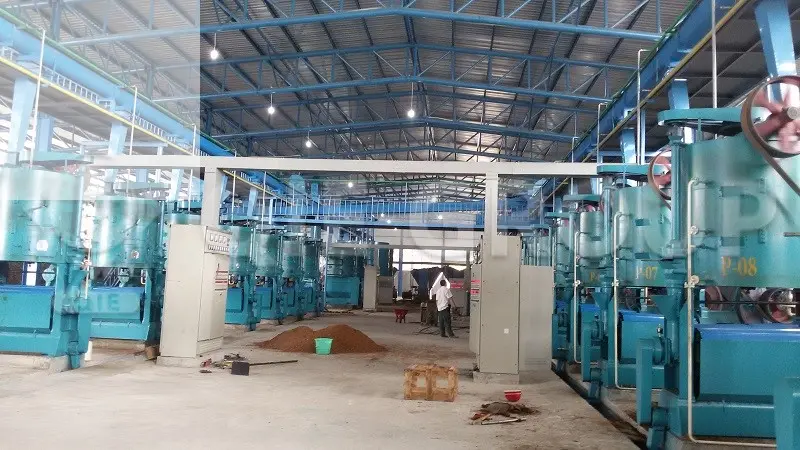
Applicable to: large-scale industrial production.
Advantages: High oil yield, optimal economic benefits, and residual oil rate ≤0.7%.
Features: After pre-pressing to extract the main oil, the residual oil is recovered by leaching; hexane or isoalkanes can be selected for leaching to ensure low solvent consumption (≤1.5 kg/t).
🔹 Comparison:
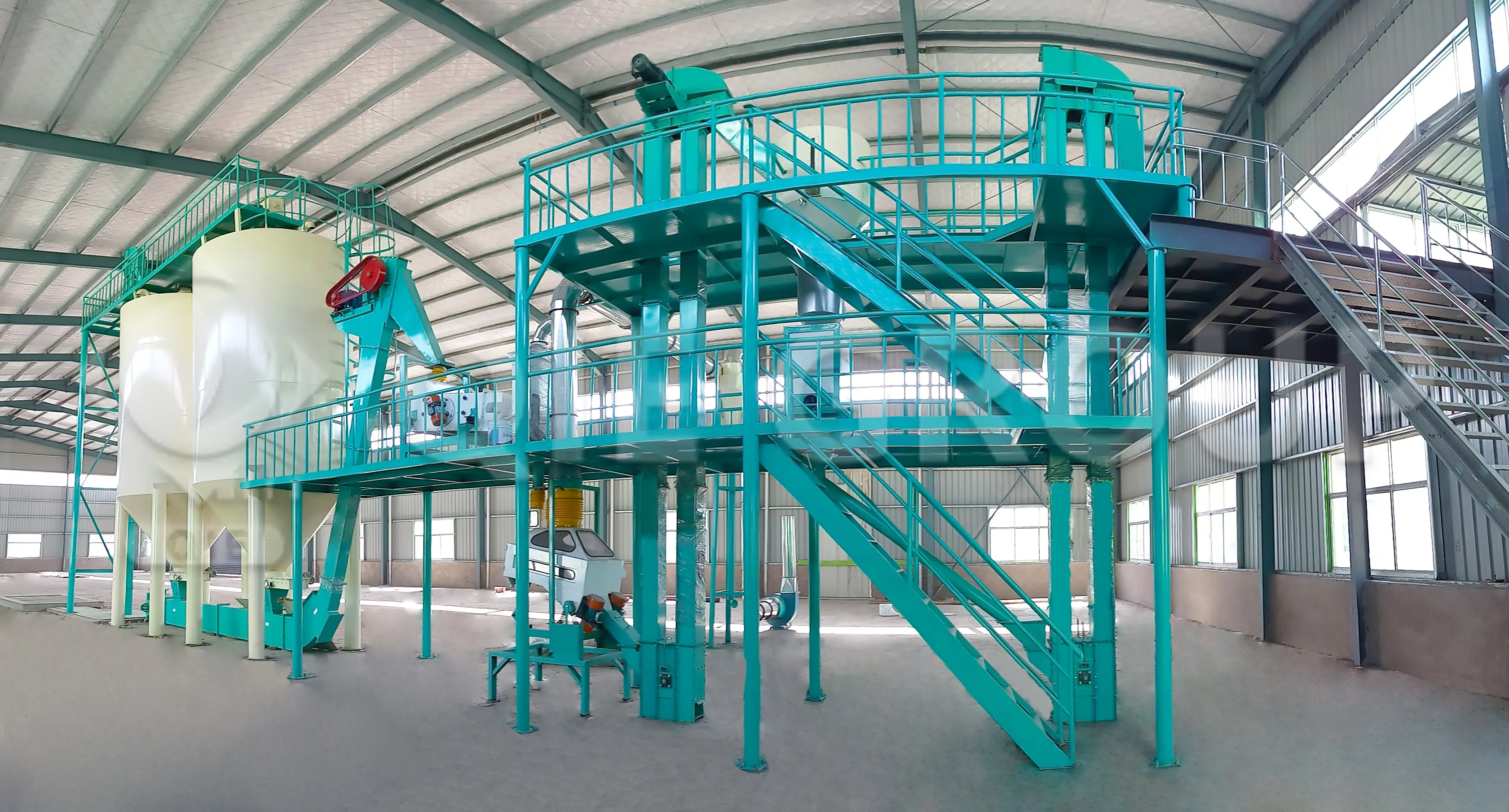
Pretreatment directly affects oil yield and oil quality. Key equipment and processes:
1. Enhanced cleaning and magnetic separation
During the harvesting and storage process, dried coconuts are easily contaminated with fibers, sand, and metallic impurities. QIE employs a double-layer vibrating screen combined with a powerful magnetic separator to effectively prevent hard impurities from causing wear and tear on the subsequent expensive roller mill and oil press screws.
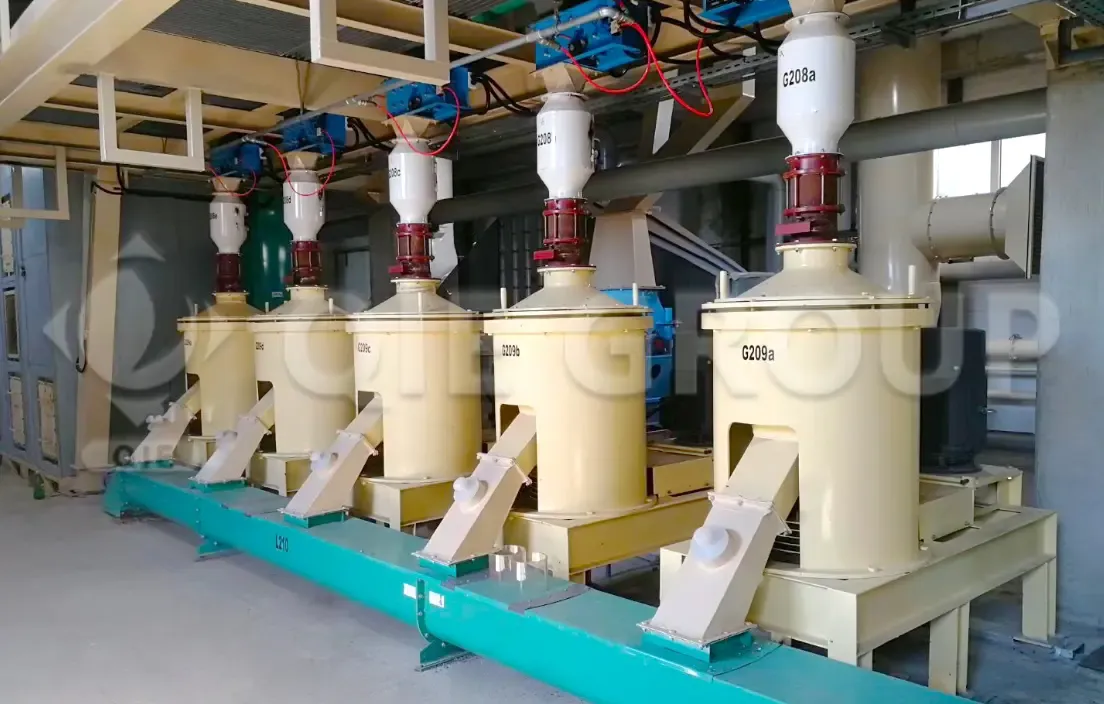
2. Precise crushing & flaking
Crushing: Crush the coconut into 4-6mm particles.
Flaking: Pressing the billet into thin sheets of 0.3-0.5 mm. This step completely destroys the cell structure of the oilseed and shortens the oil outflow path.
3. Multi-Stage conditioning
Parameter control: The moisture content of the feed should be strictly controlled at 5%-7%, and the temperature should be maintained at 80-95°C.
QIE experts advise: Coconut oil is sensitive to temperature. Precise temperature control can prevent the raw material from charring and significantly reduce the initial color of the crude oil, thus reducing the pressure of subsequent decolorization.
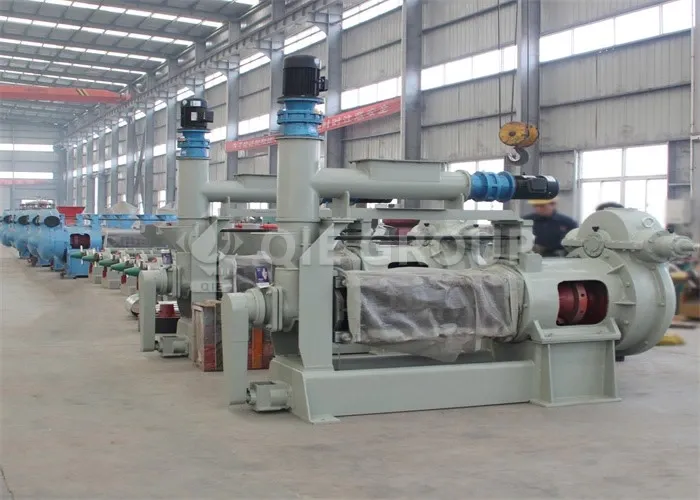
Principle: The steamed and roasted raw material is pushed by the screw shaft in the pressing chamber, and the space gradually shrinks, generating extremely high mechanical pressure (up to 70-140MPa), forcibly squeezing out the oil.
Performance: Residual oil content 6%-8%, rich oil flavor.
Equipment: Screw oil press
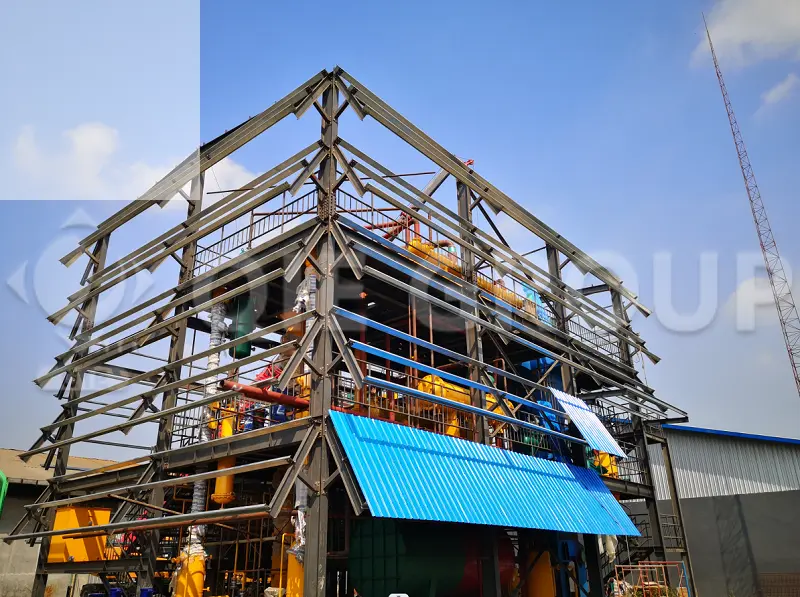
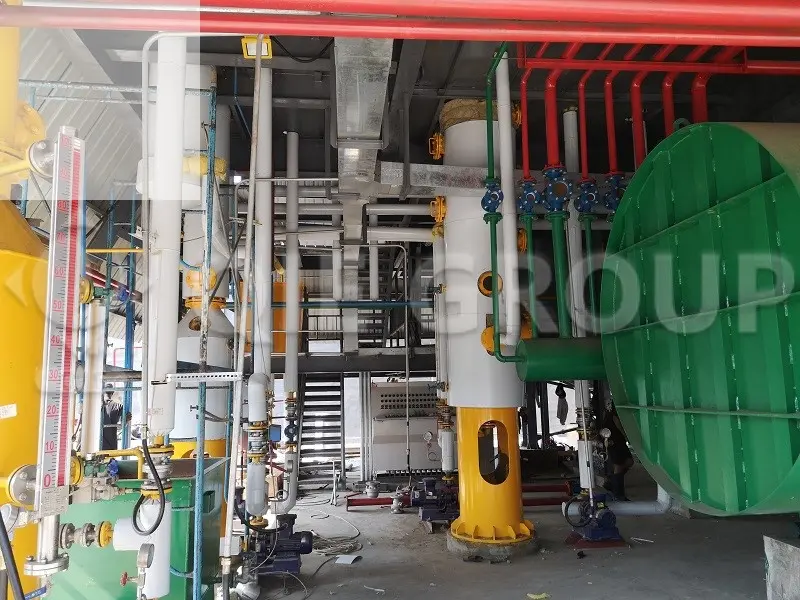
For oil mills seeking to maximize profits, pre-pressed cake (containing approximately 18% residual oil) must undergo an extraction process.
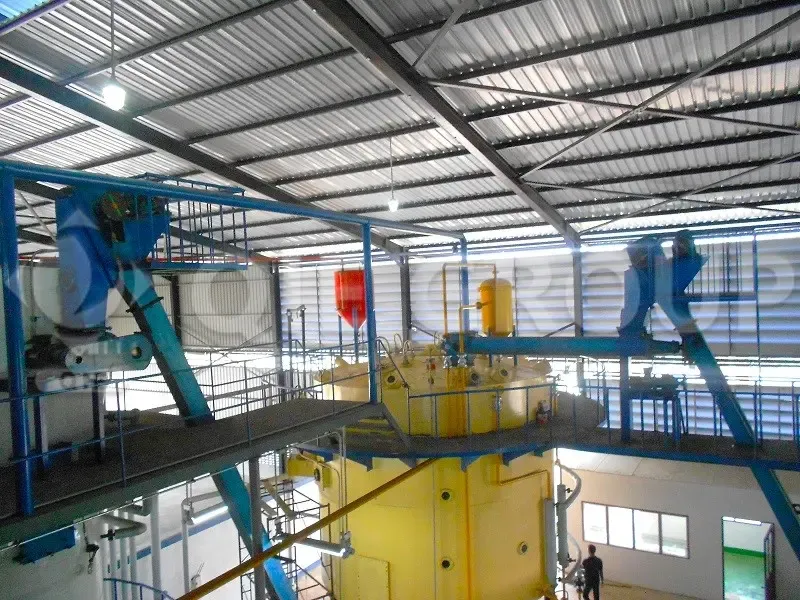
Core equipment: QIE recommends using a horizontal rotary extractor or a loop type extractor to achieve efficient extraction through full contact between the hexane solvent and the material.
Breakthrough in performance indicators: By using our negative pressure evaporation system and DTDC desolventizing technology, solvent consumption can be controlled to ≤ 1.5 kg/t, and the residual oil content in the cake can be stably maintained below 0.7%.
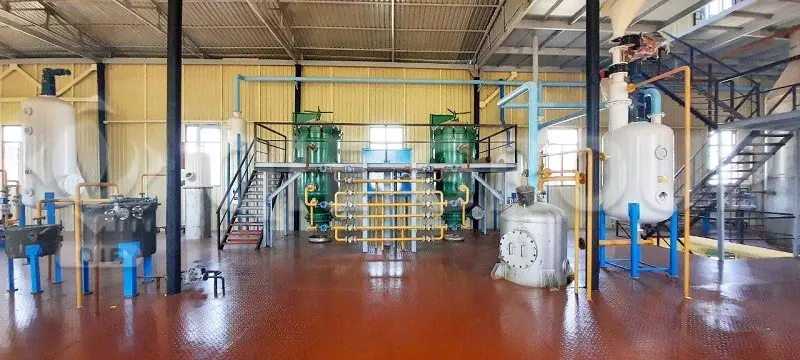
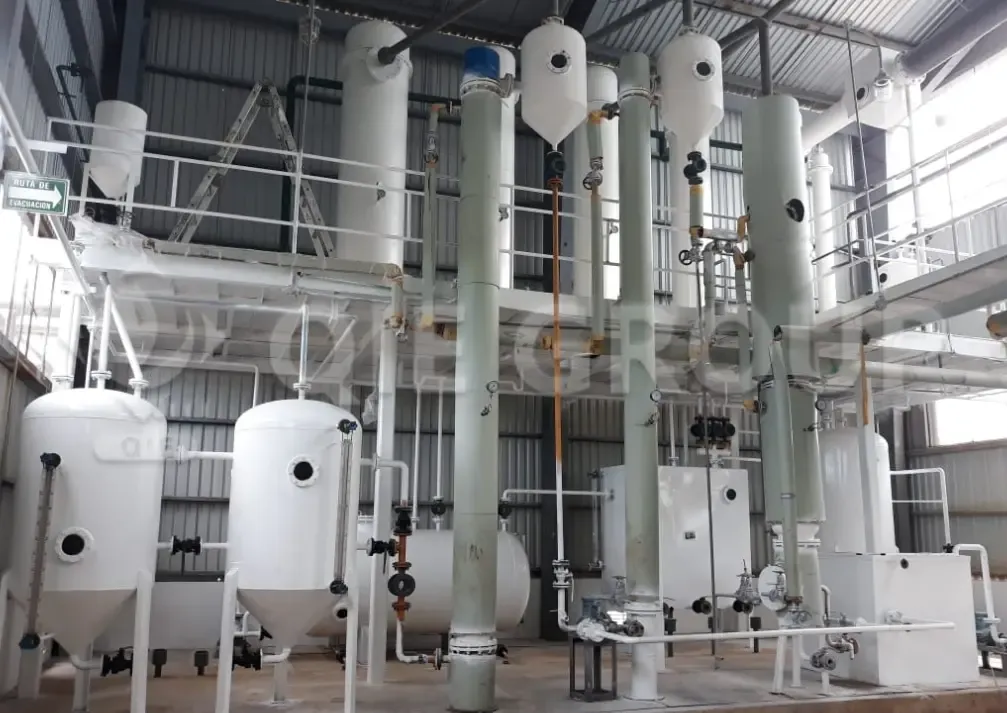
Crude coconut oil must be refined to meet RBD grade standards, which include refining, decolorization, and deodorization.
1. Degumming
Remove phospholipids, mucilage, and other colloidal impurities. Methods include hydration sedimentation (for small-scale operations) or water washing combined with a disc centrifuge (for large-scale operations). Prevent colloidal substances from affecting oil stability and subsequent refining efficiency.
2. Physical refining and deacidification
Given the high FFA (free fatty acid) content of coconut oil, QIE prioritizes physical distillation for deacidification. Compared to traditional chemical alkali refining, the physical process eliminates the need for alkali, reducing neutral oil loss by more than 1.5%, and yields higher-value byproduct fatty acids.
3. Vacuum decolorization
We utilize activated clay to adsorb chlorophyll and residual impurities under high vacuum. Our fully automatic vertical blade filter ensures that the amount of activated clay residue is minimized, resulting in a clear and transparent oil.
4. High vacuum deodorization
Steam injection is performed at a high temperature of 230-240°C and an extreme vacuum of less than 2 mbar. This process not only removes off-flavor substances that affect the taste, but also controls the acid value of the finished oil to below 0.2 mgKOH/g, greatly extending the product's shelf life.
⚠️ Energy-saving optimization suggestions: Deodorization steam can be recovered, and waste heat can be used for preheating of billets to reduce overall energy consumption.
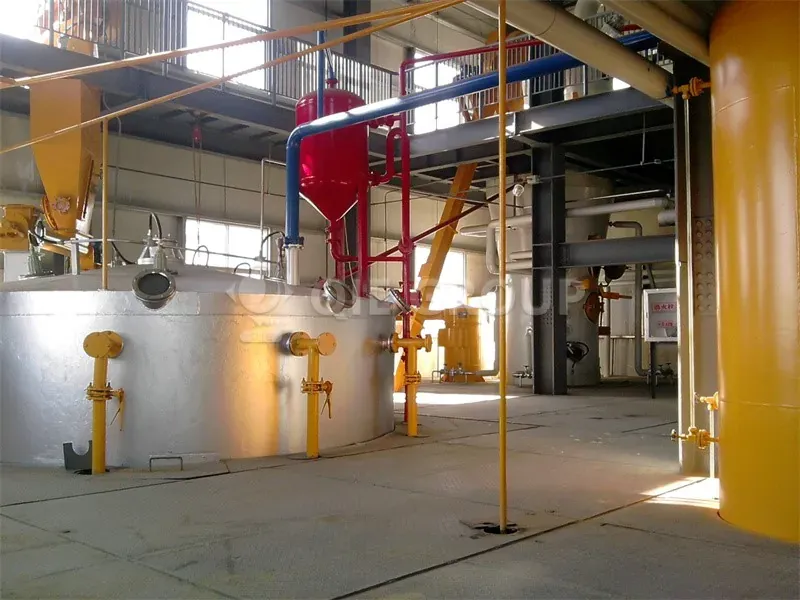
As a global supplier of edible oil engineering solutions, the QIE Group not only provides equipment but also turnkey projects.
Customized solutions: We customize corrosion-resistant and wear-resistant production lines to suit the characteristics of raw materials from different production areas such as Southeast Asia and Africa.
Energy-saving design: Solvent extraction system heat recovery technology helps plants reduce steam consumption by 10%-15%.
Technical support: Extensive experience in delivering international projects, providing on-site installation guidance and staff training.
A: This is usually related to excessively high steaming and frying temperatures during pretreatment or insufficient use of bleaching clay during decolorization. QIE's automated temperature control system can effectively prevent carbonization reactions.
A: By optimizing the condensation system and using negative pressure evaporation technology, we have controlled solvent consumption to ≤ 1.5 kg/t of raw material.
A: Cold pressing preserves the natural flavor and nutrients, but the oil yield is slightly lower; hot pressing yields a higher oil yield and can be mass-produced industrially, but some flavor and natural components may be lost.
A: Yes. We have a full range of products, from small, compact pressing lines to large, fully automated RBD refining lines, all modularly designed to fit your budget and site.
Copra oil production is not just a competition of oil yield, but also a comprehensive consideration of oil quality, flavor, and economic benefits. QIE Group helps oil mills achieve efficient, high-quality, and sustainable copra oil production through advanced equipment, mature processes, and energy-saving optimization solutions.
We welcome you to request a customized quote and technical drawings for your coconut copra oil project.
 rice bran oil processing rice bran oil production rice bran oil plant oil extraction turnkey solution






.png?x-oss-process=image/resize,h_100,m_lfit/format,webp)
.png?x-oss-process=image/resize,h_100,m_lfit/format,webp)
.png?x-oss-process=image/resize,h_100,m_lfit/format,webp)