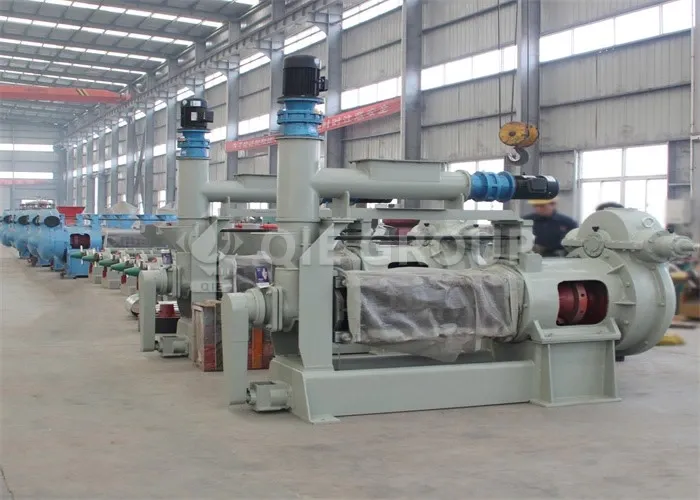
In the global edible oil market, rapeseed oil occupies a strategic position due to its balanced fatty acid profile, good oxidative stability, and widely recognized health attributes. For oil mill investors and plant managers, however, the real challenge is not simply producing rapeseed oil, but consistently delivering market- and regulation-compliant finished oil—with high smoke point, low acid value, clear color, neutral flavor, and long shelf life—while maintaining a competitive and predictable production cost.
This is fundamentally a systems engineering challenge. Success does not come from selecting individual “advanced” machines, but from designing and integrating a coherent process route, highly coordinated unit operations, and a production line with sufficient robustness to handle long-term raw material variability. Without a system-level approach, even high-end equipment can become a source of operational risk rather than value.
All successful rapeseed oil projects start with a realistic understanding of raw material variability. As an agricultural commodity, rapeseed inherently exhibits fluctuations that define the boundary conditions of plant design.
Different origins and varieties—such as Canadian canola (double-low), European winter rapeseed, or Asian spring rapeseed—show significant differences in oil content, glucosinolate levels, chlorophyll concentration, and impurity load. These directly influence pretreatment intensity, oil extraction strategy, and refining complexity.
Variations in moisture content, uneven maturity, mold risk, and storage-induced free fatty acid (FFA) increase can all affect oil yield, equipment load, and operational stability.
This unavoidable variability necessitates process designs with adequate flexibility and redundancy:
Cleaning systems sized beyond average feed conditions;
Conditioning and cooking systems with adjustable moisture, temperature, and residence time windows;
Deeper process monitoring and control across the entire line.
Attempting to process highly variable raw materials with a rigid, low-margin design is a common root cause of unstable operation and escalating operating costs.
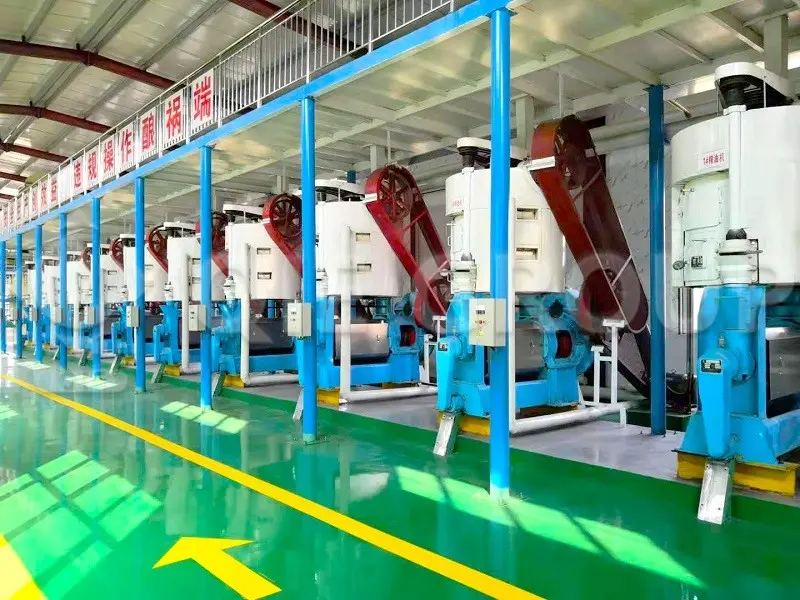
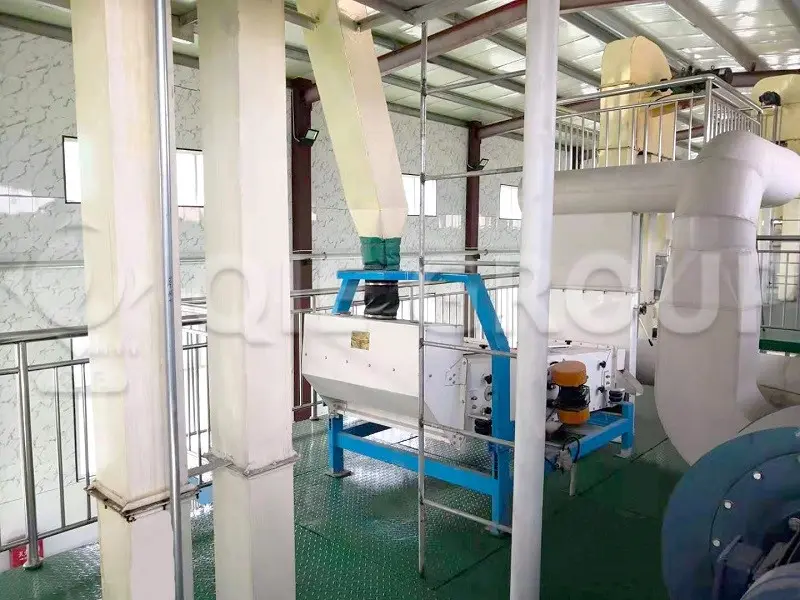
In rapeseed oil processing, pretreatment is not an auxiliary step—it is the foundation that determines the efficiency and stability of all downstream operations.
Cleaning: Magnets, vibrating screens, and destoners remove stones, sand, and metal contaminants. Beyond equipment protection, effective cleaning reduces impurity load in crude oil and stabilizes refining performance.
Flaking: Typical flake thickness ranges from 0.3 to 0.5 mm, carefully matched to rapeseed cell structure, heat transfer during cooking, and solvent penetration during extraction. Over-thick flakes limit oil release, while overly thin flakes generate fines, increasing solvent loss and meal desolventizing risk.
Cooking and conditioning: For expelling and pre-press solvent extraction routes, controlled moisture and temperature adjustment promotes protein denaturation, oil coalescence, and optimal plasticity. In projects targeting aromatic rapeseed oil, precise temperature control in this step is particularly critical.
Chain-failure risk: Inadequate pretreatment rarely causes isolated issues. Instead, it triggers a cascade of problems—poor flake quality, uneven cooking, unstable extraction—ultimately resulting in reduced oil yield, abnormal wear of presses and extractors, and increased refining load (higher gums, darker color, and more difficult degumming).
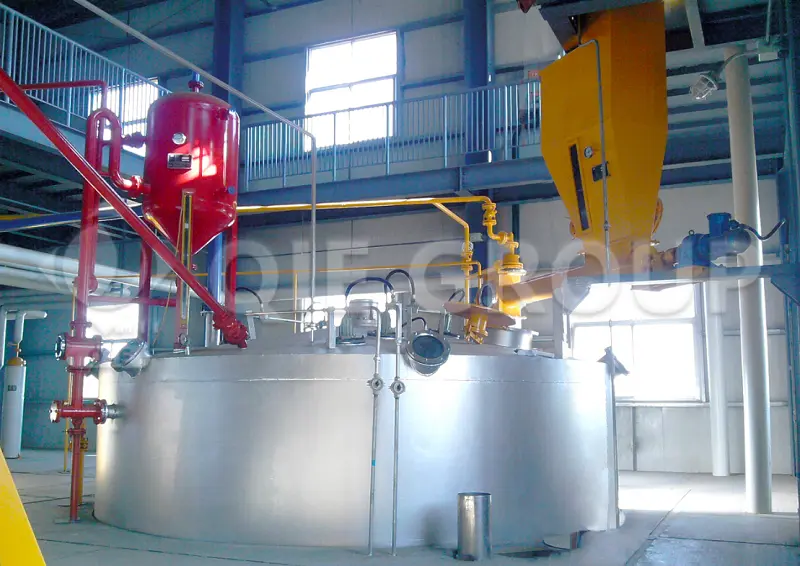
Mechanical pressing and solvent extraction are not a simple either–or choice. The optimal route depends on plant capacity, raw material conditions, product positioning, and long-term operating economics.
Typically applied in small to medium-scale plants (generally <100 TPD) or where a “mechanically pressed” label is prioritized. While process simplicity is an advantage, residual oil in cake is relatively high (often ≥5%), limiting overall oil recovery. 🔗(Rapeseed oil press machine)
This is the mainstream industrial solution, especially for capacities above 200 TPD. Pre-pressing removes most of the oil (press cake residual oil ~12–18%), followed by solvent extraction reducing residual oil to below 1%. In this route, solvent recovery efficiency and safety are key engineering considerations. 🔗 (Hot pressing, cold pressing and solvent extraction for rapeseed)
Pressed crude oil typically contains lower FFA but a higher proportion of non-hydratable phospholipids and colloidal impurities;
Extracted crude oil generally has higher total phosphorus and FFA, requiring more robust degumming, desolventizing, and deodorization design.
Thus, extraction route selection is effectively a trade-off between upstream investment and downstream refining complexity.
Rapeseed crude oil is characterized by high phosphorus content and significant chlorophyll levels, requiring targeted refining strategies.
As the foundation of refining, degumming often combines water degumming with acid or enzymatic degumming to ensure deep phosphorus removal (typically <10 ppm), enabling stable downstream bleaching and physical refining.
Chemical refining (alkali neutralization): Highly adaptable, suitable for high-FFA or high-impurity crude oils, but associated with higher neutral oil loss and wastewater load.
Physical refining (steam distillation): Offers lower oil loss and improved sustainability when crude oil quality is well controlled, but places stringent demands on upstream degumming and bleaching performance.
Activated bleaching earth, sometimes combined with activated carbon, is used to remove chlorophyll, residual soaps, and trace contaminants. Proper adsorbent selection helps avoid odor issues while controlling operating cost.
Under high temperature (typically 220–240°C) and high vacuum, direct steam stripping removes odor-active compounds and residual FFA. Advanced multi-temperature deodorization designs improve smoke point and oxidative stability while effectively limiting the formation of trans fatty acids and glycidyl esters, meeting stringent international market requirements.
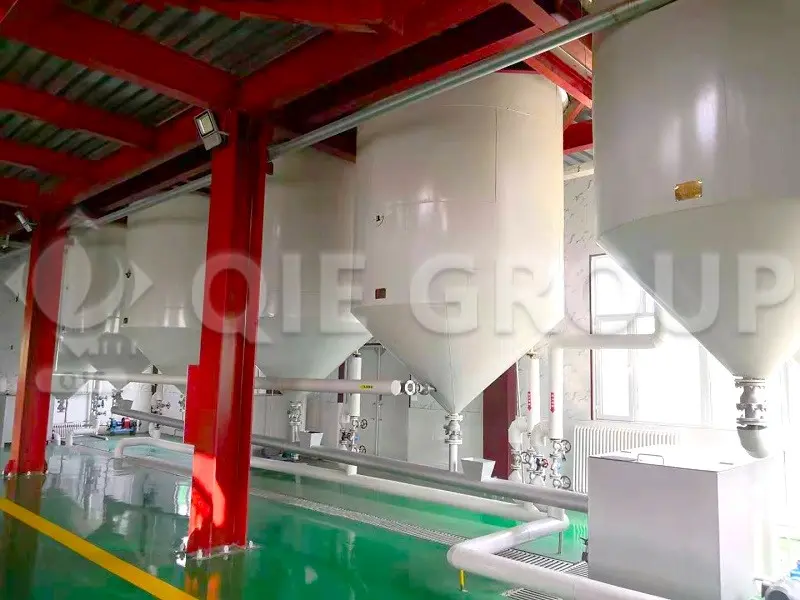
Practical operation shows that pushing processes toward theoretical extremes often leads to diminishing returns:
Reducing extractor residual oil below ~0.8% requires exponentially higher energy and capital input;
Physical refining can improve refining yield by 0.5–1.5%, but increases upstream processing cost and control requirements.
Operational stability should take priority over marginal gains. A wider, well-defined operating window typically delivers better long-term economics than chasing absolute limits.
Through systematic heat integration—such as recovering usable heat from the DT (Desolventizer-Toaster) system to preheat the deodorization section—overall steam consumption can be reduced by approximately 10–15%, partially offsetting quality control costs.
Critical units—including extractors, DTDC systems, deodorization towers, vacuum systems, and solvent recovery—should adopt proven structures, corrosion-resistant materials, and appropriate redundancy to avoid single-point failures.
Adequate access space, modular heat exchanger design, standardized spare parts, and online condition monitoring (vibration, temperature, key performance indicators) significantly reduce unplanned downtime.
In continuous oil plants, downtime losses can reach tens of thousands of dollars per hour. Apparent savings from under-designed systems are often quickly offset by operational disruptions.
The success of a rapeseed oil processing plant depends on a series of interlinked engineering decisions:
Start from raw materials: Quantify variability and define realistic process boundaries;
Ensure process synergy: Pretreatment, solvent extraction, and refining amplify each other’s performance;
Optimize globally: Balance yield, quality, energy consumption, CAPEX, and OPEX over the full life cycle;
Prioritize stability: Reliability and maintainability underpin sustainable profitability.
The value of “Right Process + Right Configuration” far exceeds that of any isolated parameter optimization.
As a specialist in edible oil processing system engineering, QIE GROUP focuses on integrated design rather than individual equipment supply. From raw material analysis and process route definition to equipment configuration, installation, commissioning, and technical handover, we deliver turnkey rapeseed oil processing plants that combine long-term operational stability with predictable economic performance—helping investors and plant operators convert complexity into lasting competitive advantage.
 rapeseed oil processing plant rapeseed oil production line edible oil equipment rapeseed oil refining equipment rapeseed oil press machine
Small edible oil processing plant Prospects for small oil refineries Edible oil factory construction Small oil plant equipment Edible Oil Processing Plant Costs Oil Refinery Profit Analysis Oil refinery investment Edible oil processing equipment
Sunflower oil yield Sunflower oil production process Dehulling process Mechanical pressing Oil refining
Sunflower oil equipment How much oil can be produced from one ton of sunflower seeds? Sunflower seed press Sunflower oil production line Edible oil processing equipment Sunflower seed oil yield
Corn Germ Oil Full pressing process Pre-pressing-leaching process Increased oil yield Edible Oil Processing
rapeseed oil processing plant rapeseed oil production line edible oil equipment rapeseed oil refining equipment rapeseed oil press machine
Small edible oil processing plant Prospects for small oil refineries Edible oil factory construction Small oil plant equipment Edible Oil Processing Plant Costs Oil Refinery Profit Analysis Oil refinery investment Edible oil processing equipment
Sunflower oil yield Sunflower oil production process Dehulling process Mechanical pressing Oil refining
Sunflower oil equipment How much oil can be produced from one ton of sunflower seeds? Sunflower seed press Sunflower oil production line Edible oil processing equipment Sunflower seed oil yield
Corn Germ Oil Full pressing process Pre-pressing-leaching process Increased oil yield Edible Oil Processing


.webp?x-oss-process=image/resize,h_800,m_lfit/format,webp)


.png?x-oss-process=image/resize,h_100,m_lfit/format,webp)
.png?x-oss-process=image/resize,h_100,m_lfit/format,webp)
.png?x-oss-process=image/resize,h_100,m_lfit/format,webp)