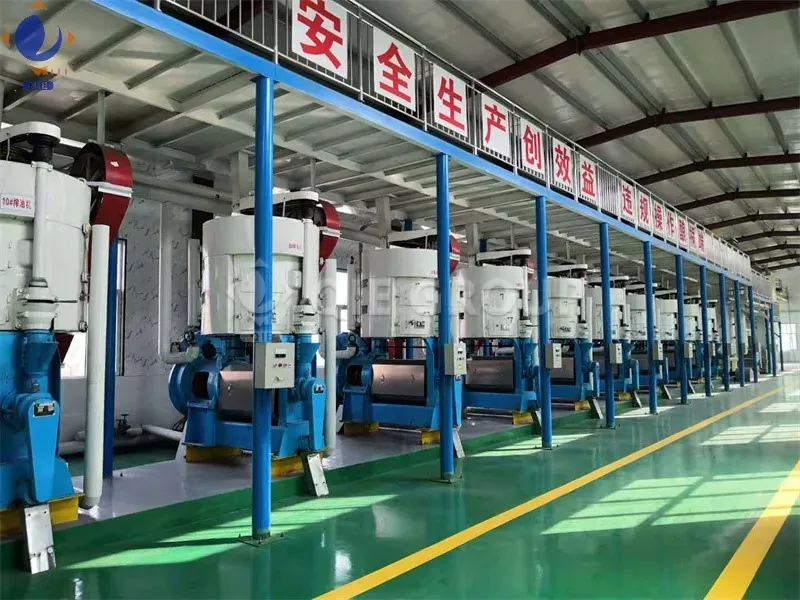
When evaluating a canola oil processing project—whether building a new 100 TPD plant or adding a dedicated canola line alongside an existing soybean oil facility—the most critical decision is not which equipment to buy, but who is qualified to take responsibility for the entire system.
From years of engineering practice, we have seen many edible oil projects struggle or fail—not because the equipment was poor, but because investors unknowingly selected equipment suppliers instead of engineering solution partners. The result is familiar: capacity below design, unstable oil quality, excessive energy consumption, and rising maintenance costs year after year.
This article is not a product catalog.It is written from an engineering and investment-risk perspective, aiming to help you judge what kind of canola oil processing solution—and what kind of supplier—is truly suitable for your project.
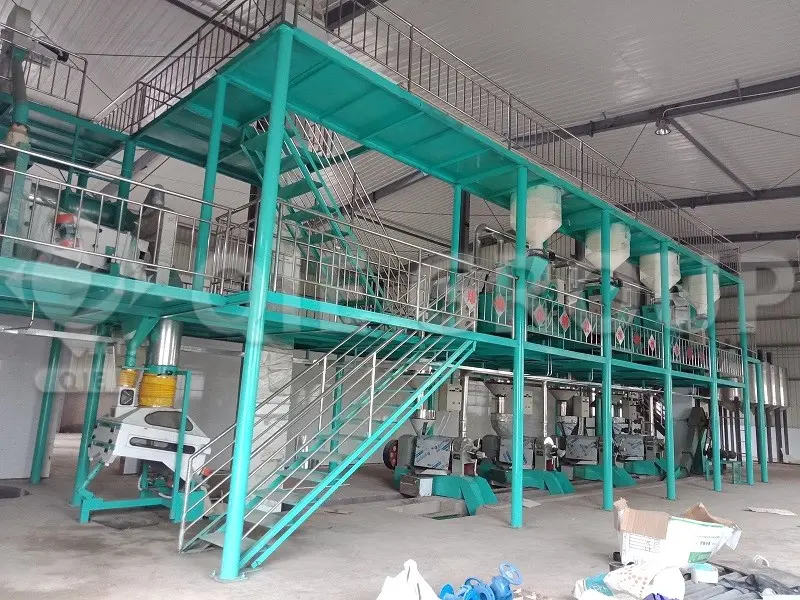
Canola oil processing is the systematic extraction and refining of oil from rapeseed, ensuring food safety, stable quality, and economic efficiency. Although the process appears straightforward, it consists of multiple tightly coupled systems where imbalance at any stage can compromise the entire plant.
A complete processing chain usually includes:
Raw Material Receiving & Pre-treatment – impurity removal, roasting/conditioning
Oil Extraction – mechanical pressing or solvent extraction 👉( Rapeseed oil processing methods comparison )
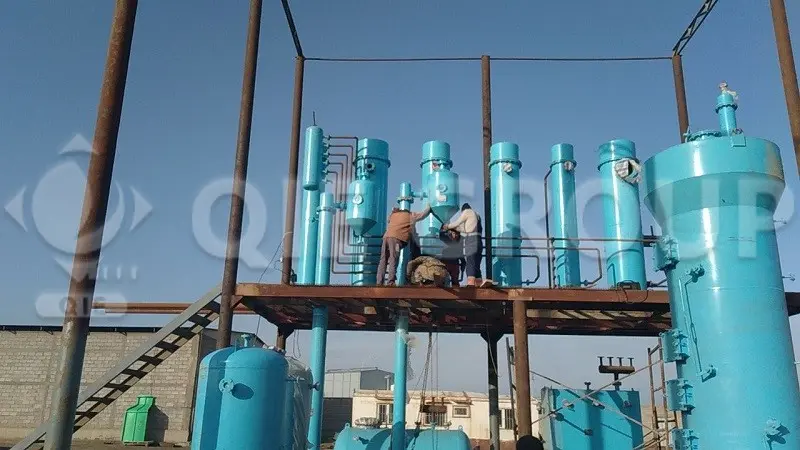
Crude Oil Refining – degumming, neutralization, decolorization, deodorization
By-product Handling & Resource Recovery – canola meal, waste gas, wastewater
Automation & Energy Management
Engineering reality:
Pre-treatment quality affects press life and oil yield.
Extraction design determines long-term operating cost.
Refining heat integration can change steam consumption by 10-15%.
A real solution is therefore system coordination, not equipment accumulation.
Supplier screening insight: If a supplier starts the discussion with an equipment list instead of process logic, they are likely selling machines—not taking responsibility for plant performance.
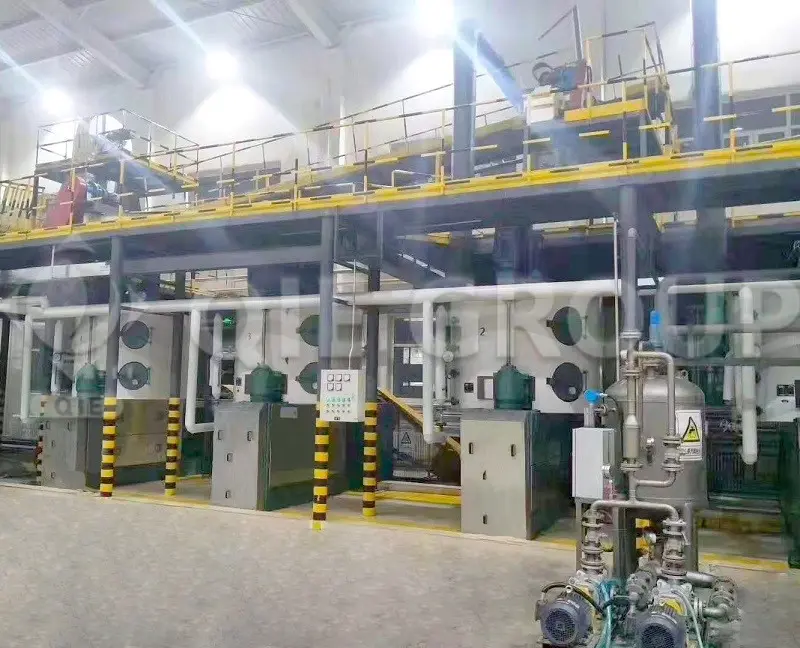
This is the most critical decision at the early investment stage, as it defines capital structure, operating cost, and long-term competitiveness.
Suitable for: Small plants (<100 tons/day) or “cold-pressed” premium oils
Advantages: Low investment, simple process, no solvent required
Limitations: High residual oil in meal (6–8%), 15–20% lower oil yield compared with extraction
Engineering note: Without uniform roasting and moisture control, oil yield fluctuations are inevitable, and equipment wear accelerates.
Suitable for:
Medium to large plants (>100 tons/day)
Projects where raw material cost dominates total cost
Process: Roasting/conditioning material is pre-pressed to remove most oil, then solvent extraction recovers the remaining oil to achieve residual oil below 0.5%.
Advantages: Maximum oil yield, better long-term economics despite higher initial investment
Challenges: Higher system complexity, requires solvent recovery, safety design, and experienced operation
Investment reality: When raw material accounts for over 60% of total cost, every 1% reduction in residual oil directly increases profitability.In such cases, pre-press + extraction is not a technical preference—it is an economic necessity.
Impurities such as stones and metal increase wear on presses and flakers.
Roasting conditions directly influence cell rupture, oil yield, and refining load.
Overheating → caramelization and higher refining loss
Underheating → poor oil release
Best practice:
Automatic adjustment based on seed moisture and ambient conditions.
Screening criterion:A qualified engineering supplier should clearly explain which parameters are “experience-based red lines,” not just theoretical values.
Solvent loss is a major operating cost driver.
Poorly designed systems: 5–8 kg solvent loss per ton of oil
Optimized systems: below 2 kg per ton
Key factors include evaporator staging, condenser efficiency, and vacuum stability, as well as heat recovery in meal desolventizing.
For 30–1000+ TPD projects:Solvent recovery is not a detail—it is a long-term operating risk that inexperienced suppliers often underestimate.
Standard four-stage refining is sufficient for most edible oil markets.
Over-refining increases energy consumption and neutral oil loss.
Physical refining can reduce chemical use if raw material quality is stable
Deodorization temperature should remain within 220–240°C
Common misconception: Over-designed refining systems often reflect supplier-driven decisions rather than plant-driven realities.
| Dimension | Single Equipment Purchase | Complete Engineering Solution |
|---|---|---|
| System Matching | Disconnected systems, frequent bottlenecks | Unified design with balanced flow and energy |
| Automation | Multiple independent controls | Integrated PLC/DCS system |
| Installation | Multi-vendor coordination issues | Single responsible engineering party |
| Commissioning | Extended debugging cycles | Structured startup and trial run |
| Long-term support | Fragmented responsibility | Clear accountability |
Practical insight: This comparison is one of the most effective tools for screening suppliers during the early investment stage.
Feasibility study & process route confirmation: 4–6 weeks
Plant layout & system design: 6–8 weeks
Equipment manufacturing & site preparation: 12–16 weeks
Installation, commissioning & trial run: 6–8 weeks
Post-startup optimization: first 3 months
Skipping proper trial production is one of the most common—and costly—mistakes.
QIE Group is not a single-machine supplier.
We operate as an engineering-focused, whole-plant solution provider, responsible for system stability, long-term operation, and risk control.
Our involvement may include:
Process route comparison and feasibility evaluation
Turnkey project delivery from design to commissioning
Integration and optimization of existing systems
Importantly, we do not believe every project should be built immediately.
In some cases, QIE Group advises clients to postpone, redesign, or even suspend a project if raw material supply, energy conditions, or market assumptions are not yet viable.
A project that should not be built is also part of responsible engineering.
With project experience across Africa, Southeast Asia, and Central Asia, we understand that there is no standard answer—only suitable solutions.
When selecting a supplier, instead of asking:“What can you do?”
Ask instead:“Under what conditions would you advise me not to proceed?”
Suppliers who can clearly define boundaries and risks are often more reliable than those who promise everything.
If you are planning a new or expanded canola oil processing plant and want to avoid hidden engineering risks, QIE Group is ready to act as your long-term engineering partner.
We can assess your raw materials, production capacity targets, energy conditions, and market expectations to determine if your project is truly feasible and ready for implementation.
Please contact us immediately → Cottonseed oil solvent extraction Cottonseed oil pressing process Cottonseed oil production line Cottonseed oil processing plant Cottonseed oil solvent extraction equipment Cottonseed oil screw press
rapeseed oil processing plant rapeseed oil production line edible oil equipment rapeseed oil refining equipment rapeseed oil press machine
Rice bran oil pretreatment Increased oil yield Rice bran oil production process Pretreatment technology optimization Rice bran oil production line equipment
Sunflower oil equipment How much oil can be produced from one ton of sunflower seeds? Sunflower seed press Sunflower oil production line Edible oil processing equipment Sunflower seed oil yield
rapeseed oil processing Hot pressing process Cold Pressing Process Leaching method Rapeseed oil production line
Cottonseed oil solvent extraction Cottonseed oil pressing process Cottonseed oil production line Cottonseed oil processing plant Cottonseed oil solvent extraction equipment Cottonseed oil screw press
rapeseed oil processing plant rapeseed oil production line edible oil equipment rapeseed oil refining equipment rapeseed oil press machine
Rice bran oil pretreatment Increased oil yield Rice bran oil production process Pretreatment technology optimization Rice bran oil production line equipment
Sunflower oil equipment How much oil can be produced from one ton of sunflower seeds? Sunflower seed press Sunflower oil production line Edible oil processing equipment Sunflower seed oil yield
rapeseed oil processing Hot pressing process Cold Pressing Process Leaching method Rapeseed oil production line




.png?x-oss-process=image/resize,h_100,m_lfit/format,webp)
.png?x-oss-process=image/resize,h_100,m_lfit/format,webp)
.png?x-oss-process=image/resize,h_100,m_lfit/format,webp)