
With the global population growing and the food industry expanding, the demand for edible oil continues to rise. For oil processing companies, building a 500 TPD (tons per day) edible oil production line not only increases production capacity but also reduces unit costs and improves market competitiveness.
Depending on the raw material and process route, the total investment for a 500 TPD plant generally ranges from $15 million to $30 million, with a construction period of about 18–30 months. Proper process design and equipment selection are critical to ensure stable operation, high oil yield, and consistent product quality.
This article provides a detailed guide on project planning, core process flow, equipment systems, and project implementation for building a highly efficient and reliable 500 TPD edible oil production line.
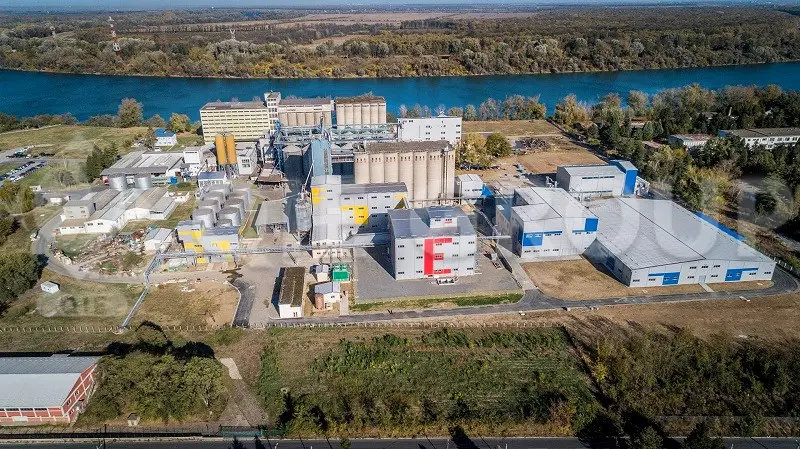
Proper planning and design are essential for the success of a large-scale edible oil plant. A well-designed process not only improves efficiency but also reduces energy consumption and operating costs.
The design of the production line must consider the target oilseed. Different oilseeds vary in oil content, physical characteristics, and processing requirements.
Common oilseeds include: soybeans, rapeseed (double-low), sunflower seeds, cottonseeds, peanuts, corn germ, rice bran etc.
Oil content and recommended process:
| Oilseed | Oil Content | Recommended Process |
|---|---|---|
| Soybean | 18–22% | Direct solvent extraction |
| Sunflower | 40–50% | Pre-press + Solvent extraction |
| Rapeseed | 38–45% | Pre-press + Solvent extraction |
| Peanut | 45–55% | Mechanical pressing or pre-press |
These characteristics affect:
An experienced engineering team can design the most efficient process route based on your raw material strategy.
For a 500 TPD plant, accurate yield calculation is essential.
Typical calculation steps: Oil content → theoretical crude oil → residual oil (pressing/extraction) → actual crude oil → refined oil output.
Example for soybeans:
| Item | Data |
|---|---|
| Raw Material | 500 tons |
| Soybean Oil Content | 18% |
| Theoretical Crude Oil | 90 tons |
| Solvent Extraction Residual Oil | <1% |
| Actual Crude Oil | 85 tons |
| Refining Loss | 8–12% |
| Final Edible Oil | 76–78 tons |
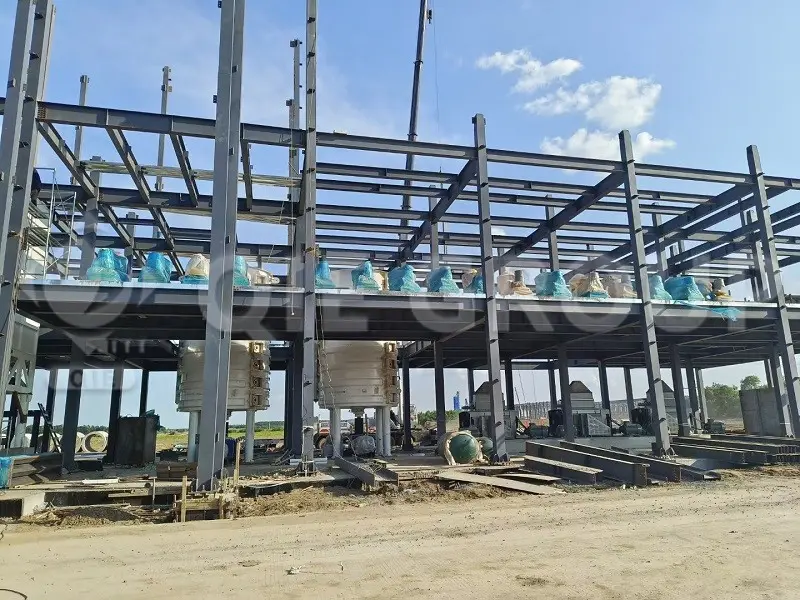
Principles: Reliability > efficiency > cost. Prioritize established equipment suppliers (e.g., QIE Group).
Automation tiers:
500 TPD standard: Advanced Process Control (APC) and predictive maintenance for critical equipment.
A 500 TPD production line must balance efficiency and yield, making process selection crucial.
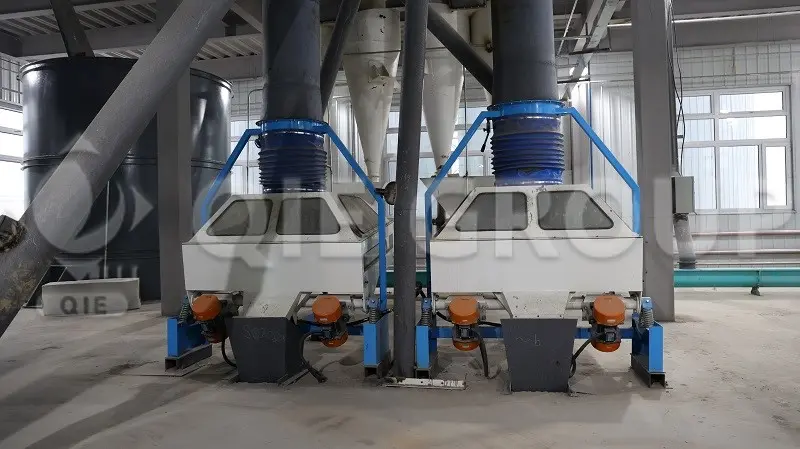
Purpose: remove impurities (sand, stones, metal, stems), adjust particle size and moisture, and prepare raw material for pressing or extraction.
500 TPD considerations: Equipment capacity must match high throughput; even flake thickness is vital for pressing and extraction efficiency.
Mechanical Pressing
best for high oil content seeds (rapeseed, sunflower, peanuts) and specialty flavor oils.
Flow: roasting → screw press → crude oil + press cake
Key metrics: cake residual oil, crude oil impurity content.
Solvent extraction
suitable for low oil content seeds (soybeans, rice bran).
Flow: flaked or pretreated seeds → solvent extractor → mixed oil → evaporation & stripping → crude Oil
Key focus: solvent recovery efficiency, explosion-proof safety, extrusion increases throughput.
Combination: many 500 TPD lines use “pre-treatment + pre-press (high oil seeds) + extraction” or “pre-treatment + direct extraction (low oil seeds).”
Purpose: remove gums, free fatty acids, pigments, odors, waxes; improve stability, color, flavor, and safety.
Physical Continuous Refining
Steps: degumming → steam deacidification → decolorization → deodorization → dewaxing.
Advantages: low energy, minimal wastewater, high yield.
Chemical Continuous Refining
Steps: degumming → alkali neutralization → water wash → decolorization → deodorization → dewaxing.
Advantages: versatile, thorough acid removal, but higher wastewater costs.
Key quality indicators:
| Indicator | Standard |
|---|---|
| Acid Value | ≤0.3 mg KOH/g |
| Peroxide Value | ≤10 meq/kg |
| Solvent Residue | <10 ppm |
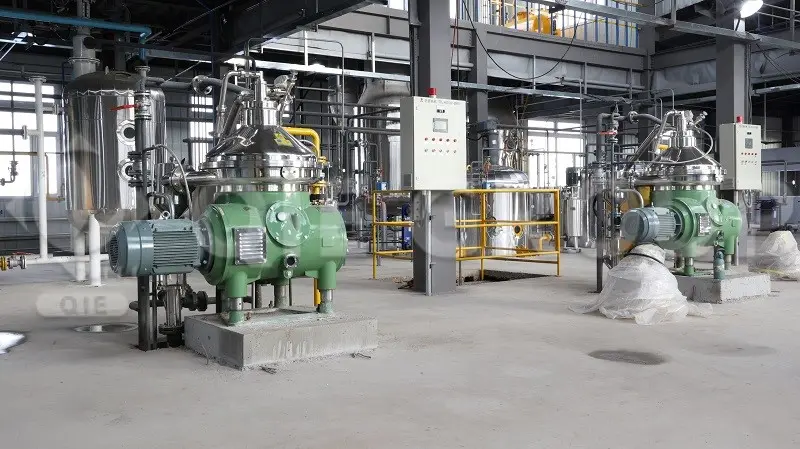
Pretreatment: cleaning sieve, magnetic separator, destoner, sheller, crusher, softening machine, flaking machine.
Pressing: screw press, roasting/steaming cooker.
Extraction: loop type extractor, DTDC desolventizer, stripping tower, solvent recovery condenser.
Refining: neutralization/degumming tank, centrifuge, decolorization tower, leaf filter, deodorization tower, cooling crystallization tank, filter press.
Utilities: raw material warehouse, cake warehouse, product oil tank, solvent tank, heat transfer oil furnace, compressed air, water treatment, dust removal.
Modern plants use PLC + SCADA control systems.
Benefits: interlocking equipment control, real-time monitoring, energy management, production report analysis. automation improves efficiency and reduces labor costs.
Extraction room: explosion-proof design (Ex d/e), nitrogen sealing, solvent monitoring and alarms, interlock shutdown, anti-static, pressure relief devices.
Waste treatment: RTO for exhaust, wastewater treatment, noise control, compliant solid waste disposal.
Occupational health: ventilation, dust control, personal protection, heat insulation, signage, training.
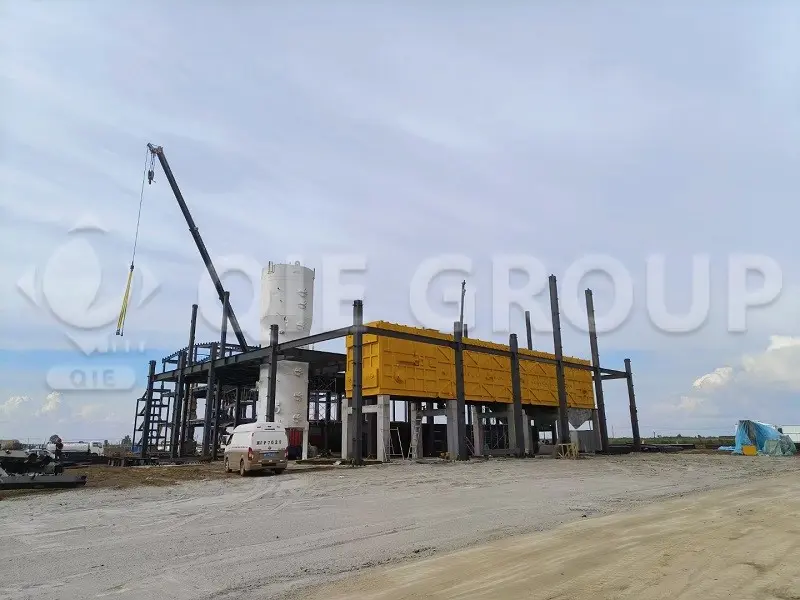
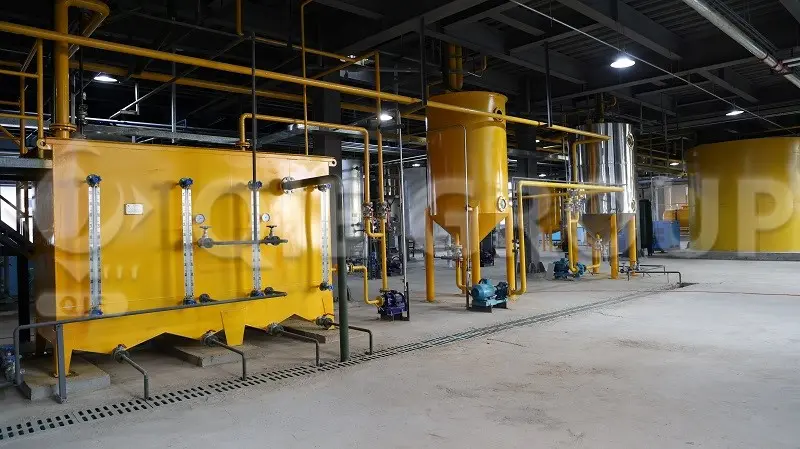
In Central Asia, a 500 TPD soybean oil extraction plant was successfully completed.
Extraction: 500 TPD (solvent extraction)
Refining: 200 TPD (producing Grade 1 soybean oil)
Performance:
| Indicator | Data |
|---|---|
| Solvent Consumption | 1.5 kg/t |
| Steam Consumption | 280 kg/t |
| Refining Yield | 96% |
The plant achieved stable operation and international-quality oil products.
Q1: How much plant area is needed for a 500 TPD line?
A: The main workshop (excluding storage tanks) typically ranges 5,000–10,000 m². Actual area depends on process, refining depth, raw material storage, and automation.
Q2: How long does construction take?
A: From contract to commissioning: 18–30 months. Detailed design: 3–6 months; equipment manufacturing: 6–12 months; installation/commissioning: 6–9 months.
Q3: Advantages over smaller lines?
A: Lower unit cost, higher automation, better energy efficiency, stable product quality, stronger market competitiveness.
Q4: Pressing or solvent extraction for 500 TPD?
A: Low oil seeds (soy, rice bran) → solvent extraction; high oil seeds or specialty flavor oils → pressing. Extraction is more common for large-scale continuous production.
Building a 500 TPD edible oil production line is a complex engineering project involving process design, equipment manufacturing, and project management.
Precision planning: select the optimal process for raw materials and market requirements.
System thinking: coordinate equipment, automation, and safety design for overall efficiency.
Professional partner: choosing experienced turnkey providers (e.g., QIE Group) reduces risk and shortens ROI.
With over forty years of experience, the QIE Group has delivered numerous turnkey edible oil production lines worldwide. We offer free process consultation, investment evaluation, and plant layout design.
 Sunflower oil yield Sunflower oil production process Dehulling process Mechanical pressing Oil refining
shea butter oil processing plant shea butter oil production line shea butter oil press machine shea butter oil refining equipment shea butter oil processing equipment
rapeseed oil processing Hot pressing process Cold Pressing Process Leaching method Rapeseed oil production line
Coconut oil refining equipment Coconut Oil Refinery Small Coconut Oil Refining Machine Coconut oil processing production line Coconut Oil Refinery Cost
Soybean oil press machine Soybean oil solvent extraction equipment Soybean oil processing plant Soybean oil production line Soybean oil refinery plant
Sunflower oil yield Sunflower oil production process Dehulling process Mechanical pressing Oil refining
shea butter oil processing plant shea butter oil production line shea butter oil press machine shea butter oil refining equipment shea butter oil processing equipment
rapeseed oil processing Hot pressing process Cold Pressing Process Leaching method Rapeseed oil production line
Coconut oil refining equipment Coconut Oil Refinery Small Coconut Oil Refining Machine Coconut oil processing production line Coconut Oil Refinery Cost
Soybean oil press machine Soybean oil solvent extraction equipment Soybean oil processing plant Soybean oil production line Soybean oil refinery plant


.png?x-oss-process=image/resize,h_100,m_lfit/format,webp)
.png?x-oss-process=image/resize,h_100,m_lfit/format,webp)
.png?x-oss-process=image/resize,h_100,m_lfit/format,webp)


.webp?x-oss-process=image/resize,h_800,m_lfit/format,webp)


