


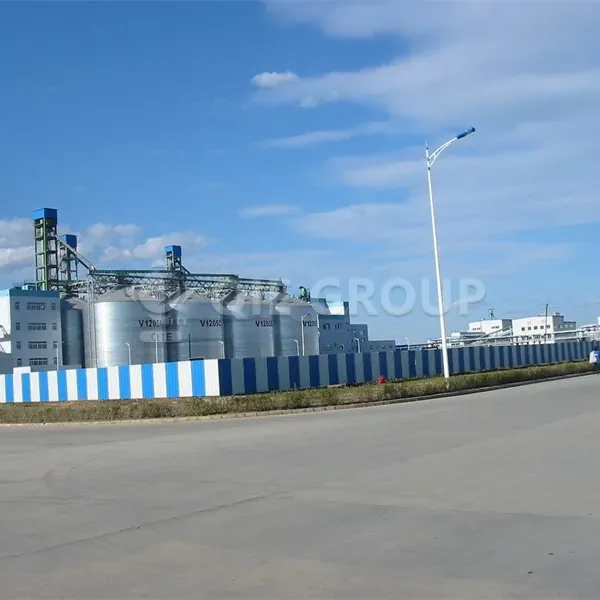


QIE GROUP provides palm oil production lines for processing fresh fruit bunches (FFB) into crude palm oil (CPO). The main processing system covers FFB reception, sterilization, threshing, fruit digestion, pressing, oil clarification, and kernel recovery. Equipment configuration is determined by the required FFB processing capacity, raw material conditions, and project requirements.
For projects requiring refined palm oil, a refining system can be supplied as an optional downstream section. Palm kernel recovery and further palm kernel oil (PKO) processing can also be considered according to the project's production objectives.
A palm oil production line mainly processes the mesocarp of fresh palm fruit to obtain crude palm oil. After pressing, the fiber cake is processed separately to recover palm kernels.
Fresh Fruit Bunches (FFB) → Reception → Sterilization → Threshing → Fruit Digestion → Pressing → Crude Oil Clarification → Vacuum Drying → CPO Storage
Press Cake → Cake Breaking → Fiber Separation → Kernel Cleaning → Nut Cracking → Kernel–Shell Separation → Kernel Drying → Palm Kernel Storage
The two processing routes operate alongside each other after the pressing stage: the oil-bearing liquid enters the clarification section, while the press cake is sent to the kernel recovery section.
Fresh fruit bunches are weighed and unloaded at the receiving station before being conveyed to the sterilization section.
The sterilization process uses heat treatment to inactivate lipase, helping prevent excessive free fatty acid (FFA) formation. It also loosens the fruits from the bunches, making subsequent threshing easier.
Main equipment configuration:
FFB loading and conveying system • Sterilizer with automatic control system • Exhaust chamber • Discharge conveyor
The sterilization configuration is selected according to the project process design and operating requirements. For more information about this stage, see our article on the function of a palm fruit sterilizer.
After sterilization, the fruit bunches enter the threshing machine, where palm fruits are separated from empty fruit bunches (EFB).
The separated palm fruits are conveyed to the digestion section, while the empty fruit bunches are discharged separately.
Main equipment configuration:
Palm fruit thresher • Threshing platform • Discharge conveyor • Fruit conveying elevator
Effective threshing helps ensure that palm fruits are properly separated and supplied to the next processing stage.
The separated palm fruits are conveyed into the digestion tank, where they are heated and mechanically stirred to prepare the fruit mash for pressing.
The reference digestion temperature in the proposed process is approximately 95°C. Actual operating conditions depend on the raw material and process configuration.
The prepared fruit mash is then fed into the palm fruit oil press. Mechanical pressure separates the crude oil mixture from the fibrous press cake.
Main equipment configuration:
Fruit digester • Palm fruit oil press • Oil collection tank • Crude oil vibrating screen
The vibrating screen provides preliminary removal of solid impurities from the crude oil mixture. The press configuration is selected according to the required processing capacity and project conditions. For individual machine details, see our palm oil press machine.
The crude oil mixture from the pressing section contains oil, water, and solid impurities. It requires further separation and purification before storage or refining.
A typical clarification and drying section includes:
Preliminary screening: A vibrating screen removes larger solid particles from the crude oil mixture.
Initial settling: A temporary settling tank allows preliminary separation before continuous clarification.
Continuous clarification: The crude oil is treated in a continuous clarification tank. The reference operating temperature in the proposed process is approximately 85°C.
Oil settling: The separated oil enters a clean-oil settling tank.
Vacuum drying: Moisture is removed before the crude palm oil is transferred to the storage tank.
Main equipment configuration:
Crude oil vibrating screen • Temporary settling tank • Continuous clarification tank • Clean-oil settling tank • Vacuum drying system • CPO storage tank
The clarification section is designed to reduce water and solid impurities in crude palm oil before downstream processing.
After pressing, the wet fiber cake contains palm kernels mixed with fibers and other materials. A separate recovery section is used to separate and clean the kernels.
The process generally includes:
1. Cake breaking: A cake-breaking conveyor breaks up the wet press cake to facilitate separation.
2. Fiber separation: An air separation system, consisting of a fiber separator, cyclone, and fan, removes most of the fiber.
3. Kernel polishing: A polishing drum and conveying equipment handle the separated material.
4. Stone removal: A further air separation and cleaning section removes stones and other impurities.
5. Kernel collection: The cleaned palm kernels are conveyed to a storage bin.
Main equipment configuration:
Cake-breaking conveyor • Fiber separation column • Fiber cyclone and fan • Polishing drum • Kernel conveying equipment • Stone separation column • Stone removal cyclone and fan • Palm kernel storage bin
This section recovers palm kernels from the press cake for storage, sale, or further processing.
The recovered palm nuts are cracked to separate the kernels from the shells. The mixture is first subjected to air separation and then processed through a water-based flotation separator for further kernel–shell separation.
The separated kernels are dried using heated air supplied by an air heater and fan before entering the storage area.
Main equipment configuration:
Palm nut cracking machine • Material elevator • Kernel separation column • Water flotation separator • Kernel drying bin • Air heater and fan
Reference process indicators:
• Kernel moisture after drying: below 7%
• Shell content in recovered kernels: below 6%
The dried kernels can be stored or sent to a separate palm kernel oil processing system. For projects requiring further processing of recovered kernels, see the palm kernel oil processing plant guide.
There is no single equipment configuration suitable for every palm oil mill. The production line is designed according to the required FFB throughput, raw material conditions, processing scope, and site requirements.
For smaller-capacity projects, a compact and modular equipment arrangement may be considered. Larger processing projects require equipment and material-handling systems configured to match the required throughput and plant layout.
The main factors affecting production line configuration include:
• Required FFB processing capacity
• Fresh fruit bunch characteristics and supply conditions
• Required CPO production and quality specifications
• Whether kernel recovery and drying are included
• Whether a downstream palm oil refining section is required
• Available steam, electricity, and water supply
• Site layout and installation conditions
To recommend a suitable configuration, we needs the planned FFB processing capacity, raw material information, target products, and basic site conditions.
Crude palm oil can be further processed into refined palm oil according to the required final product specifications.
For applicable projects, QIE can supply a downstream refining section. The refining route is selected according to the crude oil characteristics, especially its FFA content, and the required production scale and final products.
For large-scale projects with high-FFA crude palm oil, physical refining can be considered. In this process, free fatty acids and volatile odor compounds are removed through high-temperature steam treatment under high vacuum during deodorization.
The main refining stages may include:
Degumming: Phosphoric acid is used to treat the crude oil and remove gums.
Bleaching: Activated bleaching earth adsorbs pigments and other impurities under vacuum conditions.
Deodorization: High-temperature steam distillation under high vacuum removes free fatty acids and odor compounds.
Fractionation (optional): Controlled crystallization and filtration separate palm oil into palm olein and palm stearin.
Fractionation is included when the project requires separate liquid and solid palm oil fractions.
For equipment details, see semi-continuous palm oil refining equipment.
The main palm oil production line extracts CPO from the palm fruit mesocarp. Palm kernel oil (PKO), in contrast, is produced from the kernel.
After kernel recovery, drying, and storage, the kernels can be sent to a separate PKO pressing system. A typical mechanical pressing route includes:
Dried Palm Kernels → Pressing → Oil Settling → Plate-and-Frame Filtration → Crude Palm Kernel Oil
The PKO pressing equipment and capacity are selected separately according to the required kernel processing throughput. This system is not a fixed part of the CPO extraction line.
The following figures are reference values from the proposed process. Their applicability should be confirmed against the actual project configuration, raw material conditions, and operating requirements.
| Parameter | Reference value |
|---|---|
| Steam consumption | ≤600 kg/t FFB |
| Steam pressure | 0.35 MPa |
| Electricity consumption | ≤25 kWh/t FFB |
| Water consumption | ≤200 kg/t FFB |
| Oil content in empty fruit bunches | ≤5% |
| Residual oil in press cake | ≤7% |
| Moisture in crude palm oil | ≤0.2% |
| FFA in crude palm oil | <5% |
| Solid impurities in crude palm oil | ≤0.02% |
| Dry palm kernel yield | Approximately 5% |
These figures are not universal performance guarantees. Final technical specifications should be established during project evaluation and engineering design.
QIE Group has supplied palm oil processing equipment for projects in different markets. For a practical project reference, see the 10 TPH palm oil processing plant in West Africa.
The project reference can help buyers understand how processing capacity and equipment configuration are applied in an actual palm oil processing plant.
The main information includes the required FFB processing capacity, raw material supply and characteristics, target oil products, site conditions, and whether kernel recovery and refining sections are required.
Yes. The main processing line can be configured to produce crude palm oil (CPO). A downstream refining section can be supplied separately according to the required final oil products.
No. The main line extracts CPO from the palm fruit mesocarp. Recovered palm kernels require a separate pressing system to produce palm kernel oil (PKO).
The configuration depends on FFB throughput, raw material characteristics, required processing sections, utility conditions, site layout, and the intended final products.
Planning a new palm oil mill or upgrading an existing processing plant?
Contact QIE GROUP with your required FFB processing capacity, raw material information, target products, and project location. Our team can evaluate the processing scope and recommend a suitable equipment configuration based on your project requirements.
Contact Us for a Palm Oil Production Line SolutionQIE GROUP provides palm oil production lines for processing fresh fruit bunches (FFB) into crude palm oil (CPO). The line covers fruit sterilization, threshing, digestion, pressing, and oil clarification, with optional palm kernel recovery and oil refining systems. Equipment configuration is customized according to processing capacity and project requirements.
If you wanna to get more details about You can send E-mail to [email protected]. You can consult our professional engineer and specialized sales team with leave a message in below form.We will contact with you ASAP.You also can visit our factory in Henan,China.


